
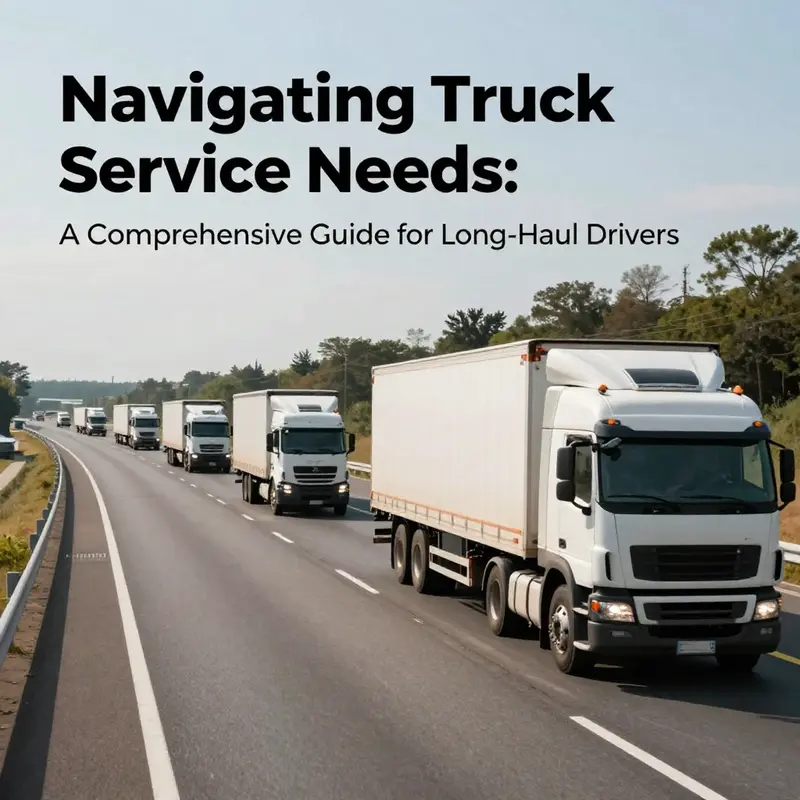
For long-haul truck drivers and trucking company owners alike, understanding where to service vehicles is crucial for maintaining efficiency and safety on the road. From dedicated repair shops located near major freight routes to technologically integrated service management systems, various options are available to keep trucks in optimal condition. This guide delves into how truckers find service locations, the role technology plays in maintenance management, and the advantages of company-owned versus independent service facilities, providing insights for all stakeholders in the trucking industry.
null
null
Service on the Move: Technology, Networks, and the Places Truckers Trust for Maintenance
Maintenance is not a fixed stop along a route; it is a dynamic thread that runs through every mile a truck travels. For the long-haul fleet and the independent driver alike, the question of where a truck gets serviced is as much about reliability as it is about access, speed, and the invisible intelligence that keeps engines humming. The modern landscape of truck service management rests on a threefold foundation: the places where repairs happen, the systems that anticipate and coordinate care, and the human expertise that translates data into durable, road-worthy performance. Taken together, these elements create a network that can turn what used to be reactive maintenance into a proactive discipline, reducing downtime, extending asset life, and sharpening a carrier’s competitive edge. As routes stretch farther and traffic grows more complex, that network must be resilient, scalable, and elegantly integrated with the day to day realities of trucking life.
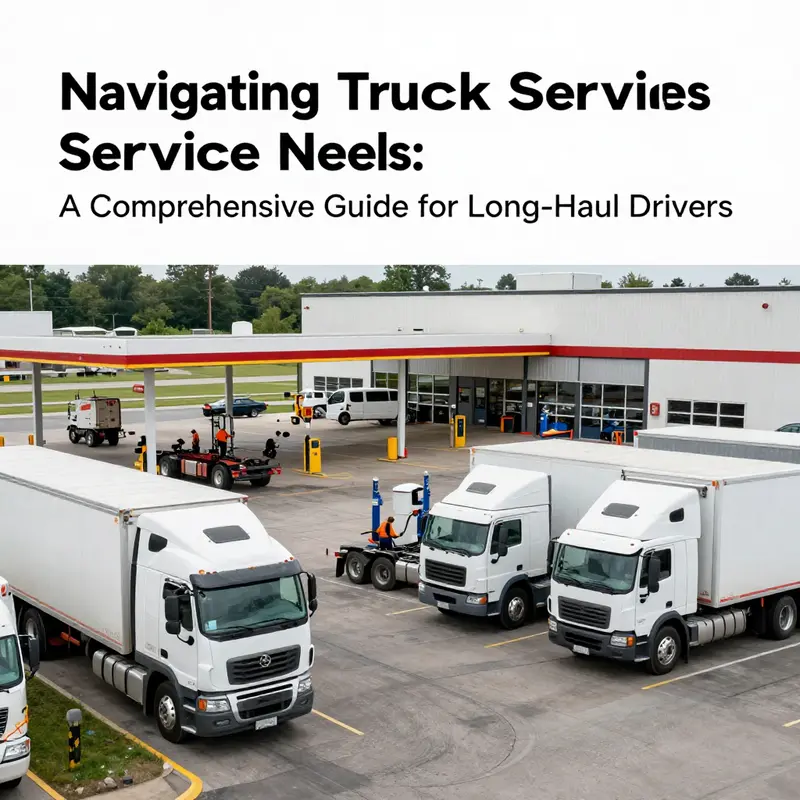
Along major freight corridors, you will find a spectrum of service options that reflects both the scale of modern fleets and the diversity of independent operators who still move goods with nothing more than a wrench, a diagnostic tool, and a willingness to troubleshoot on a highway shoulder if necessary. Large trucking companies increasingly operate their own maintenance facilities, a strategic choice that aligns maintenance windows with dispatch plans and allows for tightly controlled uptime. These company depots act as command centers for preventive programs, parts logistics, and the rapid deployment of skilled technicians to keep a fleet within service levels. For fleets that operate many hundreds of vehicles, centralized maintenance reduces variability in repair quality, streamlines parts inventory, and creates a predictable maintenance cadence that can be synchronized with depreciation cycles and utilization metrics. In effect, these in-house shops become an extension of the operational nerve system, providing quick triage on routine issues and a more formal framework for complex, mission-critical repairs.
Independent drivers and smaller operators, by contrast, negotiate a different set of realities. They rely heavily on third-party service providers, roadside repair options, and the local shops that populate travel plazas and industrial districts along trucking routes. The service experience for these operators is highly dependent on accessibility, turnaround times, cost, and the ability to obtain high-quality work without a lengthy wait. In both scopes, technology has become the connective tissue that bridges gaps between dispersed service locations and the needs of drivers who must keep moving. Predictive maintenance systems, telematics data streams, and data analytics transform maintenance from a series of isolated repairs into a coordinated maintenance strategy that can be executed in minutes or scheduled during planned layovers. This shift changes not only how maintenance is performed, but when and where it is performed, turning downtime into a managed risk rather than an unavoidable hazard.
The most influential change in recent years is the fusion of AI-driven predictive maintenance with robust telematics data. Predictive maintenance uses real-time signals from vehicle sensors, historical repair records, and usage patterns to forecast potential failures before they occur. The result is a maintenance agenda that is inherently proactive: a fleet manager can anticipate an alternator or an air system issue, schedule a service appointment before a breakdown, and route the vehicle to the most efficient repair location with minimal disruption to the schedule. This is not a distant future scenario; it is increasingly the norm. For managers, predictive maintenance translates into lower downtime, better parts planning, and more accurate budgeting. For drivers, it means fewer roadside stops and a more predictable day on the road, which in turn improves safety, reduces fatigue, and enhances overall job satisfaction.
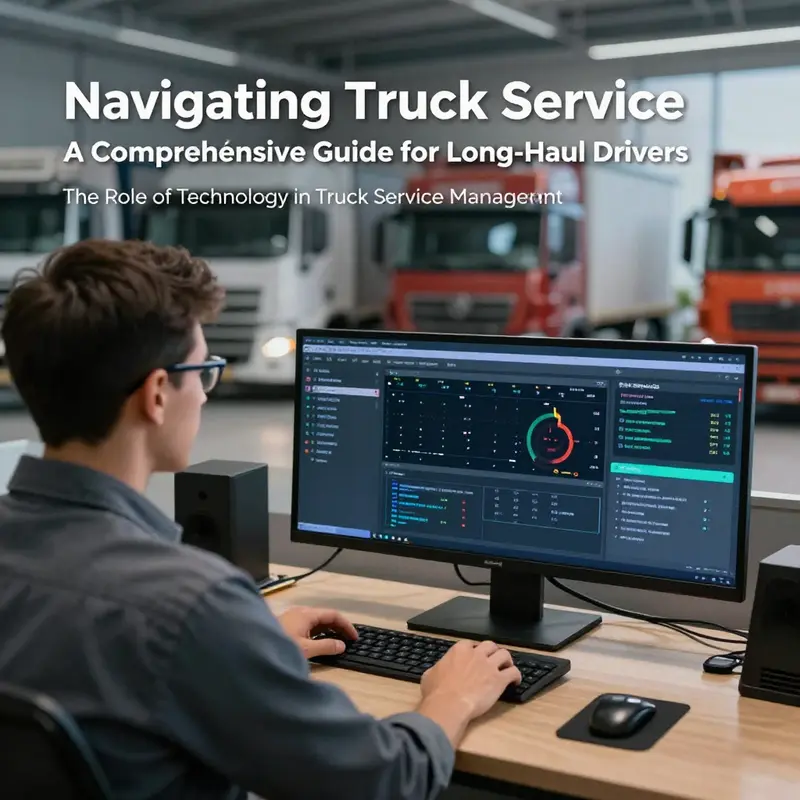
The analytical backbone of this transformation is telematics—a discipline that fuses GPS information, driving behavior metrics, engine diagnostics, and fault codes into a single, continuous data stream. Telematics provides a panoramic view of vehicle health and performance. It makes possible a near real-time assessment of which vehicles require attention, what kind of work is needed, and whether a shop has the capacity to absorb a given repair without delaying a shipment. Data analytics then turns that stream into actionable intelligence. Fleet operators use dashboards to identify trend lines, allocate maintenance resources, and optimize the timing of service across hundreds or thousands of assets. The aim is not merely to fix things when they break but to allocate maintenance labor and parts in the most efficient way, aligning upkeep with utilization and the economic calculus of each route.
This integrated approach to maintenance reshapes decision-making at every level. Erin Gilchrist, a prominent voice in fleet management thinking, emphasizes that AI and telematics empower both drivers and fleet managers. The systems give drivers more autonomy to prevent minor issues from escalating, while managers gain the data-driven visibility needed to plan and reallocate resources with confidence. The outcome is a fleet that operates with tighter control, a lubricant with less waste, and a service network that behaves more like a single, coordinated system rather than a collection of disparate, independent shops. When a vehicle experiences a fault, the software can propose several practical responses—ranging from a near-term repair at a local shop to a precise, time-bound maintenance window at an affiliated depot—reducing the cognitive load on the driver and translating complexity into actionable steps.
The service landscape thus becomes a spectrum rather than a single, monolithic path. On the one end are company-owned maintenance facilities, embedded within the larger logistics ecosystem to support reliability and standardization. On the other end lies a dense network of independent shops and mobile repair services that can reach almost any corridor or byway. Between these extremes, fleets often partner with third-party maintenance providers who specialize in heavy-duty trucks and offer flexible scheduling, standardized repair workflows, and transparent pricing. What unites these arrangements is a shared reliance on data-driven processes and a commitment to uptime. This is where the practical realities of trucking intersect with the promise of technology: the shop is no longer just a place to fix a broken valve; it is a node in a digital maintenance ecosystem that tracks, analyzes, and learns from every mile traveled.
The role of real-time information in maintenance scheduling cannot be overstated. Drivers frequently depend on GPS navigation tools to locate available repair services, fuel stations, and rest areas along their routes. The modern workflow sees the truck’s onboard diagnostics feeding a maintenance alert to both the driver and the back office, triggering a decision tree that considers current location, service bay availability, and the anticipated impact on delivery timelines. In practice, this means a repair event can be absorbed into the logistics plan with minimal disruption, or a near-term downgrade in utilization may be accepted in exchange for preserving longer-term reliability. The geographic distribution of service capacity, captured in maintenance dashboards and routing software, guides where and when to perform work. It is an efficient, resilient approach that reduces the friction that once made maintenance a bottleneck.
All of these advances, however, rely on a foundation of well-trained technicians and standardized maintenance practices. Maintenance training is not a mere supplementary activity; it is the anchor that ensures predictive insights translate into durable results. In this space, the maintenance discipline benefits from cross-industry learning and clearly defined protocols that guarantee consistency across locations and teams. A representative element of this discipline is illustrated in specialized maintenance training programs that, while rooted in a different domain, emphasize core principles of reliability, safety, and routine inspection. The relevance of such training to trucking is direct: when technicians understand inspection regimes, fault diagnostics, and preventive care, repairs are more accurate, parts are used more efficiently, and vehicles are returned to service faster. This point underlines a broader truth—the most sophisticated technology only pays off when paired with skilled hands and disciplined routines. You can explore related training considerations in the field of fire apparatus maintenance training, which offers practical illustrations of how systematic maintenance practice translates into life-saving reliability. fire truck maintenance training importance.
Intriguingly, the evolution of maintenance networks is tightly coupled with evolving vehicle technologies. Modern trucks increasingly incorporate advanced driver-assistance systems, adaptive cruise control, and electric or hybrid powertrains. Each innovation introduces new maintenance modalities and service requirements. For example, electrified powertrains shift the focus from combustion components to high-voltage systems, battery health, thermal management, and software updates. ADAS features require periodic recalibration after certain repairs or sensor replacements to maintain accuracy. The net effect is that the maintenance ecosystem must continuously adapt to the vehicle’s technology profile. Fleet managers respond by calibrating service contracts, updating technician training, and expanding the geographic footprint of maintenance facilities to ensure diagnostic capabilities are never far away from the road. These changes reinforce the idea that the repair shop of today operates within a living system that learns from every service event and every mile.
Another dimension of this transformation is the steady improvement in the speed and quality of parts logistics. When a fault arises, the time to repair can be significantly influenced by how quickly the needed parts reach the shop. Advanced supply chains, partly enabled by predictive models, anticipate demand and stage parts at strategically located hubs so that technicians can complete repairs with minimal downtime. In practice, this reduces the case where a vehicle is off the road for days because a single component was delayed in transit. The convergence of predictive maintenance, agile parts logistics, and skilled technicians creates a maintenance experience that is fast, predictable, and aligned with the tempo of freight networks. For the fleet operator, this translates into higher utilization, better on-time performance, and a more stable cost profile, which, in turn, supports a stronger customer value proposition across the logistics chain.
The human dimension remains central to all of these technological shifts. Technicians bring tacit knowledge—an experiential sense of what a given make, model, or duty cycle tends to reveal—that data alone cannot capture. The best shops blend data-driven workflows with practical intuition and a collaborative problem-solving ethos. A maintenance event becomes an opportunity to learn, not merely a transaction. The crew on the floor translates diagnostic readouts into a set of actionable steps, tests the vehicle after service to confirm repairs, and communicates with dispatch to ensure the vehicle’s impact on schedules is minimized. In this way, the network of maintenance becomes a living, responsive organism that aligns with the realities of road life—the unpredictability of weather, the pressures of tight delivery windows, and the constant demand to keep cargos moving. This synthesis of technology and craft is what keeps the highway running smoothly and what makes maintenance a core competency rather than a rearward-looking necessity.
For readers who want to connect the dots between technology and practice, consider the broader resource landscape that accompanies these trends. The Truck Management System initiatives, developed by technology-focused providers, showcase how end-to-end data orchestration supports maintenance decision-making across a fleet. These systems demonstrate how sensor data, predictive models, and repair workflows can be harmonized into a single, coherent operation. They also illustrate the importance of scalable architectures that allow maintenance practices to grow in step with fleet size and complexity. The practical takeaway is that investment in technology should be matched by investment in people and processes that can interpret and act on the data. With the right balance, maintenance becomes not a cost center but a strategic enabler of reliability and efficiency across the entire transportation network.
In sum, where truckers get their trucks serviced is evolving from a simple question of proximity to a sophisticated question of capability and integration. The service landscape now offers a spectrum of options, each shaped by the twin forces of accessibility and intelligence. Company-owned depots provide centralized reliability; independent shops offer local flexibility and quicker turnarounds; and third-party maintenance networks deliver scale and professional rigor. What binds these options is a shared commitment to uptime, the pervasive use of data to guide decisions, and the steady infusion of new technologies that make maintenance smarter, safer, and faster. As routes lengthen and fleets grow more intricate, the maintenance network becomes more than a back-office function; it becomes a strategic asset—a critical node where technology meets practice to keep the wheels of commerce turning. For practitioners at every level, from the driver on the road to the manager mapping maintenance into the schedule, this technology-enabled maintenance paradigm promises not only fewer breakdowns but also greater confidence in every mile ahead.
External reading note: For a deeper dive into truck management technology and the systems that enable predictive maintenance and better service planning, explore the Truck Management System resources from En Route Technologies at https://www.enroutetechnologies.com/truck-management-system.
Steering the Service Network: How Truckers Choose Between Company-Owned and Independent Shops
Across the vast corridors of long-haul trucking, uptime is the true currency. Each mile logged, each delay avoided, compounds into a dependable schedule that keeps shipments moving and customers satisfied. The question of where truckers get their trucks serviced sits at the heart of this cadence. It is not merely about repairs or oil changes; it is about access, trust, cost, and speed. It is about the architecture of a service network that can respond as trucks roll along interstate arteries. In practical terms, truckers rely on two broad families of maintenance facilities: company-owned operations that sit within the orbit of the fleet they serve, and independent shops that operate with a degree of autonomy and local agility. Both models aim to restore and preserve vehicle performance, but they carry distinct incentives, constraints, and rhythms. Understanding how these two streams shape daily decisions helps illuminate why fleets—whether they belong to a single large carrier or to a scattered group of owner-operators—design maintenance strategies that prioritize uptime, predictability, and total cost of ownership.
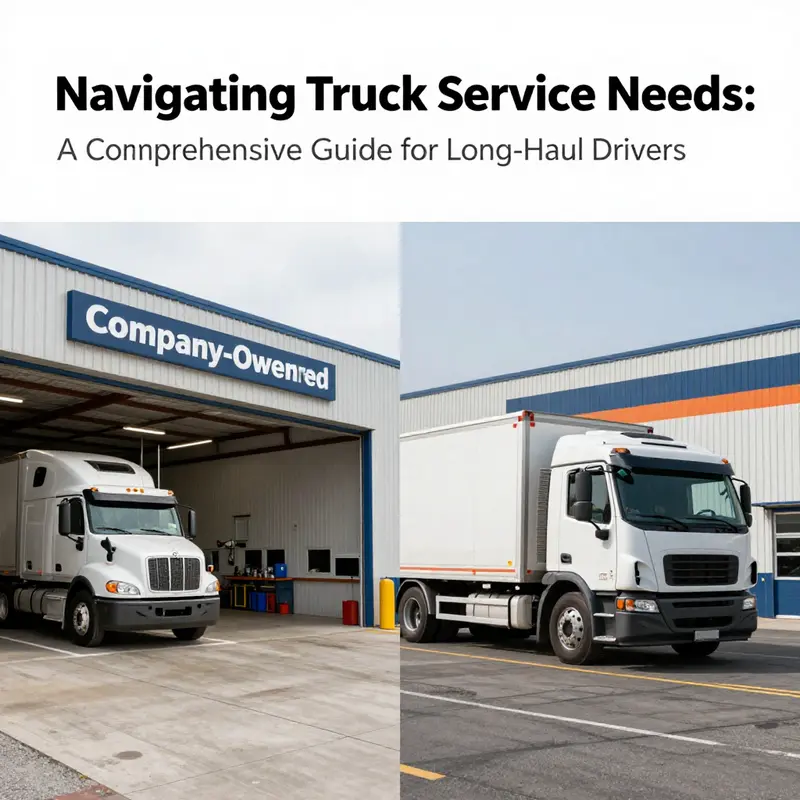
When a truck leaves a highway and seeks service, the choice is rarely driven by a single factor alone. It is a synthesis of the vehicle’s status, the immediacy of the need, the fleet’s maintenance philosophy, and the geography of the route. Company-owned facilities typically anchor a fleet’s maintenance backbone. They function as nodal points with standardized processes, uniform diagnostic protocols, and consistent parts pipelines. Because they are part of a larger corporate structure, these centers tend to adopt strict operating procedures, codified safety practices, and more formalized work order management. The merit of this standardization becomes especially visible in complex repairs or multi-vehicle maintenance tasks that require specialized knowledge or access to proprietary diagnostic tools. A company-owned shop can leverage centralized training, ensure that technicians are aligned with the same repair playbooks, and maintain traceable history across the fleet’s entire footprint. For drivers and managers, this translates into predictable turnaround times and a shared language when describing issues or requesting service.
Yet standardization can bring rigidity. In a fleet that spans multiple regions, centralized overhead can slow decision-making and inflate fixed costs. Corporate facilities may carry higher overhead because of their scale, and some drivers or owner-operators perceive this as a constraint on flexibility. The perception of price and the cadence of service can appear less nimble when compared to the quicker, sometimes more flexible response a local independent shop can deliver. There is also the matter of access to parts. Company-owned facilities often have a preferred parts catalog and established vendor relationships that optimize stock with the fleet’s maintenance schedule. While this can reduce waste and shorten lead times for common items, it may limit options for unusual repairs or non-warranty scenarios, unless the fleet’s purchasing teams maintain broad supplier networks or portable field kits that extend the center’s capabilities.
Independent service facilities, by contrast, operate with a different calculus. They thrive on proximity, personal relationships, and adaptability. A locally owned shop can respond quickly to routine maintenance needs, diagnose problems with a hands-on approach, and communicate clearly about costs and timelines. Because independents frequently serve a diverse clientele, they often develop flexible pricing, transparent invoicing, and a willingness to tailor service to a driver’s schedule. In practice, independence can translate into shorter wait times for simple tasks, more responsive scheduling for urgent issues, and the opportunity for drivers to discuss options in plain terms. This is invaluable for owner-operators who juggle business and driving duties and cannot afford long standstills.
Despite their advantages, independent facilities may lack access to manufacturer-specific diagnostic software or certain OEM-part pipelines that a company-owned center can offer. This gap does not always limit capability, however. Many independent shops invest in universal diagnostic tools, robust training, and strong supplier networks that cover a broad range of makes and models. They often partner closely with fleets, establishing mutual expectations around service quality, warranty handling, and preventive maintenance intervals. The result is a dynamic ecosystem where the best independent facilities can deliver competitive pricing and speedy turnarounds while meeting or exceeding the basic reliability standards fleets set for their vehicles.
The geographic reality of truck routes further shapes how drivers and fleet managers think about service locations. The industry tends to cluster maintenance infrastructure near major freight corridors, logistics hubs, and well-trafficked rest areas. That spatial logic makes sense: it positions service options where trucks naturally pause for fuel, food, or mandatory rest. For long-haul operators, this clustering reduces travel time off the road for repairs and improves the odds of salvaging a planned schedule when a vehicle encounters a hiccup. In practical terms, a company that owns maintenance facilities along critical corridors can orchestrate a repair plan that aligns with a driver’s rest schedule, minimizing detours and maximizing uptime. Independent shops, meanwhile, often serve as the flexible stopgap near a driver’s current location, a resource that can be essential when the fleet’s standard stations are temporarily unavailable or when a non-warranty issue arises at an inconvenient time. The interplay between location, access, and speed becomes a living map that guides where a truck will be serviced and how the service event will be integrated into the driver’s broader itinerary.
As fleets increasingly adopt predictive maintenance and telematics, the decision about where to service a vehicle moves beyond immediate need to include proactive planning. A fleet equipped with real-time data about engine metrics, braking wear, tire health, and hydraulic systems can forecast when a component will approach a threshold that warrants attention. In a mature maintenance program, alerts can trigger a consultative process that weighs the costs and benefits of on-site servicing, depot-level repairs, or manufacturer-certified center interventions. Predictive maintenance encourages a tiered servicing philosophy: routine items such as oil changes and inspections can be routed to nearby independents for speed and cost benefits, while more complex issues, warranty work, or software-driven diagnostics might be funneled to company-owned facilities that carry the right combination of tools, parts, and process controls. The technology layer thus shifts the planning horizon from “fix now” to a multi-stop strategy that minimizes disruption and preserves the asset’s uptime across a site-specific landscape.
Drivers themselves contribute to the decision calculus. A driver’s familiarity with a particular shop, the level of trust cultivated through repeated positive experiences, and the perceived transparency of the work order all weigh heavily. A driver who has built rapport with a local independent shop might prefer to return there for routine maintenance, especially if the shop offers predictable pricing and a straightforward explanation of the work performed. On the other hand, a driver navigating warranty terms or a high-stakes repair may favor a company-owned facility for its standardized processes and the assurance of alignment with the fleet’s warranty and service agreements. The human element matters: the etiquette of how questions are handled, the clarity of the quote, the openness about potential supplemental fixes, and the speed with which a shop can secure a loaner or arrange alternative transportation all contribute to a customer experience that becomes part of the vehicle’s ongoing reliability story.
From a cost perspective, the two models diverge in their approach to overhead and value capture. Company-owned facilities tend to absorb higher fixed costs through corporate budgeting, which can enable predictable invoicing and a robust warranty framework. These facilities often capitalize on scale: bulk purchasing, centralized training, and standardized workflows can reduce per-vehicle costs for complex services. Yet those same economies of scale can translate into higher price points for certain services, especially if the corporate market segment emphasizes premium efficiency or a uniform standard that leaves less room for price flexibility.
Independent shops, by contrast, frequently compete on price, speed, and personalized service. They can be more nimble with discounts, flexible scheduling, and tailored maintenance plans that align with a driver’s individual cash flow and business model. The down side can be variability in parts sourcing, potential inconsistencies across visits, and a greater reliance on the shop’s internal talent pool. For fleets that travel through regions with uneven service density, independents can be a lifeline because they provide a reliable option when a corporate depot is not nearby. In the end, the total cost of ownership becomes a balancing act among routine labor rates, parts pricing, downtime, and the strategic value of warranty coverage that a given repair might trigger. Fleet managers who quantify these dimensions in advance—factoring in the likelihood of future needs and the potential cost of delays—tend to achieve more stable maintenance outcomes across seasons and market conditions.
A central tension in this landscape is the interaction between the fleet’s maintenance policy and the driver’s day-to-day reality. A fleet may adopt a hybrid approach that blends assets from both worlds. In such a model, company-owned facilities anchor the critical, high-precision work and warranty administration, while independent shops handle quick-turnaround tasks, routine maintenance, and regional servicing where proximity saves time. This hybrid strategy can yield the best of both worlds: the consistency and technical depth of manufacturer-aligned centers, and the agility and local knowledge that independents bring. The result is a service network that behaves more like a living system than a set of discrete points. It learns, adapts, and optimizes routes and repair schedules as data accumulate about drive patterns, maintenance histories, and repair outcomes. The success of this approach rests on the clarity of communication channels, the reliability of parts supply, and the ability to track performance across the network with transparent reporting and shared standards.
The story is further enriched by the realities of the modern repair ecosystem, where partnerships between fleets and service providers extend beyond the repair bench. Fleets increasingly seek service partners who can deliver end-to-end support—early diagnostics, preventive maintenance planning, fast-lane inspections, and coordinated parts logistics. In this environment, the distinction between company-owned and independent becomes less a binary choice and more a spectrum of capabilities. Fleet managers evaluate which partners can reliably meet service-level commitments, which ones can minimize risk through standardized processes, and which have the flexibility to adapt to a driver’s schedule and a region’s unique needs. The outcome is a network that can absorb shocks—whether a sudden weather event restricts access to a depot or a surge in demand stretches a maintenance shop’s capacity—and still keep the wheels turning.
Ultimately, the decision about where to service a truck is a practical, context-dependent judgment rather than a creed. It hinges on the asset’s age and complexity, the fleet’s warranty posture, the local density of service options, and the driver’s experience with a particular shop. It hinges, too, on the broader culture around maintenance—how a fleet views preventive care, how it measures uptime, and how it rewards technicians who prevent problems before they become failures. In this sense, the maintenance strategy is less about choosing one path over another and more about orchestrating a service network that can flex as needs evolve. It is about building trust with technicians and service personnel, cultivating a reputation for reliability, and embedding maintenance into the flow of a driver’s workweek so that every fuel stop, every rest break, and every layover becomes an opportunity to check and align the vehicle’s condition with the road ahead.
For readers seeking practical grounding, consider the role of accessible, well-integrated maintenance resources that support both models. A fleet might encourage drivers to log service events in a shared system that records the service type, parts used, technician notes, and the outcome of the repair. This archive becomes a living history that helps future technicians anticipate needs and anticipate recurring issues. It supports warranty administration, informs preventive maintenance intervals, and strengthens vendor relationships across the network. The knowledge gathered from routine events informs higher-level decisions about where to channel more expensive work and which shops to nurture as preferred partners. An emphasis on transparent communication—clear quotes, candid discussions about trade-offs, and reliable updates on repair progress—builds trust with drivers, who must balance the practical demands of their work with the realities of vehicle downtime.
The way forward for the service network is not a static plan but a continually refined operation. Fleet managers who succeed in this space do not rely on a single shop or a single model of service. They cultivate a portfolio of options, align maintenance with strategic objectives, and invest in the people and processes that keep the network resilient. They recognize that company-owned facilities offer depth in complex scenarios and consistency in warranty-driven work, while independent shops supply breadth in geography, speed, and cost efficiency. By merging these strengths and creating structured collaboration protocols, fleets can achieve higher uptime, better predictability, and a service experience that feels proactive rather than reactive. And as technology advances, the boundary between the two worlds will blur further, with predictive analytics, remote diagnostics, and seamless data-sharing elevating the entire maintenance ecosystem into a more intelligent, responsive partner for the road ahead.
In closing, the choice between company-owned and independent service facilities is not about minimizing one at the expense of the other. It is about optimizing a spectrum of capabilities to support a fleet’s mission, the driver’s routes, and the business’s bottom line. The most effective maintenance strategies recognize that a robust network blends standardization with flexibility, that proximity matters, and that trust built through consistent, transparent service is the currency that keeps trucks rolling on time. The road is long, the routes are intricate, and the wheels must stay turning. The chapter of maintenance thus becomes a story of balancing control with speed, of leveraging shared standards while honoring local strengths, and of continually learning from every repair, every mile, and every conversation with a technician who knows that uptime is not a luxury but a core operating principle.
For fleets exploring concrete paths to strengthen their maintenance strategy, look to the resources that emphasize the practical benefits of training, standardization, and performance measurement across service networks. A linked resource that delves into the training and support side of maintenance can be helpful in grounding these ideas in actionable steps. fire-truck-maintenance-service-training
External reference: For a precise legal framing of the term “company-owned facilities,” see Law Insider’s definition, which clarifies ownership relationships and the scope of corporate control over maintenance operations. https://lawinsider.com/dictionary/company-owned-facilities-definition/
Final thoughts
Ultimately, understanding where and how truckers get their trucks serviced is essential for efficient operations in the trucking industry. From utilizing specialized service locations and technological tools to the strategic choice between company-owned and independent facilities, each driver’s decision can significantly impact maintenance outcomes. By recognizing these aspects, long-haul truck drivers, fleet managers, and maintenance specialists can work together to ensure that every journey is a safe and successful one.