

In today’s logistics-driven economy, truck services are more crucial than ever. Whether you’re a long-haul truck driver, a trucking company owner, a fleet manager, or someone aspiring to enter this dynamic field, knowing who to offer your services to can make all the difference. From optimizing your market reach to utilizing various freight platforms, this guide aims to illuminate your path. You’ll explore potential client profiles, effective targeting strategies, and the best platforms to showcase your services, ensuring you tap into the abundant opportunities available in the trucking sector.
From Prospect to Partnership: A Cohesive Approach to Identifying Potential Clients for Truck Services

Identifying potential clients for truck services is not a single maneuver but a deliberate journey that blends relationship-building, digital craftsmanship, and disciplined outreach. It starts with a clear picture of who benefits most from reliable, on-time, secure transportation. In the logistics world, potential clients are not just shippers with cargo to move; they are partners who rely on predictability, scale, and a carrier who can adapt to changing lanes, weather, and demand. The most successful operators view this not as a one-off sale but as an ongoing engagement that evolves into a collaborative operating rhythm. The foundation rests on three pillars: a precise client profile, a proactive presence in the right channels, and an operating ethos that turns first contact into sustained trust. When you weave these threads together, you create a rhythm that carries your truck services beyond transactional freight moves into durable, value-driven partnerships.
First, the profile of ideal clients should be tangible, not vague. Think of shippers with steady, recurring freight needs and clear transportation requirements. Large manufacturers, regional distributors, and e-commerce fulfillment centers often have predictable shipping windows, reoccurring SKU assortments, and the capacity to absorb longer-term contracts. But a robust client profile also includes niche segments that demand specialized capabilities. For example, industries requiring temperature-controlled transport, hazardous-material handling, or oversized payloads, even if less frequent, represent high-margin opportunities when you match the right equipment with the right service level. It’s not enough to capture a few big names; it’s about mapping the cargo flows, the lanes, and the cadence that drive sustainable utilization of your fleet. A practical exercise is to create a simple matrix that maps industries against core routes and anticipated frequency. This becomes the compass for your outreach and the yardstick by which you measure fit.
To translate this profile into action, you must cultivate a visible, credible presence where prospective clients are exploring options. The transport and logistics landscape today is as much about digital signals as it is about physical hinterlands. A professional online footprint matters as much as a well-run warehouse. Your website should tell a coherent story about the routes you serve, the equipment you operate, and the service standards you uphold. It should articulate capabilities in a way that a logistics manager can compare quickly with their internal benchmarks for reliability, safety, and cost. The narrative should emphasize how you handle exceptions—like rerouting in case of weather disruption, coordinating with multiple warehouses, or maintaining payload integrity in transit. Transparent load handling, real-time communication templates, and a trackable delivery window are values prospective clients search for when they evaluate a carrier partner. A clean, informative site also reduces friction by preemptively answering questions about insurance coverage, cargo safety, and the standard of maintenance for the fleet.
Beyond the website, a professional presence extends into search visibility and targeted outreach. Search Engine Optimization (SEO) should illuminate practical content that helps a logistics decision-maker understand value. Articles bearing titles like How to Choose a Trucking Partner or Understanding Cold Chain Logistics give readers tangible insights while signaling expertise. Complement this with Search Engine Marketing (SEM) to appear when decision-makers search for reliable refrigerated transport, dedicated freight service, or regional distribution support. The combination helps you capture both the intent of prospective clients and the awareness needed to shape that intent into inquiry. On social platforms, share brief, credible updates about routes, safety records, and real-time shipment milestones. Short videos that demonstrate loading procedures, cargo safety checks, and route planning basics humanize your operation and build trust with potential clients who may be evaluating multiple carriers.
Another pillar lies in developing strategic partnerships with entities that interact with shippers on a regular basis. Think of companies that have constant shipping needs or act as intermediaries—logistics brokers, warehousing networks, and freight forwarders. By structuring mutually advantageous arrangements, you gain access to referrals and joint opportunities that reduce the cost of new client acquisition. The partnerships should be designed with clarity around referral terms, service-level guarantees, and joint problem-solving protocols. When a broker or warehouse client has a known, trusted carrier, the likelihood of repeat business rises, especially if the carrier demonstrates responsiveness during peak periods or disruptions. You can implement a simple referral framework that rewards successful introductions and includes a service review with the referrer after the first few shipments. In practice, such alliances are not only about immediate freight but about the ecosystem you’re building—one where multiple players align around dependable execution.
Data-driven targeting is the fourth pillar, and it deserves focused attention. Modern client acquisition in trucking is less random and more precise when you harness intelligence about geography, industry type, and fleet capacity. Use market intelligence tools to identify distribution centers, e-commerce fulfillment hubs, and manufacturers that align with your service strengths. Segment lists by lane pattern, vehicle type, and service level, so outreach feels personalized rather than generic. With the right data, you can tailor messages to address the pain points a prospective client faces—scheduling rigidity, handling sensitive cargo, or navigating complex regulatory requirements. Email campaigns should offer value from the start: a market trend snapshot, a calendar of capacity windows, or a no-obligation assessment of a client’s current transportation footprint. A well-timed, relevant message builds credibility; a canned, generic missive does not. When the message speaks directly to a recipient’s challenges, the path to a conversation becomes shorter and more natural.
Leadership in service quality is not an optional add-on but a core driver of client acquisition. In a field where the competition can appear commoditized, the certainty that a carrier will protect cargo, honor windows, and communicate clearly distinguishes one operator from another. You should design your service protocols around visibility, safety, and reliability. Cargo safety means robust packing guidelines, tamper-evident seals when needed, and routine checks to ensure pallets and containers remain intact. On-time performance hinges on meticulous dispatching, intelligent routing, and contingency planning. Communication is the thread that stitches the journey together; proactive updates during loading, transit, and delivery reduce anxiety for clients and create a perception of control, even in adverse conditions. Happy clients refuel growth through referrals and testimonials, which in turn become powerful assets for your credibility and media presence. Every shipment becomes an opportunity to demonstrate competence, from careful loading to accurate delivery receipts and timely invoicing. The best carriers build a repository of case evidence: measurable improvements in transit time, reductions in damage, and documented compliance with safety standards.
In practice, these pillars come to life through a disciplined process. Start with a mapping exercise that identifies the most likely shipper categories for your regional and long-haul capabilities. Then craft a message library that addresses common objections—cost, reliability, capacity, and transparency. Use a customer relationship management (CRM) system to track interactions, schedule follow-ups, and quantify progress toward conversion. A simple rhythm can be established: weekly outreach to a curated list of potential clients, monthly content updates that reinforce expertise, and quarterly reviews of the client mix to reallocate resources toward more promising segments. The goal is not to chase every lead but to cultivate a focused set of relationships that yield durable volume. This discipline reduces the noise that often accompanies growth efforts and increases the probability that first contact becomes a long-term collaboration.
Within this framework, industry-wide shifts create new opportunities. The rise of dedicated freight platforms and digital marketplaces has altered how shippers discover carriers and how drivers access loads. Rather than relying solely on direct cold calls or trade show conversations, you can participate in marketplaces that pair suppliers with carriers in real time. These platforms enable real-time load matching, transparent pricing, and secure settlements, which can accelerate the pursuit of suitable client matches. You can approach these opportunities with a careful plan: verify the platform’s alignment with your service capabilities, ensure you can meet the demanded service levels, and set guardrails for price negotiation and rate quotes. The digital bridge between shippers and carriers is not a replacement for human relationship-building; it complements it by broadening the surface area of potential matches and speeding initial qualification. It is through this blend of online visibility and human engagement that you can scale reach without sacrificing the depth of your client relationships.
As you chart this path, measure progress with concrete metrics that reflect both pipeline health and service outcomes. Track inquiry-to-quote conversion rates, time-to-load, and on-time delivery percentages, as well as the rate of repeat business or referrals from current clients. A carrier that learns from its data—watching patterns in lanes, demand spikes, and seasonal shifts—can anticipate capacity needs and adjust marketing and operations accordingly. In doing so, you create a feedback loop where performance informs outreach strategy and, conversely, outreach expands performance through a broader client base. The most resilient operators balance ambition with a disciplined appetite for learning, iterating on pricing models, service offerings, and outreach scripts until the mix yields sustainable growth.
In the broader narrative of who to offer trucking services to, the answer is nuanced. You should pursue both high-volume tradable freight and specialized, value-added niches. The traditional lanes that move multiple shipments daily are essential for utilization and cash flow. At the same time, specialized capabilities—like refrigerated transport, oversize load handling, or hazardous materials containment—offer protection against price competition and can command premium margins when delivered with excellence. The key is clarity about your capabilities and the honesty to communicate those capabilities to the right audience. It is better to under-promise and over-deliver than to promise a broader set of services than you can consistently execute. Prospective clients respond to carriers who present a confident, consistent, and capable image—one that makes them feel secure about entrusting their cargo to your fleet.
The practical synthesis of these ideas often comes down to a narrative you tell during outreach. Think about the client’s daily reality: the pressure to meet tight deadlines, the need to keep goods in proper condition, the requirement to coordinate with multiple stakeholders, and the demand for predictable pricing. Your outreach should acknowledge those realities and offer a pathway to relief. It could be a brief assessment of their current transportation footprint, a comparison of service levels, or a concrete plan for a pilot with a single lane. The goal is not just to land a contract but to earn the right to manage a portion of their freight with the confidence that you will protect what matters most to them: time, temperature, handling, and accountability. When your message centers on tangible outcomes—reduced transit times, lower damage rates, better visibility, and fewer administrative headaches—prospects move from curiosity to investigation.
To close the loop, consider the value of showcasing your ability to scale. Many shippers fear that a carrier might become a bottleneck during peak seasons or unexpected surges in demand. Demonstrating scalable capacity—such as the ability to mobilize additional drivers, deploy alternate routes, or coordinate with partner networks—addresses this fear head-on. Your client conversations should at some point include scenarios that illustrate how you would handle peak periods, weather disruptions, or regulatory changes without compromising service. This is not hyperbole but a well-practiced capability you can verify and document. A well-structured plan for scaling, anchored by real-world examples and backed by data, helps convert interest into commitments and turns potential clients into trusted partners.
Finally, refer back to the broader article arc: identifying potential clients is the gateway to offering your truck services with clarity and confidence. It is about understanding who benefits most from your strengths and building a dependable, communicative, value-driven operation that makes those benefits tangible. The work is ongoing, not a one-off effort. As you refine your client profile, expand your digital footprint, strengthen partnerships, and sharpen your data-driven outreach, your route to sustained growth becomes clearer. You will find that the most effective client development is a balance of strategic foresight and daily discipline—a combination that turns random inquiries into predictable, profitable partnerships. For readers who want a distillation of practical approaches drawn from the broader logistics field, see the reflective analyses in industry resources that map the journey from awareness to partnership. exploring-the-excellence-of-5-star-truck-inc-your-premier-trucking-solution. This internal reference serves as a reminder that credible operators cultivate trust through demonstrated capability, thoughtful communication, and consistent performance.
For readers seeking further guidance on customer acquisition in the logistics sector, a comprehensive external resource offers practical strategies that complement the approach outlined here. It highlights how to balance proactive outreach with value-driven content and how to structure campaigns that move leads through a defined funnel. The emphasis on measurable outcomes, targeted messaging, and ongoing relationship management aligns with the core theme of turning potential clients into long-term partners. You can explore insights at this external source: https://www.cargobook.com/blog/10-effective-strategies-to-find-new-customer-for-your-trucking-business
Targeted Freight Demand: Aligning Your Truck Services with Growth Markets
When you run a truck service, the real test isn’t merely keeping wheels turning; it’s shaping offers that fit the exact needs of the people who will buy your capacity. The way freight markets move today—through digital platforms, consolidated networks, and a flood of data—puts a premium on precision. Rather than casting a wide net and hoping loads appear, you can lift your profitability by understanding which customers value your particular strengths and by tailoring every quote, service level, and communication around that fit. This approach—aligning what you offer with who needs it most—transforms trucking from a pursuit of obvious capacity into a disciplined operation that scales with demand, margin, and reliability. It starts with the markets you serve and ends with how consistently you deliver, across a range of routes, equipment types, and service commitments. The landscape today rewards operators who can translate capacity into dependable outcomes for specific customer groups. As shippers migrate to digital freight marketplaces that post loads and let carriers bid, your odds of winning an opportunity rise when your offers address a targeted set of needs with clarity, speed, and trust. In practical terms, this means identifying the key customer segments that drive recurring loads, understanding what those segments require in terms of timing, capacity, and risk, and designing a value proposition that is evident the moment a shipper reads your bid or speaks with you on a call. It also means recognizing that different customer segments demand different partnerships. A large retailer’s online fulfillment cycle is not the same as a regional manufacturer’s raw-material logistics, and a 3PL’s multi-client environment asks for a level of integration and responsiveness that a solo operator may provide only with the right tools. Your challenge is to create offers that are both specific and scalable, so you can win more business without sacrificing efficiency or service quality.
To begin, picture the main customer groups that truly move the needle for truck services in today’s ecosystem. E-commerce and retail firms have grown into the demand engine of many regions. The surge in online shopping has sharpened expectations for reliable, predictable delivery windows, flexible scheduling, and last-mile capabilities that can adapt to sudden surges in volume, promotions, or seasonal peaks. For a small fleet, the opportunity lies in delivering tight schedules and rapid dispatching on routes that feed distribution centers or regional stores with high frequency. For a larger operation, there is room to partner on capacity planning and cross-docking strategies that reduce handling and improve throughput. The second group—manufacturers and industrial suppliers—presents a different but equally important set of requirements. They move goods across longer distances and under more varied conditions, from bulk materials to finished products. Their needs emphasize cost efficiency, consistent service levels, and the ability to commit to longer-term transport plans that align with production schedules. A steady, high-volume relationship with a manufacturing account can yield predictable revenue streams and more stable utilization of equipment fleets. Third-party logistics providers sit at the nexus of multiple client needs. They champion reliability, tight integration with carriers, and the flexibility to reallocate capacity in response to shifting demand. Working with 3PLs often means adopting standardized data interfaces, timely status updates, and a track record of meeting service-level agreements across diverse lanes. For small and medium-sized enterprises, the opportunity is different again: these businesses may not have in-house logistics teams, but they require adaptable, affordable, and easy-to-manage trucking options. They need transparent pricing, clear terms, and the ability to scale services up or down with minimal friction. Freight marketplaces and digital freight platforms tie all these segments together by aggregating loads from many shippers and giving carriers a transparent, competitive environment in which to bid. The modern trucking system benefits greatly from the data that emerges in these marketplaces—route patterns, demand spikes, and performance signals that help carriers refine where to allocate capacity and how to price it. The science behind this shift is straightforward in concept, even if its execution is complex in practice. When shippers post loads, they expect not just a price but a guarantee: a commitment to on-time delivery, intact cargo, and prompt problem resolution. Carriers, in turn, win business by proving they can meet those guarantees consistently, with competitive pricing and efficient operations. The best operators align their offers with the specific expectations of the segments they target, and they do so in ways that leverage the strengths of digital platforms without becoming dependent on any single channel. This is the essence of optimizing offers: the blend of precise targeting, clear value propositions, and disciplined execution.
How do you translate this into concrete actions that improve your odds of winning the right loads? Start with market intelligence that lives in your back pocket, not in a quarterly report. Track where demand clusters, what routes experience recurring activity, and which lanes see the most volatile pricing. A good starting point is to map your current capacity—your trucks, trailers, drivers, and the days and times you can operate—and then overlay demand signals from marketplaces and shippers you interact with. The overlap tells you where you already have an advantage and where you should adjust. If you can reliably cover a high-frequency corridor during peak hours, frame your offers around that reliability. If you discover a lane with heavy seasonality, your pricing and scheduling tools should be tuned to absorb variations rather than chase irregular volumes with ad hoc maneuvers. The ability to bid intelligently matters as much as the ability to perform. In digital marketplaces, bids are not just about price; they are about timing, service level, and the confidence you convey that you will meet expectations. Carriers who win more than their share of loads tend to combine three capabilities: a robust, well-maintained fleet and prepared equipment; a disciplined dispatch and route-planning operation that minimizes empty miles; and a transparent, well-communicated process for customers to monitor progress. You can begin to cultivate these capabilities with a few practical steps that don’t require a wholesale overhaul of your business.
First, build service tiers that map to customer risk and value. Many operators find success by offering a baseline service with predictable pricing and clear delivery windows, plus premium options for expedited delivery, guaranteed pickup times, or specialized handling. The baseline gives you broad appeal to price-conscious customers who need steady capacity and are willing to trade some flexibility for cost certainty. Premium tiers attract shippers who value reliability and speed and are prepared to pay for it. The trick is to calibrate these tiers against your real-world costs and constraints, including fuel, maintenance, driver hours, detention fees, and cargo insurance. A well-structured tiering scheme helps you communicate value quickly in quotes and reduces the time you spend negotiating terms that end up eroding margins. It also makes it easier to discuss trade-offs with customers: you can offer a cheaper standard option but explain what falls outside the window of guaranteed service, or you can present a higher-priced option with detailed benefits that matter to the shipper. The next pillar is capacity discipline. In dense markets, capacity is a finite resource that moves with demand. Your ability to commit to specific hours, days, and lanes signals dependability. When capacity is tight, you may choose to restrict bids to lanes where you have proven performance and to times when you can reliably meet pickup windows. Conversely, when markets soften, you can expand into adjacent lanes or schedule slots that reduce empty miles. This discipline reduces the stress of sporadic bids and helps you sustain healthy margins over time. A related consideration is equipment readiness and maintenance discipline. Shippers rarely tolerate equipment breakdowns or delays that ripple across their supply chain. Maintaining a proactive maintenance mindset—from routine inspections to preventive tasks and quick repairs—improves on-time performance and protects your reputation in the marketplace. The result is a predator-prey dynamic where you increasingly attract bids from shippers who value reliability as much as price. The third element is transparency and communication. In a world where customers can see tracking data, updates, and ETAs, clarity becomes a competitive differentiator. Your quoting and dispatch processes should offer clear terms, transparent pricing, and accessible channels for issue resolution. This means setting realistic ETAs, proactively communicating delays or changes, and providing accessible status updates to customers. When a shipper knows they can trust your updates, they are more likely to re-engage, even in a marketplace crowded with alternatives. Integrating your operations with digital platforms helps you deliver on these expectations. These tools enable you to share real-time status with customers, automatically adjust routes based on traffic or weather, and capture performance data that helps you refine your offers. The insight from pricing data, route efficiency, and on-time performance becomes a feedback loop you can use to sharpen both your bids and your service. This is where a data-informed approach meets practical execution. You don’t need an advanced analytics department to benefit. Start by collecting a small, manageable set of metrics that matter to your segments: on-time delivery rate, damage incidents, detention time, fuel efficiency, and cargo claim frequency. Track these across lanes and customers. With a few months of data, you begin to see patterns: which lanes produce the best margins at reliable service levels, which clients value speed over price, and where you should invest in equipment or driver training. You can then adjust your offers accordingly, reinforcing your strengths and addressing your weaknesses. The rational progression is clear: define value propositions for each target segment, build capacity and cost structures to support those propositions, and use data to refine your strategy continuously.
A practical way to implement this is by using a flexible framework that translates market signals into concrete quotes and service commitments. Start with lane-based profiling. Break down your operations by key corridors, such as major regional routes or frequent distribution hubs. For each lane, document typical volume, peak times, average transit days, and common service requirements. This becomes your reference for matching bids to lanes where you can perform consistently. Next, align capacity with demand signals. When a lane shows elevated bid activity, ensure you can meet the demand by locking in drivers and equipment, or by pre-allocating slots with preferred customers. If a lane becomes a low-activity area, you may reallocate those assets to higher-demand routes or adjust pricing to maintain utilization. Third, design your pricing strategy around service levels rather than solely around distance. A price for standard delivery carries risk if you cannot guarantee time windows. Pair standard rates with premium surcharges for guaranteed pickups, express deliveries, or specialized handling. These distinctions offer clear, defendable reasons for a shipper to choose you over a competitor who may quote a lower price but cannot deliver the required reliability. The result is a portfolio of offers that map directly to the needs of each target segment and that you can scale as your business grows. The beauty of this approach is that it keeps you focused on a handful of core segments with strong growth potential while still allowing you to capture opportunistic loads that fit your capacity profile. In practice, the most successful operators blend discipline with flexibility: they hold firm on commitments that matter to their target customers while staying adaptable enough to fill gaps with opportunistic work when market conditions allow. This balance—not rigid rigidity, but disciplined adaptability—defines the modern truck service provider who can consistently win the right loads.
As you cultivate this targeted approach, keep in mind how the platforms you use influence your offers. Digital freight marketplaces create a dynamic environment where loads are posted with expected service levels, and carriers bid in real time. To leverage these platforms effectively, you must translate your capability into clear, compelling bids. Your quotes should communicate not just a price but a plan: your on-time performance history, your maintenance standards, your ability to meet specific windows, and your readiness to handle exceptions. The best bids answer the shipper’s implicit questions before they are asked: Will you pick up on time? Will you arrive with a clean, secure vehicle? Will you communicate delays promptly? Will you protect the cargo? When your bids consistently address these concerns, you reduce the back-and-forth that drains time and creates friction. In short, your offers become a reflection of your reliability and your operational discipline, not merely a price point.
Finally, consider the relationship you want to build with customers across these segments. A long-term relationship with a 3PL or a manufacturer can deliver more predictable volumes and better utilization than sporadic, high-variance work. To nurture such relationships, translate your offers into ongoing collaboration: flexible capacity planning, regular performance reviews, and joint continual improvement efforts. Demonstrating a willingness to adapt to a shipper’s evolving needs—whether that means shifting lanes, adjusting service levels, or coordinating on safety and compliance—sends a powerful signal. It communicates that you view the relationship as a partnership rather than a one-off transaction. This mindset is essential when operating in markets that value reliability and consistent performance as much as price. As you refine your targeting and your offers, you will also build a strong reputation for dependability across the lanes and segments you serve. That reputation, reinforced by transparent communication, accurate ETAs, and minimized disruption, is the most durable currency you can cultivate in the competitive world of trucking. When a shipper recognizes that your service is a reliable extension of their supply chain, they become a repeat customer, advocate, and potential source of referrals—not simply a one-time booking.
To connect this strategic view with practical knowledge, there is a broader conversation about how industry players organize, price, and deliver logistics services. A documented overview of trucking company dynamics—covering market structure, pricing practices, and the role of digital platforms—provides useful context for any operator seeking to improve offers. For readers who want to explore these theoretical underpinnings in a structured way, a reliable external resource offers a detailed frame of reference: https://www.sciencedirect.com/topics/engineering/trucking-company. This resource helps anchor your planning in established research, giving you a mental map of how freight systems tend to evolve when digital platforms scale, when competition intensifies, and when customer expectations rise. Returning to practical action, remember that the core work remains local and human: you must know your lanes, you must know your customers, and you must align your operations with the expectations you’ve set in your offers. When you do, the effort you invest in targeting the right customers pays off in higher win rates, more stable utilization, and a more resilient business over time.
If you want a more narrative lens on how reliability and service quality translate into competitive advantage, you can read a companion piece that delves into industry examples and service standards. It provides a deeper appreciation of how a disciplined approach to maintenance, safety, and continuous improvement underpins every successful trucking operation. For a broader, industry-wide perspective on service quality and reliability, you can explore: Exploring 5-Star Truck Inc. quality service and reliability on the road. This internal reference helps connect practical targeting tactics with real-world demonstrations of dependable service. Exploring 5-Star Truck Inc. quality service and reliability on the road.
In sum, the path to smarter offers is not a single adjustment but a disciplined rhythm: identify the segments that generate meaningful demand, tailor your value proposition to meet their exact needs, build capacity and pricing that reflect that value, and use data to refine your strategy with every load. It is a cycle of listening to the market, translating what you hear into precise offers, delivering with reliability, and then listening again. When you embed this cycle into your daily operations, you create a resilient, scalable trucking business that thrives on consistent demand and strong relationships across the freight ecosystem. The job is not merely to move freight but to move it with predictability and trust, across lanes and seasons, for customers who prize what you can uniquely provide. That is how you shift from being just another carrier to becoming a preferred partner in a world where digital platforms amplify opportunity but demand clarity, reliability, and a clear value proposition as the price of entry.
Mapping the Road: How to Choose Freight Platforms to Offer Your Truck Services in 2026
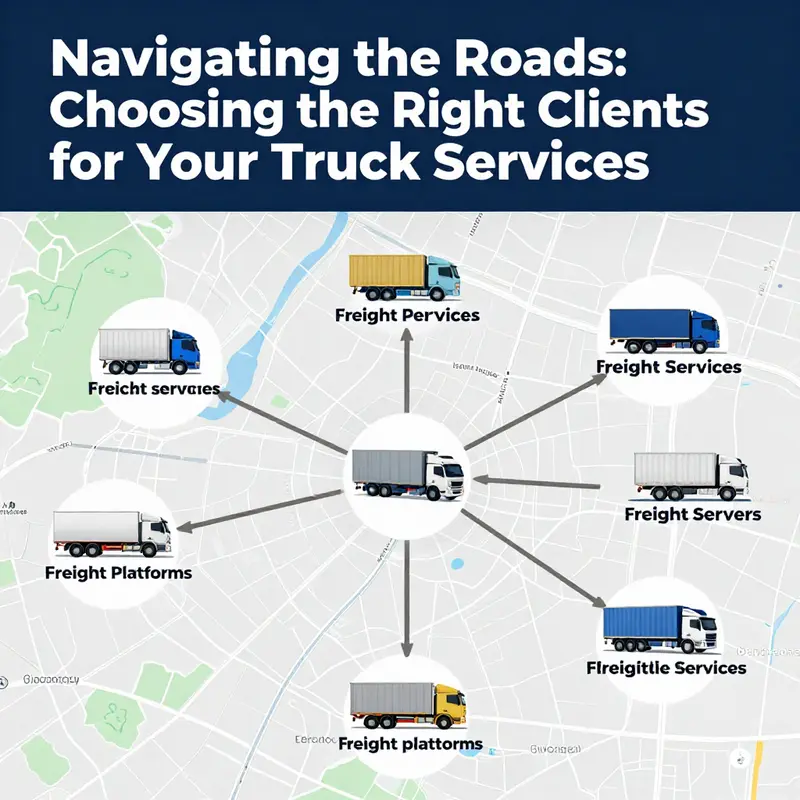
To a truck operator, choosing freight platforms is about aligning with digital ecosystems that connect shippers to carriers and provide visibility from pickup to payment. In 2026, think of platforms as parts of a broader operating fabric that can grow capacity, reduce empty miles, and present a professional service to customers who demand predictability. Start by assessing market reach, load density, and the platform’s technological toolkit, including real-time tracking, transparent pricing, and dispatch capabilities, plus integration points with your back office. Consider service offerings such as insurance options and secure payments, onboarding speed and support quality, and the platform’s cost structure, whether commissions, subscription, or tiered pricing. A phased approach works well: begin with one user-friendly platform to validate fit, then layer in additional networks or a TMS-like interface to consolidate operations. Track metrics like load acceptance rate, dwell times, time to pay, and on-time performance to guide optimization. Stay engaged with platform updates, attend webinars, and revisit your lineup as your business evolves. The right mix of platforms should shorten the cycle from load to payment, improve pricing clarity, and deliver data that helps improve routes and margins while keeping back-office systems in sync.
Final thoughts
Ultimately, successfully offering truck services hinges on knowing your audience and leveraging the right platforms. By understanding who your ideal clients are—whether they’re long-haul drivers, fleet managers, or logistics firms—you can tailor your offerings more effectively. Utilize the recommended freight platforms to reach these clients efficiently and maximize your business potential. Embrace the insights shared in this guide and step confidently into a thriving market filled with opportunities.