
In the world of trucking, where every mile counts and technology drives performance, the experience of service personnel becomes a linchpin. The complexity of today’s trucks—equipped with sophisticated mechanical systems and advanced technologies—demands not just knowledge but also intuition born from years of hands-on experience. Whether you are a long-haul truck driver, a trucking company owner, or an aspiring driver, understanding the nuances behind truck servicing can be the difference between seamless operations and costly downtime. Each of the following chapters delves into key facets that highlight why experience matters profoundly in truck servicing: the technological advancements shaping trucks, the imperative of safety and efficiency, the intricacies of diagnosing complex issues, the necessity of maintaining uptime, and the importance of ongoing training and development.
Experience as a Compass in the Age of Smart Trucks: Why Veteran Servicers Still Matter
The road ahead for servicing trucks is less a straight line and more a winding map guided by experience. As vehicles grow smarter, with increasingly integrated electronics, data networks, and assisted or autonomous capabilities, the role of the technician shifts—but does not disappear. Experience remains a steady compass that helps service teams navigate complexity, interpret subtle signals, and translate raw data into safe, reliable uptime. The most successful shops are those that treat technology as a partner rather than a replacement for judgment, allowing veteran know-how to inform and elevate the capabilities of every new diagnostic tool, every cloud-based alert, and every software update that flows through the vehicle’s mind as eagerly as its mechanical heart beats.
The current landscape of heavy-duty trucking has shifted from a world where expertise meant knowing how to adjust bolts and fill lubricants to one where a technician must also read fault trees in electronic control units, understand how data travels from a wheel-end to a cloud, and anticipate how a sensor’s misreading could ripple through a vehicle’s powertrain, braking, or steering. Modern engines and transmissions are not stand-alone machines; they are nodes in a network that spans the fleet and links to the driver’s dashboard, to maintenance platforms, and to remote diagnostics. The shift is not merely about adding more wires or more software; it is about redefining what counts as a repair. A breakthrough in reliability often comes from a precise interpretation of a fault code, a patient understanding of how software and hardware interact, and a calm decision to verify or re-create a symptom before replacing components. In short, experience teaches technicians to convert a cascade of raw signals into a clear, actionable plan.
One of the most conspicuous changes in this era is the gradual move away from traditional, manual maintenance practices toward sealed, maintenance-free systems. Take wheel ends as an example. Industry talk increasingly centers on long-life, maintenance-free wheel ends that rely on high-performance synthetic lubricants and precision seals. These systems deliver reliability well beyond typical maintenance intervals and dramatically reduce downtime. Yet they do not erase the need for skilled hands and informed minds. In fact, they heighten the responsibility on technicians to install, inspect, and certify complex assemblies correctly. The risk of misassembly or improper sealing remains, not because the system is fragile, but because the consequences of a lapse can be severe in on-road operations. In this context, experience becomes a safeguard against adverse outcomes. It is the seasoned technician who knows how to recognize a torque pattern, a subtle vibration signature, or a seal seating irregularity that a newcomer might overlook. The lesson is not anti-technology; it is grateful realism about how new systems interact with human skill and procedural discipline.
Yet the practical value of experience extends far beyond the mechanics. Modern fleets increasingly rely on data streams—telemetry, fault-code history, maintenance calendars, and predictive alerts. A veteran technician does more than fix a failing sensor or replace a worn component. They interpret trends that emerge across dozens of vehicles and thousands of miles. They distinguish a true signal from a spurious alert and decide when to escalate a diagnostic puzzle to software specialists or system engineers. In this world, diagnosis often hinges on pattern recognition cultivated over years of hands-on work, as well as a thorough understanding of how hardware and software intersect. The result is not just repair quality, but faster root-cause analysis, fewer returns for the same issue, and greater confidence in the repair decision.
The demand for technical fluency in software and electronics is not merely an add-on; it is a requirement that can determine safety and uptime. Subtle faults in electrical and electronic systems may not trigger obvious warning lights but can degrade performance, efficiency, or control. A seasoned technician brings an instinct for where such faults tend to hide—behind a harness, within a control module, or in a calibration that drifts under temperature and load. Their judgment intertwines mechanical understanding with a diagnostic mindset that prioritizes correct sequencing, proper data interpretation, and safe testing practices. This is crucial as fleets push toward more intelligent braking systems, driver-assistance features, and even automated driving capabilities. The more automated the next truck becomes, the more the human eye and mind matter to ensure data integrity, correct calibration, and robust overall system behavior.
The human factor also intersects with workforce strategy in ways that only experience can illuminate. As manufacturers and fleet operators seek greater efficiency through digital tools, the challenge is to deploy skilled labor at the right moments—across a globally dispersed network of technicians who must interpret local conditions and local data. The concept of “the right expertise at the right time” is a guiding principle for modern maintenance operations. It recognizes that veteran insight is most valuable when it is applied decisively to cases that are ambiguous or high risk, while routine tasks are adequately handled by trained technicians or automated standards. In practice, this balance translates into streamlined workflows, better knowledge transfer from experienced mentors to newer technicians, and more consistent adherence to safety and quality protocols. It also underpins the reliability of service-level agreements that fleets increasingly rely on, such as rapid turnaround for minor repairs and timely resolution of major faults, which a well-orchestrated blend of experience and technology can deliver.
The role of experience in shaping autonomous and semi-autonomous operations offers a particularly compelling illustration of this synergy. Autonomous trucking studies emphasize the value of large, diverse training data to improve AI performance. Here, human drivers and technicians contribute in two critical ways. First, experienced drivers provide the rare, edge-case scenarios that enrich datasets and help AI models generalize beyond the most common conditions. Second, seasoned technicians supervise or guide the testing of autonomous functions, ensuring that the AI’s decisions align with real-world constraints and that any anomalies are understood in terms of practical safety and operational risk. This mentorship model evokes traditional training paradigms in which veterans pass down tacit knowledge—an understanding that isn’t always codified in manuals but is essential for safe and reliable operation. The takeaway is clear: experience does not impede progress; it accelerates safe progress by ensuring that innovation respects the envelope of practical, on-the-ground realities.
All of this points to a robust, forward-looking conclusion. The most effective modern truck service operations are not a zero-sum choice between humans and machines. They are a synthesis: decades of practical wisdom guided by the precision and speed of advanced diagnostics. A veteran technician who can read a multimeter, interpret a CAN bus fault, and verify a data-driven anomaly with a physical inspection is better equipped to prevent failures than any one technology alone. The result is a safer road, improved uptime, and lower lifecycle costs for fleets that increasingly measure success in reliability and resilience, not just in parts replaced or miles logged.
For readers who want to deepen their understanding of the human dimension in this transformed maintenance world, ongoing maintenance training remains essential. The discipline that once centered on greasing and standard tune-ups has evolved into a continuous, holistic practice that blends hands-on mastery with digital literacy. A practical, continuously updated training program helps technicians stay fluent in the language of modern trucks—the language of sensors, signals, and software interfaces—without sacrificing the instinctive problem-solving that experience nurtures. This is a timeless truth: experience anchors competence, and competence translates into safer, more efficient service. It also aligns with the growing expectation that maintenance teams are not just fixers but guardians of uptime and safety on increasingly complex roadways.
To read more about how ongoing maintenance training reinforces frontline capabilities, see this discussion on fire-truck maintenance training. It offers insights into how structured, knowledge-rich programs support technicians as they work with advanced systems while preserving the practical wisdom that seasoned professionals bring to every diagnostic challenge. fire-truck maintenance training.
As the industry continues to evolve, the message endures: technology expands what is possible, but experience guides what must be done and how it should be done under real-world pressures. The best service organizations will keep investing in the people who can interpret data without losing sight of the vehicle’s immediate realities on the road. In doing so, they create a durable advantage—one that blends the reliability of maintenance-free technologies with the irreplaceable judgment of skilled technicians. The future of truck servicing, then, is not a clash between human insight and machine precision; it is a cooperative pact between the two, forged by experience and sharpened by innovation. And that is not just good practice; it is the best way to keep fleets rolling, drivers safe, and roads reliable in a world where the speed of progress demands both wisdom and software.
External reference for further context: Maintenance-Free Wheel Ends Are the Future of Commercial Vehicles. https://www.truckline.com/blog/maintenance-free-wheel-ends
The Hand Behind the Wrench: Experience as the Engine of Safe, Efficient Truck Servicing
In the realm of heavy transport, safety and uptime hinge on something more enduring than the latest diagnostic tool or the freshest software update: the experience of the technician who wields the wrench. A well-serviced truck is more than a sum of parts; it is a reliable system backed by judgment, pattern recognition, and a practiced sense for what should be happening versus what is happening at the moment. Experience shapes every layer of service, from the most routine Level 1 check to the most complex system diagnosis, and it translates directly into safer roads, fewer unplanned breakdowns, and a more predictable maintenance window for fleets that can ill afford surprises on the highway. The modern truck, with its advanced diesel systems, after-treatment packages, cloud-connected diagnostics, and evolving electric architectures, still speaks through the hands of a seasoned technician who can listen to the vehicle’s telltale signs and translate them into precise action.
As trucks evolve, the role of experience becomes more nuanced. Today’s vehicles rely on a web of electronic control units, sensors, and networks that oversee everything from fuel injection timing to exhaust after-treatment and braking modulation. An experienced technician does not merely press buttons on a scan tool and replace a failed component. They interpret error codes in the context of what they have seen over thousands of service events. They can correlate a suspicious engine code with a subtle change in fuel pressure, a slight shift in pedal response, or a faint irregularity in exhaust temperature. This is what the industry often calls “the art of diagnosis”—not a single test, but a process of narrowing possibilities through observation, testing, and historical knowledge. In this environment, experience becomes a kind of operating system for the shop floor, guiding decisions when data alone cannot tell the full story.
The balance between human expertise and machine intelligence is not a zero-sum game. Younger technicians enter the field with heavy exposure to digital dashboards, cloud-based monitoring, and rapid troubleshooting workflows. Their proficiency with diagnostics software and real-time data streams is a critical asset in a fleet that expects speed and accuracy. Yet without the seasoned eye to read the data against real-world behavior, even the most sophisticated diagnostics can fail to capture the root cause. An experienced technician knows when to trust the numbers and when to question them. They recognize when a fault code is masking another issue, such as a pressure leak or a worn mechanical component, and they understand the cascading effects those failures can have on transmissions, axles, and braking systems. This combination of data literacy and practical intuition is what keeps repairs from becoming mere fixes and turns them into reliable, durable solutions.
Routine maintenance, on paper, might appear straightforward. Engine oil levels, coolant, brake and clutch fluids, power steering fluid, and lights are checklists that any competent technician can perform. But experience injects depth into these checks. A veteran technician knows to evaluate more than the numbers: the color of the oil, the presence of emulsified fluid, the smell of coolant indicating contamination, or a creeping dampness around hose fittings that signals a creeping failure. They understand how wear patterns on components such as suspension bushings, wheel bearings, and brake pads tell a story about the truck’s typical duty cycle, the routes it has traveled, and the drivers who have piloted it. When they test a transmission or a differential, they listen for unusual gear whines or shifts that could indicate misalignment, worn synchronizers, or degraded seals. The intent behind Level 1 checks is reliability; the seasoned eye pads those checks with a focus on early warning signs, so minor anomalies are addressed before they escalate into major faults and costly downtime.
In more advanced levels of service, the difference between a quick fix and a lasting repair often lies in historical context. Experienced technicians bring with them a mental map of how particular models age under different duty cycles, climates, and maintenance histories. They know which wear patterns are typical for a given model and which signals are outliers that warrant deeper investigation. They can anticipate how a failure in one system might ripple into another—how a coolant leak can impact an electronic control module, or how a brake fluid leak might affect anti-lock braking system performance. This knowledge does not come from surface-level training alone; it accrues through years of hands-on work, diverse repair scenarios, and a willingness to reflect on past jobs to sharpen future decisions. When a technician applies this lens to a Level 2 or Level 3 service, the result is not just compliance with specifications but a restoration of the vehicle’s intended performance envelope. In the clean, measured environment of a service bay, such depth matters; it translates to precise tolerances, properly torqued fasteners, and correctly diagnosed faults that do not resurface within weeks.
The safety implications of experience extend beyond the vehicle to the people around it. A driver benefits from the assurance that maintenance has been executed with a critical eye toward safety margins, not just an expedient fix. Fleet operators gain confidence from technicians who can articulate why a particular maintenance interval is appropriate given mileage and operating conditions. The more chaotic the operating environment—high-speed highway routes, heavy payloads, or frequent stop-and-go city driving—the more valuable the seasoned technician becomes. They know that a small change in a hydraulic system’s behavior, if left unaddressed, can snowball into reduced braking efficiency or a late-stage failure under load. Experience equips technicians to manage risk proactively, aligning maintenance actions with safety requirements and service-level expectations. It is this proactive mindset that makes a well-staffed shop a frontline defense against accidents, cargo loss, and unnecessary downtime.
The practical upshot of experience is uptime. A fleet’s bottom line often hinges on the ability to keep trucks on the road rather than in the shop. The fastest, most reliable repair is not always the one that completes most quickly; it is the one that resists recurrences because root causes were properly identified and addressed. The adage that the difference between a good repair and a great one comes down to the experience behind the wrench captures this reality. An experienced technician does not simply meet the repair spec; they exceed it by ensuring the issue is resolved in a way that safeguards future performance. They also tend to collaborate more effectively with other team members, sharing insights about wear patterns, maintenance scheduling, and diagnostic heuristics. This collaborative culture multiplies the value of experience, turning individual expertise into organizational resilience.
The rhetoric around technology often centers on speed and automation, yet experience remains the indispensable counterweight. As innovation accelerates, the risk that new features introduce hidden complexity grows. The best service teams do not fear complexity; they master it through training, mentorship, and disciplined practice. They adopt new tools without surrendering the critical thinking that experience provides. They recognize when automation is a door to faster service and when it is a barrier that requires human judgment to interpret ambiguous signals. In this light, ongoing training takes on a dual purpose: it updates technicians on new architectures and it reinforces the centuries-tested instincts that come from hands-on work. This is why many successful maintenance programs emphasize not just technical certification, but sustained, practical exposure to a wide range of real-world scenarios. The value of learning by doing—under the mentorship of seasoned professionals—cannot be overstated when the goal is both safety and efficiency.
For readers seeking a broader perspective on the hands-on, maintenance-centric aspect of modern trucking, a dedicated resource discusses why experienced technicians remain essential for contemporary truck maintenance. As you explore the nuances of keeping fleets safe and on the road, consider the depth offered by practical, experience-based perspectives: fire-truck maintenance training importance. fire-truck-maintenance-training-importance
The central takeaway is simple: technology may expand what trucks can do, but it cannot replace the professional judgment that comes from years of direct, focused practice. Experience is the quiet multiplier that elevates routine service into reliable performance, safety, and uptime. It is the difference between responding to a fault and preventing one, between patching a symptom and restoring a system. In a world where a single hour of downtime can ripple through a fleet’s schedule and bottom line, the hand behind the wrench remains the most valuable asset in the servicing ecosystem. The continued investment in experienced technicians—through mentoring, training, and real-world exposure—will keep the industry advancing without compromising the core aim: safe, efficient, and reliable trucking every mile of the way.
External reading: for another expert perspective on the link between experience and modern maintenance outcomes, see Truck Tech Magazine’s discussion on the essential role of experienced technicians in contemporary truck maintenance. https://www.trucktechmag.com/why-experienced-technicians-are-essential-for-modern-truck-maintenance
Reading the Road Beyond the Codes: How Veteran Experience Deepens Truck Diagnostics
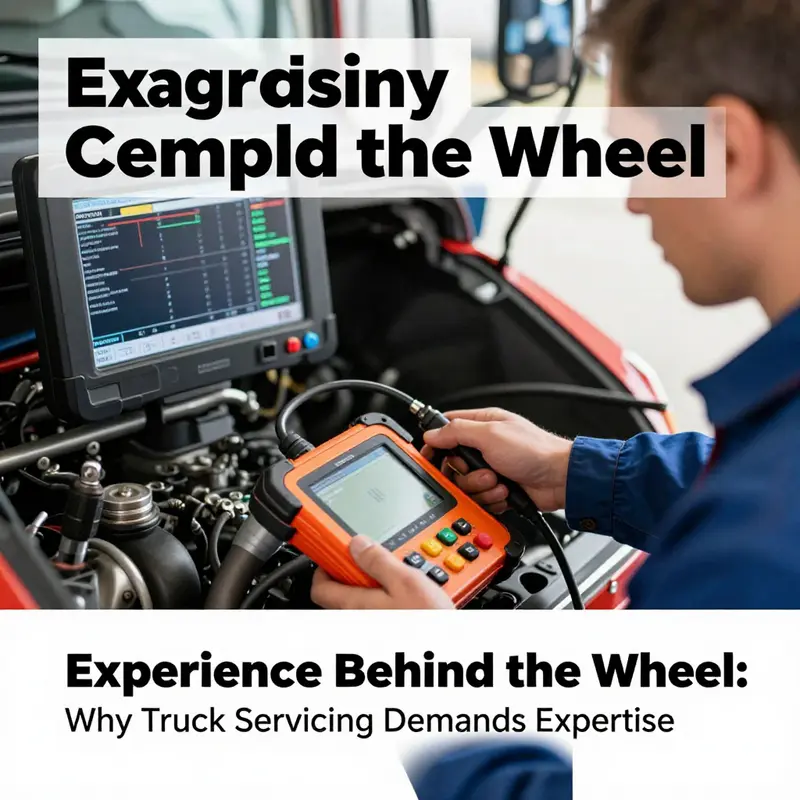
When a modern truck coughs, stalls, or drifts out of balance, the first impulse for many technicians is to turn to the code reader and the fault log. The data that pours from an engine control module can be precise, yet it can also be misleading if read without the broader context of the vehicle’s history. This is where experience sits at the center of the diagnostic process. It is not nostalgia for old‑school repair but a pragmatic, current-strength that allows technicians to translate streams of numbers into meaningful action. Modern trucks are not just more powerful; they are more interconnected. They fuse intricate diesel systems with sophisticated emission controls and increasingly complex powertrain architectures. They also embed software across systems that were once purely mechanical. In that environment, diagnostic tools are essential, but they are tools—capable of pointing toward a fault, sometimes several faults at once. The seasoned technician uses those tools as one voice among many, carefully weighed against years of hands‑on observation and pattern recognition built across thousands of service encounters.
Experience teaches the diagnostician to listen for the quiet, often nonverbal signals that the computer cannot articulate. Fault codes may suggest a direction, but the real map emerges only after correlating these codes with how the truck behaves in the real world. An intermittent stalling issue, for instance, rarely reveals itself in a single diagnostic run. A veteran tech will think through a sequence of possibilities: fuel delivery stability, electrical ground integrity, sensor timing, and the potential influence of after‑treatment management. They remember past cases with similar symptoms and how those trucks behaved under varying loads and temperatures. This historical memory is not mere recollection; it’s a practical, working database that guides quick, accurate decisions.
Crucially, this diagnostic fluency rests on the ability to synthesize multiple information streams into a coherent explanation. The modern truck does not offer a single smoking gun; it presents a constellation of clues. A relay’s chatter, a fluctuating sensor voltage, a rough idle, and a slight exhaust note change could all be interrelated symptoms of a single root cause, or they could be multiple issues that require separate workflows. An experienced technician can distinguish which patterns tend to converge on a common failure mode and which anomalies are likely red herrings. This aptitude comes from countless hours under hoods and inside cab consoles, from observing how systems interact during start‑up, acceleration, and shutdown, and from learning how similar fault codes behave across different makes and models. The diagnostic process thus becomes a disciplined art, not a routine procedure.
Beyond the data, the sensory cues a veteran technician relies on matter just as much. A faint vibration at the transmission tunnel, an oily smell near the exhaust, or a barely perceptible change in engine tone can be the telltale signs that the codes have not yet captured. The human ear and nose, trained over time, pick up subtleties that a machine cannot quantify. Those subtleties guide technicians away from premature conclusions and toward the root cause with greater confidence. They also help in prioritizing repair work. In a world where service‑level agreements demand swift turnarounds—minor repairs under 24 hours or major faults resolved within 72 hours—being able to triage effectively matters as much as technical prowess. Experience makes triage possible, reduces unnecessary disassembly, and keeps the vehicle on the road sooner.
This is not to downplay the value of software and electronic diagnostics. Far from it. Modern diagnostic platforms are powerful, programmable, and capable of streaming data from dozens of subsystems in real time. The challenge is to interpret the data within the context of real‑world behavior. A young technician may excel at data extraction and code interpretation, while a seasoned veteran brings an interpretive framework that converts data into a plausible repair path. The synergy between software insight and experiential reasoning is what makes the most complex repairs efficient and reliable. The ultimate goal is not simply code elimination but asset stability: ensuring that the truck performs as intended across a spectrum of operating conditions and over time. Experience is what helps technicians anticipate issues before they become failures, guiding preventive measures that avert downtime and extend component life.
The value of experience also reveals itself in how technicians approach non‑linear problems. A fault code might point to a sensor, but a root cause could lie elsewhere—perhaps a compromised ground connection that causes erratic sensor readings under load or vibration. A veteran technician will link such seemingly disparate symptoms by tracing signal paths through wiring harnesses, connectors, and control modules. They will test hypotheses with minimal disruption—checking grounds, inspecting for corrosion, reseating connectors, and validating the logic flow with careful observations. This iterative thinking, refined through years of troubleshooting, helps prevent the all‑too‑common trap of chasing a single faulty sensor while neglecting a more systemic issue.
Another dimension of experience is the discipline of avoiding unnecessary disassembly. The quickest, least invasive path to truth often begins with re‑creating fault conditions, measuring relevant parameters, and narrowing the field through educated deduction. When the fault is intermittent, as many are, professionals rely on experience to design test sequences that provoke the symptom under controlled conditions. They know which tests yield the highest diagnostic value with the least risk of collateral damage. This efficiency translates into shorter diagnostic cycles, lower shop labor costs, and, most importantly, faster vehicle uptime for fleets that depend on dependable service.
The implications of experience extend into safety and reliability. An experienced team not only fixes problems but anticipates them. They implement maintenance plans that respect the vehicle’s history, track wear patterns, and adjust service intervals to align with actual usage. They understand that even small, overlooked issues can cascade into bigger failures if left unaddressed. As maintenance practices evolve with technology, experience remains the bedrock on which safety and uptime stand. It is the guardrail that ensures a truck’s evolving systems stay synchronized with the fleet’s demands and with the road’s realities.
To reinforce the point, consider how ongoing training complements experience. While hands‑on familiarity with diverse trucks builds intuition, formal training helps codify best practices, expand diagnostic vocabularies, and expose technicians to new architectures before they encounter them in the field. The combination of experiential wisdom and structured learning creates teams that can navigate both familiar and novel configurations with confidence. For professionals seeking to strengthen this capability, dedicated training resources and maintenance programs are invaluable. See guidance on industry standards and best practices at https://www.trucking.org/resources/maintenance-best-practices for a broader context.
Experience as the Engine of Uptime: Why Veteran Service Matters in Modern Truck Maintenance
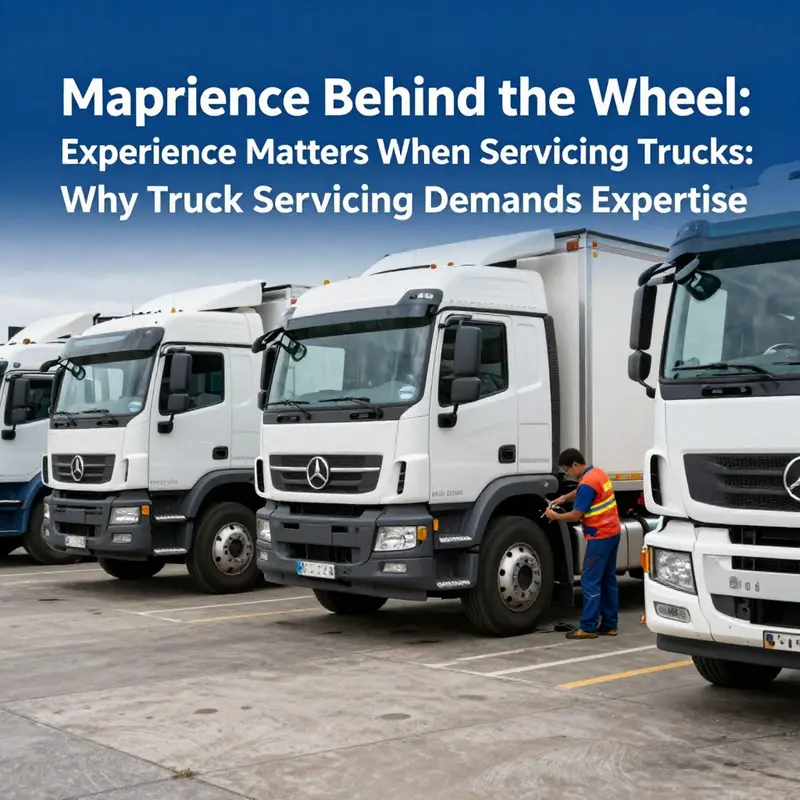
In the evolving world of heavy trucking, uptime is more than a metric; it is the organization’s core operating rhythm. A fleet’s ability to keep tractors, trailers, and support equipment on the road translates directly into revenue, reliability, and trust with customers. The modern truck has earned this central role not through a single breakthrough, but through a rapid integration of sophisticated diesel systems, electrified propulsion options, and increasingly complex electronic control architectures. These changes push maintenance beyond the realm of routine wrenching into a data-rich, diagnostic, and software-driven discipline. And yet, technology, for all its power, reveals its limits only when it meets the wisdom and judgment that come from years spent in the service bay, on the road, and under the hood in a variety of locations and weather conditions. In this context, experience becomes the quiet, persistent engine behind uptime, translating a mountain of data into a reliable, actionable path to keeping trucks moving and profits steady.
Close to the surface, the shift toward smarter diagnostics and connected fleets is visible in every shop pull. Real-time telemetry, cloud-based monitoring, and remote diagnostic capabilities give service teams a new set of tools for spotting anomalies before they become failures. A leading engine maker has framed uptime as a holistic capability: not merely reducing failures, but maximizing vehicle availability through quality parts, data-driven insights, and expert, hands-on service. This framing places the technician at the center of uptime, turning data streams into practical decisions in the bay and on the scheduling board. The table stakes have changed. It is no longer enough to know how a component works; one must know how it behaves across loads, routes, climates, and wear patterns, and then translate that knowledge into precise maintenance timing and swift repairs.
Experience supplants guesswork in a way that is particularly visible when the technology grows more intricate. Modern trucks test a technician’s ability to interpret diagnostic trouble codes, correlate them with running history, and assess whether a fault is a fleeting glitch or a sign of a deeper issue. Seasoned technicians accumulate mental models of failure modes through countless days in the shop and countless miles on the road. They recognize subtle warning signs that may appear only under certain loads or specific temperatures. They understand the interplay between a faulty sensor, a failing actuator, and a software calibration, and they know when to recheck after a reset or when to replace a part rather than chase a phantom fault. This intuitive part of expertise—pattern recognition built from repeated exposure to diverse failure scenarios—often shortens the time between symptom and solution, and it protects uptime when new software releases or hardware revisions arrive.
The impact of experience on downtime is not merely anecdotal. Industry observations suggest that a well-trained technician can reduce mean time to repair (MTTR) by as much as forty percent. Those gains come from more than faster wrench-turning. They arise from a technician’s ability to quickly triage the issue, identify the most likely root causes, and sequence the repair steps in a way that minimizes back-and-forth between subsystems. In a world where fleets rely on tight maintenance SLAs—minor repairs under 24 hours and major faults resolved within 72 hours, for example—every minute saved in diagnosis and repair becomes a meaningful percentage of uptime. Experience transforms that time into a reliable range rather than an unpredictable band.
Yet experience does not exist in a vacuum. It flourishes when technicians can blend hands-on dexterity with the analytical power of connected diagnostics. The best service teams treat data not as a replacement for judgment but as an amplification of it. They view telemetry as a map, not a compass. Real-time data can show an engine’s temperature profile under a heavy load, a battery’s state of health during a high-traction climb, or a hydraulic system’s response to steering input. But data without context can mislead. A veteran technician understands how environment, fuel quality, maintenance history, and duty cycle influence what the numbers mean in a given truck. They know which data points deserve immediate action and which should be monitored for a short window before a decision is made. That contextual understanding—built by years of hands-on work—makes the difference between a quick fix and a repeat visit.
The relationship between technology and experience also reframes risk management and safety. Drivers with extensive on-road experience are adept at recognizing the practical realities that influence a vehicle’s performance, such as load distribution, road grade, and traffic conditions. The same kind of tacit knowledge sits with the technician who maintains the fleet. A seasoned mechanic can anticipate a cascade of potential failures after a near-miss event or a harsh operating condition. They know which components are likely to degrade under vibration, which sensor readings tend to drift with wear, and which software calibrations might drift out of tolerance after a component replacement. This proactive posture reduces the likelihood of a breakdown at the worst possible moment, which is the essence of safer, more reliable service. It also aligns with the broader service objectives of the fleet operation, which aim to minimize the risk of roadside incidents and the associated safety costs.
The central tension in modern maintenance is not between mechanical skill and software savvy but between speed and depth. High-tech diagnostics can illuminate a problem quickly, but a hurried diagnosis can miss a subtle pattern that only years of practice reveal. A junior technician may spot an obvious fault and replace the component, only to discover later that the real issue was a sensor calibration drift or an intermittent wiring fault. Experienced practitioners resist that trap by balancing immediate symptom relief with a thorough assessment that considers how the truck has operated over weeks and months. This discipline makes maintenance more deliberate and targeted, which matters when fleets operate under strict uptime commitments and cost constraints.
Training programs are increasingly designed to foster this balance. They emphasize not only the mechanics of parts and the steps of a repair but also the critical thinking that underpins diagnostic reasoning. Mentorship and hands-on practice with a broad range of equipment help less-experienced technicians build the mental models that seasoned veterans rely on when faced with new architectures or evolving protocols. The idea is not to replace experience with training but to use training to accelerate the path to practical wisdom and to broaden the pool of people who can contribute meaningfully to uptime. When a shop leverages experienced technicians to mentor newer staff, the entire team ascends in its ability to interpret data, manage time, and communicate with fleet operators about the what, why, and when of each repair. The result is not only faster repairs but also fewer misdiagnoses and a steadier maintenance cadence that reduces unplanned downtime over the lifecycle of the equipment.
From the operator’s perspective, experience in the service bay translates into predictability and trust. Fleet managers know that a shop staffed with seasoned technicians tends to interpret alarms with a ballast of context, schedule preventive maintenance with confidence, and respond to unexpected faults with a plan that minimizes disruption. In contrast, a lack of experience can mean over-reliance on software alone, which, if misinterpreted, can lead to unnecessary repairs or missed faults that later become major failures. The most effective uptime programs treat experience as a strategic asset. They invest in recruiting, developing, and retaining skilled technicians, and they recognize that the value of experience compounds over time as teams build a library of real-world patterns, repair templates, and escalation playbooks that map how to keep trucks moving under a variety of conditions.
For practitioners seeking practical guidance on applying uptime-focused maintenance in a world of rapid technology progression, a well-timed resource on fire apparatus uptime offers a useful synthesis. It emphasizes proactive support, the importance of consistent service quality, and the need for hands-on expertise to translate data into reliable action. See unlocked-fire-apparatus-uptime-essential-product-support-secrets for a concise deepen-your-practice reference that aligns with the broader principle that experience remains the crucial differentiator in maintenance leadership. unlocking-fire-apparatus-uptime-essential-product-support-secrets
Ultimately, technology enhances what technicians can do, but it does not replace the human capacity to judge, adapt, and anticipate. Experience is the sustaining force that keeps uptime realistic under pressure: it shapes how teams interpret data, how they prioritize repairs, and how they communicate with operators about risk and reliability. It turns a sequence of diagnostic readouts into a coherent maintenance plan with clear, time-bound outcomes. As the service landscape grows more connected and complex, the most resilient fleets will be those that recognize and cultivate this virtue in their people—the seasoned hands who can translate sophisticated systems into steady, predictable operation day after day.
External resource: https://www.fleetequipment.com/why-experience-matters-in-truck-maintenance
Experience as the Hidden Gear: Why Veteran Insight Drives Safer, Faster Truck Servicing
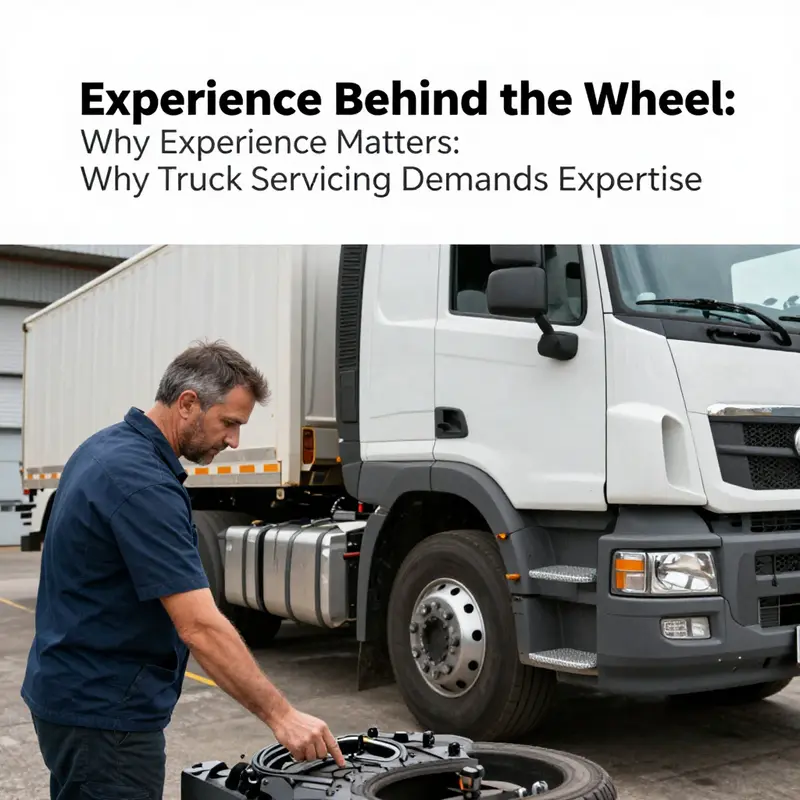
Experience is the quiet fuel in a truck shop. As trucks grow more complex with smarter engines, connected diagnostics, and software-driven controls, servicing them requires more than a steady hand. Training remains essential, but experience—earned through years of hands-on work—bridges the gap between theory and reliable, real-world performance. In an industry where precision matters and downtime bites, the difference between a good repair and a great one often rests with the tech who has learned to read the machine in front of them as a living system rather than a collection of separate parts.
Experienced technicians can quickly distinguish subtle clues that a newer hand might overlook. They hear unusual engine notes, feel unexpected vibrations, or notice anomalies in steering or braking feedback. These signs point to a chain of potential causes, ranging from tire imbalance to a mounting fault in the suspension or a developing issue within the engine management loop. The ability to move from symptom to likely causes rapidly shortens downtime and reduces the risk of costly, unnecessary repairs. It is not just about what is broken, but about how the system behaves under load, over time, and across varying road conditions. In practical terms, this pattern recognition translates into faster triage and more targeted interventions, which keeps fleets on the road and customers confident in the repair before them.
Younger technicians may lean heavily on diagnostics software and step-by-step tests. While those tools are invaluable, they can also create dead-end loops if the technician cannot interpret data in the context of vehicle history and usage. Experience teaches which data trends matter, which alarms are meaningful, and when a readout is a false positive or a symptom of a bigger system interaction. A dashboard light can be a single fault or a cascade of related issues across sensors, control modules, and wiring harnesses. An experienced hand asks the right questions, cross-checks historical patterns, and knows when to push beyond a single fault code to uncover the root cause. In practice, this reduces cycles of trial and error and keeps the service lane moving in line with customer expectations.
Once a technician faces complex procedures, such as engine disassembly and reassembly, experience becomes even more critical. Precision is essential to avoid secondary damage. Knowing the tolerances, typical wear patterns, and the correct sequence helps protect components and expedite the repair. A seasoned hand can anticipate tight spots, align interfaces, and verify clearances with confidence. The risk is not merely replacing a worn part but ensuring that the repair preserves the integrity of the entire system. In such operations, decades of hands-on exposure yield a mental map of how components interact, where misalignment or debris can cause subtle failures, and how to verify success beyond the last diagnostic readout.
Experience also informs decisions about parts and preventive care. Veteran technicians know which replacement parts perform well in specific service environments, and they tailor maintenance advice to a truck’s usage, mileage, and duty cycle. This kind of customization extends the life of the vehicle and maintains performance long after the repair is completed. They understand that a heavy-duty work truck running in rough terrain, in hot climates, or with high-mileage remanufactured units presents different wear patterns than a highway cruiser with lighter duty. The insights gained from practical exposure empower service personnel to select high-quality parts, plan preventive tasks, and communicate realistic maintenance windows to fleet operators. In this sense, experience becomes a long-term investment in uptime rather than a short-term fix.
The broader lesson is that practical knowledge cannot be fully replicated in a classroom or a simulator. Real-world service blends tacit knowledge—the kind you only gain by seeing hundreds of similar cases—with formal training. The result is a technician who not only fixes a problem but understands why it happened and how to prevent it from recurring. This integration is particularly valuable in trucks, where the margin for error can translate into safety risks for drivers and passengers, or into unplanned downtime for essential services. In other words, experience turns maintenance from a set of isolated repairs into a proactive strategy that preserves what matters most: uptime, reliability, and safety on the road.
In the context of fleet operations, experience translates into uptime and safety. Technicians who can recognize patterns over time reduce unplanned downtime, which directly affects delivery schedules and operating costs. The reliability of a fleet depends on this human factor as much as on any piece of equipment or software. Some fleets set stringent service SLAs—minor repairs under 24 hours and major faults resolved within 72 hours—and rely on seasoned teams to meet them, much as notable operators have done in heavy-truck networks. Experienced teams are better equipped to prioritize tasks, allocate resources, and coordinate with drivers and fleet managers to minimize disruption. The ability to anticipate what will go wrong next—based on years of observing similar vehicles in similar service environments—offers a kind of predictive robustness that no single diagnostic tool can provide.
Formal training and on-the-job development should work hand in hand. While courses lay the groundwork for diagnosing standard faults and understanding new architectures, it is the seasoned professional who knows when to trust a suspect symptom and when to pursue a broader diagnostic path. For teams building this blend, ongoing mentorship, cross-training, and opportunities to tackle progressively challenging tasks are essential. As noted in fire-truck-maintenance-training-importance, structured programs set expectations and create a baseline of competency, but experience fills the gaps that theory alone cannot reach. This synergy is especially important as trucks increasingly integrate cloud-based telemetry, over-the-air software updates, and real-time diagnostic dashboards that can overwhelm someone without the contextual judgment that experience provides.
Beyond the mechanics, experience shapes how a technician communicates with customers and stakeholders. A veteran tech can translate complex data into actionable plans. They can explain why a particular failure occurred and what steps will prevent a recurrence, all while managing the driver’s expectations and the fleet’s maintenance budget. This communication is not optional; it is part of delivering reliable service. It also positions the shop as a trusted partner in uptime rather than a temporary fixer. When crews can forecast potential issues and propose concrete maintenance windows that fit a driver’s schedule, the relationship with the operator strengthens, and the maintenance plan becomes something the fleet relies on rather than negotiates around.
The interplay between experience and technology is not a zero-sum game. On the contrary, it is a virtuous loop in which tools extend the reach of seasoned technicians, and experience channels the use of those tools toward meaningful outcomes. Diagnostic software can reveal a fault tree, but interpretation—guided by years of hands-on engagement—tells you which branch to follow first. Likewise, a well-designed training program lays the foundation for systematic thinking, but the most important lessons are learned at the bench, under the hood, and on the road when a truck must be kept moving under challenging conditions. In that sense, experience is the real accelerator that ensures tech teams do not just respond to faults but anticipate and prevent them.
The chapter of experience in truck servicing thus reads as a narrative of balance. It honors the discipline of training while affirming the indispensable value of judgment built through exposure to diverse vehicles, configurations, and operating environments. It recognizes that modern trucks, with their digital ecosystems and integrated control modules, demand more than mechanical skill alone. They require a craftsman’s intuition—the knack for hearing when a rough idle is more than a misfire, or understanding when a sensor reading is an artifact of a temporary fault rather than a system-wide problem. In this sense, experience is not a retreat from technology; it is the mature, disciplined application of technology to real-world problems, delivered with speed, precision, and a steady eye on safety.
External resource: https://www.maintenanceandrepair.com/
Final thoughts
In conclusion, the value of experience in servicing trucks cannot be overstated. As the industry faces rapid technological advancements, ensuring that skilled technicians are at the helm is vital for safe, efficient, and reliable operations. From diagnosing complex issues to maintaining uptime, their knowledge transforms challenges into opportunities. Companies and drivers alike must recognize that investing in experienced personnel is not just about repairs; it’s about cultivating the backbone of the trucking industry. Armed with the insights shared, all stakeholders are encouraged to consider how to prioritize experience in their strategic operations.