
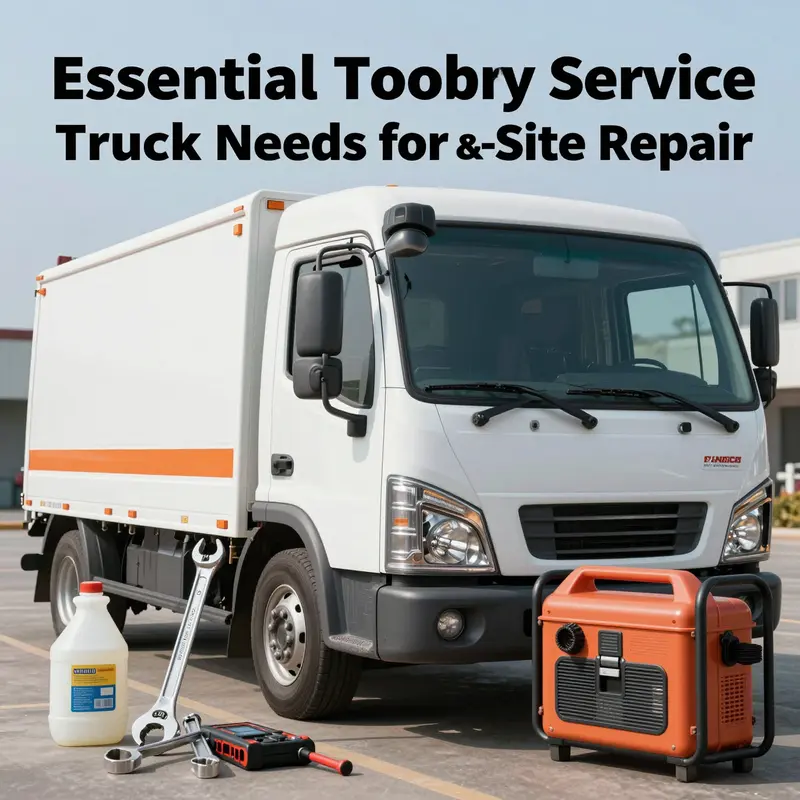
For truck drivers, fleet managers, and maintenance specialists, having a fully equipped service truck is not just advantageous—it’s essential. Whether you’re responding to a breakdown in the middle of nowhere or performing routine maintenance for a fleet, the right tools can make all the difference. In the chapters ahead, we’ll dive deep into the core elements that transform any service truck into a mobile workshop. From essential repair tools and advanced diagnostic equipment to fluid systems and the necessity of power and lighting tools, you’ll gain a comprehensive understanding of what it takes to keep those trucks running smoothly on the road.
Field-Grade Mastery: Essential Core Repair Tools for Service Trucks
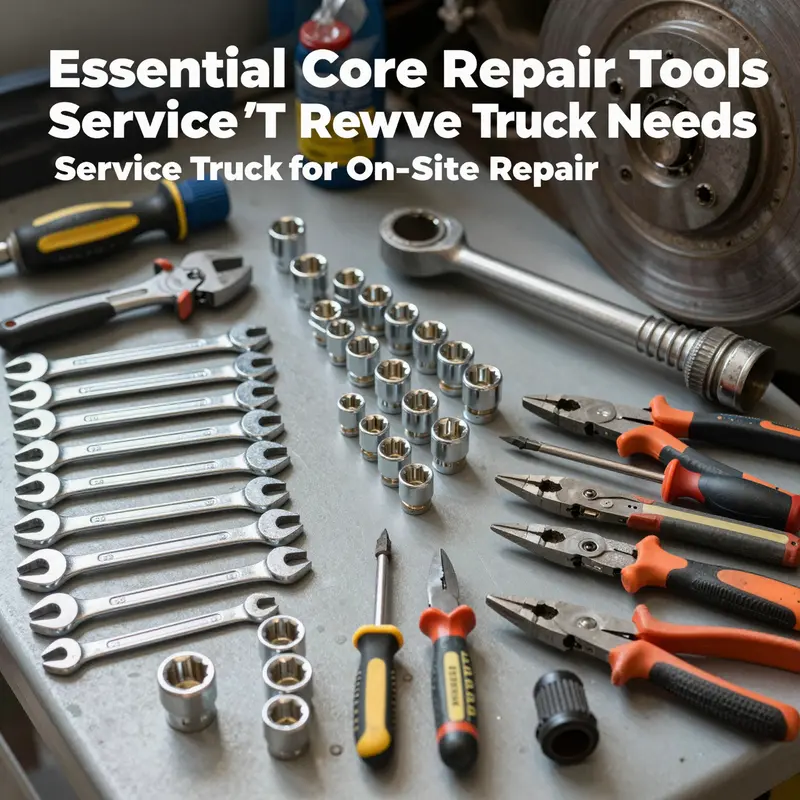
A service truck is more than a conveyance; it is a compact, purpose-built workshop that travels to the fault, not the fault traveling to the shop. In remote job sites, industrial yards, and crowded urban lanes, the success of a field operation depends on one thing above all else: the reliability and readiness of the tool kit carried on board. When the engine coughs, the brake line bleeds, or the suspension shudders under load, technicians reach for tools that deliver consistent, predictable results under conditions that test both human judgment and material endurance. The core repair tools of a service truck are the backbone of on-site maintenance. They must be robust enough to withstand daily handling in dust and vibration, precise enough to respect manufacturer specifications, and organized enough to allow rapid, confident action in the middle of a working day. In essence, these tools translate field work into durable uptime, a value that every fleet manager and technician understands instinctively. The most fundamental tools begin with heavy-duty wrench sets, built to handle large fasteners that anchor engines, axles, and driveline components. In the context of service trucks, these wrenches are not casual add-ons; they are reliable workhorses that tolerate high torque, resist wear from repeated use, and retain accurate sizing even after mid life. When a bolt resists, the tool should offer steady progress rather than sudden, dangerous slips. This is where the power of torque multipliers and impact sockets comes into play. A torque multiplier converts modest input force into towering output torque, enabling the technician to manage stubborn fasteners without risking tool breakage or user injury. Pairing that capability with rugged impact sockets ensures that the interface between driver and fastener remains solid, even as bolts endure heat, corrosion, and misalignment during service. Yet power without precision can invite risk. Digital torque wrenches bring repeatable accuracy to tightening routines, recording exact torque values and enabling traceable maintenance. The digital readout helps technicians adhere to tight spec sheets, protect critical joints, and maintain engine and drivetrain integrity. In field work, where a slip of care can ripple into excessive wear or catastrophic failure, the ability to repeat a target torque across multiple fasteners is not a luxury but a safety requirement. The chain of tools that follows expands the diagnostic and measurement capacity of the on-site workshop, yet it remains firmly within the realm of core repair. Diesel compression testers, rated up to a thousand PSI, provide a practical gauge of cylinder health when a vehicle runs rough or loses power at altitude or during heavy loads. They let a technician quickly identify compression loss due to worn rings, leaky valves, or compromised head gaskets without returning to the shop. Oil pressure diagnostic gauges complement this by offering a straightforward reading of the lubrication system during various operating states. A sudden drop in oil pressure or an inconsistent reading can reveal a problem with oil pump performance, clogged passages, or improper clearances, guiding the technician toward a targeted fix rather than a long, uncertain inventory search. When an engine is opened for overhaul, precision metalworking tools such as cylinder hones enter the scene. A smooth bore created during honing is critical for sealing effectiveness when new piston rings meet the cylinder walls. In field workshops, cylinder honing is a careful, measured operation that demands patience and consistent technique; the correct finish on the bore translates directly into longer engine life and more reliable maintenance intervals on the road. The drivetrain and axle realm introduces its own set of specialized instruments, and the core toolkit must accommodate them with equal seriousness. Differential bearing pullers and installers are indispensable for servicing rear axles, where careful disassembly and reassembly prevent misalignment and noise that can plague a fleet for miles. Pinion depth setting tools ensure that gears mesh with the right alignment, a detail that becomes invisible until a harsh vibration or unusual wear appears. Ring gear micrometers enable precise measurement of gear components, while dial indicators provide the means to assess gear backlash, a parameter that governs noise, vibration, and the longevity of the gear train. The presence of precise measurement tools is not a luxury; it is a necessity that transforms guesswork into disciplined maintenance, particularly in heavy-duty contexts where components endure extreme loads and endure misalignments caused by rough terrain or repetitive starts and stops. Even beyond internal engine and driveline work, the body and frame of a vehicle demand a subset of core tools that keep metal fresh and joints sealed. Gasket scrapers and surface prep tools are tasked with cleaning mating surfaces before new gaskets and seals are introduced. Their role may seem modest in the moment, but a clean, true surface is the difference between a leak and a robust seal that holds for thousands of miles. Hand jacks and hydraulic lifts round out the essentials by providing safe, stable positioning of a vehicle during maintenance tasks. In field conditions, where gravity and instability can complicate even simple repairs, dependable lifting and jacking systems reduce risk, protect the technician, and accelerate work. A well-rounded core toolkit also relies on durable, compartmentalized storage within the service truck body. The chassis and body of the vehicle are designed to resist impact and corrosion while preserving tool integrity. Reinforced steel housings with modular shelving keep items segregated yet accessible, enabling a technician to locate the exact tool in seconds rather than minutes. Labeled compartments and color-coded drawers improve speed and reduce the chance of cross-contamination between fluids, oils, and mechanical components. An organized layout translates directly into uptime; it minimizes the time spent wandering through a cluttered space while a client awaits service. In practice, the most effective core tool configuration blends sturdy hardware with practical workflow design. Wrenches, sockets, and torque devices belong in a high-tidiness, easily accessible corner; gauges and measuring devices sit in a separate zone guarded from oil splashes and grit; and the delicate, high-sensitivity instruments like dial indicators and micrometers are stored in shock-absorbing holders that protect calibration. This structured diversity is not merely about convenience; it is about reliability under pressure. Technicians who perform on-site maintenance across varied environments face temperature swings, dust, and vibrations that can degrade precision instruments. The robust, compartmentalized casework in the service truck is a shield against such degradation, ensuring that the tools remain accurate and accessible when the world around them moves at a hundred miles per hour. While these core tools are foundational, their true value is realized when they are part of a broader ecosystem that includes specialized kits tailored for particular vehicle types or operating conditions. For example, a heavy-load truck or a regional vehicle operating in mountainous terrain may require pre-packed service kits that bundle engine oils, filters, radiator hoses, coolants, thermostats, water pumps, and seals in field-ready configurations. Such kits do more than save time; they optimize the sequence of maintenance tasks and reduce the likelihood of missing essential components during a field repair. In this sense, the core tools and the specialized kits function as a two-tiered system: a resilient, generalist toolkit that covers the broad spectrum of field repairs, and targeted, vehicle-specific packs that accelerate the most common service procedures for particular fleets or missions. The importance of this approach is reinforced by real-world field performance. For technicians operating in remote or high-demand environments, the equipment on the truck must withstand not only mechanical stress but also the crawl through rough terrain and the quick turnarounds demanded by tight schedules. The durability and organization of the tool storage directly influence the time spent on site and the quality of the repair delivered. A well-kept toolkit reduces the risk of rework, which is particularly costly in field operations where follow-up visits may be logistically complex or where the customer relies on continuous uptime to keep production lines running. The concept of durability extends beyond metal and fasteners into the way tools are attached and carried. Retention methods such as latch systems, magnetic strips, and foam inserts contribute to rapid, error-free access. Shock absorption in the tool boxes and drawers protects delicate measurement devices from calibration drift. Even the choice of materials matters. Hardened steel components, corrosion-resistant finishes, and wear-resistant coatings help tools survive months of field use in climates that range from searing heat to biting cold. A disciplined approach to maintenance is equally critical. Tools must be inspected regularly for wear, misalignment, and calibration drift, and any item that fails to meet performance standards should be retired or recalibrated promptly. The integration of diagnostic and measurement instruments with the core set helps technicians confirm the health of the vehicle in real time. While this chapter centers on core repair tools, it is important to acknowledge that onboard diagnostic equipment and fluid dispensing systems also play a supporting role by enabling quick, on-site assessments and replenishments. The most effective practice is to view the service truck as a living workshop that responds to each task with the precise tool that makes the job faster, safer, and longer-lasting. In the field, an intimate familiarity with the layout of the toolbox and a calm, methodical approach to repairs translates into fewer mistakes and more consistent outcomes. The emphasis on precision at every turn—from the angle and fit of a torque wrench to the surface finish achieved by a cylinder hone—reflects a broader philosophy: empower the technician with reliable tools, structured storage, and a workflow that minimizes doubt and maximizes confidence. As fleets scale, this philosophy becomes a competitive differentiator. A well-equipped service truck reduces downtime and extends the life of expensive assets, reducing total cost of ownership for the fleet while preserving safety for the crew and reliability for customers. Practically, this means that decision-makers should prioritize a core toolkit that is both comprehensive and modular. Heavy-duty wrenches, torque multipliers, and digital torque wrenches should be complemented by precision measurement tools and specialized installation and removal devices for driveline work. Detailing and labeling, protective storage, and proactive maintenance schedules should accompany every kit. When a technician reaches for a tool, they should feel the confidence that comes from knowing the instrument is up to the task, calibrated, and protected from the harsh field environment. For those seeking to connect these principles to broader industry conversations, the concept of field readiness is reflected in the attention given to maintenance training, spare parts planning, and after-sales support. The most successful fleets treat the core repair tools as a living system—constantly reviewed, updated, and aligned with the specific challenges of the operation. The practical implications of this approach are clear: faster repairs, fewer callbacks, and a higher degree of predictability in service delivery. The goal is simple but ambitious: to equip technicians with a portable workshop that performs as reliably as a fixed shop, yet remains nimble enough to adapt to the variable demands of the road. In that light, the core repair tools discussed here are not merely a list. They are a philosophy of field workmanship that underpins every successful on-site repair, every safe lift, and every sealed interface that keeps a heavy vehicle on the move. For readers who want to explore related operating concepts in more depth, the field examples and practical case studies across rugged environments illustrate how these tools perform under real-world pressure and how the right storage and workflow design can make the difference between a triumphant fix and a missed window. Heavy-duty field operations often rely on a blend of proven hardware and disciplined practice, a combination that elevates a service truck from a mobile toolbox to a trusted partner in uptime. To see how these principles apply in a broader context, one might explore cases of rugged field work such as heavy-duty rescue operations in demanding locales. Heavy-Duty Rescue Operations in Prince Georges County demonstrates how durable tools and robust on-board systems enable responders to perform critical maintenance tasks in challenging conditions. In tandem with such insights, external references to industry guides on heavy truck repair tools provide a consolidated perspective on best practices and evolving standards. For a broader understanding, consult the detailed guidance offered in the resource from Maintenance Engineer, which aggregates core categories, applications, and the rationale behind specialized tool development for heavy trucks. Heavy Truck Repair Tools.
Mastering On-Site Diagnostics: How Advanced Diagnostic Equipment Elevates Mobile Service Trucks
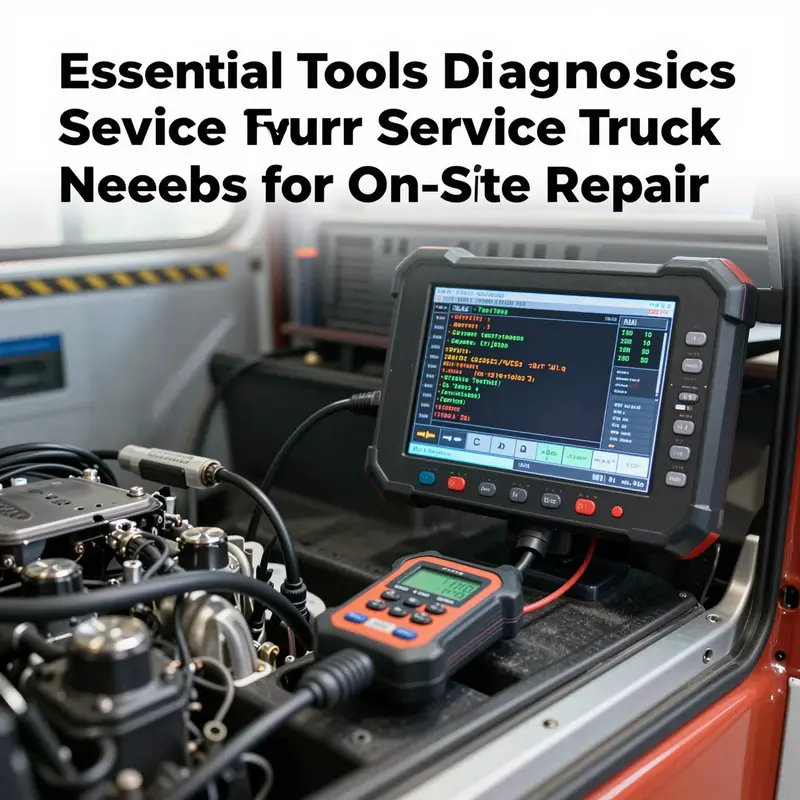
On site diagnostics have moved from a niche capability to a core competency for any mobile service operation. In many fleets, uptime is the currency that keeps vehicles moving and customers served, and the ability to pinpoint faults quickly in the field translates directly into reduced downtime and lower operating costs. Advanced diagnostic equipment turns a service truck into a portable data center that talks to every major vehicle system, not just the engine. It reads live data, logs it for trend analysis, and guides technicians through repair procedures with the same clarity that a shop computer provides. For modern service vehicles that roam through diverse environments, from congested city streets to rugged rural workplaces, the diagnostic suite must handle a spectrum of architectures and evolving control strategies. It is not enough to pull a single fault code; the tool must present a coherent map of related faults, current sensor readings, and the probable sequence of events leading to the failure. The aim is to convert electronic noise into actionable steps, while ensuring compliance with emissions and safety standards that govern contemporary powertrains and ancillary systems. The diagnostic framework thus becomes the nerve center of the mobile workshop, integrating engine management, transmission control, braking systems, and chassis electronics into a unified workflow.
The evolution of diagnostic tools in the mobile sector mirrors broader shifts in automotive technology. No longer is a single code reader sufficient for field work. Today’s devices are multi-brand platforms that speak a common language across a wide array of vehicle makes and models. They are built to handle Euro 5 and Euro 6 engine architectures, which often feature complex fuel delivery gestures, advanced exhaust aftertreatment, and intricate electronic control networks. These platforms provide more than code retrieval. They offer live data streams from multiple control units, real-time measurements of fuel pressure, injector timing events, and exhaust gas recirculation behavior. They also support ECU calibration and, when licensed, software updates that ensure the machine can interface with the latest service procedures. In short, an advanced diagnostic tool for a service truck must be capable of both precise fault isolation and proactive maintenance planning, empowering technicians to anticipate wear before it becomes a roadside emergency.
A central consideration in selecting diagnostic equipment is the breadth of coverage. Modern fleets run vehicles from different manufacturers and across varied duty cycles, including long-haul tractors, regional delivery trucks, and rugged off-road machines. The best solutions provide what could be described as a universal translator for vehicle electronics. They connect to onboard networks via diverse interfaces, from wired adapters to wireless tablets, and they can decode fault codes across engine, transmission, ABS, traction, air suspension, and body control modules. This multi-system visibility is crucial when faults manifest as a blend of symptoms, such as a drop in fuel economy accompanied by abnormal transmission shifting or irregular ABS activity. In practice, technicians rely on the diagnostic platform to cross-reference sensor data, validate fault trees, and confirm whether a symptom is a single-point failure or a cascade triggered by another subsystem. The upshot is a more accurate diagnosis, fewer unnecessary part replacements, and faster restoration of service.
The human element remains central even as machines become more capable. A proficient technician uses diagnostic data not as an oracle but as a structured guide. The best tools present clear fault trees, recommended repair sequences, and software-based procedures that align with current service literature. They also encourage disciplined workflows, starting with secure connection to the vehicle, followed by verification of fault codes against real-time data, and then the stepwise execution of diagnostic and repair steps. The value of guidance systems grows when they are augmented with offline capabilities for areas with limited connectivity. In such contexts, technicians can download essential procedures, store them locally, and consult them during a field repair without sacrificing accuracy. This balance between powerful cloud-enabled features and robust offline availability helps sustain consistent performance, whether the truck is in a corporate yard or at a remote job site.
Preserving data integrity and security is another pillar of effective mobile diagnostics. Vehicle networks often contain sensitive control logic, and some operations require authenticated access to software and calibration files. The diagnostic workflow must therefore include secure login, license validation, and traceable change logs. For fleet operators, the ability to capture and export diagnostic data into a centralized maintenance system is a strategic advantage. It enables fleet-wide visibility into common failure modes, parts replacement rates, and the effectiveness of preventive maintenance programs. When data from the field is aggregated into a fleet analytics platform, patterns emerge that inform procurement decisions, spare parts stocking, and service scheduling. The best diagnostic ecosystems not only help fix a vehicle but also contribute to a longer, more predictable lifecycle for the entire fleet.
In practice, there are two broad categories of diagnostic solutions that service technicians employ on mobile workstations. The first consists of diagnostic tablets that provide a full-vehicle reach with multi-brand compatibility. These tablets offer a sealed, rugged design suitable for harsh field conditions, a processor capable of real-time data processing, and a user interface designed for rapid navigation through complex diagnostic trees. They typically include a mix of offline libraries and cloud updates, enabling access to the latest diagnostic procedures while remaining usable when connectivity is intermittent. The second category comprises portable handheld scanners that emphasize speed and simplicity. These devices excel at quick DTC reads, dashboard warning resets, and on-the-spot parameter checks. While they may not offer the exhaustive coverage of a tablet solution, their compact form factor, long battery life, and straightforward operation make them indispensable for routine maintenance checks and roadside triage. The most effective field setups blend both approaches, allowing a technician to perform a rapid check with a handheld unit and then switch to a tablet for in-depth analysis and programming when needed.
Calibrating and reprogramming modules in the field is a nuanced capability that distinguishes truly capable diagnostic systems from basic code readers. Many modern engines and aftertreatment systems demand precise calibration and, in some cases, ECU reprogramming to restore full functionality after component replacement or software updates. This is not a process to be undertaken casually; it requires licensing, access to manufacturer service software, and a clear understanding of the vehicle’s security and reflash procedures. In the field, technicians rely on guided software that presents step by step instructions and safety checks. The workflow typically begins with confirming the exact vehicle configuration, then establishing a secure connection to the ECU, followed by validating the current software version, and finally applying any available calibration or reflash files. Post repair verification is equally important, with the technician re-reading fault codes and monitoring live data to confirm that the fault is resolved and that no new anomalies have appeared. The capacity to perform calibration and coding on site dramatically reduces the turnaround time for complex repairs and helps keep critical fleets on the road rather than waiting for depot-based service.
As diagnostic capabilities expand, the integration between diagnostic hardware and fleet management software becomes increasingly intimate. Modern service trucks operate as nodes in a broader digital ecosystem. Diagnostic data can be automatically uploaded to a central platform where technicians review trends, schedule preventive maintenance, and benchmark performance across the fleet. This integration supports predictive maintenance, a discipline built on analyzing sensor trends such as fluid temperatures, pressure readings, and actuator positions over time. When a pattern emerges that signals imminent wear or impending failure, the system can trigger an automated reminder for parts inspection and service, sometimes even before the vehicle presents any warning signs. In heavy-duty operations where downtime costs are high, this proactive approach translates directly into improved uptime, better fuel efficiency, and longer component life. It also allows maintenance teams to plan service windows around vehicle schedules, maximizing productivity for the fleet as a whole.
The practical realities of field diagnostics also demand durable hardware and dependable power. Diagnostic tablets and handheld units must withstand vibration, dust, moisture, and temperature extremes. They should offer multiple power options, including USB-C charging, vehicle power coupling, and robust battery life sufficient to cover extended maintenance windows. Connectivity is another critical factor. In urban corridors with strong cellular signals, cloud synchronization can be rapid and seamless. In remote worksites, quick offline caches and reliable local storage ensure that diagnostic work proceeds without interruption. A well designed mobile diagnostic setup also anticipates the need for comprehensive data capture. High quality data logs recording fault histories, live sensor streams, and applied calibrations can be exported into maintenance databases for retrospective analysis, enabling fleet managers to correlate diagnostic findings with part replacement patterns and service outcomes. This data-driven discipline supports smarter stocking, reduces emergency repair costs, and improves overall asset reliability.
The landscape of diagnostic software continues to evolve, driven by improvements in data processing, artificial intelligence guided fault detection, and the push toward standardization across brands. While the core goal remains consistent high quality repair in the field, the ways to achieve it are increasingly sophisticated. Technicians can now benefit from guided repair procedures that combine expert knowledge with real time data, reducing guesswork and accelerating decision making. The sector also benefits from ongoing training regimes that keep field staff aligned with evolving engine technologies, software licensing requirements, and safe handling practices for high stakes calibration work. A technician who embraces these tools learns to translate noisy signals into a coherent diagnostic narrative, a narrative that identifies not just what failed but why it failed, how it interacted with surrounding systems, and what the most reliable path to a fix will be. In this sense advanced diagnostic equipment acts as a translator, turning the language of modern vehicle electronics into actionable field knowledge that keeps fleets running and customers satisfied.
For readers looking to deepen practical understanding, a wealth of case based insights can be found in industry resources and specialized blogs. These discussions highlight how service teams leverage diagnostic platforms to manage fleets efficiently, react to incidents quickly, and maintain compliance with evolving emissions standards. To explore a broader perspective on mobile maintenance and service optimization, consider visiting the 5startruckin blog, which offers field tested perspectives on technology adoption and service excellence. 5startruckin.com/blog
Looking ahead, the role of advanced diagnostic equipment in service trucks will continue to grow as engines become more integrated with electronic control systems and as fleets adopt more sophisticated maintenance analytics. The convergence of robust field hardware, secure software ecosystems, and cloud based data aggregation will enable technicians to become more proactive, reducing downtime and extending vehicle life. The immediate benefits are tangible: faster fault isolation, more precise repairs, safer and more compliant operations, and better alignment between field service activities and fleet level goals. The larger payoff is strategic resilience, where each service truck acts not only as a repair unit but as a mobile data node that informs maintenance strategy, supports safe operation, and sustains the efficiency that modern transportation networks demand. The craft of field diagnostics thus sits at the intersection of hands on mechanical skill and data informed decision making, a place where savvy technicians will shape the future of mobile service more than any single tool or gadget ever could. For those seeking further technical depth on diagnostic interfaces and practice, the external resource at the end of this chapter offers additional context and examples that complement the field oriented guidance presented here. https://www.auteltech.com/en/sinotruk-diagnostic-scanner.html
Flow, Pressure, and Precision: The Fluid Systems That Drive On-Site Service Trucks
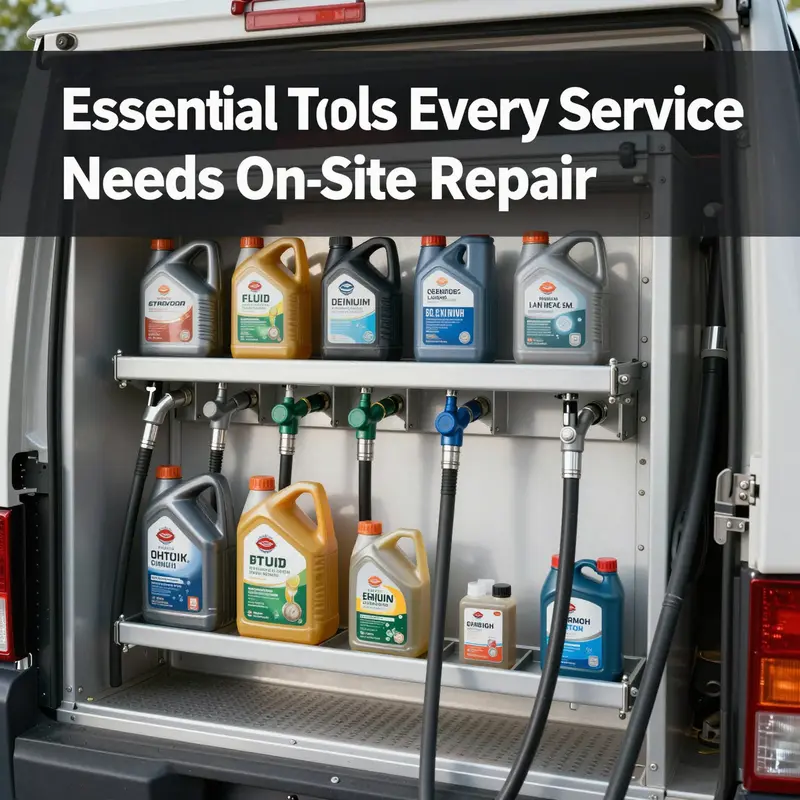
Fluid systems in service trucks are more than a set of hoses and tanks. They are the living circulatory system of a mobile workshop, designed to deliver the right lubricant to the right place at the right time while keeping the rest of the truck safe, organized, and ready for the next job. On remote sites or in bustling fleet shops, technicians rely on these fluid networks to minimize wear, extend component life, and maintain operations with minimal downtime. The fluid system starts with thoughtful reservoir design. A high-capacity reservoir not only holds grease, oil, and hydraulic fluids but also preserves their purity, separating each fluid by dedicated compartments or dual-chamber setups to prevent cross-contamination. The placement of these reservoirs matters. They must be accessible to the technician without requiring a climb or a search, yet securely fastened to withstand vehicle motion and vibration. A well-planned layout ensures gravity assists the flow where it’s needed, but it also relies on careful engineering to avoid siphoning contaminants back into fresh lubricant during operation or refilling. The result is a system that can be filled quickly, weighed for stability, and integrated with other on-board utilities so that lubrication does not feel like a separate chore from diagnosing an engine or replacing a hose on-site.
Moving from the reservoir to the heart of lubrication delivery, the pumps in these mobile systems are precision tools in their own right. They are designed to deliver controlled volumes at set pressures, ensuring bearing surfaces, joints, and engine components receive exactly what they require. In practice, that means a pump capable of switching between oil, grease, and other hydraulic fluids, with calibrated flow rates that align with the maintenance schedule and the specific machine being serviced. The emphasis is on metered delivery rather than free-flow dumping. Too much lubricant can be as harmful as too little, leading to churning, heat buildup, or leaks that complicate repairs and waste resources. The pumps, often coupled with pressure regulators, are tuned for repeatable performance under varying loads and temperatures. Technicians quickly rely on the system’s feedback—visible gauges, digital readouts, or simplified indicators that warn when pressure drifts from the target range—so they can adjust on the fly rather than guess. This precision is particularly valuable when servicing complex assemblies where a single misapplied drop can alter clearances, alter lubrication film thickness, or contaminate seals.
The hoses and connectors form the tactile interface between the pump and the machine being serviced. High-quality hoses resist cracking, abrasion, and chemical attack from aggressive lubricants. Connectors use quick-release fittings that snap securely yet detach without tools, saving time on busy job sites. The length and routing of hoses are planned with redundancy in mind; technicians carry spare sections and extra fittings to account for unexpected access points or tight spaces. The connectors are color-coded and labeled, a simple system that reduces guesswork when technicians switch between grease guns, oil cans, and hydraulic lines. A robust hose management strategy keeps the residual lubricant off the floor and off the technician’s clothing, a small yet meaningful detail that enhances safety and efficiency. When the system must reach distant points—bearings tucked inside a heavy-duty hub, a hydraulic ram at the base of a loader, or a gearbox buried behind an engine shield—the hoses coil neatly, feed smoothly, and store away without snagging on tools or panels. The reliability of the entire workflow depends on these seemingly modest components—well-chosen hoses, dependable connectors, and a thoughtful routing plan that minimizes kinks and pressure loss.
Lubricants themselves come in a palate of options, each chosen for the specific demands of a vehicle or piece of equipment. Grease, oil, hydraulic fluid, coolant, and other specialty lubricants each have their own viscosity, base oil, and additive package. In a mobile workshop, the ability to switch between fluids is a practical necessity, not a luxury. The system must separate, meter, and dispense different lubricants without cross-contamination, which means intelligent compartmentalization and dedicated lines for each fluid type. Fluid compatibility is not an academic concern; it determines seal compatibility, gasket choice, and even the life of the pump seals. A well-designed mobile fluid system also accounts for temperature effects. On a cold morning, thicker lubricants resist flow; in a hot afternoon, thinner oils can surge and slosh. An adaptive system may include preheaters, insulation, or heat tracing to stabilize temperatures, ensuring predictable viscosity and flow regardless of the climate. This attention to thermal behavior underpins consistent lubrication, reduces the risk of under-lubrication or over-lubrication, and helps the technician avoid guesswork in suboptimal conditions.
Among the innovations that truly redefine the on-site lubrication workflow is the concept of a multiport, electrically driven lubrication unit designed to work in concert with progressive divider valve systems. In practical terms, this arrangement allows a technician to lubricate multiple points on large equipment in parallel, with a single, centralized unit controlling distribution. The multiport unit acts like a conductor, delivering measured quantities through a matrix of outlets to critical points such as bearings, joints, and zerk fittings. This parallel approach is a boon for big machines—haul trucks, mining machinery, or agricultural fleets—where dozens of lubrication points would otherwise require repeated tool changes and multiple passes. By automating distribution, the system reduces human error, ensures uniform coverage, and shortens maintenance windows. The progressive divider valve system, in turn, ensures that each outlet receives the right share, maintaining consistent pressure and flow across all points. The result is smoother operation, reduced downtime, and longer intervals between major repairs. Technicians report that the ability to run several lubrication tasks at once is not just a time saver; it also lowers fatigue on long jobs and improves accuracy, since the distribution logic remains constant across all outlets, even as the technician moves between points.
Practical use cases reveal how these systems translate into tangible outcomes. Consider a heavy-duty engine that relies on a robust oil circulation loop to feed critical bearings, cam lobes, and the crankshaft. In a service truck, the oil reservoir and pump work together to maintain a steady circuit. The operator monitors pressure and flow, confirms that oil travels to the intended galleries, and watches for leaks that would indicate worn seals or faulty connections. The same logic applies to grease networks that service joints in heavy machinery. The grease path must reach bushings without pooling or creating drag, which is why the system emphasizes cleanliness, controlled metering, and clean-off zones near fittings to avoid contamination. In the field, technicians often replicate the vehicle’s own lubrication sequence to verify that the portable system can maintain the same performance. Such replication is not mere ritual; it is a diagnostic step that uncovers hidden issues—an occluded line, a weak pump, or a compromised seal—before a fault escalates into unscheduled downtime. The ability to mimic and verify internal lubrication with a portable system is a practical safeguard for reliability on the road or at a remote site.
Sustainability and efficiency are increasingly central to modern fluid systems. Mobile workshops are designed to minimize lubricant waste and prevent environmental impact. A disciplined approach to containment, spill control, and leak detection reduces the chance of accidental releases. Reusable or recyclable containers and careful inventory management help prevent overstocking and oil waste. In addition, precise metering and controlled delivery directly translate into lower oil consumption and less environmental burden over the life of a fleet. When maintenance teams implement standardized procedures for lubrication—including labeled reservoirs, color-coded hoses, and documented flow rates—the entire operation becomes more predictable and auditable. These measures are more than procedural niceties; they are the practical tools that preserve asset value while aligning with broader sustainability goals.
The fluid system does not exist in isolation. It is integrated with other on-board systems, diagnostic tools, and a mobile workshop’s layout. On modern service trucks, you’ll find a holistic design that anticipates the technician’s workflow: a central workbench with labeled tool stations, easily accessible fluid reservoirs, and a compact but capable pump assembly that communicates with onboard diagnostic modules. This integration reduces the need to shuttle back and forth between separate tool carts and makes it easier to maintain a clean, organized workspace under demanding conditions. Even the maintenance routine receives a more streamlined cadence; calibration checks for pumps and flow meters, hose inspections for cracks or wear, and the periodic replacement of seals are scheduled as part of the truck’s routine service plan. The result is a more predictable maintenance cycle, fewer on-site delays, and a stronger alignment between preventive maintenance and the actual needs of a fleet.
To maximize learning and safety on the job, technicians lean on structured training that covers lubrication theory, practical handling, and the specific procedures used during on-site maintenance. For hands-on learning and practical guidance, refer to fire-truck-maintenance-service-training, which offers insights into how maintenance teams approach on-site repair work and lubrication protocols in high-stakes environments. This resource reinforces the principle that a well-trained technician can translate a portable fluid system into reliable, repeatable results across a range of vehicle types and operating conditions. The synergy between training and equipment design is what makes mobile fluid systems robust enough for harsh environments while still being approachable for technicians of varied experience.
The procurement and customization of these systems reflect a similar philosophy. Service fleets frequently adopt modular kits that pair a core fluid delivery system with specialized pre-packed kits tailored for particular vehicle types or operating contexts. For example, heavy-load trucks, mountainous terrain fleets, or emergency response units benefit from kits that include engine oils, filters, hoses, coolant, thermostats, water pumps, and seals oriented to their typical maintenance profiles. These kits are not generic; they come with predefined layouts, labeled storage, and compatible fittings that reduce the time spent configuring a new mobile workshop. Suppliers commonly offer customization and rapid delivery alongside engineering support, allowing fleets to tailor their fluid networks to their prevailing operating environments while keeping downtime to a minimum. In practice, this means a service truck can be pre-wired for future upgrades, with spare outlets, extra reservoirs, and a scalable pump array that can be upgraded as fleet requirements evolve. The result is a vehicle that remains relevant in the face of changing maintenance demands, without sacrificing reliability or safety.
All of these elements—the reservoirs, the pumps, the hoses, the connectors, and the intelligent distribution logic—cohere into a fluid system that makes the mobile workshop an efficient, reliable, and safe place to work. The technician’s task is not simply to fill a bottle and spray a nozzle; it is to orchestrate a sequence of precise, measured actions that sustain machinery far from a fixed shop floor. The best service trucks transform lubrication from a routine maintenance task into a disciplined, repeatable process that reinforces asset reliability. That outcome is the result of careful design, rigorous testing, and a culture that treats on-site maintenance as an engineering problem worth solving with the same rigor applied to permanent workshops. In the end, fluid systems and lubrication tools represent a quiet but decisive advantage. They enable service teams to keep complex machinery moving, to minimize downtime, and to extend the service life of fleets that operate in demanding environments.
External resource for further reading: https://www.skf.com/au/products/lubrication-tools-and-equipment
Powering Every Move: Onboard Power and Illumination for Service Trucks
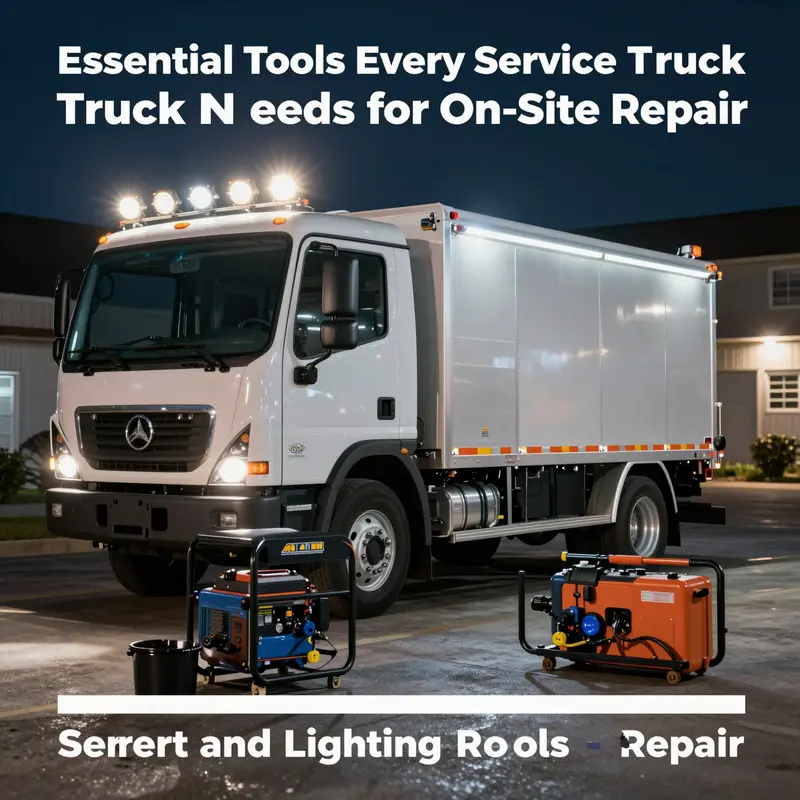
On a worksite where every minute matters, the power that fuels tools and the light that reveals details are not luxuries but lifelines. In a service truck, power and lighting are the heartbeat of efficient operation. They enable technicians to diagnose, assemble, adjust, and test in environments that challenge visibility and stamina. The message is clear: without reliable power and robust illumination, even the most skilled technician can be slowed, misled, or endangered by darkness, moisture, dust, or vibration. The broader must have toolbox for a service truck hinges on the integrated systems that deliver energy, sustain activity, and illuminate the work zone with precision.
The core of onboard power lies in a balance between generation capacity and power management. A service truck needs a dependable source of electricity that can operate in remote locations, at odd hours, and under harsh weather. Generators and onboard power units must be sized to support continuous operation of diagnostic equipment, air powered tools, and communication devices while also charging batteries in support of cordless tooling and mobile devices. In practice, this means a power system that offers consistent voltage and current, with protective features to guard against voltage spikes, short circuits, and vibration induced wear. The aim is not to have the loudest or flashiest unit but the most reliable one capable of sustaining a full day of preventive maintenance checks, fault finding, and component replacement without demanding a networked power source. The nuance lies in distribution: a robust power system spreads energy evenly to the hardest working tools, while a dedicated sub panel handles sensitive electronics with surge protection and clean power. This separation matters because a fault in a heavy pneumatic tool should not cascade into a fragile diagnostic scanner or a cooled storage unit that preserves critical fluids.
In service truck practice energy stewardship extends beyond raw watts. It is about how energy flows through the vehicle, how storage is organized, and how resilience is built into the system. Batteries, alternators, inverters, and power outlets are not standalone gadgets; they form a modular ecosystem designed to withstand the literal ride of daily service work. The best setups feature redundancy for the most critical tasks: a secondary energy source that can jump into service if the primary unit falters, and a charging strategy that keeps batteries topped up even on long days that demand continuous tool use. This approach protects uptime, which is the currency of efficiency in maintenance operations. When a technician can rely on a steady stream of power to run a diagnostic scanner, a torque wrench set, a refrigerant pump, or a portable air compressor, the time spent waiting for power to return becomes time spent advancing the job rather than waiting for the next recharge.
Lighting, meanwhile, is the other half of the equation that makes power meaningful in the field. The best service trucks treat light as a controllable tool with deliberate placement and purpose. Work lights and area lighting systems should provide broad, uniform illumination for general visibility and high intensity, focused beams for detail work. The challenge is composite: the truck must illuminate a wide work surface such as an engine bay, a suspended brake assembly, or the underside of a chassis while also delivering bright pinpoint light for micrometric adjustment. The color temperature of lighting is not cosmetic; it affects how technicians perceive contrast, detect leaks, or identify subtle wear patterns. A well designed lighting package uses a mix of flood and spot lighting with dimmable controls and quick aim fixtures that can be repositioned as the job evolves. The benefit is tangible: fewer errors from shadows, better safety margins when technicians operate at height or in confined spaces, and less fatigue when performing repetitive checks in low light environments like tunnels or culverts.
Across environments such as municipal projects, pipelines, or utility infrastructure, lighting is more than a convenience. It is a safety system. Bright, reliable illumination reduces the risk of tripping over tools or missing critical fasteners, while the ability to illuminate a full repair zone supports safer handling of hazardous fluids and hot surfaces. Equally important is the ability to power diagnostic devices in these same settings. A service truck that can simultaneously run a digital multimeter, a refrigerant recovery tool, and a high pressure pump while maintaining clear visibility creates a smooth workflow that minimizes the chance of errors and rework. The synergy between power and light thus becomes a competitive advantage, enabling multi trade operations to progress with greater predictability. Technicians can shift from inspection to replacement with confidence, knowing the energy supply and illumination will not falter mid task.
Beyond the practicalities, the integration of power and lighting systems is about designing for the realities of fieldwork. The most effective configurations are rugged in construction and modular in spirit. Durable housings resist vibration and weather, while fixed and swappable power outlets prevent the need for improvisation with improvised adapters. Adjustable shelving, labeled compartments, and modular tool racks sit adjacent to the electrical system, ensuring that a technician who finds a needed diagnostic lead or a tuned torque adapter can grab it without exposing themselves to risk or interrupting the power workflow. This level of organization is not an aesthetic choice; it reduces cognitive load, minimizes the time spent hunting for tools, and lowers the risk of accidental disconnections or shorts when moving between tasks. In practice, that means a power and lighting system that is integrated into the vehicle frame and body, not bolted on as an afterthought. The result is a portable workspace that travels where the crew goes, ready to turn a stranded engine or a sluggish cooling loop into a diagnosed and corrected fix before the sun sets.
The conversation around power and lighting in service trucks cannot ignore the trade offs that come with advanced integration. There are higher upfront costs, and the maintenance footprint expands as systems become more sophisticated. A more capable electrical network demands regular inspection of wiring harnesses, fuses, breakers, and the integrity of inverters. It also requires technicians who understand not only the mechanical aspects of the job but the electrical discipline that keeps the tools running safely. Training becomes a continuous investment, especially for teams that rely on aerial lifts or telescopic booms, where the interplay of power, lighting, and hydraulics introduces additional layers of complexity. Yet the payoff is compelling. Downtime caused by power failures or poor illumination translates into real costs delayed maintenance windows, missed safety checks, and compromised service levels. A fleet that invests in reliable power and lighting systems reduces those costs, delivering greater uptime, safer worksites, and higher quality outcomes for customers who depend on on site repairs to keep critical infrastructure online.
The broader context of must have service truck tools is rhetorical as well as practical. When fleets evaluate what to stock and how to configure, they increasingly view power and lighting not as peripheral conveniences but as central enablers of the entire maintenance workflow. A well lit, power ready truck can perform preventive campaigns, respond to emergencies, and support multi trade operations with a degree of fluidity that is hard to achieve with a leaner, less capable setup. This philosophy aligns with the move toward modular, scalable solutions that can be adjusted as fleet needs evolve whether the vehicle is deployed to city streets, a construction corridor, or a remote industrial site. The capacity to reallocate energy, to reconfigure lighting coverage, and to repurpose outlets for different tools keeps the crew agile and ready for the next task. In practice, that agility manifests in more efficient inspections, quicker diagnosis, and fewer callbacks, all of which contribute to a higher level of service reliability across the board.
For fleets seeking to optimize efficiency, the path forward is not just about adding more tools but about integrating the power and lighting framework with the rest of the service truck the systems. The design philosophy should favor a centralized energy strategy that supports the diagnostic ecosystem, the fluid handling modules, and the containment and refrigeration units used for sensitive materials. It should also emphasize intelligent layout decisions where power outlets align with frequently used tool stations, where lighting fixtures are positioned to reduce glare and shadow, and where the workbench is physically integrated with a power distribution module and a dust and water resistant control panel. When these elements are harmonized, technicians move through their tasks with fewer interruptions, and the vehicle itself becomes a controlled, safe, and efficient workplace. This holistic approach to the onboard toolset, in which power and light are inseparable from the other systems, makes a service truck more than a vehicle; it becomes a compact, mobile workshop that preserves the integrity of repairs and the safety of the team.
There is a recognition, however, that all these advantages require disciplined planning. The most effective fleets design for common use scenarios, map out energy budgets for typical maintenance routes, and harden the truck against the kind of operational rigors that would test weaker systems. In doing so, they set the stage for reliable, repeatable performance under the most challenging conditions. The value is clear: when a technician opens the back of the truck and finds both a dependable power source and a bright, adaptable lighting system, they are empowered to test components with confidence, verify repairs under varying lighting conditions, and complete cycles of maintenance more quickly and with greater precision. The cumulative effect is a service operation that can meet tight schedules, adapt to shifting requirements, and maintain the high safety and quality standards that customers expect from a professional fleet.
To connect these ideas with practical navigation through the broader material on service truck tools, consider how the integration of power and lighting informs the organization of other tool systems. A well lit workbench becomes the anchor for a full set of diagnostic instruments, the lubrication and fluid systems, and the storage schemes that keep oil, coolant, and replacement parts within reach. The right lighting is the quiet enabler of clearer labels, safer handling, and more precise measurement factors that compound to reduce missteps and rework. The energy system that supports this environment ensures that every instrument stays online, every light remains bright when the task demands it, and every technician is prepared to move from inspection to repair with the least resistance. The result is a service truck that not only carries the tools but also sustains the conditions necessary for meticulous, reliable field work.
For readers seeking a broader perspective on how these dynamics play out in real world fleets, a relevant resource on design efficiency in emergency services provides valuable context about how power, lighting, and modular design converge to optimize uptime and safety in demanding environments. And to gain insight into the kinds of auxiliary power and lighting considerations discussed here from an authoritative industry source, an external reference on power systems and equipment configurations can be found at GM Truck: https://www.gmtruck.com/.
Final thoughts
Equipping a service truck with the right tools is fundamental for maximizing efficiency during maintenance and repairs. Each component—from core repair tools and diagnostic equipment to fluid systems and reliable power sources—plays a critical role in ensuring that truck drivers and fleet managers can respond quickly and effectively to any situation. Therefore, investing in these must-have tools not only enhances operational capability but also contributes to safer and more reliable trucking overall. Keep your service truck ready, equipped, and dependable on every journey.