
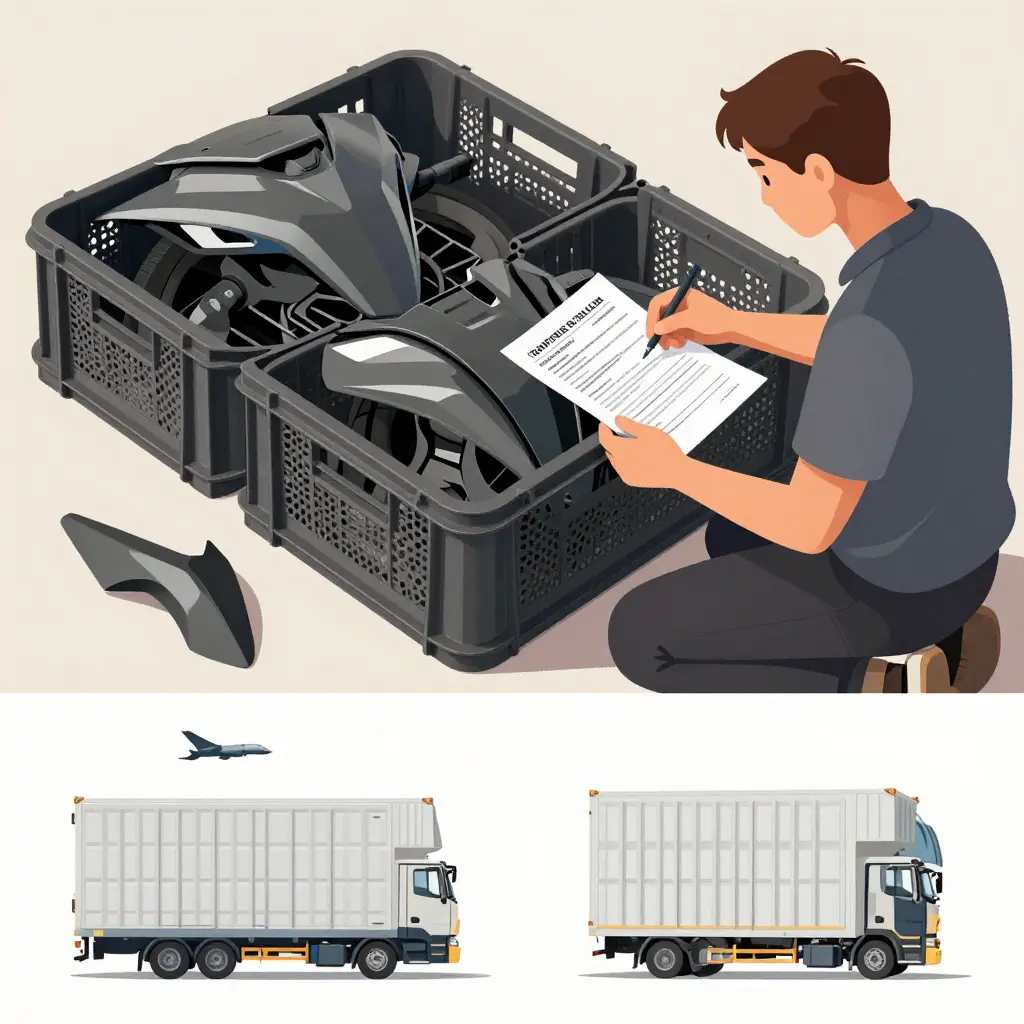
Motorcycle Fairing Shipping: Crate Packing, Customs Holds and Damage Claims
Motorcycle fairings are thin, painted body panels that shield the rider and give a bike its shape. Their ABS plastic is light, the mounting tabs are small, and the factory paint shows every mark, which makes them easy to damage in freight. A carton dropped on one corner can crack a nose cowl, chip a side panel, or snap a clip-on mount. Restorers shipping a rare sportbike, freight companies carrying high-value cargo, and retailers moving inventory all run into the same problem: how to get a fairing from pickup to delivery without a claim.
Three things decide whether a fairing arrives intact, on time, and without a loss.
Crate Packing. Custom crating absorbs shock and keeps panels from shifting, rubbing, or flexing. Foam-lined wooden crates, reinforced corners, and labeled orientation protect painted surfaces where cardboard alone fails.
Customs Holds. When fairings cross a border, incomplete paperwork or a vague HS code can stall a shipment for days. Accurate invoices, declared values, and pre-cleared documentation lower the odds of a hold that delays delivery and adds storage cost.
Damage Claims. Even good packing fails sometimes. A clear claims process, backed by photos, inspection reports, and filing on time, decides how quickly a shipper recovers value after loss or breakage.
Delicate, high-value cargo is its own specialty. An experienced carrier that already runs dependable freight and transport services gives fairing shipments a head start on all three fronts.
Why Motorcycle Fairings Are Fragile Cargo
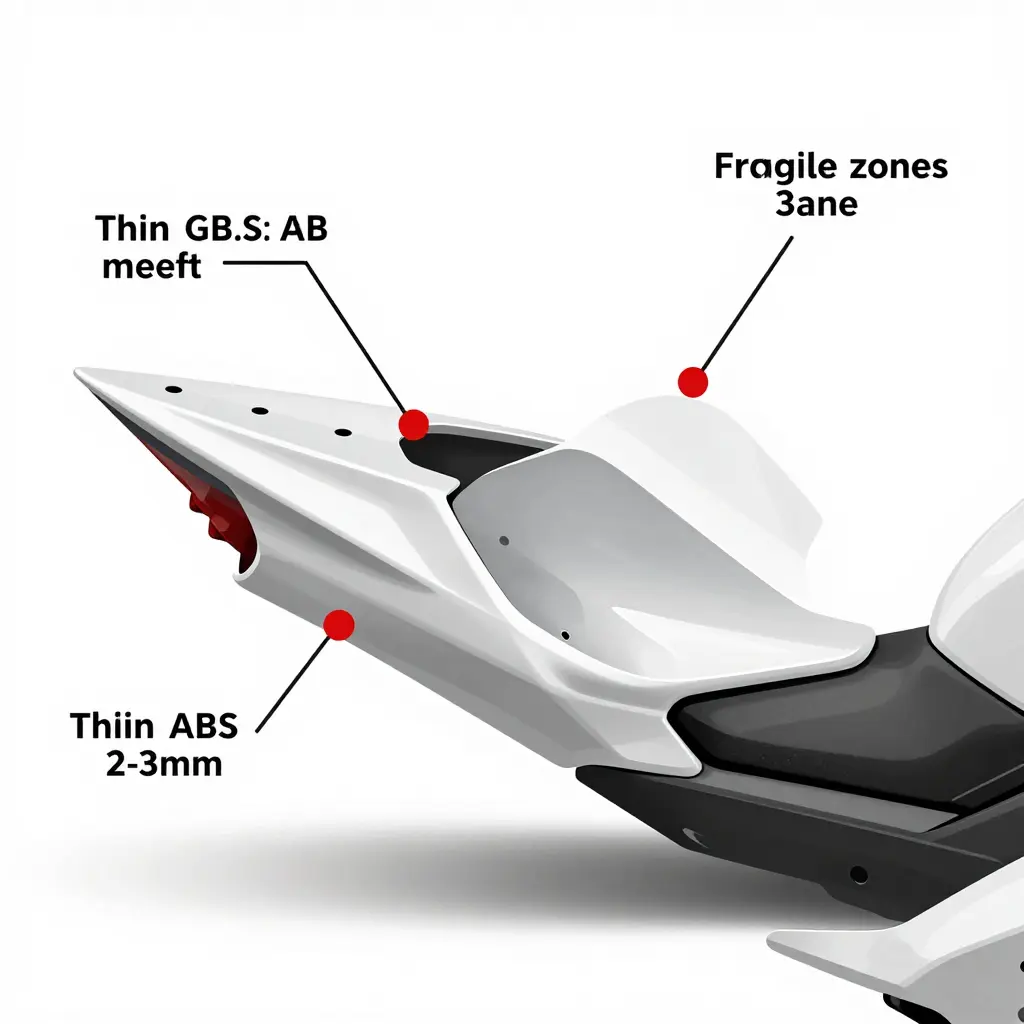
On the bike, a fairing looks solid. In a loading dock, it is one of the most fragile things you can hand a carrier. The materials, finish, and shape were designed for airflow and looks, not for surviving freight.
Thin, Lightweight Panels
Most fairings are thin ABS plastic or fiberglass, light enough to hold a complex curve without adding weight.
- ABS plastic runs only a few millimeters thick. One point load, whether a crate edge, a strap buckle, or another box landing on top, can split or dent it instantly.
- Fiberglass is stiffer and more brittle. It does not bend on impact; it cracks or shatters, and the fracture often spreads a spiderweb across the panel.
Painted Surfaces That Show Everything
Factory paint is a glossy, multi-layer finish, and any flaw shows. The panel can survive the trip and still arrive with a scuff, a chip, or a haze from rubbing in transit, which is enough to turn a cosmetic part into a claim.
Weak Mounting Tabs
The small tabs and grommet mounts that attach a fairing to the frame are the first things to break. They are thin, unsupported, and soak up vibration and shock, so rough handling in motorcycle fairing shipping snaps them off.
Large, Irregular Shapes
A fairing is wide and curved, with no flat face to brace against. That makes it hard to secure in a standard box, and it leaves long unsupported spans that flex and crack. A local rider and an overseas fairing export order face the same problem: the shape demands custom blocking and cushioning. Carriers with proven reliable transportation and logistics services help, but the protection comes from packing built around these four weak points.
For a large, fragile, expensive part, crate packing is the step that decides the shipment. One careless moment can crack a panel or scuff fresh paint and turn a clean delivery into a costly damage claim, which is why the packing and shipping service you choose matters. Before the cargo leaves the dock, work through this checklist.
- Wrap each panel in soft foam or bubble wrap to protect the surface from scratches and hairline cracks.
- Fill empty gaps with custom-cut foam blocks so nothing shifts in transit.
- Bag bolts, clips, and hardware in labeled zip-top bags, then tape each bag to its matching panel.
- Add desiccant packs to keep humidity and condensation from building inside the crate.
- Reinforce the crate with corner braces, plywood sheets, and diagonal supports.
- Seal it with heavy-duty strapping and mark “Fragile” and “This Side Up” on every side.
- Photograph the packed fairings and the sealed crate before pickup; the images document condition if you file a claim.
- Check crate dimensions and weight against carrier and customs limits to avoid costly delays.
- Make sure no sharp hardware edges press against painted surfaces once the crate is closed.
Crate Packing Methods and Materials
A fairing is thin and painted on both sides, so almost any impact or flexing can crack a panel or scuff its finish. Crate packing combines a rigid outer shell with soft and semi-rigid layers inside, and each material handles a different stress: shock, vibration, abrasion, or stacking pressure.
Wooden Crates
The wooden crate is the structural shell of the shipment. Plywood or timber-framed crates resist punctures, carry stacking weight, and hold their shape around forklifts and pallets. In motorcycle fairing shipping, a fully enclosed crate also keeps out dust and moisture and blocks the casual handling contact cardboard allows.
Foam Inserts
Closed-cell or polyethylene foam inserts sit directly against the fairing surface. They absorb impact energy and keep panels off the hard crate walls. A common method is to line the floor and walls with foam, then fit shaped blocks between panels so nothing shifts or rubs when the truck turns or brakes.
Corrugated Dividers and Edge Protectors
Corrugated dividers keep painted surfaces from touching each other. Edge protectors, usually plastic or heavy card angle strips, wrap the thin outer edges and mounting tabs where cracks most often begin. Both are inexpensive parts of crate packing, and both prevent the small scuffs and stress cracks behind most damage claims.
Strapping Systems
Strapping ties the load together. Nylon or polyester bands, tensioned over the crate or around inner bundles, stop movement inside the box and keep a bulky fairing set from shifting. With the crate and foam layers, they make one stable unit that survives the vibration of long-distance freight.
Crate, foam, dividers, edge protection, and straps work as a stack, not a set of parts. Pair careful packaging with proven freight services such as 5 Star Truck Inc’s quality service and reliability, and fairings arrive intact and ready for inspection.
Choose the packing method by balancing budget, protection, and shipping volume.
| Packing Method | Typical Cost Level | Protection Strength | Best Use Case | Reusability |
|---|---|---|---|---|
| Single-wall cardboard box with bubble wrap | Low | Light | Domestic retail, short-haul | None |
| Double-wall carton with foam corners | Low-Medium | Moderate | Small fairing sets, light export | Limited |
| Standard wooden crate, solid panels | Medium-High | High | Full fairing sets, overseas freight | Low |
| Plywood crate with foam lining and cradle blocks | High | Very High | High-value or restored fairings | High |
| Hybrid crate on pallet base with strapping | Medium | High | Mixed orders, LCL shipments | Medium |
For long-distance fairing export, a solid crate is the safest choice; lighter options only make sense on short domestic runs. Skip the crate and the shipment faces higher odds of damage, customs delays, and rejected claims.
The Cost of Inadequate Packing
Skimping on packing rarely stays a small saving. For a retailer, weak protection turns one shipment into a chain of costs that outlasts the sale.
Replacement costs come first. When a fairing arrives cracked, scuffed, or warped, the retailer usually eats the full price of a new unit, not just the margin on one order. Several damaged panels in a single crate multiply that quickly.
Then come reshipping fees. Returns and replacements double freight charges, handling time, and labor. Every retry at motorcycle fairing shipping eats into the profit the order was supposed to produce and turns a routine delivery into a costly loop.
Damage claims add their own friction. Filing, documenting, and chasing reimbursement burns staff hours, and carriers often approve only part of the payout. The customer waits in the meantime, and patience is finite.
The softer costs cut just as deep. Customer dissatisfaction travels through reviews, forums, and word of mouth, and one bad arrival lingers. Brand reputation is what brings buyers back, and it erodes with every box that arrives less than flawless.
Dependable reliable transport partners contain those costs, because solid logistics and solid packing reinforce each other. Good packaging is not overhead; it is the cheapest insurance a retailer can buy.
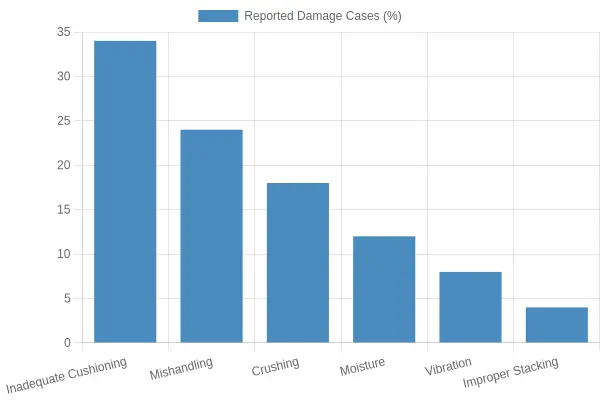
What the Chart Tells Us About Fairing Damage
The chart ranks the leading causes of motorcycle fairing damage during shipping by share of reported claims. Inadequate cushioning comes first, with mishandling and crushing close behind; together the three account for most incidents. Moisture, vibration, and improper stacking sit lower, but they still pose a real threat on long-haul routes.
Most of this damage is preventable with better crate packing and handling discipline. For teams that manage the wider logistics side of these shipments, a freight partner that understands quality service and reliability on the road keeps cargo handling standards consistent from pickup to delivery.
Why Customs Holds Happen for Motorcycle Fairing Shipments
Customs holds are one of the most common causes of delay in motorcycle fairing shipping, and they usually have a concrete trigger. Once flagged, a shipment stops moving until the importer fixes the underlying problem. Knowing the usual triggers helps enthusiasts and retailers prepare paperwork that passes.
Valuation Disputes
Customs authorities compare the declared value against market prices for similar fairings. A value that looks unusually low invites suspicion of under-declaration, and officers hold the shipment while asking for supporting proof, such as invoices or payment records.
Missing or Mismatched Documentation
An incomplete commercial invoice, a missing packing list, or a consignee name that does not match the shipping label can all trigger a hold. When documents conflict, agents cannot confirm what is inside the crate, so the shipment waits until corrections are filed.
Restricted Materials
Some fairings, along with their coatings, adhesives, or packaging, may contain regulated substances that require extra declarations. Even legitimate goods can be stopped if a controlled material is not disclosed properly.
HS Code Errors
The Harmonized System (HS) code tells customs exactly what a product is. A wrong or overly broad code for fairings can route a shipment into the wrong category, raise flags, change duty rates, and prompt a manual review.
Duty or Tax Issues
If the assessed duty, tariff, or import tax is unpaid or disputed, the shipment stays held until the balance is settled. Importers who miscalculate these charges often face added storage fees while the account is resolved.
An experienced logistics provider keeps motorcycle fairing shipping on schedule: reliable transport and logistics support can catch paperwork errors before they turn into costly customs holds.
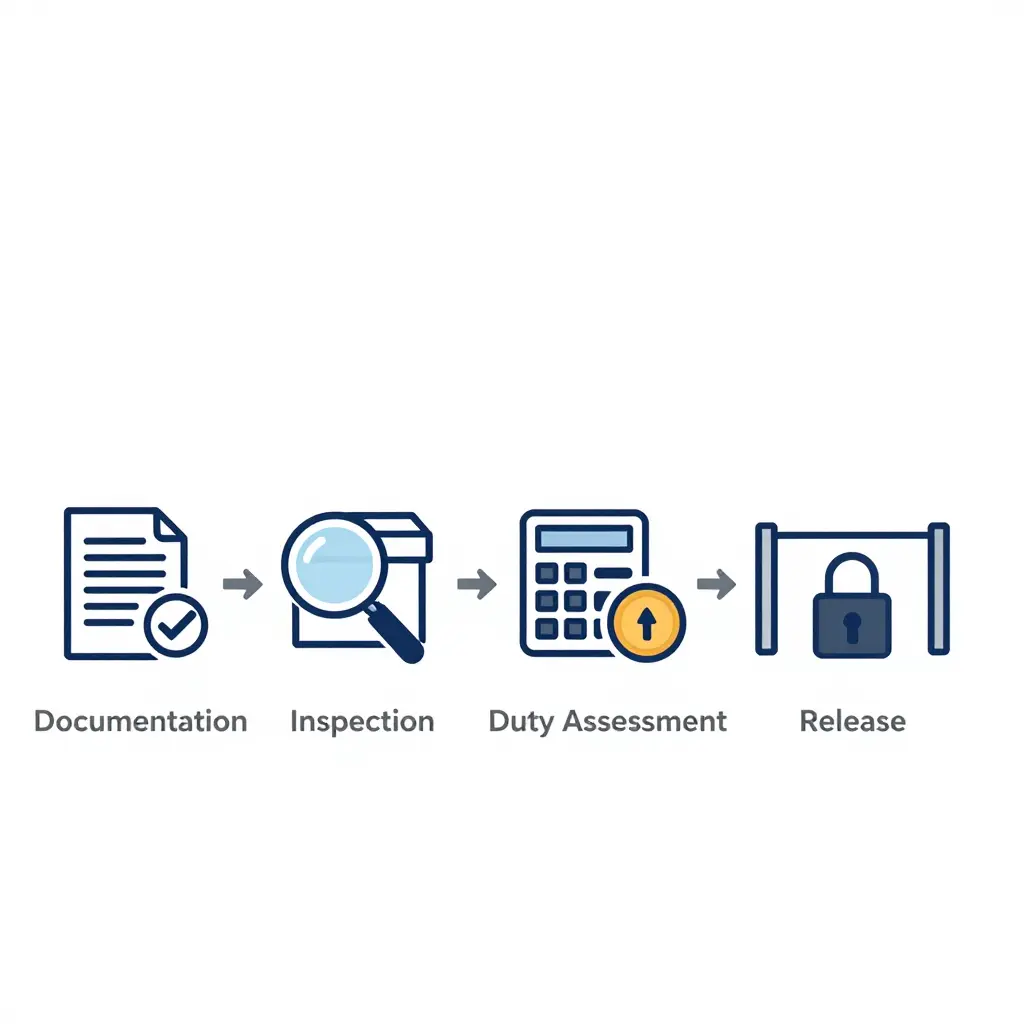
Documentation to Prevent Customs Delays
Customs clearance moves fastest when every document is complete, accurate, and consistent. During a fairing export, a single mismatch between the invoice description and the shipping paperwork can trigger customs holds, inspection fees, and costly storage charges. Getting the documents right before dispatch keeps shipments moving.
The commercial invoice anchors the clearance file. It should state the seller and buyer, a full description of the fairings, the quantity, the unit value, the total value, the currency, and the applicable Incoterms. The item description must match the packing list exactly.
A packing list details how the goods are organized inside each carton or crate. When crate packing is used, list the number of crates, their dimensions and weights, and the contents of each one. This lets customs officers verify the shipment without opening every package, which reduces handling time.
The HS (Harmonized System) code classifies the fairings for duty and tax purposes. Using the correct code for motorcycle body parts prevents misclassification and re-assessment delays. A certificate of origin confirms where the goods were manufactured and may reduce duties under a trade agreement.
Most shipments also require the following supporting documents:
- Commercial invoice
- Packing list
- HS code classification
- Certificate of origin
- Export or customs declaration
- Bill of lading or airway bill
- Insurance certificate
- Import licenses or permits requested by the destination country
Reviewing every document for consistency before the fairing export departs is the simplest way to avoid customs holds. A freight partner that values reliability on the road further reduces the risk of handling errors in transit.
When a shipment of motorcycle fairings gets stuck at the border, customs holds can turn a routine delivery into a stressful, expensive delay for enthusiasts and retailers alike. Working through the problem in order is the fastest way to get the fairings moving again.
- Locate the official hold notice. Pull the written notification from the carrier or broker and confirm the shipment reference number so you know exactly which consignment is affected.
- Identify the specific hold reason. Determine whether the issue is missing paperwork, a valuation dispute, a restricted-material flag, or a random inspection.
- Gather your core documents. Review the commercial invoice, packing list, and bill of lading for matching quantities, values, and descriptions.
- Contact your customs broker or carrier. Ask for a direct status update and a clear list of what the authorities need to release the goods.
- Prepare the required corrections. Fix harmonized tariff codes, add a precise description of the fairing materials, and resolve any value discrepancies.
- Submit the corrected paperwork on time. Missing a filing deadline is one of the most common reasons customs holds drag on, so file before the clock runs out.
- Pay any assessed duties, taxes, or penalties. Settle the amount promptly and request a formal release confirmation in writing.
- Track the shipment to final delivery. Keep monitoring status until the fairings clear and are handed off to the last-mile carrier.
A freight partner that keeps documentation tight from the start sidesteps most of these holds, so explore reliable freight solutions before your next shipment leaves the dock.
Navigating Damage Claims for Motorcycle Fairing Shipping
Even with careful crate packing, fairings can occasionally arrive with cracks, scuffs, or hidden stress fractures. A working knowledge of the damage claims process helps retailers, shippers, and enthusiasts resolve issues without a fight. The steps below outline how it generally works.
Inspection Timelines
Most carriers expect recipients to inspect a delivery within a defined window, commonly 24 to 72 hours after arrival. Some contracts allow a longer period for concealed damage discovered after unpacking. Missing these deadlines can weaken a claim, so inspection should begin the moment the crate is opened.
Documentation and Photographic Evidence
A strong claim rests on clear records. Keep the bill of lading, the packing list, and any inspection reports together. Photographic evidence should capture the crate’s exterior before opening, the packaging materials, and each affected fairing from multiple angles, including close-ups of the damage and wide shots showing where the part sat.
Carrier Liability
Liability depends on the shipping terms and the carrier’s classification. If the crate itself shows external damage, responsibility often falls clearly on the carrier. When crate packing was inadequate, the shipper may share liability instead. Reviewing the declared value and any insurance coverage clarifies how much can be recovered.
Insurer Communication
Write to the insurer promptly. Reference the claim number, provide the full documentation set, and submit photographs as attachments. Keeping a single point of contact and a dated log of correspondence helps prevent disputes. A provider known for dependable freight handling practices can simplify this stage.
A short checklist keeps everything organized:
| Item | Purpose |
|---|---|
| Bill of lading | Confirms carrier custody and responsibility |
| Packing list | Verifies contents and declared value |
| Inspection report | Records noted damage at delivery |
| Photographs | Documents condition before and after opening |
| Correspondence log | Tracks dates, contacts, and responses |
Following these steps keeps motorcycle fairing shipping claims transparent, timely, and easier to settle.
A successful damage claim starts with capturing the right evidence at the right moment in the process.
| Claim Stage | Required Evidence | Who Provides It | Typical Time Limit |
|---|---|---|---|
| Pre-Shipment Inspection | Photos of fairing condition, packing log, serial numbers | Shipper / Retailer | Before pickup |
| Origin Pickup | Signed bill of lading, crate photos, weight record | Carrier / Driver | At collection |
| In Transit | GPS tracking log, checkpoint notes, handler reports | Carrier | During transit |
| Delivery / Receiving | Delivery receipt, unpacking photos, damage close-ups | Consignee | Same day as delivery |
| Claim Filing | Claim form, invoice, inspection report, all prior evidence | Consignee / Shipper | 24-48 hours after receipt |
| Claim Review | Repair estimate or replacement quote, adjuster report | Repair Shop / Adjuster | 5-15 days after filing |
| Settlement | Signed release, payment record, resolution letter | Carrier / Insurer | 15-30 days after approval |
Timely, well-documented evidence wins damage claims in motorcycle fairing shipping. When every stage is on record, resolution comes faster.
Choosing the Right Freight and Packaging Partner
Choosing a freight and packaging partner is one of the bigger decisions in motorcycle fairing shipping. Fairings are large, curved, and easy to crack, and the wrong carrier turns a straightforward delivery into a costly dispute. A few concrete criteria, checked before signing a contract, reduce that risk.
Carrier Experience with Fragile Cargo
Ask how often the carrier handles fairings, body panels, and other oversized plastic parts. A provider that routinely moves fragile motorcycle components understands stacking limits, moisture barriers, and the handling techniques that prevent stress fractures. The same operational discipline that keeps emergency fleets road-ready, as shown in this look at design efficiency in emergency services, applies to fragile freight: consistent process and equipment reduce avoidable damage.
Packaging Capabilities
Packaging is where most damage is either prevented or introduced. Look for providers that offer true crate packing rather than loose boxing. A proper crate should immobilize each fairing, use foam or custom inserts at contact points, and seal against moisture. Confirm whether the carrier builds crates in-house or outsources the work, since in-house capability usually means tighter quality control.
Insurance Options and Damage Claims
Insurance is only useful if the terms are clear. Request the carrier’s coverage limits, exclusions, and the timeline for filing damage claims. Reputable partners document every load before transit and process claims without prolonged negotiation. Reliable product support and clear documentation, similar to the approach described in maximizing fire truck product support, give shippers a dependable record when something goes wrong.
Tracking Transparency
Real-time tracking with milestone updates lets both retailers and enthusiasts monitor a shipment and act quickly if a delay or exception appears. Carriers that share status data proactively are easier to work with than those that require repeated follow-up.
For buyers sourcing fairings, summitfairings.com offers over 3,000 styles across almost all motorcycle models at 10-40% less than other sites, and answers questions within six hours. A vetted freight partner plus that catalog keeps motorcycle fairing shipping predictable from order to delivery.
Motorcycle Fairing Damage Claim Outcomes
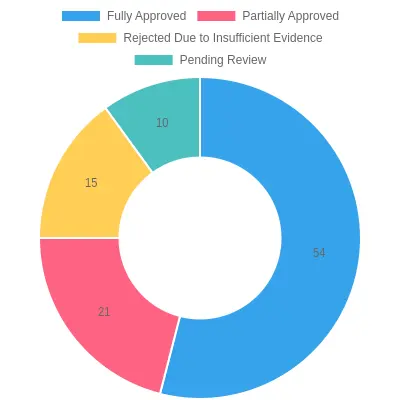
Just over half of all fairing damage claims (54%) are fully approved, reflecting cases where the shipment was well crated and the documentation left no room for dispute. Roughly one in five claims (21%) is partially approved, while 15% are rejected because the evidence linking the damage to transit is too thin. The remaining 10% sit in pending review, often waiting on photos, inspection reports, or carrier responses. Thorough packing and documentation move a claim toward the fully approved slice; gaps in proof push it toward partial approval or outright rejection. Learn more about reliable transport and logistics support to keep your shipments protected.
Motorcycle Fairing Shipping: Frequently Asked Questions
1. What is the best material for crate packing motorcycle fairings?
Plywood is the industry standard because it resists flexing and holds fasteners firmly. A double-walled plywood crate with reinforced corners protects panels from stacking pressure and shifting loads. Avoid thin cardboard or single-layer particleboard, which can collapse during transit.
2. How should individual fairings be secured inside a crate?
Wrap each panel in foam or bubble wrap, then brace it so it cannot move. Use custom foam inserts or expanded polyethylene blocks to fill empty space and cradle curved surfaces. Filling every void matters, because cargo that cannot shift is the best defense against impact.
3. How long do customs holds typically last?
Most customs holds clear within 24 to 72 hours when the paperwork is complete. Inspections or missing documents can stretch a hold to several days or even weeks. Delays grow longer if duties are unpaid or the declared value looks inaccurate.
4. What documents help prevent customs holds?
Include a commercial invoice, packing list, and harmonized tariff code with every shipment. Accurate descriptions such as “motorcycle body panels” reduce the odds of a physical inspection. Attach the paperwork to the outside of the crate and email a copy to your broker for dependable freight transportation.
5. What should I do when fairings arrive damaged?
Photograph the packaging and the damage before moving anything. Note the condition on the carrier’s delivery receipt and keep all original packing materials. Report the problem to the carrier and shipper within the stated claim window, usually 24 to 48 hours.
6. How do I file damage claims successfully?
File a written claim that includes photos, the invoice, and the signed delivery receipt. Keep the damaged crate until the claim closes, since inspectors may want to review it. Clear documentation is what makes damage claims succeed.
7. Is insurance necessary for motorcycle fairing shipping?
Insurance is strongly recommended because fairings are light, brittle, and expensive to replace. Standard carrier liability often pays far less than a panel’s real value. Full-value coverage closes that gap and speeds up reimbursement.
8. Can I ship fairings internationally without a crate?
No, shipping loose panels invites scratches, cracks, and total loss. Professional crate packing is essential for any international move. It also helps your shipment clear customs holds faster because inspectors can see it is properly secured.
Conclusion: Getting Motorcycle Fairing Shipping Right
A smooth motorcycle fairing shipping process rarely happens by accident. Three things carried the weight of this guide, and each one deserves the same level of attention from motorcycle enthusiasts, retailers, and carriers alike.
Crate packing is where protection begins. A fairing is lightweight, oddly shaped, and vulnerable, so a properly braced, cushioned crate does more to prevent damage than any insurance policy ever could. Get this wrong, and every step downstream becomes an uphill fight.
Customs holds are the wildcard. Missing paperwork, unclear declared values, or incomplete import documentation can stall a shipment for weeks, regardless of how well the crate was built. Clean documentation keeps freight moving and tensions low.
Damage claims represent the last line of defense. Even careful shippers face the occasional mishap, so documented inspections, timestamped photos, and prompt filing turn an unfortunate event into a manageable one.
Quick Recap
- Crate packing: build a rigid, cushioned crate that isolates the fairing from shock and moisture.
- Customs holds: prepare accurate paperwork before pickup to avoid costly delays.
- Damage claims: document everything and file quickly to protect your investment.
For teams that value dependable handling from pickup to delivery, dependable trucking support makes these three easier to uphold. See how consistent service and reliability on the road can support every leg of your logistics chain.
Fairing shipments survive best when they are crated with care, cleared with clean paperwork, and backed by disciplined damage claim habits. With all three in place, fragile motorcycle fairings arrive intact, on time, and ready to be fitted.