
Why Regular Pallet Truck Servicing Matters
In a busy warehouse, a pallet truck gets used more than almost any other piece of equipment. Every lift and turn works the hydraulic oil, the load wheels, and the pump. Skipping service on those parts doesn’t save money; it just moves the cost from scheduled maintenance to a breakdown in the middle of a shift.
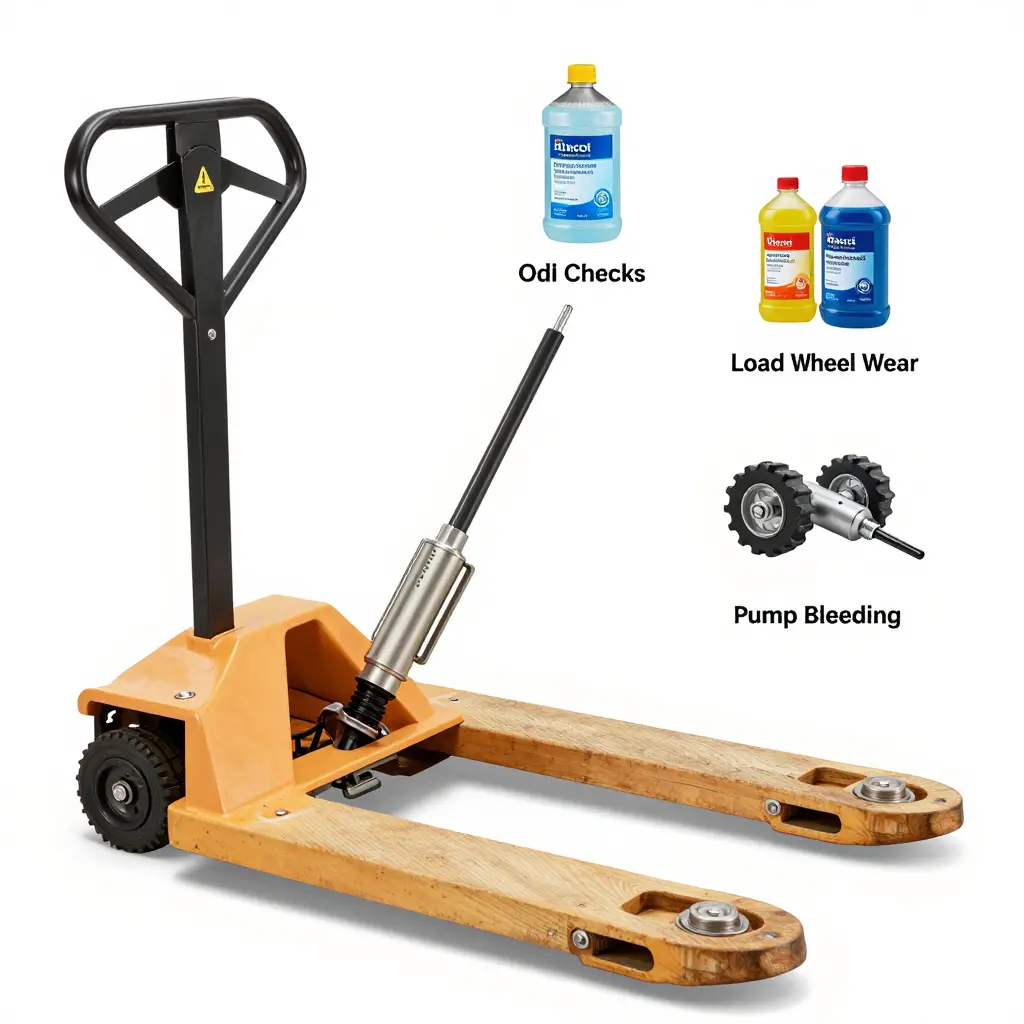
Servicing a pallet truck comes down to three jobs. Hydraulic oil checks confirm the fluid is clean and at the right level; dirty or low oil costs the truck lifting power. Load wheel wear inspections catch flat spots, cracks, and uneven tread before they damage the floor or make a raised load unstable. Pump bleeding clears trapped air from the hydraulic circuit so the forks rise smoothly and hold under weight. Together they cover most of what a pallet jack maintenance routine needs.
Regular service pays off in three ways: the truck stays in use instead of waiting on repairs, worn wheels and spongy pumps don’t tip loads or drop them on operators, and small adjustments now avoid full pump or wheel replacements later.
Teams that want to build this into a wider habit can look at structured maintenance and service training programs, which cover how a consistent inspection schedule extends equipment life across a fleet.
How the Pallet Truck Hydraulic System Works
A pallet truck lifts a heavy load with very little effort at the handle. That leverage comes from the pallet truck hydraulic system, a compact set of parts that turns a small hand movement into a large lifting force.
The Four Key Parts
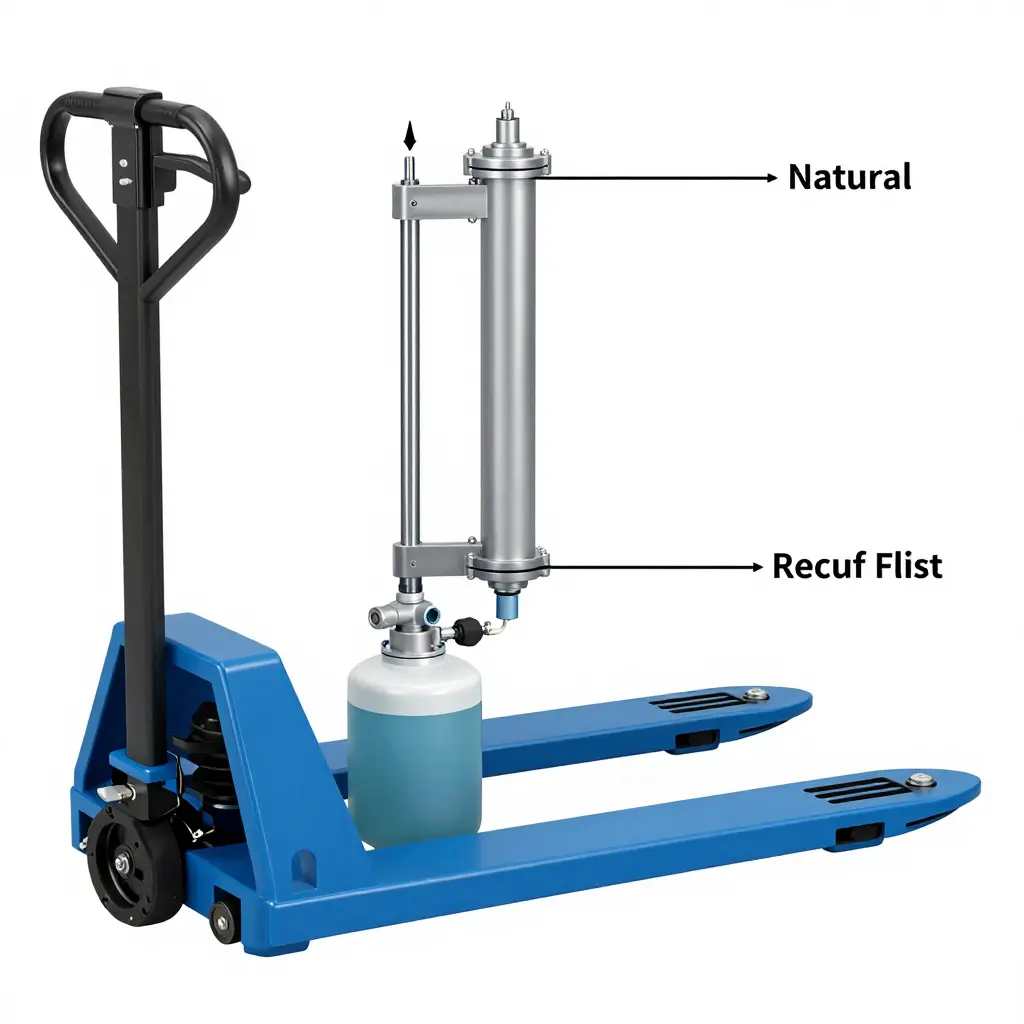
The hydraulic pump sits at the base of the handle. Each stroke pulls oil from the reservoir and pushes it under pressure into the cylinder.
The cylinder holds a piston that rises as oil enters. That rising piston is what actually lifts the load forks.
The reservoir stores the hydraulic oil and feeds the whole loop. If the oil level drops too low, the pump pulls air instead of fluid.
The relief valve acts as a safety gate. When a load is too heavy, it opens and releases excess pressure so seals and hoses do not burst.
How Lowering Works
To lower a load, a release lever opens a return path. Oil flows back to the reservoir, and gravity brings the forks down smoothly.
Why Each Service Point Matters
Each routine task protects one of these components. Hydraulic oil checks keep the fluid clean and full so the pump and cylinder stay efficient. Pump bleeding removes the trapped air that makes the handle feel spongy. Worn load wheels tilt the truck, which strains the cylinder, so wheel wear matters here too. Keeping up with all three is one of the simpler ways to maximize equipment uptime across a fleet.
Understanding the Hydraulic System Layout
Before touching any fittings, seals, or fluid levels, it helps to know what you are looking at. A pallet truck’s lifting power comes from a compact, self-contained hydraulic circuit, and the jobs in this guide (topping off oil, bleeding the pump, diagnosing a slow lift) are easier once you can name the parts and see how they connect.
The diagram above shows the parts you’ll work with: the pump, which builds pressure when you work the handle; the cylinder, which turns that pressure into lifting force; the oil reservoir, which stores and feeds hydraulic fluid; the relief valve, which protects the system from overpressure; and the load wheels, which carry the weight once the forks are up.
Step-by-Step: Checking Hydraulic Oil
On manual and electric trucks alike, the fluid system deserves special attention. Work through these steps in order for a safe, accurate result.
- Position the truck on level ground. Park the pallet truck on a flat, solid surface and engage the brake so it cannot roll or shift while you work around it.
- Lower the forks fully. Pump the handle down until the forks rest completely on the floor, which releases internal hydraulic pressure and gives you a true fluid reading.
- Locate the filler/breather plug. Find the small plug on top of the pump housing; it is typically a hex or slotted cap that vents the reservoir and seals the oil inside.
- Inspect oil level and color. Remove the plug and check the fluid against the recommended mark. Clean, amber oil is healthy; dark or milky oil signals contamination.
- Top up with the correct grade. Add the exact grade specified by the manufacturer, pour slowly to avoid overfilling, then wait a moment and recheck the level.
- Reseal the plug. Wipe the threads clean, tighten the plug snugly, and cycle the forks once to confirm everything operates smoothly.
Checking the oil every few months keeps your pallet jack hydraulic oil clean and effective and reduces pump wear. Structured preventive maintenance training helps teams spot small faults before they turn into expensive breakdowns. If the oil looks badly contaminated, or the forks still struggle to lift, drain the reservoir entirely and refill it with fresh fluid before returning the truck to service.
Pallet Truck Hydraulic Oil: Specifications and Check Frequency
The table below matches common pallet truck configurations with the right oil grade, check interval, and the signs that the fluid has gone bad. Confirm the final specification against your unit’s data plate or service manual before topping up or draining.
| Oil Grade/Type | Recommended Check Interval | Signs of Contamination | Corrective Action |
|---|---|---|---|
| ISO VG 32 hydraulic oil (standard manual truck) | Every 6 months or 500 operating hours | Milky or cloudy fluid; visible water droplets | Drain reservoir, flush system, refill with fresh ISO VG 32 |
| ISO VG 46 hydraulic oil (heavy-duty manual truck) | Every 3 months or 250 hours under heavy load | Darkened oil; metal filings; burnt smell | Replace oil; inspect seals and pump assembly |
| ISO VG 32 (semi-electric, OEM-specified) | Every 3 months or 300 operating hours | Discoloration; sludge buildup; grit in reservoir | Flush system, replace hydraulic filter, top up to mark |
| ISO VG 32 or 46 (fully electric, per OEM spec) | Every 3 months or 250 operating hours | Foaming; varnish film; metallic particles | Full oil change, new filter, verify pump and check valve |
Assessing Load Wheel Wear
Load wheels and steer wheels carry the full weight of the truck and its pallet, so they wear faster than most other parts. The load wheels under the forks take constant rolling pressure; the steer wheel takes the turning and pivoting. Over time that grinds down the tread, loosens bearings, and sends vibration through the chassis. Catching load wheel wear early is the difference between a truck that rolls smoothly and one that thumps across the floor.
How to Inspect
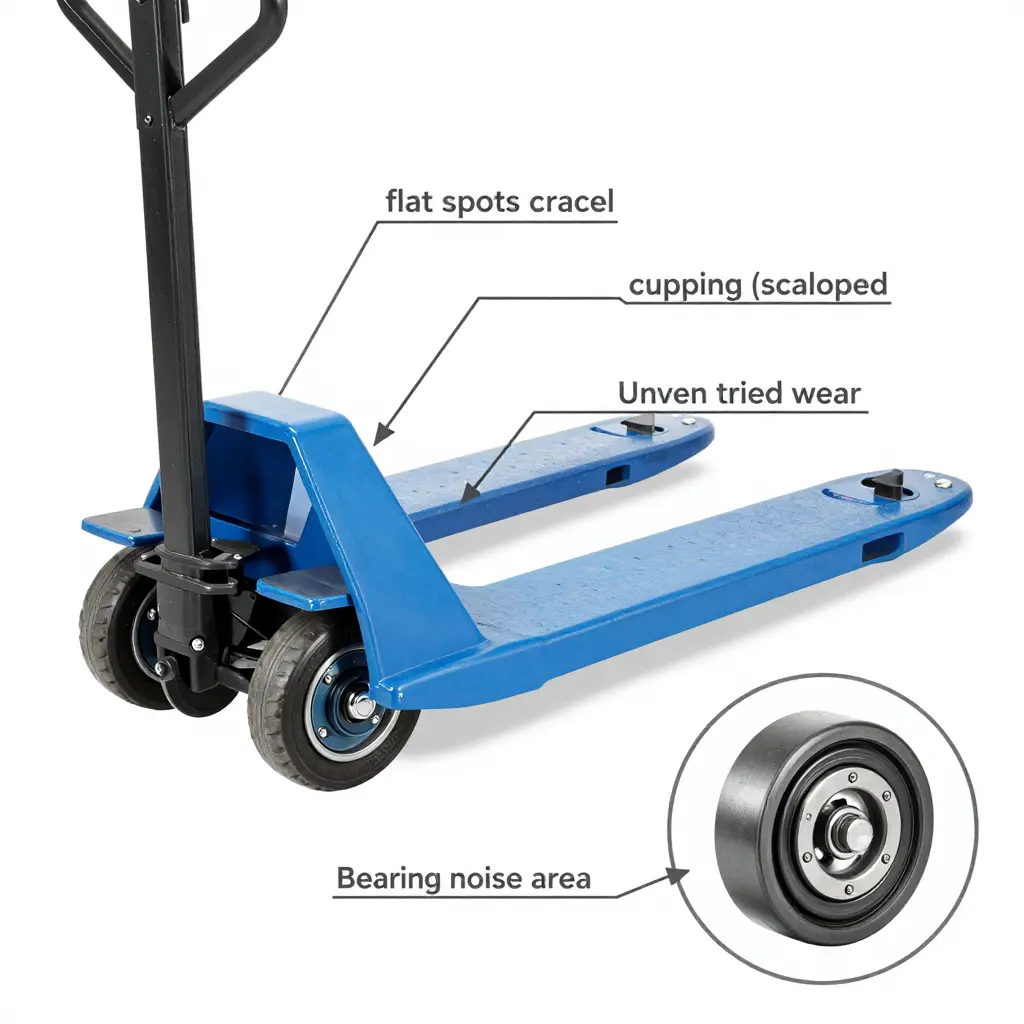
Park the truck on a level surface and raise the forks. Spin each load wheel and steer wheel by hand, listening and watching closely. Check for:
- Flat spots – thumping or a bouncing ride when the truck rolls.
- Cracks – hairline splits in the tread or hub, often from overload.
- Cupping – scalloped, wavy tread from misalignment or a bad bearing.
- Uneven tread – one side worn lower, a sign of bent axles.
- Bearing noise – grinding or rattle that points to worn bearings.
| Symptom | Likely Cause | Action |
|---|---|---|
| Flat spots | Hard braking / overload | Replace wheel |
| Cracks | Age / overload | Replace immediately |
| Cupping | Misalignment / bad bearing | Replace wheel, inspect axle |
| Uneven tread | Bent axle | Check axle, replace wheel |
| Bearing noise | Worn bearings | Replace bearing or wheel |
Measuring Against the Threshold
Measure tread depth with a caliper or a tread-depth gauge at several points around the wheel, then compare the lowest reading to the manufacturer’s minimum. On most pallet truck wheels, replace once the tread drops to roughly 3-5 mm or wear reaches the hub. Any crack, missing chunk, or exposed bearing means replace immediately, no exceptions.
Replacement Steps
- Lower the forks fully and switch off the truck.
- Lift the load end and chock or block the frame safely.
- Remove the axle bolt and slide out the worn wheel.
- Fit the new wheel, bearing, and spacers, then torque the axle to spec.
- Spin the wheel to confirm smooth rotation and no wobble.
Routine load wheel replacement keeps a truck rolling and prevents downtime. A wider preventive maintenance and service training routine keeps worn wheels from surprising your team mid-shift.
Reading the Wear Curve: Load Wheel Wear vs. Operating Hours
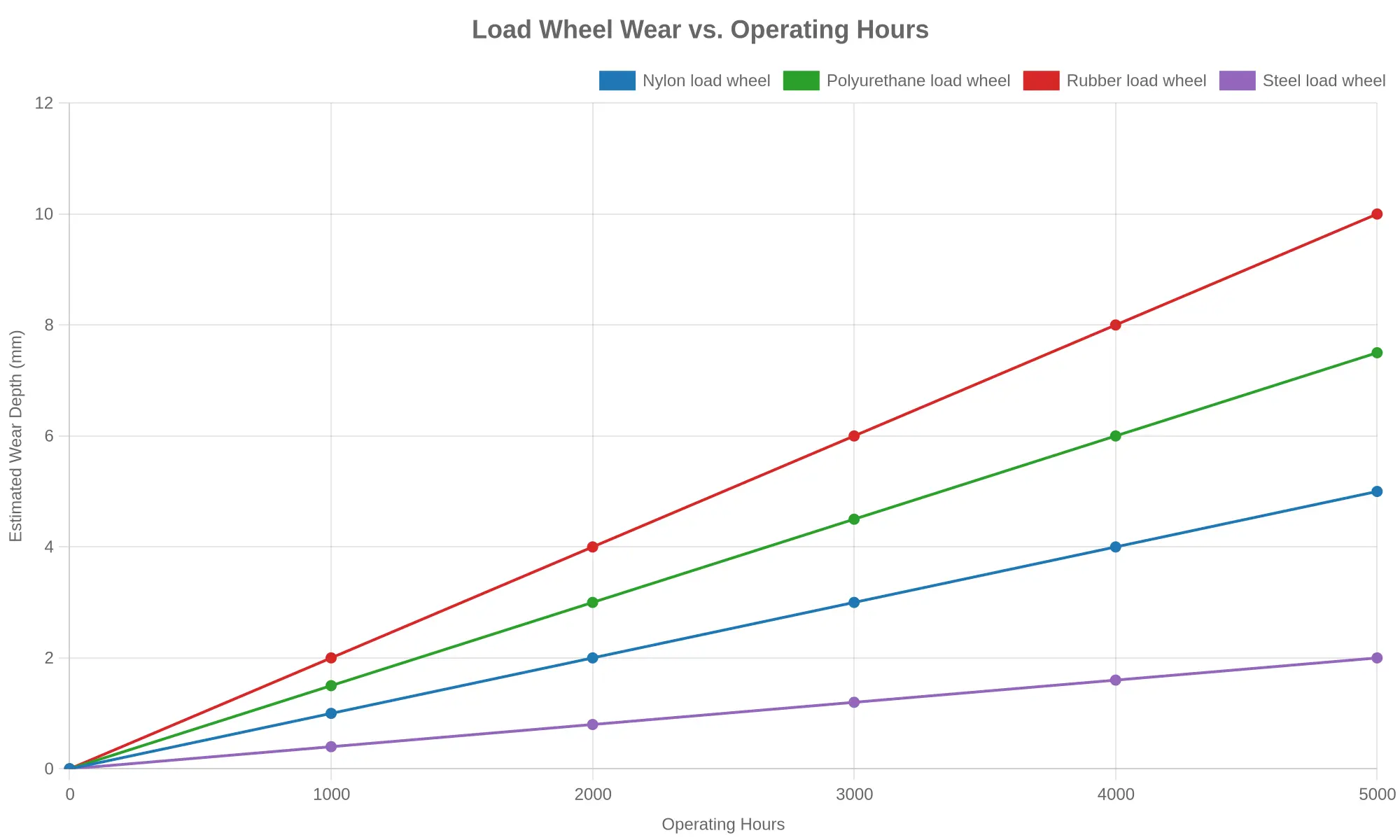
Load wheels wear down gradually rather than all at once. The chart below estimates wear depth in millimeters against operating hours for the four most common pallet truck wheel materials. Use it as a quick reference when deciding whether a wheel is due for inspection, rotation, or replacement.
How to Interpret the Trend
- Rubber wheels wear the fastest, climbing toward roughly 10 mm by 5,000 hours. That steep slope is why rubber-equipped trucks in high-traffic aisles need the most frequent wheel checks.
- Polyurethane wheels sit in the middle, reaching about 7.5 mm at the same interval. They offer a solid balance between floor protection and service life.
- Nylon wheels hold up well, reaching about 5 mm over 5,000 hours, and they resist abrasion in concrete-heavy environments.
- Steel wheels barely move on this scale, staying near 2 mm, which is why they last for years but can punish delicate flooring.
A practical rule of thumb: once measured wear depth approaches about half the original tread, or whenever you notice flat spots, chunking, or uneven rolling, it is time to pull the wheel for a closer look. Always measure wear at the same point on each wheel so readings stay comparable over time. Pairing those measurements with the smooth hydraulic performance described in our maintenance and service training guidance keeps the whole truck running predictably.
Bleeding the Hydraulic Pump
Air causes most hydraulic problems, and a pallet truck is no exception. It usually enters through a low oil level, a worn or cracked seal, a loose fitting, or a damaged O-ring. It can also get in when the reservoir is topped up carelessly, when the pump is tipped on its side during transport, or after any repair that opens the hydraulic path. Hydraulic oil is essentially incompressible and air is not, so even a small pocket of trapped air weakens the firm, responsive pressure the system needs.
The effect on lifting is easy to spot. A truck with trapped air feels spongy or mushy at the handle, lifts loads slowly, refuses to reach full height, or slowly sinks under load. In severe cases the forks will not rise at all. Regular pump bleeding restores solid, immediate lifting action and protects the pump from premature wear.
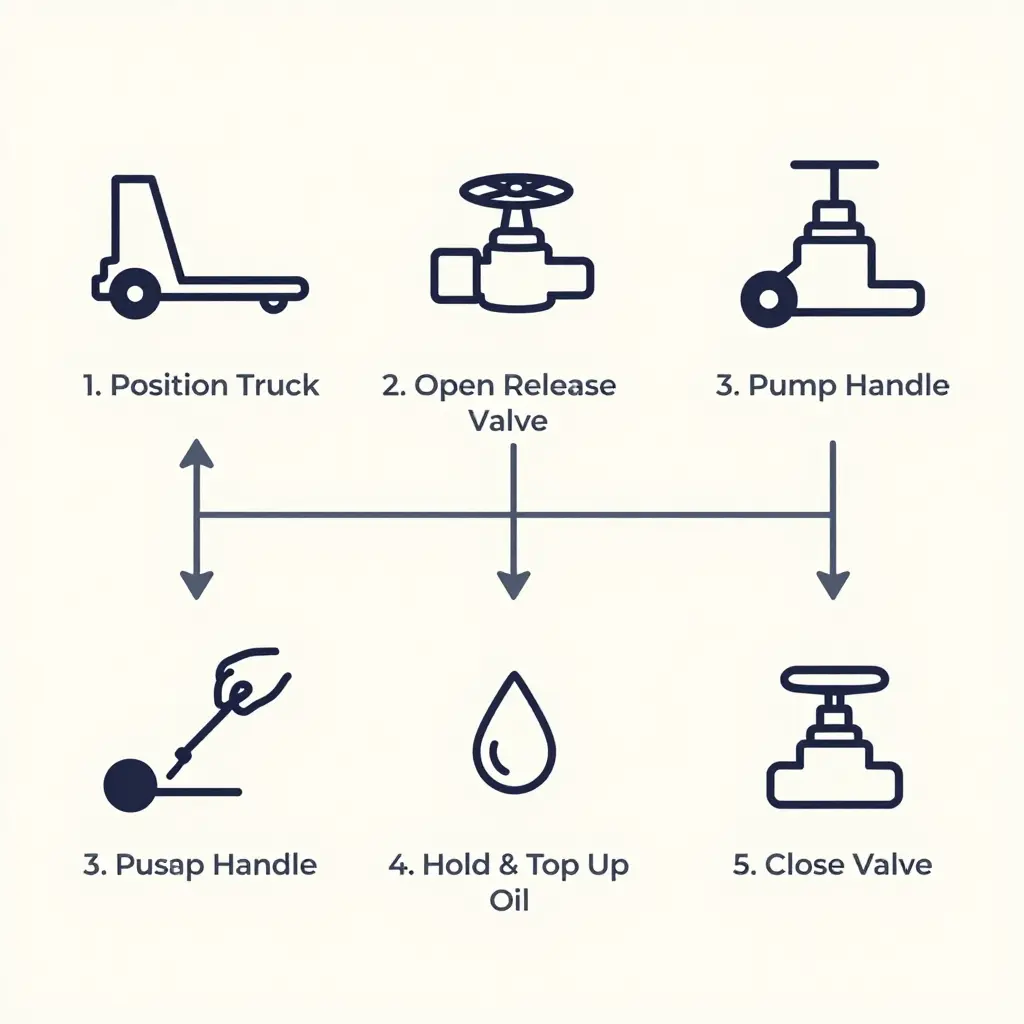
Bleed the system in this order:
- Open the release valve. Lower the forks fully, then turn the release valve to the open (down) position so all residual pressure is relieved from the circuit.
- Pump the handle several times. Work the handle through its full stroke repeatedly. This cycles oil through the pallet truck hydraulic pump and drives trapped air toward the reservoir.
- Hold the handle in the raised position. Keep the handle up and pause briefly so the separated air can escape instead of being drawn straight back in.
- Top up the oil. With the pump still raised, check the reservoir and add the correct grade of hydraulic oil until it reaches the manufacturer’s fill line.
- Close the valve. Return the release valve to the closed (up) position, then test the lift. Repeat the whole cycle if the action still feels soft.
Building a Preventive Pallet Truck Maintenance Schedule
A written pallet truck service schedule turns maintenance from a break-fix scramble into a predictable routine. Spread checks across daily, weekly, and monthly intervals, and you catch small problems such as a worn load wheel, a low hydraulic reservoir, or a spongy pump before they stall your operation.
Daily Checks (Start of Shift)
- Walk around the truck and look for hydraulic fluid puddles or drips.
- Confirm the hydraulic oil level sits within the sight-glass or reservoir mark.
- Test lift, lower, and neutral functions at both low and full height.
- Inspect forks for cracks, bends, or debris.
- Verify brakes, horn, and (on electric models) battery charge.
Weekly Tasks
- Inspect load wheels for flat spots, cracking, or uneven wear.
- Check hydraulic oil color: dark or milky fluid signals contamination.
- Lubricate chains, pivot points, and linkages.
- Tighten any loose fasteners on the handle and fork assembly.
Monthly Service
- Bleed the pump to purge trapped air that causes jerky lifting.
- Replace worn load wheels before they damage the floor or axle.
- Drain and refill hydraulic oil if it shows moisture or debris.
- Review the full service log against your fleet maintenance and service planning calendar to schedule deeper repairs.
That rhythm keeps pallet jack maintenance affordable and downtime rare. Customized maintenance training helps your technicians read wear patterns correctly and act early.
Frequently Asked Questions About Pallet Truck Servicing
What type of oil should I use in my pallet truck?
Most manual and electric pallet trucks use ISO VG 32 hydraulic oil, though some manufacturers specify ISO VG 46 for heavier duty cycles. Confirm the recommended grade in your equipment manual before topping off. The wrong viscosity can damage seals, overheat the system, and reduce lifting performance.
How often should I check the hydraulic oil?
Check the oil level at least once a month and before any period of intensive handling work; in high-use facilities, weekly checks are a good habit. Full inspections and changes follow the interval in your manual, such as every 6 months or 500 operating hours on a standard manual truck. Consistent checks catch leaks and contamination early.
What are the signs that load wheels need replacing?
Look for flat spots, cracking, chunking, or uneven wear across the wheel surface. A truck that pulls to one side, vibrates, or rolls noisily usually has worn load wheels. Replace them in pairs where possible to keep the load balanced and the steering stable.
Why will my pallet truck not lift?
A common cause is low or contaminated hydraulic oil, which prevents the pump from building the pressure needed to raise the forks. Trapped air in the system, a faulty release valve, or a worn pump seal can also stop lifting entirely. Bleeding the pump and rechecking fluid levels resolves most of these problems quickly.
How often should I bleed the pump?
Bleed the pump whenever lifting feels spongy, slow, or inconsistent, and again after any hydraulic oil change. Under normal use, a bleed every six to twelve months is generally sufficient. Structured technical training on routine equipment maintenance helps your team keep fleets running reliably and safely.
Keeping Your Pallet Trucks Working
Servicing a pallet truck is an ongoing routine, not a one-time job. The three checks covered in this guide each protect a different part of the machine. Clean oil preserves lifting power. Fresh load wheels keep the truck rolling true and stable. A properly bled pump restores the smooth, controlled response operators depend on.
Consistent maintenance shields workers from sudden failures and controls cost by replacing inexpensive components before they damage costly ones. It also keeps equipment available when the warehouse floor is busiest. Understanding how to service a pallet truck turns reactive repairs into planned work.
Build these checks into a fixed schedule, log every inspection result, and treat each finding as a signal for the next service interval. Along with strong product support aimed at maximizing equipment uptime, that discipline keeps every truck in the fleet productive. Review your current routine, confirm the oil, wheel, and pump procedures are documented, and adjust the intervals to match real operating hours.