

When your truck alerts you with the ‘Service StabiliTrak’ message, it signifies a critical issue within your vehicle’s stability control system. For long-haul truck drivers, trucking company owners, fleet managers, and aspiring truck drivers, understanding this warning is paramount. This system plays a crucial role in preventing skidding and maintaining control, particularly in challenging driving conditions. In the following chapters, we will explore what the ‘Service StabiliTrak’ message truly means, the common problems that trigger it, the urgency required in addressing it, and the steps to diagnose and rectify these issues effectively. Equipped with this information, you’ll enhance your knowledge and competency in managing your vehicle’s safety systems and ensuring optimal performance on the road.
Reading the Service Stability Warning: What It Means for Your Truck’s Safety and Control
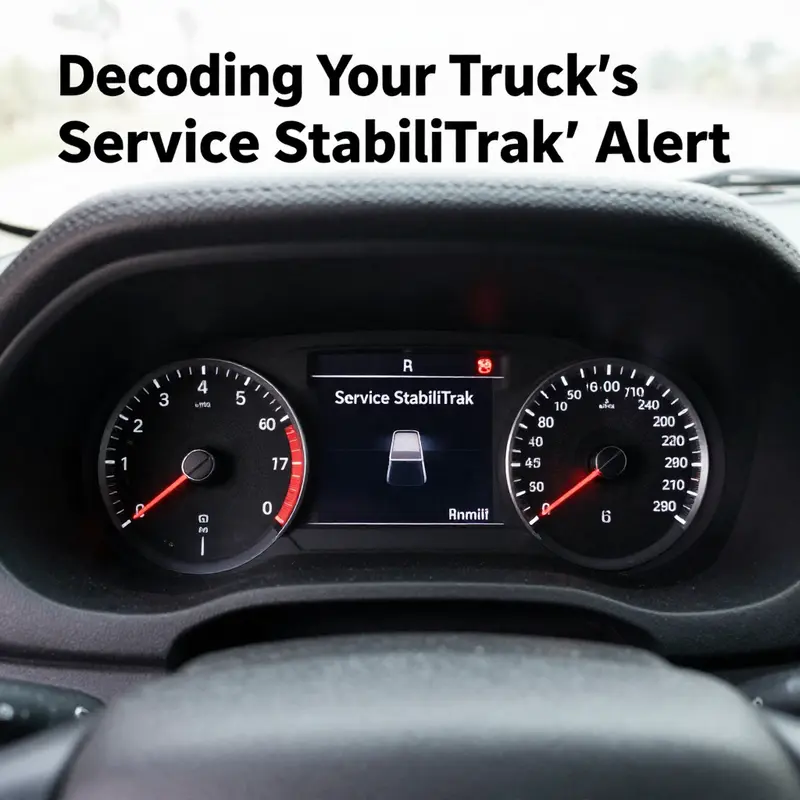
When the stability warning appears on your dashboard, it signals that the electronic stability control system has detected a fault that could affect steering, braking, and overall stability. The system helps manage wheel slip and yaw by applying brakes to individual wheels and, if needed, adjusting engine power. A fault can be triggered by worn or faulty wheel speed sensors, a malfunctioning steering angle sensor, brake system issues, or electrical faults. A professional diagnostic is required to read stored codes (DTCs) and verify the fault with live data and component tests. Not every occurrence means a total failure, but persistent or repeating warnings should be treated as a real fault. Until repaired, drive cautiously: reduce speed, increase following distance, avoid abrupt maneuvers, and stay alert for changing road conditions. Schedule a diagnostic inspection with a qualified technician at a dealership or shop equipped for electronic stability control systems to identify the exact cause and complete the necessary repairs or software updates. Following manufacturer guidance is important, as is ensuring proper calibration after sensor or module replacement. Driving with a malfunctioning stability control increases risk in wet, icy, or emergency driving scenarios, so prompt attention helps restore the system’s protective safety net.
Reading the Signals: Tracing Common Problems Behind a Service StabiliTrak Alert

When a truck dashboard lights up with a Service StabiliTrak warning, it doesn’t always mean the engine is about to stall or that a tire is flat. It signals a fault in the electronic stability control system, a safety feature designed to help you keep the vehicle under control under demanding conditions. StabiliTrak, like its counterparts in many modern trucks, monitors how the vehicle behaves during cornering, braking, and throttle input. When it detects a mismatch between the driver’s intent and the vehicle’s actual response, it steps in. It can brake individual wheels, adjust engine power, or both, to prevent skidding and loss of control. The warning light is a flag—not a final verdict—that something in the system has fallen out of spec. Reading that flag correctly means understanding that the system relies on a network of sensors, wires, and a central control module. A fault in any one part can trigger the message, and sometimes more than one issue can be involved at once. The reality is that the warning is a prompt to investigate rather than a fix in itself, a reminder that stability control is a composite safety feature rather than a single gadget on the dash.
The most common prompt for a Service StabiliTrak alert is a faulty sensor. Modern trucks depend on several sensors to track how the vehicle moves and how the driver steers. Wheel speed sensors are tucked near the wheel hubs and feed real time data about each wheel’s rotation. Dirt, grime, or physical damage can cloud the readings, causing the ESC to miscalculate traction and grip. The steering angle sensor, which gauges how much and in what direction the steering wheel is being turned, may drift or fail. If the system thinks you are steering the vehicle in a different way from your actual input, it may contend that you are losing control and respond by cutting power or braking outputs to restore stability. The yaw rate sensor, sometimes called the body yaw sensor, measures the vehicle’s rotation around its vertical axis. A fall in accuracy here can falsely signal a skid even when the truck is traveling straight. The lateral acceleration sensor, which reads side-to-side forces, also feeds the stability calculations. When any of these sensors give erroneous data, StabiliTrak may overreact or underreact, leading to the warning you see on the dash.
Electrical faults are another frequent culprit. The system’s sensors do not operate in isolation; they communicate with the StabiliTrak control module and the ABS system through a network of wiring and connectors. A damaged harness, a corroded connector, or a blown fuse can interrupt this communication. Short circuits or grounding issues can create a cascade effect, confusing the ESC and triggering a fault code that lights the warning. In some cases, an electrical fault may not stem from a single bad wire but from an evolving issue, such as heat damage or vibration-induced wear in a bundle of wires under the hood or in the wheel wells. The complexity of this network means that a simple inability to read a sensor correctly can cascade into a system-wide alert.
Sometimes the problem sits in what you might consider the brain of the operation—the StabiliTrak control module itself. This electronic control unit processes sensor data, determines how much braking to apply and when to throttle back, and coordinates with ABS to manage wheel slip. If the module begins to fail, or if its software becomes corrupted, the system can lose its ability to interpret legitimate signals as well as faulty ones. In this light, the Service StabiliTrak warning can be a symptom of a software fault rather than a hard hardware failure. Software issues are not unusual; in the field, updates and recalibrations can restore proper function, but they require specialized diagnostic tools that read the codes stored in the vehicle’s computer. The notion that this warning could be purely software-driven is not a fantasy; it is a practical reality that technicians must confirm with the right tools before replacing hardware.
This is where the concept of fault codes becomes central. A flashing or steady service indicator is a beacon, not a diagnosis. A professional diagnostic scan will pull diagnostic trouble codes, or DTCs, from the ESC module. These codes pinpoint the likely origin—whether a wheel speed sensor is out of spec, a steering angle sensor is misreporting input, a yaw sensor is drifting, or there is a broader electrical fault affecting the data pathways. It is common to see multiple codes associated with a single condition, especially if a sensor reads inconsistently or if a harness is intermittently failing. The specifics matter. For example, a code associated with a wheel speed sensor might point the technician toward cleaning the sensor, checking the tone ring, or replacing the sensor itself. A code tied to the steering angle sensor may require recalibration after repair to ensure the system reads the driver’s intent correctly. And while a fault code like P0507 is often cited in discussions of sensor trouble, the key point remains: the code gives the direction of the investigation, not the final stopping point. The diagnosis must consider the vehicle’s behavior, the road conditions, and the driver’s reports of when the warning occurs.
The impact on driving is not merely theoretical. The ESC system is designed to prevent loss of control, particularly in slippery conditions, during abrupt lane changes, or when braking on a curve. When the system is disabled—or when it operates erratically—the vehicle loses a layer of protection. It does not mean you cannot drive; it means the car is not operating at its full safety potential. In dry, sunny weather, you might notice the vehicle handles as usual, but in rain, snow, or ice, you will want the extra cushion that stability control provides. Even in normal weather, a degraded ESC can prolong stopping distances or make the vehicle more prone to understeer or oversteer during a sudden maneuver. Practically, that means a driver must adapt by reducing speed, avoiding aggressive steering inputs, and planning longer stopping distances until the system is repaired.
The diagnostic approach is both straightforward and exacting. A professional technician begins with a road test to observe behavior and validate the complaint. Then the service bay or a diagnostic scanner reads the ESC’s memory for stored codes. After corroborating the codes with the observed symptoms, the technician will check the wiring and connectors for obvious faults, inspect and test wheel speed sensors and the steering angle sensor, and verify the integrity of the ABS subsystem. This step often reveals that even if the ESC warning was triggered by a sensor fault, the root cause may include related components in the ABS network or in the harnesses that connect them. Cleaning dirt buildup on wheel speed sensors, repairing damaged wiring, or replacing a sensor is not always the end of the story. In some cases, a failed control module or a faulty software calibration will require module reprogramming or replacement.
The maintenance implication for truck owners is clear. Regular checks of wheel alignment and tire condition matter not only for tire wear but for the proper functioning of stability control. Worn tires, uneven tread, or incorrect tire pressures can alter wheel speed readings and yaw measurements, which in turn can confuse the ESC. Low tire pressure is a common, overlooked trigger that can push the system toward false positives. A tire that is underinflated on one corner can create an imbalance that the ESC interprets as instability. In turn, it may trigger a warning or cause the system to intervene more aggressively than necessary. The best practice is to maintain consistent tire pressures across all four corners and to replace tires when tread depth becomes insufficient. Periodic alignment checks ensure that steering inputs translate correctly into the vehicle’s intended path, which preserves the integrity of the ESC calculations.
In many cases, vehicle owners can take proactive steps to reduce the chances of nuisance alerts. Routine cleaning of wheel wells and sensors can prevent dirt and grime from interfering with sensor readings. A close inspection of fuses and relay modules relevant to the stability control and ABS circuits can catch heating or corrosion issues before they escalate. Moreover, it is prudent to schedule regular maintenance that specifically covers the ESC system and its associated sensors. This kind of proactive approach reduces the likelihood of an unexpected warning and keeps the stability control working as designed when it matters most. The goal is not to chase every possible fault but to create a reliable baseline in which the ESC can function as intended during emergencies, road spray, or sudden evasive maneuvers. For drivers and fleet operators alike, stability control is a foundational safety feature rather than a luxury add-on, and that distinction should guide maintenance priorities.
From a user experience perspective, the Service StabiliTrak warning should be treated with seriousness, not fear. If you notice the light come on after hitting a pothole or after a heavy wheel load in rough terrain, you might suspect a temporary hiccup. If the light remains on, or if the vehicle exhibits unusual steering behavior, the prudent course is to seek professional diagnosis rather than continuing to drive and hope the problem clears itself. This is not a system to be reset without understanding why the warning appeared. A reset without repair can mask a fault and leave the driver relying on brakes and traction control features that may not respond in an emergency. In other words, treating the warning as a clue rather than as a nuisance keeps you safer on the road and reduces the chance of subsequent, more expensive repairs.
To wrap the concept into a practical mindset, consider this: the alert is the vehicle’s way of telling you that a sophisticated safety system is not receiving the reliable data it needs to function. It is a reminder that your truck’s stability is the result of an intricate dance among hardware, software, and driver input. If any piece of that dance falters, the body’s natural response—our instinct to slow down and adjust—needs to be accompanied by professional attention. In the context of fleet management or daily work use, this is where having a trusted technician or a dependable service partner matters most. They can translate the codes, interpret sensor readings, and confirm whether a repair involves a sensor, a wire, a module, or a software update. The objective is not merely to silence the warning light; it is to restore the integrity of the stability control so that the truck can respond to the demands of the road with confidence.
For those seeking a broader perspective on maintaining uptime and system reliability, there is value in consulting additional resources on vehicle maintenance and safety system integrity. A practical route is to explore structured maintenance strategies that emphasize essential product support and spare parts readiness, which aligns well with keeping stability control components in good working order. Unlocking Fire Apparatus Uptime: Essential Product Support Secrets offers a perspective on proactive maintenance that can translate to heavy-duty trucks as well as emergency vehicles. Unlocking Fire Apparatus Uptime: Essential Product Support Secrets
For a wider safety context about stability control systems and their role in preventing crashes, consult a trusted external resource that outlines how electronic stability control works and why it matters for road safety. External resource: https://www.nhtsa.gov/vehicle-safety/vehicle-stability-control
Reading the Silent Alarm: Why Timely Action When Your Truck Says Service StabiliTrak Keeps You Safe

When the Service StabiliTrak warning lights up, it signals that the Vehicle Stability Control system may not be providing its usual level of support. This warning does not mean the truck is unsafe, but it does mean you should exercise caution and seek a professional check as soon as possible. The system helps prevent understeer or oversteer by coordinating brakes, throttle, and steering. A fault can come from dirty wheel speed sensors, a bad steering angle sensor, ABS issues, wiring faults, or a miscalibration. In many cases a simple sensor cleaning, a wiring repair, or a software update can restore normal operation. If you must drive, reduce speed, avoid abrupt maneuvers, and maintain extra distance. A guaranteed fix requires diagnostic tools to read fault codes and verify sensor data. Routine maintenance, including tire condition, wheel alignment, and brake fluid levels, helps prevent nuisance warnings. If the warning persists, schedule service promptly. The goal is to restore confidence in the system so it can intervene when conditions demand it.
Reading the Warning: Understanding and Responding to Service StabiliTrak Alerts on Your Truck
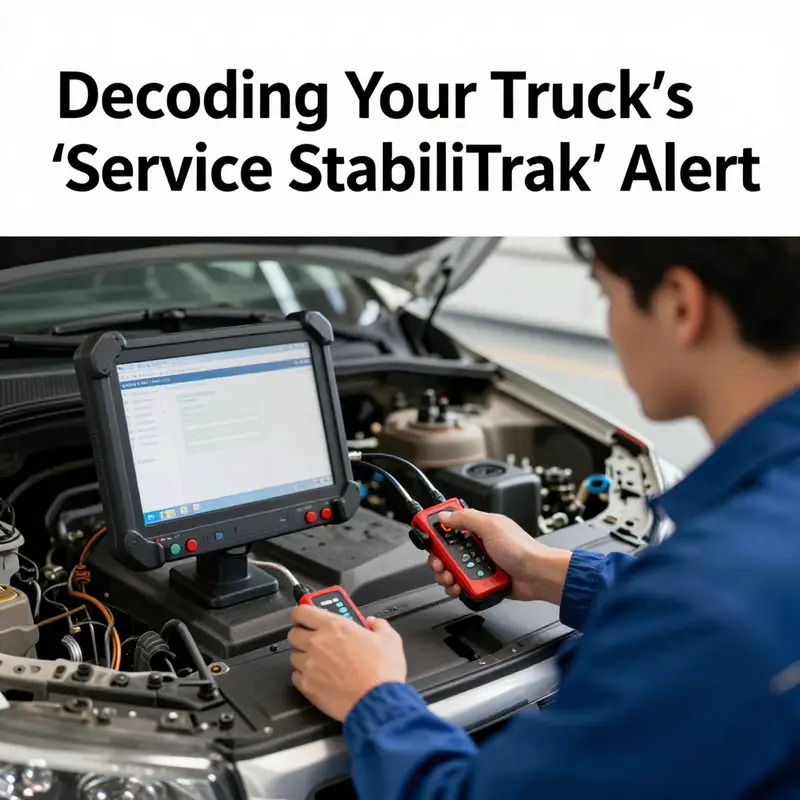
When you see a warning light or message that says service StabiliTrak lighting up your instrument cluster, it isn’t a routine reminder to perform a simple function. It is the stability control system itself telling you it has detected a fault that could affect how it helps you stay on course. StabiliTrak, the stability control technology in many modern trucks, acts as an invisible co-pilot. It continuously watches how the vehicle is moving—how fast each wheel is turning, the angle of the steering wheel, how the vehicle is yawing or tilting, and how the tires grip the road. If any sensor readings diverge from what you intend through the steering input, the system steps in. It can apply braking force to individual wheels, modulate engine torque, or both, to nudge the truck back toward the path you wanted. When the warning lights up, it means something has disrupted that safety net, and the vehicle is either operating with reduced support or, in some cases, with the system temporarily unavailable. The distinction between a temporary glitch and a true fault matters a lot for how you drive away from the moment you notice the message.
To grasp what this means on the road, it helps to understand the multiple senses the system uses. Wheel speed sensors read how fast each wheel is turning and compare those readings to detect slip or loss of traction. The steering angle sensor looks at how much steering input you’ve given and compares it with where the vehicle is actually headed. A yaw rate sensor and a lateral acceleration sensor help map the vehicle’s actual movement in space, so the system can tell if the truck is sliding, spinning, or departing from the driver’s intended path. When these readings don’t agree, the system flags a fault. It may still let you drive, but the steering feel can become heavier, or the brakes may be more forthcoming to certain wheels, even if you didn’t request them. In a challenging weather scenario—rain, sleet, or snow—that fault can turn into a real safety concern if you push the truck to its performance limits.
Responding to service StabiliTrak begins with recognizing that not every momentary hiccup is a crisis. A one-time message after a rough road patch or a momentary electrical fluctuation could resolve itself with a simple reset. Yet a persistent warning should not be treated as minor. The stakes rise in wet or slick conditions, when the system is most valuable. The first impulse should be to slow down and assess. If you’re on a highway, move to a safe lane, reduce speed, and avoid aggressive maneuvers. If you feel the truck behaving differently—less predictable braking, a nudge toward one side during cornering, or a sudden deceleration you didn’t anticipate—stop somewhere safe and consider a professional evaluation rather than continuing to drive.
The diagnostic path for service StabiliTrak is not something most drivers can complete reliably with a quick glance at the dashboard. The modern stability system stores diagnostic trouble codes in the vehicle’s computer. These codes point to the exact sensor, wiring, or module that is malfunctioning. Reading these codes requires an advanced diagnostic tool that can interrogate the vehicle’s data stream. A shorthand description such as fault in wheel speed sensor or steering angle sensor is only the tip of the iceberg. A technician will typically scan for codes, review live data, and observe sensor readings in real time to confirm whether the fault is a dirty sensor, a damaged connector, or a failing control module. In some cases, software within the system can be updated to correct a software glitch that isn’t tied to a physical component. In others, the fault is hardware-based and requires replacement parts.
If you decide to attempt an initial reset, do it with caution. The recommended basic reset is simple: turn off the engine and wait for about 30 seconds before restarting. This action can clear minor glitches that arise from transient electrical noise or a bit of dirt on a sensor tip. It is not a fix for a real fault, and if the warning returns, you should not assume the problem is gone. After the reset, drive gently and monitor for any recurrence of the warning or changes in how the vehicle handles. If the message persists, the hard truth remains: you need a professional diagnostic session. A shop equipped with an OBD-II diagnostic tool and the ability to read advanced vehicle data will pull codes that begin to illuminate the path to a real repair. These codes often fall into families tied to wheel speed sensors, access to the ABS subsystem, or problems within the stability control module itself. Even a miscalibrated steering angle sensor can trigger the warning. The technician’s job is to correlate the code with the current vehicle behavior, not simply replace components in a guessing game.
Among the most common culprits is a faulty wheel speed sensor. Each wheel has a sensor that reports how fast it’s turning to the system. If debris, dirt, or metal shavings cling to the sensor tip or the reluctor ring—the toothed wheel it reads—signal integrity can deteriorate. A simple cleaning of the sensor and its reluctor ring often resolves the fault. If the sensor is damaged or if the wiring to the sensor is compromised, replacement becomes necessary. Wiring problems can be less obvious but equally disruptive. Corrosion, frayed insulation, or loose connectors in the wheel wells or along the harness can lead to intermittent faults that produce warning lights without obvious symptoms while you are driving. Inspecting the harnesses and connectors for corrosion, moisture intrusion, and secure mating is a critical part of the diagnostic process.
The steering angle sensor calibrates against the driver’s intended path. If calibration drifts or becomes misaligned, the system may misread the vehicle’s true trajectory and decide to intervene incorrectly or refuse to intervene when it should. The ABS-related sensors and their wiring also play a role because the stability system often shares information with the ABS module about braking performance and wheel slip. A minor misalignment in the front end, or even a warped rotor or a low brake fluid condition, can echo through the stability control system and produce a false fault code. The stability control module itself, the ECU that ties all these signals together, can fail or require software updates to address a known glitch. Software updates are not universal panaceas, but in some cases they resolve intermittent warnings without hardware replacement.
So what does this mean for your driving routine? If the light appears once, you can consider performing a careful reset and monitoring the situation, but do not press your luck. If the warning reappears, schedule a diagnostic appointment. When you bring the truck in, ask for a comprehensive check of the wheel speed sensors, including cleaning and inspection of the reluctor rings, as well as a careful look at the steering angle sensor calibration and the ABS sensor network. The technician will also verify brake fluid level and condition, as low fluid or contaminated fluid can contribute to braking anomalies that the stability system interprets as a fault. Electrical harnesses should be inspected for signs of wear, moisture intrusion, or loose connections—especially in the wheel wells where road debris and water spray can accelerate deterioration. In some cases, a hardware replacement—sensor, connector, or even a control module—will be required. In others, the issue may be a simple recalibration, an alignment correction, or a software update that clears a vexing fault code.
The practical takeaway is simple: you should not operate a truck that shows service StabiliTrak as if the system is fully reliable. The stability control network is a warning system as much as a safety system. If it flags a fault, treat the road with extra caution, especially in wet conditions or during sudden maneuvers. Your best course is a professional diagnostic under controlled conditions. A qualified technician uses specialized tools to retrieve precise diagnostic trouble codes and to monitor live sensor data in order to identify whether the fault is a sensor, wiring, or control module issue. Once the diagnosis is confirmed, the repair plan can range from cleaning and tightening to parts replacement or software reprogramming. The crucial outcome is restoring reliable stability protection, not simply silencing a warning light.
In the broader context of vehicle safety and maintenance, the service StabiliTrak message underscores the importance of proactive care. Regular inspections of sensor housings, wheel hubs, and brake components help prevent many issues before they surface as warning lights. Cleanliness matters because dirt can obscure sensor tips and create erroneous readings; moisture can corrode connectors and compromise signal integrity. If you’re responsible for a fleet, the same logic applies at scale: routine maintenance protocols that include sensor cleaning, connector checks, and calibration verification contribute to higher uptime and safer operation, especially in critical environments where road conditions can deteriorate quickly. Within this framework, staying informed about how the system works helps you interpret warning signs accurately and act decisively when a fault is detected.
For drivers who want to understand how these safety systems interlock with overall vehicle dynamics, it helps to think of StabiliTrak as a last line of defense that keeps drift and sudden loss of control from becoming an accident. It’s not a guarantee of invulnerability, but it is a powerful tool that requires reliable data to function properly. That data comes from a network of sensors and wires that must be free from dirt, corrosion, and damage. When that network is compromised, the warning light is your cue that you and your vehicle should not rely on the system in its current state. The next step is a service visit where a technician can confirm the fault, repair or replace the faulty component, and re-establish the sensor calibration and system logic so that StabiliTrak can once again do its part to keep you on your intended path.
As you navigate this process, consider the value of integrating diagnostic awareness into your routine maintenance mindset. A simple habit—checking for warning lights during pre-trip inspections, keeping wheel wells clean, and ensuring brake fluid levels are within spec—can reduce the likelihood of a surprise service event. It also makes the upcoming diagnostic session smoother, which can shorten downtime and get you back on the road with confidence. If you want a practical framework for maintaining essential safety systems across your fleet or personal vehicle, you may find it helpful to explore focused maintenance resources that tie into the broader discipline of keeping emergency and heavy-duty trucks ready for duty. For more on maintenance and service training in this area, see fire-truck-maintenance-service-training.
To deepen your understanding of how these systems work in the real world and to see the safety implications laid out by the industry’s standard procedures, consult the official service bulletins published by the vehicle manufacturer. These documents detail calibration procedures, sensor testing methods, and software update recommendations that guide technicians through correct diagnostic and repair steps. They are the authoritative reference for how the system should behave after a repair and what pendulum of tests should determine the system is back to proper specification. For a practical, hands-on reference, consider reviewing the broader context of how modern stability and braking systems are integrated into daily maintenance routines. External resources from the vehicle manufacturer provide in-depth guidance on diagnosing and repairing these safety-critical components; they offer the technical language and step-by-step procedures technicians rely on in the shop.
External resource: https://www.gm.com/tech-bulletins
Final thoughts
Understanding what the ‘Service StabiliTrak’ message means and responding promptly is key to maintaining your truck’s safety and performance. This system is designed to provide assistance when you most need it, especially under challenging conditions. Failing to address these notifications can lead to safety hazards, decreased operational efficiency, and costly repairs. By diagnosing and rectifying any issues as soon as they arise, you not only improve the longevity of your vehicle but also ensure the safety of everyone on the road. Stay informed and proactive; your awareness can make a significant difference in your driving experience.