
For long-haul truck drivers, fleet managers, and aspiring drivers, vehicle reliability is paramount. A&C Mobile Truck Service stands at the forefront of this need, providing innovative, on-site maintenance and repair solutions. By effectively eliminating the traditional service center model, A&C Mobile Truck Service enhances efficiency and minimizes downtime—a critical factor for trucking companies relying on a robust fleet. In this exploration, we will dive into their unique business model and on-site solutions, core services and operations that keep trucks roadworthy, and the tangible market impact created through customer engagement strategies. Together, these elements form a comprehensive view of how A&C Mobile Truck Service is transforming the trucking landscape.
On-Site Responsiveness and Fleet Uptime: Reimagining Truck Care with A&C Mobile Truck Service
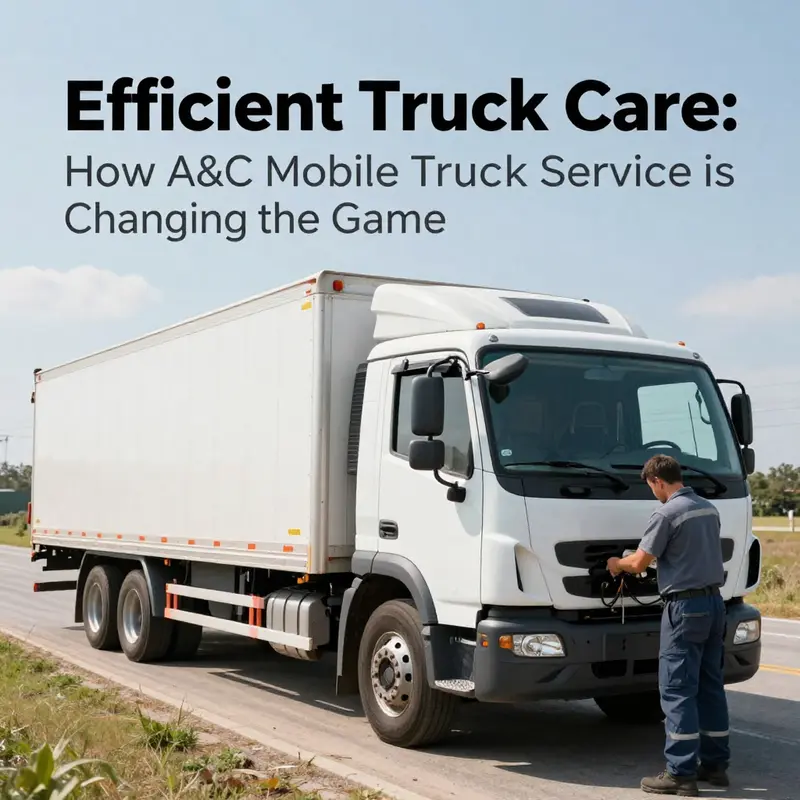
A&C Mobile Truck Service has built a distinctive niche around a simple, powerful premise: keep commercial trucks where they work—on the road, in the yard, or at a loading dock—while delivering the same or higher levels of reliability you would expect from a traditional shop. Based in Peoria, Arizona, this operation turns what used to be a choice between downtime and disassembly into a deliberate strategy of uptime. The chapter that follows traces how a mobile fleet service model integrates people, processes, and technology into a seamless on-site solution. It is a story of speed, precision, and ongoing value, not merely a breakdown fix at the curb. It is a model designed for fleets that measure success by minutes rather than miles per gallon alone—minutes saved, time regained, and miles gained back in service continuity.
From the outset, the core differentiators of A&C Mobile Truck Service are laid bare: professionalism, mobile on-site service, and maintenance management. The emphasis on professionalism signals a disciplined approach to workmanship, backed by trained technicians who diagnose with accuracy and repair with accountability. In a mobile context, professionalism extends beyond competence; it includes appearance, communication, and respect for client operations. Dispatchers coordinate rapid responses and engineers translate complex engine data into actionable on-site work plans. The true test of professionalism, however, lies in the consistency of outcomes when a fleet operator needs a repair completed accurately, the first time, without the luxury of a traditional shop waiting line.
The second differentiator—mobile on-site service—acts as the operating engine of the business model. Technicians equipped with a portable workshop assemble the tools, diagnostic devices, and essential parts needed to address a wide range of issues wherever the vehicle is located. Whether at a warehouse, distribution center, or roadside, the technicians arrive with a focused toolkit designed to minimize downtime. This on-site capability is not just about proximity; it is about the ability to execute targeted, data-informed interventions that restore function quickly and reliably. In practice, this means the mobile team can perform engine diagnostics, diagnose diesel engine concerns, address transmission issues, and carry out preventative maintenance without forcing fleets to tow, schedule, or relocate vehicles to a fixed facility.
The third differentiator—maintenance management—transforms maintenance from a reactive activity into a strategic capability. By capturing service history in a centralized system, the on-site team helps fleet operators anticipate upcoming needs, schedule preventive maintenance before failures occur, and optimize the overall health of the fleet. This data-driven approach yields several tangible benefits: fewer unplanned breakdowns, longer engine life, and more predictable budgeting. The maintenance-management discipline also supports regulatory compliance and safety programs by documenting service intervals, parts used, and inspection results in a readily auditable format. In effect, maintenance management closes the loop between execution and planning, turning each service call into a data point that informs future interventions and performance forecasts.
Industry alignment reveals how this mobile model fits into broader shifts in fleet operations. Across the trucking sector, there is a growing preference for result-oriented, service-based solutions that prioritize uptime and throughput over raw capacity. The regenerative result-oriented product-service (RROPS) mindset described in academic discourse resonates with the way A&C approaches fleet care: deliver measurable outcomes, reduce downtime, and maximize asset utilization. While the operation described here is not a closed-loop or circular-economy system by itself, its emphasis on preventive maintenance and rapid on-site response contributes to longer vehicle life, lower total cost of ownership, and reduced environmental impact by avoiding unnecessary vehicle replacements and the emissions associated with vehicle relocation.
One can picture a typical day in Peoria for a fleet operator who relies on A&C Mobile Truck Service. A day begins with a dispatch that prioritizes urgency and impact on the customer’s operation. A technician heads out with a fully equipped van that carries diagnostic laptops, onboard testing modules, a compact air compressor, hydraulic tools, and a curated selection of commonly needed wear parts. The driver arrives at the customer site, checks in with the fleet coordinator, and immediately proceeds to a structured assessment. Engine diagnostics may reveal a software salt-and-pepper of fault codes, sensor readings, and live data streams. The technician interprets the data, prioritizes fixes that can be completed on-site, and discusses the plan with the fleet manager. If a problem can be resolved in one visit, the vehicle remains in service, and downtime is minimized. If a part is needed, the technician coordinates a quick parts drop or schedules a follow-up visit, all while maintaining clear communication with the operation. This process blends technical skill with logistical agility, turning a potential disruption into a controlled, predictable event.
What makes this approach sustainable over the long term is its emphasis on prevention as the driver of efficiency. The on-site maintenance services focus on more than just responding to failures. They examine wear patterns, monitor critical wear points, and implement service intervals that reflect real-world usage, idling times, and load demands. In other words, the model uses maintenance not as a cost center but as a preemptive investment in uptime and reliability. This perspective aligns with industry trends toward proactive care, where the objective is not simply to fix broken components but to minimize the probability of breakage in the first place. A&C’s technicians, therefore, operate as both troubleshooters and caretakers of a fleet’s operational heartbeat.
Integral to this approach is the idea of maintenance management as a collaborative process. The fleet operator brings the business context—the routes, the schedules, the demand peaks—while the on-site team supplies the technical lens and the data-driven view of what the vehicle needs and when. The fusion of these perspectives allows for a more precise calibration of service timing and scope. A routine service may be scheduled during low-demand windows, allowing the vehicle to return to work quickly, while a more complex repair could be staged in a way that minimizes impact on production lines or delivery timelines. This synergy between client operations and mobile service capacity is what elevates the traditional shop-to-road dichotomy into a coherent, responsive system.
From a capacity perspective, the mobile model also reshapes how technicians are deployed and how inventory is managed. Rather than maintaining a fixed inventory in a central shop, the mobile unit relies on a portable stock of essential components, diagnostic modules, filters, oils, and wear parts that can cover a broad set of common issues. When a repair requires a part not carried in the field, the team can orchestrate same-day delivery through a reliable supplier network, or swiftly arrange an additional visit with a pre-identified part, thus keeping the work sequence aligned with the customer’s production needs. This flexibility reduces the friction between diagnosis and repair and ensures that a single visit can translate into a complete, quality repair whenever possible.
Beyond the technical and logistical elements, a crucial dimension of A&C’s model is the emphasis on reliability through consistency. The same standard of workmanship, regardless of location, builds trust with fleet operators who depend on predictable outcomes. Technicians are trained to document findings with precision, explain the rationale behind recommended interventions, and respect the customer’s operational constraints. In a business where minutes matter, clear communication becomes as important as the repair itself. The combination of disciplined processes, skilled technicians, and a supportive dispatch system fosters a workplace culture centered on accountability and continuous improvement.
The narrative of this mobile fleet service approach would be incomplete without acknowledging the value of third-party thought leadership that reinforces similar principles. For fleets seeking practical guidance on maintenance principles, the industry discourse often points to case studies and best practices compiled by fleet-focused channels. A concise example can be found in the 5Star Truckin blog, which distills practical strategies for maintenance planning and uptime optimization. This reference is not a prescriptive endorsement but a corroborating voice that aligns with the on-site maintenance discipline described here. It underscores the idea that maintenance should be a proactive, data-informed discipline embedded within the daily rhythm of fleet operations. For readers exploring broader perspectives, a quick consult with that resource can offer complementary viewpoints while staying consonant with the operational realities of mobile fleet repair services.
The practical implications for fleet operators are straightforward. By choosing a mobile, on-site maintenance partner, fleets reduce the frequency and duration of vehicle downtime. They gain a partner who can perform diagnostic testing, execute repairs, and manage preventive maintenance remotely, all while aligning with the fleet’s specific schedules and routes. The on-site model also simplifies regulatory tracking and safety compliance. When service history is captured and stored in an accessible format, audits, inspections, and maintenance planning become more efficient. This is not a marginal convenience; it is a core capability that enhances reliability, reduces risk, and strengthens operations across the supply chain.
As we consider the broader impact, it is useful to reflect on how a mobile service paradigm resonates with customers’ strategic priorities. In sectors where trucks operate around the clock, every hour of downtime translates into lost revenue and diminished service levels. A&C Mobile Truck Service reframes maintenance as an inline function of throughput rather than a discretionary expense. By delivering rapid diagnostics, targeted on-site repairs, and a disciplined maintenance cadence, the company helps its clients sustain high utilization of their fleets. The result is a more predictable cost structure, better asset utilization, and a reduction in the operational volatility that can creep into busy logistics networks. In conversations with fleet managers, such outcomes often translate into a clear preference for service models that center on uptime, transparency, and collaborative problem-solving.
In closing, the A&C Mobile Truck Service model is more than a convenience. It is a deliberate reimagining of how fleet care is delivered in the modern era. By combining on-site responsiveness, a professional standard of workmanship, and forward-looking maintenance management, the service aligns with contemporary expectations for efficiency, reliability, and sustainability. It stands as a concrete example of how mobile care can transform a fleet’s operating reality, enabling trucks to spend less time off the road and more time moving goods to their destinations. This is, ultimately, the objective that gives fleet operators confidence in their partnerships and peace of mind in their daily operations.
External resource: A&C Mobile Truck Service Official Website
For readers seeking related perspectives and practical case discussions that complement this chapter, the breadth of industry dialogue, including the on-site maintenance approach described here, can be explored further through industry-focused resources. If you are interested in a broader view of how maintenance thinking intersects with fleet reliability and operational efficiency, the linked industry blog can offer additional context and examples that echo the themes of on-site service, proactive maintenance, and data-driven decision-making.
Note on internal linking: a related, accessible resource that complements this narrative is the 5Star Truckin blog, which provides practical insights into maintenance practices and uptime strategies. See the resource here: 5Star Truckin blog.
A&C Mobile Truck Service in Action: Delivering Core On-Site Services to Maximize Fleet Uptime
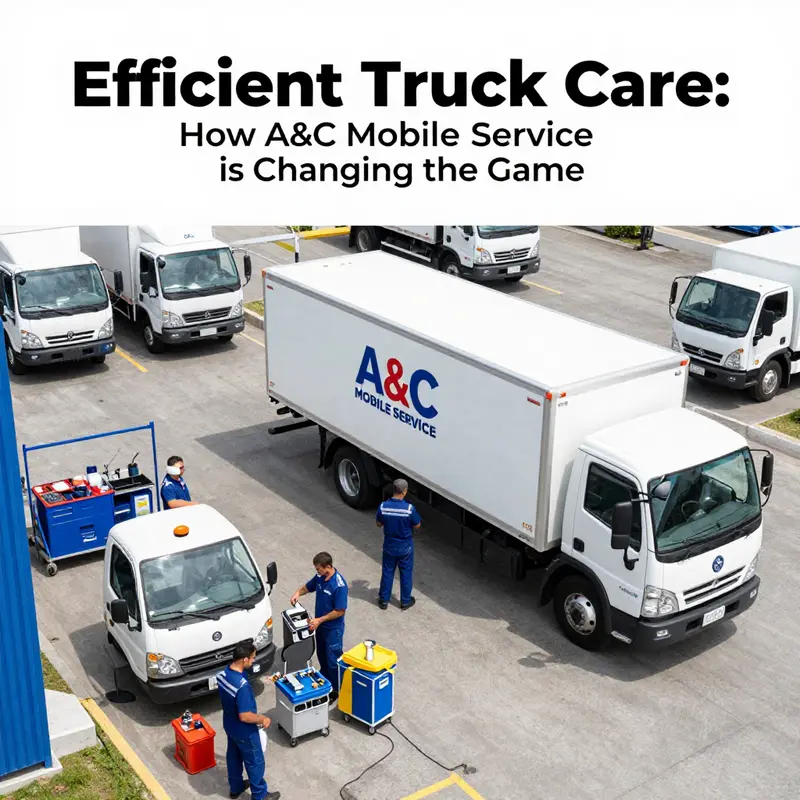
A&C Mobile Truck Service operates where the road ends and the work begins. Based in Peoria, Arizona, the company has built a mobile-first model that meets the urgent needs of fleets whose operations hinge on vehicle uptime. Rather than transporting trucks to a fixed repair bay, technicians arrive at the point of failure with the tools, parts, and know-how to diagnose, repair, and recover. This approach is not just convenient; it is a strategic response to the realities of modern logistics, where every hour of downtime translates to cost, delay, and diminished reliability. In practical terms, the service portfolio centers on on-site maintenance and emergency response for heavy-duty vehicles. The emphasis is comprehensive capability delivered with speed, safety, and a disciplined maintenance mindset. The core idea is straightforward: keep fleets moving by bringing the repair shop to the truck, not the truck to the shop.
The on-site maintenance and emergency repair offering is the backbone of the business. When a vehicle stalls, a team can perform diagnostic checks at the roadside, identify issues ranging from electrical faults to mechanical wear, and implement live repairs whenever feasible. In the field, diagnostic tools—portable scan devices, multi-meters, and engine analyzers—are deployed to quickly pinpoint faults. The technicians are not only mechanically adept but also accustomed to interpreting the data that comes from heavy-duty engines, hydraulics, and drive systems. This combination of practical know-how and diagnostic capability is essential for minimizing downtime. A major advantage of on-site work is the immediate triage that happens at the fault scene, allowing fleets to decide whether a temporary fix will suffice or whether a more extensive repair must occur at a later time.
Beyond the immediate mechanics of engine and system diagnostics, the service portfolio includes specialized support that is crucial for heavy equipment and commercial trucks operating in demanding environments. When a vehicle cannot be driven safely, mobile towing becomes a necessary extension of the service model. A&C Mobile Truck Service coordinates towing with due regard for the vehicle’s weight class, road conditions, and the location of the breakdown. This is not a simple transport service; it is a carefully managed operation that prioritizes safety, minimizes additional wear on the vehicle, and ensures rapid return to service. In many cases, the mobile team can perform minor adjustments or part replacements on-site, which can avert the need for towing altogether or cut the time required for subsequent service calls.
In situations where road conditions are complex—mud, sand, uneven terrain, or other off-road challenges—the company deploys lifting and extraction capabilities that go beyond routine roadside repair. Lifting services are not mere heavy-lift capabilities; they are integral to operational resilience when a vehicle is stranded in a difficult location. The technicians plan lifts with an eye toward stability, payload, and ground conditions, ensuring that hoists, cranes, and support equipment are matched to the job. This kind of service extends the value proposition from repair to recovery and incident management, which is increasingly important for fleets that include not only trucks but also construction and heavy equipment that may become immobilized in challenging terrain.
Road clearance is another essential element. After an incident or a breakdown, keeping the road clear and the traffic flow steady is a priority. The mobile team collaborates with local authorities when needed and uses specialized equipment to remove debris, relocate damaged vehicles, and reopen lanes with minimal disruption. The value here is not solely in getting the truck back on the road but in preserving safety on the corridor, reducing the risk of secondary incidents, and supporting the broader efficiency of a fleet’s operations.
A&C Mobile Truck Service differentiates itself through a combination of rapid response, round-the-clock availability, and a disciplined dispatch network. Speed is a function of both geography and process. The service network spans the region with strategically placed crews and a fleet of mobile units designed to reach most sites quickly. Real-time dispatching and digital workflow tools enable the team to assess the nearest available technician, match the right skill set to the job, and pre-assemble the most likely parts required for anticipated repairs. The operational philosophy is simple: minimize the distance travelled by the truck, minimize the time wasted in diagnostic cycles, and maximize the time the vehicle spends performing productive work.
A core strength of the model lies in its safety standards and risk management practices. The field environment can be unpredictable, so every operation is conducted with a structured safety framework. Technicians follow protocols for personal protective equipment, vehicle stabilization, load handling, and traffic management. The emphasis on safety does not slow the process; it speeds it up in the long run by reducing the likelihood of injuries, cascading failures, or escalations that would otherwise extend downtime. The emphasis on safety also extends to customers’ assets. When parts are replaced at the roadside, the team ensures proper installation, torque, and testing before a vehicle is released back into service.
The service scope includes a broad set of core offerings tailored to the realities of fleet maintenance. On-site repairs cover a wide array of mechanical and electrical issues that commonly arise in heavy-duty operations. A technician might address a cylinder misfire, diagnose a fuel-system issue, or rewire a failed sensor in the field. In many cases, a temporary repair might be performed to stabilize the vehicle and prevent immediate breakdown, while a more durable fix is scheduled for later in the day or during a planned shop visit. In both cases, the goal is to restore function quickly and safely, reducing the window of downtime and enabling the fleet to return to work.
Towing services are calibrated to the weight class and configuration of the vehicle. Heavy-duty tow capabilities are deployed when the truck cannot be safely driven or when a tow to a dedicated facility is the most efficient path forward. The towing operation is planned with attention to route safety, clearance restrictions, and potential damage to the vehicle. The aim is to deliver not just a tow but a controlled, predictable process that keeps drivers safe and the vehicle protected while in transit. In the context of a fleet, such services prevent further operational disruption by ensuring that trucks are moved with minimal risk and maximum efficiency.
Hoisting and lifting services come into play when the job requires lifting heavy components or repositioning equipment that cannot be moved under normal conditions. The field teams utilize cranes and lifting gear appropriate to the payload, with careful consideration of ground bearing capacity and stability. They coordinate with the vehicle layout to avoid secondary damage and to keep modifications or replacements within the scope of what can be accomplished in a roadside setting. These capabilities allow fleets to handle challenging scenarios that would otherwise necessitate a longer downtime where the vehicle would remain out of service while awaiting a scheduled repair.
Road clearance and debris removal round out the core suite. After an incident, the priority is to restore safe traffic conditions and reestablish a clear lane of travel. The field team can clear obstructing debris, assist with traffic control if needed, and ensure that the roadway is safe for the next stage of the repair process. By combining on-site repair, towing, hoisting, and road clearance, the company offers a holistic response to roadside emergencies that keeps customers’ operations moving with as little interruption as possible.
Operational characteristics of A&C Mobile Truck Service reinforce the emphasis on speed, reliability, and safety. Rapid response is achieved through a professional cadre of technicians equipped with mobile service capabilities and a well-coordinated dispatch system.24/7 availability ensures that customers receive support precisely when they need it, not just during normal business hours. In many fleets, a typical emergency reduces downtime from hours to minutes, simply because the responders arrive with the right mix of tools and expertise when the incident occurs. The dispatch network, built to cover wide geographic areas, relies on real-time data to estimate arrival times, align skills, and optimize routing. The result is a streamlined process that minimizes response time and maximizes the time trucks spend in productive service.
From a service-design perspective, customization matters as much as speed. Some customers operate in harsh or remote terrains where standard procedures do not suffice. For those scenarios, the company provides special terrain support, including extraction from mud or sand and other challenging surfaces. In all cases, safety remains the central compass. The technicians follow strict safety standards to protect personnel and the customer’s assets during every intervention. Whether working on a highway shoulder, a facility site, or a remote work zone, the emphasis is on controlled, predictable execution that respects the unique constraints of each location.
Pricing follows a rational, transparent model that aligns with the service’s on-site value proposition. Basic on-site services typically include a defined distance for free transportation, with additional mileage and road charges handled by the customer. For high-cost or specialized operations—such as large-scale hoisting or deep excavation recoveries—fees are assessed after on-site evaluation, reflecting the complexity and risk of the task. Parts and components used in roadside repairs may be billed to the customer separately, depending on whether a repair is temporary or requires a parts replacement. This pricing framework allows fleets to anticipate expenditures and plan maintenance costs in a way that mirrors the actual on-site work performed. Fleet managers often appreciate the clarity and consistency of such a structure because it aligns with the immediate service outcome: getting back on the road, safely and quickly.
The operational model also considers service limitations. Certain areas, such as highway segments with restricted access or tunnel environments, may impose limitations on what can be accomplished at the roadside. In these cases, the technicians coordinate with authorities and the fleet to determine the most appropriate course of action, whether that means towing the vehicle to a safer location or arranging an on-site repair within the permissible scope. The goal remains to minimize downtime while adhering to regulatory and safety constraints. This pragmatic approach helps fleets avoid unrealistic expectations and supports more accurate downtime forecasting.
The value delivered goes beyond the immediate fix. By keeping vehicles moving, the service reduces the total cost of downtime for fleets. It shortens the maintenance cycle, lowers the risk of cascading failures, and helps sustain the throughput of operations that depend on reliable vehicle availability. For managers, the benefit is not just a repaired engine but a measurable improvement in uptime metrics, a reduction in idle hours, and a more predictable maintenance budget. In practice, this translates into a more resilient supply chain, better service levels for customers, and a stronger competitive position for the fleet operators who rely on on-site expertise to maintain momentum on the road.
To connect the technical with the strategic, A&C Mobile Truck Service embodies a philosophy of service design that treats uptime as a service attribute. The company’s field teams are more than technicians; they are mobility engineers who interpret the road as a dynamic workshop. They merge diagnostic insight with practical field skills to create a seamless transition from problem identification to problem resolution. The narrative of on-site maintenance is not merely about repairing a truck; it is about maintaining the continuity of an entire operation—the string of dependences that connect suppliers, drivers, warehouses, and customers in a network where delays compound quickly. In this sense, the service is a strategic capability, one that fleets can rely on as a core component of their reliability programs.
The narrative also touches on the broader implications for industry practices. For fleets that historically relied on fixed-location repair shops, mobile services introduce a shift in how maintenance strategies are conceived. The ability to perform a substantial portion of repair tasks in the field reshapes planning horizons, spare-parts management, and technician utilization. For example, fleets can reorganize preventive maintenance schedules to align with the realities of on-site work, scheduling routine checks in a way that overlaps with field responses to urgent failures. This integrated approach to maintenance—combining predictive assessment with rapid on-site execution—contributes to more stable uptime, lower operational risk, and greater consistency in mission-critical performance.
In drawing connections to industry discussions about reliability and uptime, it is instructive to consider the broader governance and safety frameworks that shape roadside assistance and field operations. The literature emphasizes that rapid response must be paired with sound risk management and robust safety practices. This alignment is reflected in the company’s discipline around on-site procedures, equipment handling, and adherence to safety standards. While the operational details are tailored to the field realities of heavy-duty operations, the underlying principle is universal: every intervention should prioritize safety, efficiency, and clarity of purpose. The synergy between technical skill and strategic execution makes on-site maintenance a compelling model for fleets that value uptime as a core performance metric.
For readers seeking a practical window into how these design principles play out in adjacent domains, consider industry discussions that examine the design and maintenance of specialized heavy-duty vehicles. These analyses highlight how modern design choices can influence uptime, resilience, and the quality of field service. The core takeaway is that uptime is shaped not only by the ability to diagnose and repair but also by the architecture of the service system that brings expertise to the vehicle when it matters most. In this sense, the A&C Mobile Truck Service model resonates with broader industry insights about maintenance productivity, field readiness, and the value of mobile, end-to-end support networks. It is a reminder that the road is a working environment with its own rules, and that the most effective fleets are those that treat repair capability as an integrated, strategic asset rather than a reactive function.
Internal link for further context: How modern pumper fire truck design can save lives: essential features explained.
External reference: https://www.cr.gov.hk/docs/wrpt/RNC063/RNC063L_202
Bringing the Shop to the Fleet: Market Impact, Customer Engagement, and the On-Site Advantage of A&C Mobile Truck Service

A&C Mobile Truck Service operates where logistics, maintenance, and uptime intersect. Based in Peoria, Arizona, the company has built a mobile fleet service model that shifts the paradigm from waiting in line at a fixed shop to receiving expert care where and when it is needed. The result is not merely a more convenient option for maintenance; it is a strategic capability that reshapes how fleets think about downtime, reliability, and total cost of ownership. When a truck never leaves its daily route, when a repair or a diagnostic can happen between deliveries or during a scheduled break in a shift, the math of fleet management changes. The market rewards efficiency, rapid problem resolution, and predictable service windows. A&C Mobile Truck Service exemplifies that shift by delivering on-site engine diagnostics, diesel engine repairs, and comprehensive maintenance directly at customer locations. This approach aligns with the broader industrial impulse toward closer, more responsive service ecosystems—where speed, locality, and access to skilled technicians converge to reduce the friction that has long plagued on-road fleets: the need to coordinate tow trucks, relocate assets, or wait for a service window that may not fit operational timelines.
Market dynamics in this space are shaped by two forces: the demand for minimized downtime and the supply of on-demand expertise that can operate with the same speed and precision as a fixed facility. In industries that rely on high vehicle uptime—logistics, distribution, and last-mile delivery, to name a few—the economic calculus is driven by time saved and the predictable availability of mobile service teams. When a fleet manager can forecast maintenance windows around peak shipping hours rather than around the shop’s schedule, the result is tighter vehicle utilization, more predictable delivery commitments, and a better overall service level agreement with customers. In practical terms, the market impact of A&C’s model is visible in accelerated maintenance cycles, fewer disruptions to routes, and an extended operational life for critical components. Each service encounter becomes not just a repair moment but a data point in a larger system of continuous improvement.
The broader industry context helps illuminate why this shift resonates with customers. Mobile services for commercial trucks echo a broader consumer preference for immediacy and locality. Just as mobile food vendors reimagined how urban appetite meets urban space, mobile truck maintenance reimagines how fleets access expertise. The analog is useful because it demonstrates a fundamental truth: when service is portable and responsive, it expands the geographic and temporal boundaries of capability. It also speaks to the way customers evaluate value. For fleets, value is not just in the price of a fix but in the reduction of downtime, the reliability of the maintenance window, and the clarity of the service promise. A&C’s on-site maintenance portfolio reinforces this value proposition by prioritizing speed without sacrificing quality, transparency in diagnostics, and a clear pathway to repair completion that minimizes surprises at the end of a service call.
In addition to time and reach, the market impact of a mobile model like A&C’s also emerges in the way it changes relationships with customers. On-site service reduces the logistics burden for fleet managers who previously had to juggle tow services, alternate drivers, or temporary rerouting to accommodate a shop visit. It also lowers the so-called friction costs—the administrative overhead, the scheduling complexity, and the productivity losses associated with transporting a vehicle to a fixed facility. When a truck can be serviced on its own turf, the relationship between provider and client shifts toward a partnership model. Technicians become familiar with the customer’s operational rhythms, and that familiarity—paired with consistent response times—cultivates trust. Trust, in turn, is a durable differentiator in a market where competition is often defined by response speed, service clarity, and the ability to deliver measurable uptime gains.
The case for mobile fleet maintenance grows stronger when looked at through the lens of urban efficiency and the realities of dense operating environments. In cities and regions with high vehicle density, shifting the point of service from a fixed facility to the street reduces the load on central shops, lowers gate times for fleets, and helps maintain a steady flow of goods during peak periods. It is not just about saving minutes; it is about enabling a more resilient supply chain where every vehicle contributes to predictable throughput. This systemic benefit matters for customers who manage multiple fleets or operate in tight delivery windows. For them, on-site maintenance is not a single service moment but a modular capability that can be deployed across the fleet with a minimal overhead. The market response to this capability has been positive in terms of adoption rates and willingness to contract with providers who can demonstrate measurable uptime improvements.
From a customer engagement perspective, the success of a mobile fleet service hinges on visibility, responsiveness, and the ability to translate a service visit into ongoing value. A&C Mobile Truck Service leverages several core strategies that align with best practices in dynamic service delivery. One of the most compelling is the use of real-time visibility to keep customers informed about what is happening, why it matters, and what to expect next. Real-time communication tools—text updates, app-based status dashboards, and proactive notifications about ETA and completion time—help fleets operate with a degree of predictability that is rare in traditional repair paradigms. When a technician arrives on-site, the customer-facing interface becomes as important as the diagnostic tool kit. The crew’s ability to explain diagnostic findings in plain language, outline a repair pathway, and provide transparent pricing underpins a relationship built on clarity rather than mystery. This approach reduces the cognitive load on fleet managers and drivers, who often juggle multiple responsibilities during a maintenance window.
Another pillar of engagement lies in the smart use of technology to expand the truck’s reach beyond the immediate repair scenario. Dual-sided LED displays and other dynamic digital signage mounted on the mobile unit can transform a service vehicle into a platform for local advertising, community alerts, and contextual information. This capability, while seemingly tangential to maintenance, serves a practical purpose: it ensures the on-site encounter remains visible and informative, not merely transactional. A carrier that can simultaneously address maintenance needs and broadcast time-sensitive messages to pedestrians and motorists enhances its utility and visibility in the community. This approach to on-vehicle advertising is not gimmickry; it is a strategic asset that broadens the service footprint and creates additional touchpoints with customers and potential clients. In places with active commerce, the mobile unit becomes a moving communications hub, capable of delivering relevant content while technicians perform essential work.
In implementing these engagement strategies, data plays a central role. Insights drawn from broader mobility analytics—the same category of analysis used by industry observers like S&P Global Mobility to optimize routes, forecasts, and service demand—can be adapted to the mobile maintenance context. For A&C, data-driven insights translate into smarter routing, better priority setting, and a more responsive scheduling system. By analyzing historical maintenance patterns, high-demand zones, and the timing of service requests, the company can refine its coverage model to minimize travel time between jobs and maximize first-call repair success. The practical upshot is a service experience that feels almost anticipatory: technicians arrive when the fleet needs them most, often before a routine downtime window closes, and with a diagnostic narrative that maps directly to a clear, cost-conscious repair plan.
This convergence of mobility, technology, and customer-centric engagement is further reinforced by the real-time capabilities that modern mobile maintenance teams deploy. The ability to communicate instantly with customers about arrival times, work scope, and potential contingencies reduces the uncertainty that typically accompanies a shop visit. In an industry where delays and miscommunications can cascade into cascading downtime, speed-of-reaction and transparency become competitive differentiation. A&C’s on-site approach, supported by digital signage, data-informed routing, and proactive outreach, creates a service ecology in which customers feel seen, understood, and empowered to manage their own operations more effectively.
The cumulative effect of these market and engagement dynamics is a notable shift in how fleets plan maintenance and how vendors position themselves within the supply chain. A&C Mobile Truck Service is more than a repair contractor; it is a mobility-enabled maintenance partner that can align service availability with the operational rhythms of a customer’s business. In markets where fleets operate around the clock and downtime translates directly into revenue leakage, the value proposition becomes quantifiable: fewer tows, shorter repair windows, higher asset utilization, and a clearer pathway back to peak performance. In places where urban logistics intersect with manufacturing cycles, the presence of an on-site maintenance option can tip the balance in favor of one service provider over another, particularly when that option is backed by transparent diagnostics, predictable scheduling, and on-location capability that respects the integrity of customer operations.
Within this context, the chapter’s guiding insight is that market impact in mobile fleet maintenance hinges on delivering a dependable on-site experience that aligns with customer priorities. Speed, clarity, and reliability are the triad that carries weight with fleet managers and operations leaders. The ability to project and sustain uptime, to reduce the cost of downtime, and to give customers a tangible sense of control over their maintenance calendar positions mobile service providers not as a temporary fix but as an enduring component of the fleet’s operating model. The dynamic signage embedded in the service vehicle, the data-informed routing that minimizes travel and idle time, and the real-time communication that closes the loop between diagnosis and completion all coalesce into a compelling value proposition. This is how mobile maintenance becomes not just a service option but a strategic capability—one that can evolve with customer needs and scale as logistics networks grow more complex.
For readers seeking a broader perspective on the digital signage and customer engagement dimension of mobile service, the following resource offers context on how mobile advertising and information delivery on moving platforms can extend reach and impact: Inside Mobile Truck Led Display Advertising Vehicle Sign: Technical Details, Quality Standards, and Applications.
As the industry continues to experiment with new formats and new data-driven practices, one point remains constant: the customer’s experience must be seamless, visible, and trustworthy. The on-site maintenance model promises faster resolutions and less disruption, but it also requires a careful balance of speed, quality, and communication. A&C Mobile Truck Service demonstrates how that balance can be achieved through a thoughtful blend of skilled technicians, on-board diagnostic capabilities, and engagement tools that extend the value of a single service encounter into a lasting relationship. The result is a market proposition that resonates with fleet operators seeking to optimize uptime, reduce operational friction, and partner with providers who can adapt to the rhythms of modern logistics. In the chapters that follow, we will explore how these principles intersect with broader service design and technology integration, offering a roadmap for fleets aiming to embed maintenance excellence into their daily operations.
For readers who want to explore a related path about uptime and service readiness from an ecosystem perspective, a useful internal reference offers insights into uptime optimization strategies and dedicated product support—an area where the mobile model can extend its reach and credibility. You can explore this topic here: unlocking fire apparatus uptime and essential product support secrets.
External reference for further context on dynamic, audience-focused mobile signage and its applications in mobile service scenarios can be found at the following resource: Outside of the immediate service context, this material provides a technical overview of how dynamic LED signage on moving platforms can enhance engagement and information delivery in real-world environments. https://www.ledtrucksigns.com/inside-mobile-truck-led-display-advertising-vehicle-sign/
Final thoughts
A&C Mobile Truck Service exemplifies how a focused approach to mobile fleet services can meet the ever-growing demands of the trucking industry. By offering on-site solutions, they not only reduce downtime and operational costs but also foster stronger relationships with their clients. Whether you’re a long-haul driver facing vehicle issues, a fleet manager looking for reliable service, or an aspiring truck driver eager to learn about maintenance, A&C Mobile Truck Service stands ready to provide the support you need on the road.