
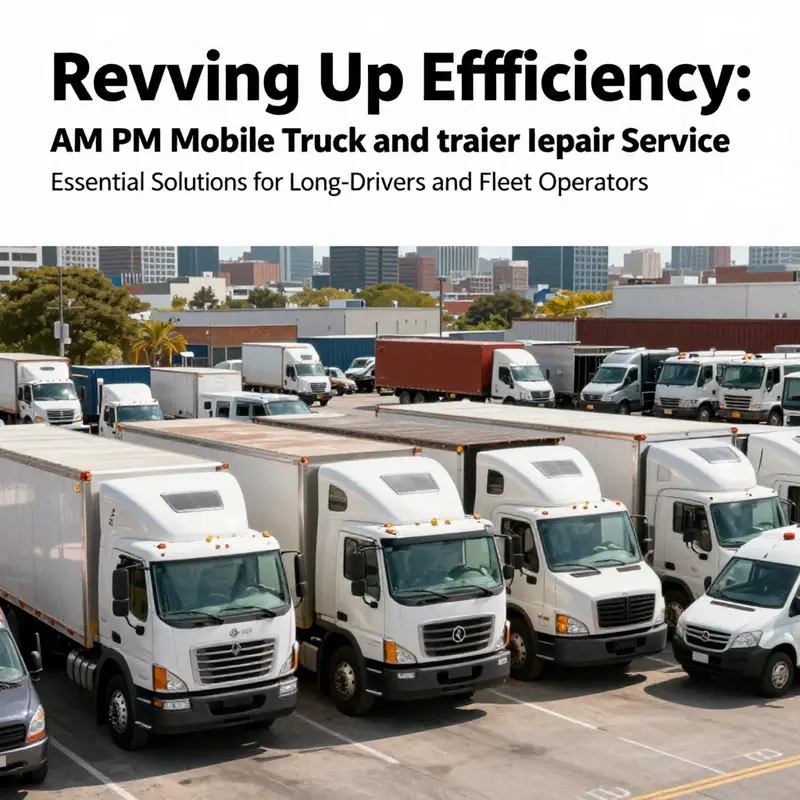
The road demands reliability, and that’s where AM PM Mobile Truck & Trailer Repair Service shines. Catering to long-haul truck drivers, trucking company owners, fleet managers, and aspiring truck drivers, this Toronto-based mobile repair service ensures that vehicles remain on the move with minimal downtime. Offering a comprehensive array of on-site services, embracing cutting-edge technological innovations, and creating economic efficiencies for fleet operations, AM PM stands as a vital partner in the trucking industry. Throughout this article, we’ll explore the full spectrum of services AM PM offers, delve into the technological advancements they utilize, and discuss their economic impact on fleet management, illustrating how they uphold the backbone of the transport industry.
Bringing the Workshop to the Road: AMPM Mobile Truck & Trailer Repair
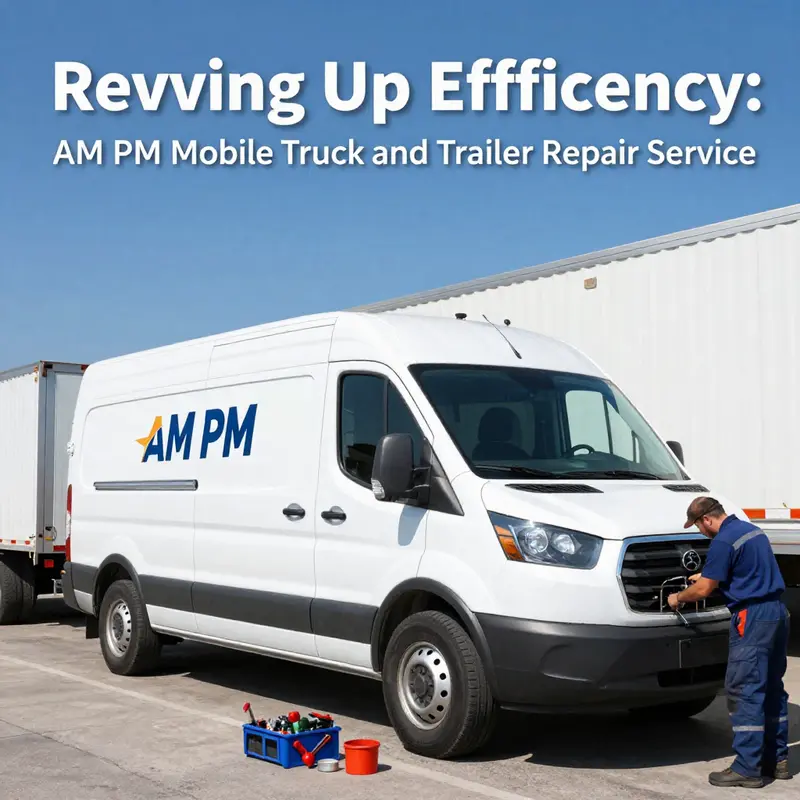
When fleets depend on reliability, the mobile repair model keeps vehicles moving by bringing the workshop to the yard. AMPM Mobile Truck & Trailer Repair, based in Toronto, emphasizes on-site maintenance and repair to minimize downtime and keep operations productive. Technicians arrive with a well-equipped van or truck, diagnostic tools, and a parts kit designed for rapid on-site service, enabling routine maintenance as well as common field repairs. The result is reduced disruption, faster turnaround times, and a clear record of work performed that travels with the asset.
Core capabilities include on-site preventive maintenance, quick diagnostics, and the ability to perform routine tasks such as brake checks, fluid top-ups, filter replacements, and light electrical checks without towing. When issues exceed on-site scope, the team coordinates the most efficient path to repair, whether that means a tow to a facility or a scheduled follow-up visit after parts are secured. Around-the-clock availability supports nights and weekends to help fleets meet tight delivery windows.
Safety and documentation are integral to the service. Technicians follow standardized procedures, capture diagnostic codes, capture service actions in a maintenance history, and provide clear written summaries for the operator. This approach makes maintenance a predictable part of the fleet’s rhythm, not a disruptive exception. The on-site model aligns with broader fleet-management objectives by reducing downtime, lowering indirect costs, and improving asset health through timely, traceable care.
On-Site Innovation: How Technological Breakthroughs Power AMPM’s Mobile Truck and Trailer Repair
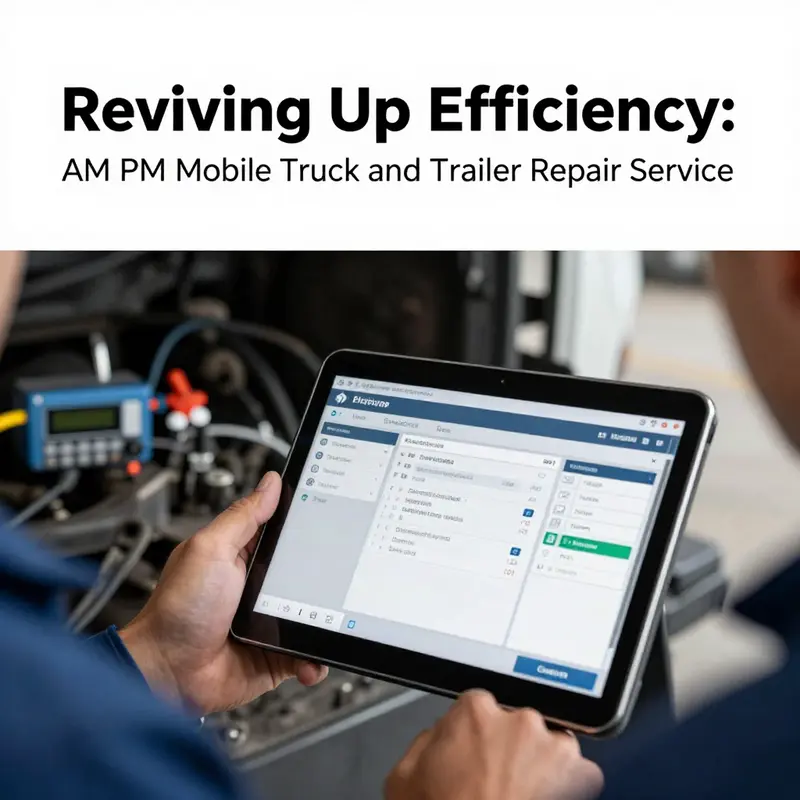
When fleets depend on long hours of operation, downtime is not merely an inconvenience; it is a cost multiplier that can ripple through productivity, customer satisfaction, and bottom-line performance. In Toronto and its surrounding regions, AMPM Mobile Truck & Trailer Repair Service operates as more than a repair team that drives to a breakdown. It is a mobile, field-based workshop that blends traditional hands-on expertise with a rapidly evolving set of technologies designed to bring high-grade maintenance and repair right to the location where a vehicle rests. The result is a service model that treats downtime as a resource to be managed rather than a problem to be endured. What makes this approach compelling is not only the capability to fix issues on the spot but the way technology underpins every stage of the process, from diagnosis to dispatch, to parts management and post-service information sharing. In this chapter, we explore the technological currents shaping mobile heavy-duty repair and how they translate into faster turnarounds, higher reliability, and cleaner, safer operation for fleets that rely on trucks and trailers to move goods through the city and beyond.
At the core of mobile repair technology is the diagnostic mindset. Onboard diagnostic systems, standardized across modern heavy-duty fleets, empower technicians to access real-time health data from the vehicle’s internal networks. When a technician arrives at a site, they do not guess at the root cause of a warning light or a strange sensor reading. They retrieve diagnostic trouble codes, correlate them with symptom descriptions, and map them to probable failure modes. This capability shrinks the time spent in the shop trying to reproduce a defect, a critical advantage when a driver is waiting and the fleet cannot absorb prolonged downtime. But the diagnostic process does not stop with codes alone. The most effective mobile teams pair real-time data with historical repair histories and parts availability information stored in cloud-based systems. With a quick look at a vehicle’s repair timeline, a technician can distinguish between a recurring wear issue and a one-off anomaly, reducing the risk of misdiagnosis and unnecessary replacements. In practice, this means that even when a problem is mechanical or electrical in origin, the decision to repair or replace hinges not only on what is broken today but on the vehicle’s longer performance record and the costs associated with each repair path.
Alongside diagnostics, dispatching efficiency has become a shield against unnecessary downtime. GPS-enabled tracking and route optimization enable a repair crew to reach the vehicle quickly while also selecting the most time- and fuel-efficient path from multiple ongoing assignments. The technology acts as a supervisor in the background, balancing urgent needs with the realities of urban traffic, construction, and weather. This is not about flashy gadgets; it is about reliable, repeatable processes that minimize the time a driver spends waiting and ensure that the fleet’s schedule remains predictable. The dispatch software often interfaces with customer portals and conversation channels so that managers can view live progress, confirm appointment windows, and receive alerts if a delay arises. The beauty of this integrated approach is that it turns a potentially chaotic situation—an unexpected breakdown—into a structured workflow that can be traced, adjusted, and communicated clearly to all stakeholders.
Digital work order management has, in effect, extended the workshop’s reach beyond the physical location of the vehicle. In a traditional garage, technicians carry a notepad and a handful of forms to log what was checked, what was replaced, and what remains to be done. In a mobile setting, it would be reckless to rely on paper alone. Digital work orders carry the entire repair narrative in real time, from the initial service request through the final invoice. They evolve as work progresses, capturing the sequence of diagnostics, parts requests, approvals, and test drives. This digital thread serves several values. First, it reduces transcription errors and miscommunication between technicians, parts suppliers, and customers. Second, it creates a verifiable history that fleet managers can consult to monitor vehicle performance and plan preventive maintenance. Third, it fosters accountability, because every action is timestamped and attached to the vehicle’s unique identifier. The impact is felt not just in the moment of repair, but in the fleet’s longer-term maintenance strategy. When a fault recurs, decision-makers can ask more informed questions, adjust maintenance intervals, and allocate resources with greater confidence.
Cloud-based communication platforms knit together remote technicians, fleet operators, and parts networks into a single, living system. Real-time access to repair histories, parts availability, and technician notes means that a client can see which components were inspected, what parts are on hand, and what dates are scheduled for follow-up if a repair needs verification after a road test. For technicians operating in the field, cloud access eliminates the need to memorize every detail of a vehicle’s past work. They can pull up a vehicle’s history instantly, cross-reference any notes from previous visits, and attach fresh documentation—photos, measurements, torque values, and testing results. The seamless exchange of information improves trust and reduces the back-and-forth that often slows down field service. It also supports remote collaboration, because specialists who are not physically present at the site can review diagnostics, approve corrective actions, or guide a technician through a complex procedure without the driver or fleet manager needing to pause operations to wait for a phone call.
The mechanical and electrical work performed in the field has undergone its own wave of modernization. Mobile workshop features are no longer the bare minimum of tools and a portable generator. Modern on-site fleets carry portable power sources capable of delivering clean, stable electrical supply to power heavy-duty tools anywhere. This capability is transformative in locations with limited access to utility power or remote highway pullouts where a repair might occur after hours. Portable power, when combined with compact welding and cutting equipment, enables on-the-spot fabrication and fabrication-adjacent repairs that would have previously required a return to base. The ability to weld a cracked bracket, reinforce a damaged frame tie-in, or fashion a temporary support for a missing component on the roadside reduces the risk of extended downtime while supplying a durable solution that can be replaced with a proper part at the earliest feasible opportunity.
But tools alone do not guarantee efficiency. The organization and layout of a mobile workshop have become a discipline in themselves. Integrated tool storage systems curate an inventory of essential components and fasteners in a way that allows for rapid deployment. When a technician opens a drawer and finds exactly the right wrench, bolt, or connector at the precise moment it is needed, the session gains a critical momentum. This organization goes hand in hand with a structured approach to inventory management, ensuring that high-demand parts are stocked and rotated to avoid obsolescence. In many field operations, a single misfiled item can cost precious minutes and escalate downtime. The modern mobile shop counteracts that risk by combining ergonomic design with data-driven replenishment decisions. When a vehicle returns to service, its repair history and current condition feed back into the inventory loop. The next day’s workload can be prioritized not just by urgency but by the likelihood of requiring common, reusable parts that expedite future visits.
The interplay between human expertise and digital systems is perhaps the most delicate balance in this equation. Technicians bring skill, judgment, and care to every repair, while digital platforms supply context, data, and structure. This synergy is not about replacing technicians with software; it is about extending human capability with information and connectivity. The most effective mobile teams cultivate a culture of continuous learning, where field data feeds back into training programs and maintenance strategies. For instance, repeated patterns in field diagnostics can indicate a broader reliability issue with a model family or a particular component category. Rather than applying a one-off fix, teams can adjust preventive maintenance checklists, revise inspection intervals, and educate drivers on early warning signs. This kind of learning loop is what turns a mobile operation into a knowledge-driven service, capable of elevating uptime from a reactive response to a proactive capability.
The customer experience in this environment shifts as well. Fleet operators gain visibility into the status of each asset and a clearer forecast of when it will be back in service. Technicians are not merely repair professionals; they become on-site coordinators who minimize disruption by coordinating with drivers, dispatchers, and parts suppliers. The on-site repair experience becomes more predictable and transparent, which has downstream effects on safety and compliance. When a vehicle is fixed faster and with fewer callbacks, the fleet’s safety score improves as well. Regular, data-informed maintenance tends to catch wear before it escalates into a safety risk, and the digital thread created by digital work orders and cloud-based histories provides traceability that auditors or regulators may seek. This is not about glamorous technology for its own sake; it is about a practical, evidence-based approach to maintaining heavy-duty vehicles in the field under real-world conditions.
It is important to acknowledge that the precise technologies employed by AMPM Mobile Truck & Trailer Repair Service have not been publicly enumerated. The broader industry context, however, makes the trajectory unmistakable. From onboard diagnostics to cloud-connected records, the diagnostic-to-delivery cycle is becoming shorter, smoother, and more reliable. The combination of real-time vehicle health insights, optimized dispatch, digital work orders, and portable, well-equipped mobile workshops transforms what used to be a logistics problem into a well-orchestrated service operation. This shift reflects a larger movement in fleet maintenance: operators expect smarter, faster, and more resilient responses to breakages and wear. The mobile repair model is uniquely positioned to deliver that promise because it aligns service capacity with the actual operating environment of the vehicle—the road, the yard, and the customer site—rather than forcing fleets to adapt to a fixed garage schedule.
The broader significance of technological innovations in this space goes beyond speed. It relates to consistency, safety, and total cost of ownership. By increasing uptime, fleets can realize higher utilization of their assets, which translates into more predictable revenue streams and better capital planning. The data trail that accompanies modern field service—every diagnosis, every part identified, every test result—builds a verifiable record that supports warranty claims, maintenance planning, and continuous improvement initiatives. In practical terms, that means fewer unexpected failures, more decisive maintenance actions, and a fleet that remains aligned with the evolving demands of customers and markets. The mobile repair paradigm thus emerges not as a niche service but as a critical component of modern fleet operations, offering a blueprint for how technology can extend the life of powerful machines and the reliability of the logistics networks they sustain.
As the adoption of these technologies deepens, a natural question arises: how can fleet operators partner with mobile repair providers to maximize the benefits? The answer lies in embracing a collaborative, data-driven relationship. Operators should share maintenance histories and operating patterns, enabling mobile teams to anticipate needs and calibrate preventive programs. Providers in turn should offer transparent dashboards that reveal not only what was fixed but why, including the diagnostic rationale and a rationale for choosing one repair path over another. This level of transparency strengthens trust and enables fleet leaders to make decisions that optimize uptime and cost. It also supports safety by ensuring that repairs meet established standards and that post-repair testing confirms proper function before the vehicle returns to service. In short, the most powerful outcomes arise when technology and human expertise are integrated into a seamless workflow that remains flexible enough to adapt to the unpredictability of the road while being rigorous enough to deliver measurable reliability.
For readers seeking a broader perspective on the kinds of insights shaping this field, consider the idea that uptime is not merely a metric but a philosophy—a way of thinking about maintenance as an asset rather than a burden. It is a mindset that recognizes the value of real-time information and the mercy of a well-organized, resourceful mobile workshop. The story of AMPM and similar services in urban and peri-urban settings echoes a spatial shift in maintenance philosophy: repair work now travels to the vehicle, not the other way around. That movement changes not only how repairs are performed but also how fleets plan, how drivers are educated about early warning signs, and how stakeholders coordinate to keep the supply chain moving. The chapter of mobile repair is still being written, but the plot lines are clear: data, dispatch, and delivery converge in the field to deliver faster, safer, and more reliable service to the fleets that keep commerce moving forward. For operators curious about deeper explorations of the comparative advantages of different mobile repair paradigms, a focused review of industry literature emphasizes uptime, product support, and the importance of an integrated maintenance ecosystem, which links to further discussions on how uptime can be sustained across myriad operating environments.
In this evolving landscape, AMPM’s approach—though not exhaustively publicly detailed—appears to exemplify a modern, tech-enabled mobile repair model. The combination of diagnostic clarity, intelligent dispatch, digital documentation, cloud collaboration, and a robust on-site workshop equips technicians to do more in less time, with greater accuracy and fewer follow-up visits. It is a model that aligns closely with the needs of commercial fleet operators who must balance service level commitments with efficient asset utilization. It also reflects an industry-wide shift toward proactive maintenance, where data-driven insights guide schedule planning and parts readiness, helping to turn what was once a reactive service into a proactive capability that protects uptime and operational continuity.
For readers who wish to explore related perspectives on the broader ecosystem of mobile repair and fleet maintenance, a related discussion on industry practices and maintenance training offers additional angles on how field-based technicians continue to develop their skills in tandem with advancing technologies. This body of knowledge—encompassing training approaches, best practices for apparatus procurement, and the human factors involved in on-site service—provides a more complete picture of how mobile repair operates within the larger machinery of modern fleet management. To gain a sense of how these ideas are being discussed in complementary contexts, consider following a resource that delves into the ongoing conversation about how technology, training, and field service are converging to improve uptime and reliability. Unlocking Fire Apparatus Uptime: Essential Product Support Secrets provides a useful lens for understanding the kind of strategic thinking that underpins successful field repair operations, including the role of dependable product support in sustaining fleet performance. Unlocking Fire Apparatus Uptime: Essential Product Support Secrets
In sum, technological innovations in mobile truck and trailer repair are not about replacing skilled technicians with machines. They are about empowering technicians to work smarter, faster, and more safely, while giving fleet managers a clearer view of what is happening to their assets and why. The Toronto-based service landscape described here embodies that synthesis: diagnostic clarity meets agile dispatch; digital records meet on-site fabrication and testing; and data-driven maintenance aligns with a lifecycle approach to asset management. The net effect for fleet operators is straightforward—less downtime, higher asset utilization, and more predictable operations in a highly dynamic urban environment. The story is ongoing, and as technology continues to mature, the mobile repair model will likely become even more capable, more transparent, and more essential to the day-to-day reality of keeping heavy-duty vehicles and their trailers on the road. The capacity to respond with precise, well-supported, site-specific repairs will remain a defining strength of mobile services, while the underlying technologies will continue to sharpen the edge of speed, safety, and reliability that fleets depend on every day.
External resource: https://www.mapquest.com/business/am-pm-mobile-truck-trailer-repair-service-toronto-on
How Mobile Truck and Trailer Repair Translates to Measurable Fleet Savings
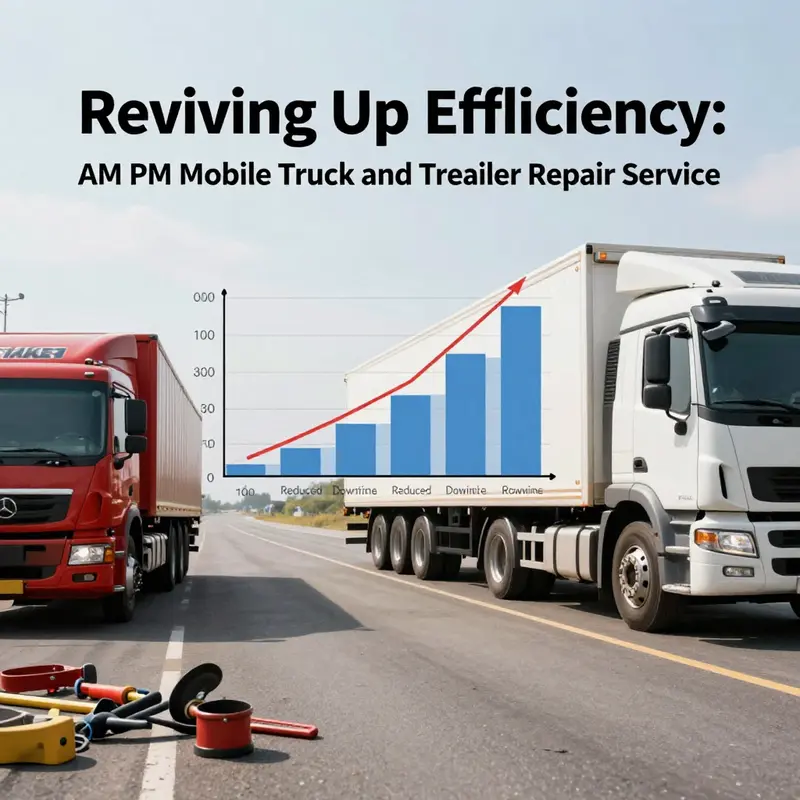
Economic ripple effects across fleet operations
A mobile truck and trailer repair model changes the balance sheet in tangible ways. It reduces downtime and turns maintenance from a disruptive cost center into a predictable element of operations. When repair technicians come to the asset instead of the asset going out of service, every hour saved compounds into measurable operational gains. That difference affects labor costs, fuel use, delivery schedules, lease utilization, and customer satisfaction.
At the center of this dynamic is the ability to perform maintenance during non-operational windows. Technicians who provide night and weekend service let fleets avoid taking vehicles out of rotation during peak hours. This preserves revenue-generating runs and reduces the need to hire temporary drivers or reroute loads. For many operators, that alone changes planning assumptions. Schedulers can work with longer service windows without sacrificing margins. Dispatchers gain flexibility to match capacity and demand with less costly contingency plans.
Proactive, contact-minimized maintenance also mitigates the risk of small faults escalating into major breakdowns. Rapid diagnostics identify issues such as diesel aftertreatment faults, engine sensor anomalies, and tire problems before they cascade. Fixing a single sensor or replacing a worn tire on-site is far cheaper than addressing a seized engine, a collapsed axle, or a late shipment. When minor repairs are addressed immediately, the fleet saves on towing, storage, and emergency labor. These savings are direct and continuous.
Economic benefits are measurable and repeatable. Industry data shows fleets that adopt scheduled mobile maintenance reduce unscheduled downtime by roughly 30 percent. Lower downtime produces two categories of value: first-order savings, such as reduced towing bills and fewer external repair shop invoices; and second-order gains, such as improved delivery reliability and higher asset utilization. When a fleet can keep equipment working longer between depot visits, the effective return on each vehicle increases.
Multifunctional mobile units bring further efficiency. A well-equipped mobile truck can perform comprehensive repairs on-site. That eliminates the need to tow damaged equipment to offsite facilities. Removing transport from the maintenance equation slashes direct costs. It also lowers incremental wear from hauling and reduces scheduling friction. A trailer that would otherwise be out of rotation for days might return to service in hours, avoiding missed contracts and penalty fees.
Improved asset utilization leads to longer equipment life and more favorable capital planning. When vehicles avoid unnecessary transit and sit time, structural and drivetrain wear slows. Regular, targeted interventions extend the useful life of major components. Fleets can defer capital expenditures or redeploy budget into other productivity-enhancing investments. A deferred purchase has a cascading effect on depreciation schedules and tax considerations, improving net operating cash flow.
There are compliance and safety benefits that carry economic weight too. Mobile technicians who perform routine checks ensure regulatory tasks occur on time. Preventive service keeps brakes, lights, and emissions systems within legal limits. Avoiding fines and unexpected off-road orders prevents revenue interruption. A fleet that stays compliant also maintains insurance terms and avoids increases in premiums tied to incident frequency.
Beyond the strictly operational impact, service responsiveness influences reputation and customer retention. For businesses that promise time-sensitive deliveries, reliability is a competitive differentiator. Each avoided late delivery protects contract margins and reduces the likelihood of fines or lost business. Over time, a dependable maintenance program reduces churn among customers who demand consistency.
Quantifying the value requires clear metrics. Start by tracking mean time to repair (MTTR) and mean time between failures (MTBF). Combine those with utilization rates, average revenue per vehicle, and incremental towing costs. When a mobile repair program reduces MTTR by a predictable percentage, it becomes straightforward to translate that improvement into revenue preserved per hour. For example, if a vehicle expected to generate $500 per day experiences two fewer downtime days per month, the monthly revenue impact is immediate and material.
Labor economics also shift. Bringing services to the roadside reduces the need for overtime and emergency dispatches. It limits the frequency of drivers waiting on repairs while fleets scramble for replacements. When mechanics are scheduled for preventive rounds, their labor is more predictable and efficient. That can lower the premium paid for emergency technician hours and reduce management overhead.
Fuel economics improve as well. Towing and repositioning expenses are lower. Vehicles avoid empty deadhead miles to a maintenance bay. These reductions are small per event, but they scale. For a fleet of dozens or hundreds, the cumulative fuel savings over a year amount to significant sums. Lower fuel usage also reduces emissions, aligning with environmental goals and potentially qualifying fleets for incentive programs.
There is a psychological, operational advantage for drivers too. Drivers who trust that maintenance will be timely and convenient report higher satisfaction. That reduces turnover, and lower turnover reduces hiring and onboarding costs. Driver retention helps fleets avoid productivity dips associated with new operator learning curves. It also preserves institutional knowledge about routes, customers, and equipment behavior.
A mobile-first maintenance strategy recalibrates vendor relationships. With capable on-site repair, fleets rely less on tow-to-shop workflows. They can select partners based on diagnostic depth and emergency responsiveness rather than proximity. This shifts purchasing power to providers who can deliver integrated diagnostics, parts availability, and rapid field repair. Competitive pricing for bundled mobile services often improves total cost of ownership.
To capture savings, fleets must align scheduling and reporting systems. Telemetry and maintenance management platforms feed timely fault codes to mobile technicians. The faster a technician knows the likely fault, the better their chances of rolling with the correct parts. Stocking mobile vans with common wear parts is efficient. But integration is key. When fault data, driver notes, and parts inventories sync, repair times shrink and repeat visits decline.
Financial modeling should include direct savings and strategic benefits. Direct savings include fewer towing events, reduced external shop invoices, and lower labor premiums. Strategic benefits include preserved customer relationships, deferred capital expenditure, and improved asset lifespans. When building a business case, include one-time transition costs, such as process redesign and training. Then model annual savings conservatively across three years. Many fleets see a rapid payback in the first year and compounding gains thereafter.
Case scenarios make the math actionable. Consider a regional carrier with 100 tractors and 200 trailers. If a mobile repair program reduces unscheduled downtime by 30 percent, and each downtime hour costs the carrier $100 in lost revenue or recovery expense, the monthly savings scale quickly. Add avoided towing fees and fewer offsite shop hours. Factor in extended service intervals and deferred capital replacement. The aggregated savings can fund the mobile service contract and still leave a meaningful margin.
Operationalizing the model requires disciplined processes. First, define service windows that align with fleet rhythms. Second, prioritize high-impact assets for mobile rounds. Third, set clear escalation paths for complex repairs requiring shop resources. Fourth, create KPIs that connect maintenance activities to revenue outcomes. These steps ensure resources focus where they return the most value.
The contact-minimized approach merits attention. It reduces interactions where business-critical delays might occur. It supports business continuity plans under unusual conditions. Fleets that practiced contact-minimized maintenance during constrained periods reported fewer interruptions. Predictable service during constrained times reinforces operations, preserving revenue and reputation.
Long-term planning benefits from mobile capabilities too. A fleet that maintains equipment consistently can plan for phased upgrades, fleet standardization, and targeted electrification pilots. When downtime is under control, managers can trial new equipment types without risking core service reliability. The steady rhythm of maintenance data builds a clearer view of component lifecycles, enhancing procurement decisions.
Accounting and tax teams see advantages as well. Predictable maintenance costs simplify budgeting. When repairs occur on a schedule, accruals and reserves become more accurate. Also, extended asset life alters depreciation schedules. The capital spent on replacements shifts in timing, which can free cash flow for strategic investments.
Risk management becomes more precise. With rapid on-site diagnostics, fleets can identify systemic issues before they become fleet-wide problems. That insight prevents cascading failures and informs targeted training for drivers and technicians. Insurance underwriters value demonstrated maintenance regimes. Fleets demonstrating robust, responsive maintenance programs often have an easier time negotiating terms or defending claims.
Scaling the model requires an eye on supply chain resilience. Mobile teams depend on parts availability. Fleets should align vendors for critical parts and maintain buffer stocks for high-failure items. In parallel, data should guide inventory decisions. Usage rates, seasonal patterns, and failure modes inform how mobile vans are stocked. When parts are available quickly, technicians can complete repairs in one visit and avoid repeated mobilizations.
To quantify ROI conservatively, build scenarios. Use a baseline, then model a best-case and a cautious-case. Include the Fleet Maintenance Trends Report metrics as a benchmark. Industry research suggests a 30 percent reduction in unscheduled downtime and up to 25 percent lower maintenance costs over twelve months for fleets that adopt scheduled mobile maintenance. These figures are a useful starting point for financial projections. For further reading, consult the Fleet Maintenance Trends Report, 2025: https://www.fleetmaintenance.org/reports/2025-fleet-trends-report
Finally, consider the broader strategic value. Mobile maintenance converts unexpected disruptions into manageable events. It lets fleets focus on their core competency: moving goods. It aligns maintenance activity with business demand. It improves financial predictability and operational resilience. For decision-makers, the argument for mobile repair is both operational and fiscal. It reduces variable costs and stabilizes performance, creating a platform for growth.
For practical comparisons and industry context, see the discussion of fleet-focused service excellence in this piece on 5-Star Truck Inc, which offers perspectives relevant to fleet maintenance strategy: Unveiling 5-Star Truck Inc: a beacon of excellence in trucking services.
Embedded in the numbers and models is a simple operational truth: when maintenance is predictable and fast, fleets extract more value from each asset. The impact shows up on profit-and-loss statements, balance sheets, and customer dashboards. It also shows up in quieter ways — fewer phone calls at two a.m., fewer emergency dispatches, and steadier schedules. Those outcomes, summed over months and years, define the economic case for mobile truck and trailer repair as a strategic tool, not merely an operational convenience.
Final thoughts
AM PM Mobile Truck & Trailer Repair Service isn’t just another repair shop; it’s a strategic partner for those in the trucking industry. By focusing on on-site services, embracing the latest technology, and positively impacting economic aspects of fleet management, they ensure that trucks are not only repaired promptly but also maintained to extend their life on the road. For long-haul drivers, trucking company owners, and fleet managers alike, choosing AM PM means investing in reliability and efficiency—key factors in thriving within this demanding sector.