
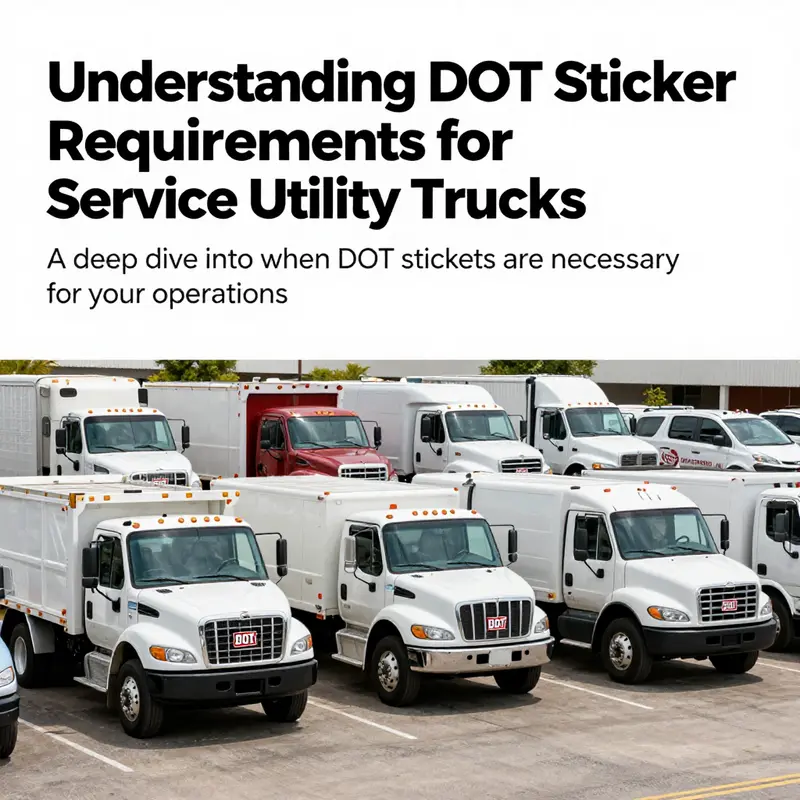
Determining whether your service utility truck requires a DOT sticker is crucial for compliance with federal regulations. Long-haul drivers, trucking company owners, fleet managers, and aspiring truck drivers need to understand the specific regulatory landscape surrounding DOT stickers. This article will explore the various regulatory requirements, the importance of these stickers for interstate commercial operations, and any exemptions that may apply. Each chapter will build on the last, helping you to fully grasp your obligations and rights as you navigate interstate commerce in your service utility truck.
Stickers on the Move: Navigating DOT Requirements for Service Utility Trucks
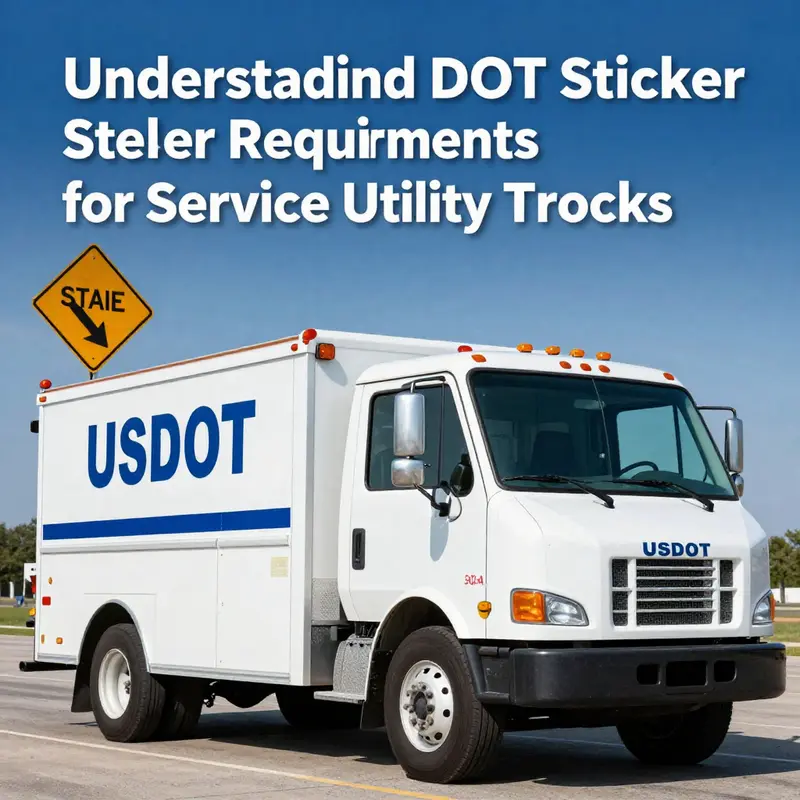
In the world of service utilities, trucks are more than workhorses; they are mobile offices, tool cradles, and beacons of reliability that must travel across towns, states, and sometimes regions where weather, traffic, and demand collide. With that mobility comes a set of regulatory expectations that can feel opaque or overly technical until you see how they translate into everyday fleet decisions. The question at the center of this chapter—whether a service utility truck needs a DOT sticker—is not simply about a sticker on the side of a cab. It is about tracing the path that goods, crews, and equipment travel across state lines and understanding how the federal framework built by the Federal Motor Carrier Safety Administration (FMCSA) governs that travel. The short answer hinges on interstate commerce. If your operation crosses state lines, you almost certainly need a USDOT number and the corresponding DOT sticker. If the truck works exclusively within one state, the federal sticker requirement usually does not apply. Yet even the possibility of crossing borders or delivering across jurisdictions means you should plan for USDOT registration and proper display, because regulatory lines are rarely drawn with a blunt brush; they are defined by how your fleet actually moves.
The USDOT number is not a decorative badge. It is a federally issued, unique identifier for the motor carrier that appears in databases used by enforcement, safety inspectors, and insurance providers. The Department of Transportation requires most commercial motor vehicles engaged in interstate commerce to display this number on the outside of the vehicle. The FMCSA does not prescribe a single, rigid sticker design; rather, it requires that the number be clearly legible and permanently affixed. In practical terms, many fleets choose durable vinyl decals or laser-etched plates that resist rain, dirt, sun, and road salt. The key is legibility and permanence: if a decal starts peeling after a season, or if the numbers become obscured by grime, the fleet operator has not met the spirit of the requirement. The integrity of the display matters as much as the act of obtaining the number itself.
For service utility trucks—whether they are in construction, landscaping, electrical, plumbing, or telecommunications—the line between private work and interstate activity is often thinner than it appears. A crew that assembles in one state to complete a project in a neighboring state, or a fleet that moves specialized equipment from job to job across borders, triggers the regulatory framework that governs USDOT registration and the visible mark on the vehicle. The FMCSA’s emphasis is on safe operation and identification. The USDOT number helps regulators trace who is operating a commercial vehicle and how that operation aligns with federal safety standards. In the field, this means that a truck with a USDOT number is presenting a verifiable point of contact, a safety record, and a defined scope of operation to authorities—elements that become precious when time on the road turns into an audit, a roadside check, or an insurance inquiry.
The display details may seem granular, but they matter in real-world scenarios. The USDOT number must be clearly visible on the side of the vehicle’s cab or body and must be permanently affixed in a way that it remains legible throughout the vehicle’s operational life. The FMCSA does not insist on a particular sticker type, but the policy clearly anticipates durable, weather-resistant materials. Magnetic signs, temporary magnets, or removable stickers are inadequate for fleet operations that are designed to last through seasons of constant exposure to rain, sun, and road grime. The requirement to avoid magnetic or detachable formats is more than a matter of aesthetics; it protects the integrity of the identification in dynamic road conditions where a loose sign can slip or fall away in wind, rotation, or vibration. In short, the sticker must stay put, even as a truck traverses hills, traffic, and climate shifts.
Placement is part of the compliance conversation. The USDOT number should be visible on the exterior side of the vehicle, ideally on the cab or body in a mid-to-lower height range that remains accessible to roadside inspectors and camera-based checks while not obstructing routine maintenance tasks. The specification that the number be displayed on “the side of the vehicle” helps avoid ambiguity about where the mark should appear, especially on larger service bodies or integrated equipment racks. It is not intended to cover non-structural or detachable components such as trailer sides or fuel tank covers. That limitation matters for operators who might be tempted to apply a sticker to a surface that could later be removed or replaced; the FMCSA’s guidance is explicit about where not to apply the sticker, because a clear, durable, and persistent display depends on stable, non-removable surfaces that reflect the vehicle’s identity over time.
To translate these requirements into everyday practice, imagine a fleet of service utility trucks performing field work across a region. A single cross-state contract can create a compliance cascade: you must have the USDOT number, display it legibly on the vehicle, renew the registration as needed, and maintain the sticker so that it remains legible during inspections and audits. The value of this system is not merely compliance for compliance’s sake. It is safety, accountability, and a smoother operation across jurisdictions. When a crew travels from one state to another, the USDOT number is a quick, standardized signal to regulators that a responsible entity is behind the operation, one that has met the safety and identifier requirements that the FMCSA codifies. The presence of the number is a reminder to everyone in the chain—from mechanics to dispatchers to safety officers—that the journey across borders is not an informal arrangement but a regulated activity with a documented safety profile.
The path to compliance begins with understanding the scope of your operation. If your trucks are used exclusively within a single state and never venture across borders, you may not need a USDOT number or a DOT sticker. Many intrastate fleets are exempt under the FMCSA framework or operate under state-specific administrative regimes that do not involve the USDOT number. However, the rule is designed to anticipate the real-world possibility of interstate travel. If there is even a chance your work will cross state lines, the prudent route is to pursue USDOT registration and to ensure the corresponding equipment display is in place. This is especially true for utilities that maintain cross-border service contracts, respond to regional outages, or deploy crews quickly to projects that involve multi-state collaboration. The cost of over-preparing—obtaining a USDOT number and affixing a compliant sticker—pales beside the risk of noncompliance, which can include fines, out-of-service orders, or delays that ripple through a job schedule and a client’s timeline.
From a procurement and safety-management perspective, the central question becomes how to weave regulatory readiness into everyday fleet management. Compliance should not be treated as a separate task but as a core component of fleet discipline. Consider the procurement decisions that carry a compliance thread—from the choice of vehicle configurations and mounting points to the selection of decals that resist weathering and wear. The decision to obtain a USDOT number aligns with broader risk management and safety practices: it signals a trackable, auditable operation and creates a centralized point of contact for regulatory inquiries. In practice, this means that fleet managers should coordinate with compliance officers, fleet maintenance teams, and procurement specialists to ensure that any cross-border activity triggers the necessary registrations and that the vehicle livery remains consistent with the identified numbers across the entire fleet. The discipline extends beyond a single truck; it shapes how the entire fleet communicates its identity on the road and how it is perceived by authorities and customers alike.
The mechanics of obtaining and displaying a USDOT number are straightforward, but they deserve careful attention. The USDOT number itself is assigned by the FMCSA after the carrier completes the registration process through the FMCSA portal. The number is then displayed on the side of the vehicle in a way that remains legible under standard operating conditions. The FMCSA’s guidance emphasizes permanence and legibility rather than a mandated aesthetic. This means that a fleet can choose between different practical formats—embossed plates, vinyl decals, or stencils—so long as the number is clearly visible and securely affixed. In this sense, the sticker is a vehicle credential, not a branding instrument. It communicates regulatory status and accountability more than it communicates marketing value. For the operators, this distinction matters because it anchors compliance to a standard that inspectors and auditors recognize, reducing ambiguity and making inspections smoother.
The nuance about where the sticker cannot be placed is as important as where it should go. The policy forbids attaching the number to non-structural components such as trailer sides, fuel-tank covers, or any detachable elements. This constraint is not arbitrary; it protects the integrity of the identification in routine vehicle maintenance and in the rough-and-tumble environment of field service work. A decal on a fuel-tiller cover or a removable component might be damaged or removed during servicing, leading to gaps in regulatory visibility when it matters most. By anchoring the sticker to a stable, structural area on the side of the cab or body, the FMCSA ensures that the USDOT number remains an enduring thread through the vehicle’s life, weathering whatever the road and the job throw at it.
In practical terms, a fleet that moves across state lines will often adopt a standard operating procedure that codifies the USDOT display as part of the vehicle’s pre-trip checklist. Maintenance teams verify that the number is legible, undamaged, and properly affixed, while dispatch and compliance officers track renewals and ensure that the number aligns with the company’s USDOT profile. This alignment is not simply about compliance; it enables smoother risk management, consistent record-keeping, and a clearer chain of responsibility in case of incidents or audits. It also supports insurance processes, as insurers frequently reference USDOT numbers to verify the safety history and regulatory compliance of the operating entity. In short, the sticker does more than mark a vehicle; it marks a governed operation ready to meet the demands of multi-state work in a transparent, verifiable way.
As readers reflect on their own fleets, a practical question often remains: how does this guidance intersect with the realities of procurement and safety leadership in a service- or utility-focused organization? The answer lies in weaving compliance into the culture of fleet management. To explore how safety considerations influence procurement decisions in a broader context, you can consult discussions on safety-forward procurement strategies that emphasize community-driven, compliant approaches to equipment acquisition. Purchasing-for-safety-community-driven-fire-truck-procurement-strategies This link points to a broader conversation about aligning purchasing decisions with safety, regulatory readiness, and practical field realities. It is a reminder that compliance is not an isolated step but an ongoing discipline embedded in how fleets are planned, equipped, and deployed.
At the end of the day, the question about a DOT sticker on a service utility truck is less about a sticker and more about the highway logic of your operation. If your trucks move across state lines, you are operating in a framework that requires a USDOT number and a compliant display that is visible, durable, and permanently affixed. If your operation remains strictly within state borders with no cross-border planning, the federal requirement may not apply. Yet the risk calculus changes when you consider the possibility of interstate movement, multi-state contracts, regional outages, and rapid deployment needs that are common in utility work. Regulators expect that carriers doing interstate services identify themselves clearly and maintain a safety profile that is traceable and accountable. The USDOT number on the side of the vehicle is a tangible signal of that identity. It communicates, without ambiguity, who is behind the operation and that the operation adheres to the safety frameworks designed to protect workers, the public, and the road network.
For organizations looking to verify the current landscape or to confirm specifics that apply to their unique circumstances, the FMCSA’s official resources remain the most reliable compass. The FMCSA’s regulations portal houses the essential guidance on motor carrier registration and identification requirements, and it is the right starting point for updates, amendments, and clarifications that may affect your fleet. The page at FMCSA lays out the core requirements in plain terms while connecting practitioners to the relevant forms, processes, and compliance timelines. In a field where contracts and schedules can hinge on regulatory readiness, keeping pace with FMCSA updates is a practical obligation for fleet leaders and safety professionals alike. The path to compliance is not a one-time event but an ongoing practice that grows more reliable as it becomes part of the day-to-day life of the fleet.
External resources are helpful for grounding day-to-day decisions in official guidance. For official guidance, consult the FMCSA regulations page on motor carrier registration and identification requirements: https://www.fmcsa.dot.gov/regulations/registration
DOT Stickers on the Move: Navigating Interstate Compliance for Your Service Utility Truck
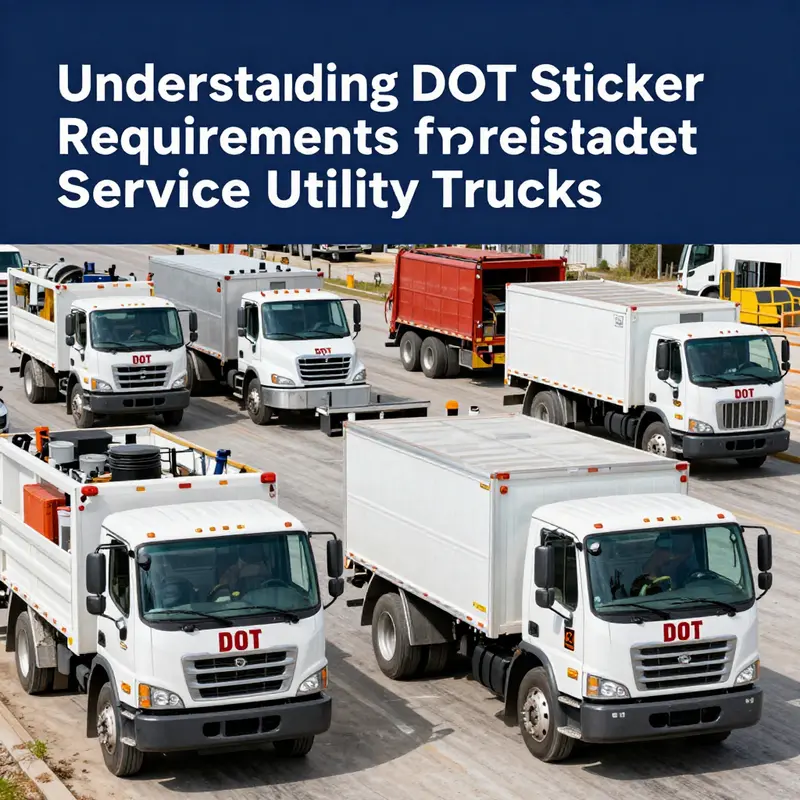
Dawn light spills across a yard full of service utility trucks, each one carrying tools, hoses, reels, and the quiet tension of conformity. For the fleet manager who keeps those trucks rolling, a simple question often rises to the top of today’s briefing: does my service utility truck need a DOT sticker? The answer hinges on a straightforward, government-backed idea: interstate travel. When a vehicle operates across state lines in the course of business, it steps into the federal regulatory arena. The USDOT number that appears on a sticker or decal becomes less a branding mark and more a legal badge of compliance, a numeric passport that allows the vehicle to move beyond the borders of its home state. The sticker itself is not just a symbol of permission; it is a live link to a carrier’s safety record, a door to the regulator’s eyes, and a signal to the roadside inspector that the operator has met the federal minimums for safe operation and accountability. In practical terms, this means most service trucks that routinely cross state lines, whether they are doing electrical work, plumbing, landscaping, telecommunications, or light construction, bear a visible USDOT identifier on both the front and rear of the vehicle. The requirement comes from the Federal Motor Carrier Safety Administration, and its enforcement serves a broad purpose: to keep safe operation observable, to make investigations and oversight more efficient, and to improve the reliability of a national transportation network that underpins critical services in homes and businesses alike.
The USDOT number is the heart of the system. It is a unique, federally assigned identifier that links a carrier to a wealth of data in the FMCSA’s safety oversight ecosystem. When inspectors pull up a USDOT number in the agency’s public-facing SAFER system, they can access a carrier’s inspection history, safety ratings, crash data, enforcement actions, and other records that reveal how well the company maintains its fleet, trains its drivers, and responds to safety issues. The DOT sticker is the outward face of that system, a legible, durable marker that signals to every regulator and partner that the vehicle belongs to a registered, accountable operation. The sticker itself is not a strict template with a mandated typeface or format; rather, it must be legible, securely affixed, and placed in the locations specified by regulation. The underlying requirement is that the number be easily visible to law enforcement at a distance and at various angles, so that a quick check can be performed without delay. In this sense, the sticker operates as a practical interface between a busy fleet and the public interest in safe, reliable transportation. It is a reminder that a single truck, when it moves across state lines, is not merely moving hardware; it represents a compliant organization that has accepted federal safety standards and the ongoing duty to maintain them.
The day-to-day reality of maintaining this system is not glamorous, but it is essential. For a service utility fleet that travels from job site to job site, possibly through urban corridors and rural routes, the sticker is a compact, weather-resistant badge that endures sun, rain, mud, and road salt. Because the sticker must be clearly legible, many operators choose durable vinyl decals designed to withstand the elements and the rough handling that comes with a busy service schedule. The design choice—whether a larger decal on the front doors or a smaller, two-sided application on the sides—often reflects the vehicle’s configuration, the company’s branding strategy, and the daily realities of cleaning and maintenance. Importantly, the number on the sticker is not just a random label; it is the key to a carrier’s safety profile. If an inspector scans the USDOT number, the accompanying safety data becomes accessible, painting a picture of the carrier’s compliance history, vehicle maintenance practices, driver qualifications, and risk management processes. In other words, the sticker is a gateway to accountability and transparency that benefits not only regulators but also customers, insurers, and the public at large.
Understanding when the rule applies requires a precise read of the line between interstate commerce and intrastate operations. If a service utility truck operates solely within a single state and never crosses state lines, the USDOT number and sticker are generally not required. The FMCSA’s rules are anchored in the concept of interstate commerce, which captures activities that cross state borders in the course of business. However, the practical world of service work—where a truck might be dispatched to a project in a neighboring state or pick up a generator from a supplier outside the home state—creates a gray area that many fleets must navigate with care. The prudent approach is to assume there could be interstate travel if there is any chance a route may cross a state line. In those cases, registration with the USDOT and visible display of the USDOT number are necessary, because readiness for interstate operation is a core safety and regulatory objective of the FMCSA.
For operators who do move across borders, the legal landscape is not simply about placing a sticker and calling it a day. It is a living system that requires ongoing attention to the status of the USDOT number and the accuracy of the information tied to it. The number must be active and current in the FMCSA database, reflecting the true status of the business—ownership, fleet size, operational scope, and any changes in operating authority. A change in ownership or a shift in the fleet’s composition triggers updates to the FMCSA records, and those updates in turn affect what appears on the sticker and how the carrier is regulated during inspections. If a sticker fades or becomes obscured by dirt, mud, or debris, or if the number becomes difficult to read, the carrier risks delays or penalties. Routine checks and a small but steady maintenance routine—cleaning the sticker, replacing worn decals, and verifying the number in the FMCSA database—are not cosmetic concerns; they are essential practices that help ensure the vehicle remains compliant in the field and on the road.
The significance of the DOT sticker extends beyond the regulator’s need to identify carriers quickly. It embodies a broader transparency that supports efficient, reliable supply chains. Shippers and brokers increasingly rely on the USDOT number to verify a carrier’s credentials and safety performance before contracting work. This visibility incentivizes safer practices, because it creates a tangible, measurable expectation that a carrier will meet safety standards and maintain its fleet properly. The digital dimension of this system—SAFER and related databases—means a USDOT number becomes a living record, not a static tag. When a company updates its records, it is not merely fulfilling a formality; it contributes to the public record that informs business decisions across the freight ecosystem. For a fleet manager, the practical takeaway is straightforward: keep the USDOT record accurate, keep the sticker legible, and integrate these duties into the ongoing safety management program rather than treating them as a one-off compliance task. In the big picture, the DOT sticker is a small but consequential instrument of trust, a visible signal that a service fleet operates within a framework of safety, accountability, and interjurisdictional responsibility.
As fleets evolve and grow, the value of standardization becomes more evident. When a company consolidates its compliance practices across a fleet—consistent sticker placement, uniform processes for updating USDOT records, centralized checks for sticker legibility, and a shared understanding of when interstate operation triggers registration—benefits accrue in reduced risk and smoother operations. This is not merely about avoiding fines; it is about embedding a culture of safety and reliability in the day-to-day rhythm of field work. The idea extends to the procurement and maintenance practices that support compliance. Maintenance teams should incorporate DOT sticker checks into routine inspections, just as they inspect tires, lights, and brakes. Dispatch and operations teams should confirm that each vehicle’s weight, cargo, and route plans align with the requirements of the applicable regulations. The discipline of compliance, when applied consistently, pays dividends in fewer roadside interruptions, fewer delays in loading and unloading, and more predictable project timelines. For many organizations, the path toward this kind of consistency begins with a simple commitment: treat the USDOT number and the DOT sticker not as bureaucratic hurdles but as a shared standard that underpins performance and accountability across the fleet.
The practical implications of this commitment extend to training and culture within the organization. Drivers should understand the purpose of the USDOT number and the sticker, recognizing that these elements are not about surveillance but about safety and trust. They should be trained to report damage to the sticker, to ensure its visibility at all times, and to understand that an out-of-service condition is not a minor inconvenience but a sign that something fundamental is wrong with regulatory compliance. Fleet managers can weave DOT sticker awareness into safety briefings, maintenance schedules, and procurement decisions, reinforcing a common language that aligns with the broader goals of safe operations, public accountability, and dependable service delivery. This also means staying informed about regulatory changes, since the FMCSA occasionally updates guidance or clarifies requirements in response to evolving industry practices and safety data. The chapter of compliance is ongoing, not a single entry in a file cabinet. It is a living practice that keeps service fleets ready to serve communities that rely on them every day.
When a fleet approaches DOT compliance with a mindset of proactive stewardship, the path forward becomes clearer. A few practical steps anchor this approach. First, confirm whether any operation could reasonably involve interstate travel, even on rare occasions. If there is, register for and display a USDOT number. Second, secure a durable, weather-resistant decal that clearly shows the USDOT number on both the front and rear of each vehicle, taking care to mount it in locations specified by the relevant rules. Third, maintain the USDOT record in the FMCSA system, and ensure the number remains active and accurate whenever the fleet undergoes changes in ownership, leadership, or composition. Fourth, implement a routine sticker maintenance protocol that includes inspection for legibility and proper placement, cleaning to remove dirt and grime that can obscure the number, and timely replacement of damaged decals. Fifth, integrate DOT compliance measures into the broader safety management program, so that the sticker becomes part of a holistic approach to safety, regulatory adherence, and responsible fleet operation. Finally, recognize the role that DOT compliance plays in business credibility. Customers, insurers, and partners increasingly expect fleets to demonstrate transparent safety practices, and the USDOT number on a clean, legible sticker is a concrete, verifiable signal of that commitment.
In the end, the question of whether a service utility truck needs a DOT sticker is not just a question of regulatory compliance; it is a statement about the integrity and reliability of the business operating behind the wheel. It is about the quiet guarantee that, when the truck moves from city street to state highway, the operator has not only the tools and training to get the job done but also the systems in place to ensure that the journey is safe for the driver, the public, and the workers who depend on them. The DOT sticker, in that sense, is a compact but powerful emblem of professional stewardship. It signals that a company is accountable not only to its clients but to the public that shares the space where those trucks travel. The result is a transportation network that works more smoothly, an industry that can make smarter decisions based on accessible safety data, and a more secure foundation for essential services that keep communities functioning day in and day out. This is the practical reality that underpins the regulation: a framework that, when followed diligently, supports dependable service delivery while maintaining respect for the laws that govern the movement of people and goods across state lines.
For those seeking deeper context and official specifics, the FMCSA provides authoritative guidance on 49 CFR Part 390 and the dot-number-and-sticker requirements, which remain the reference point for carriers navigating interstate commerce. As you plan the next steps for your fleet, consider linking your internal practices to the broader safety and compliance ecosystem. In the spirit of continuous improvement, you can explore the concept of standardization as a lever for better outcomes across your fleet. The idea is simple: when you align practices—like sticker placement, record accuracy, and routine inspections—across every unit, you reduce variance that can lead to mistakes, misreads, or delays. This approach resonates with the broader goal of building a dependable, trustworthy fleet that can perform reliably under pressure and in changeable conditions. For fleets looking to connect the dots between DOT compliance and broader fleet excellence, you may find it useful to review related discussions on standardization and safety program design in other parts of the industry landscape, such as resources that emphasize the benefits of standardized operations. benefits-of-standardizing-fire-truck-fleets.
In summary, the policy backdrop is clear, the practical steps are straightforward, and the broader implications are meaningful. A service utility truck that operates across state lines carries more than cargo; it carries responsibility. The DOT sticker is a visual reminder of that responsibility, a tangible link to the regulatory framework that guards public safety and sustains a robust, efficient transportation network. Properly applied, maintained, and integrated into the company’s safety culture, the sticker becomes not a burden but a constant, visible endorsement of professional practice. The result is a fleet that moves with confidence, navigates the regulatory landscape with fewer detours, and delivers essential services with a reliability that customers count on and regulators can trust. For any fleet tasked with serving communities through the complexity of interstate work, this approach translates to clearer compliance, smoother inspections, and a stronger, more resilient business foundation. Official details and current regulatory language can be found on the FMCSA’s site, which remains the definitive resource for the rules that govern dot-number and sticker requirements: https://www.fmcsa.dot.gov/regulations/49-cfr-part-390/dot-number-and-sticker-requirements.
null
null
Final thoughts
In summary, understanding whether your service utility truck needs a DOT sticker hinges on the nature of your operations—especially as they pertain to interstate commerce. Whether you are a long-haul truck driver, a trucking company owner, or just starting out, knowing where you stand with DOT regulations will save you from potential fines and complications in future operations. Ultimately, maintaining compliance ensures the safe and lawful transportation of goods and services across state lines, fostering a smooth operational environment.