
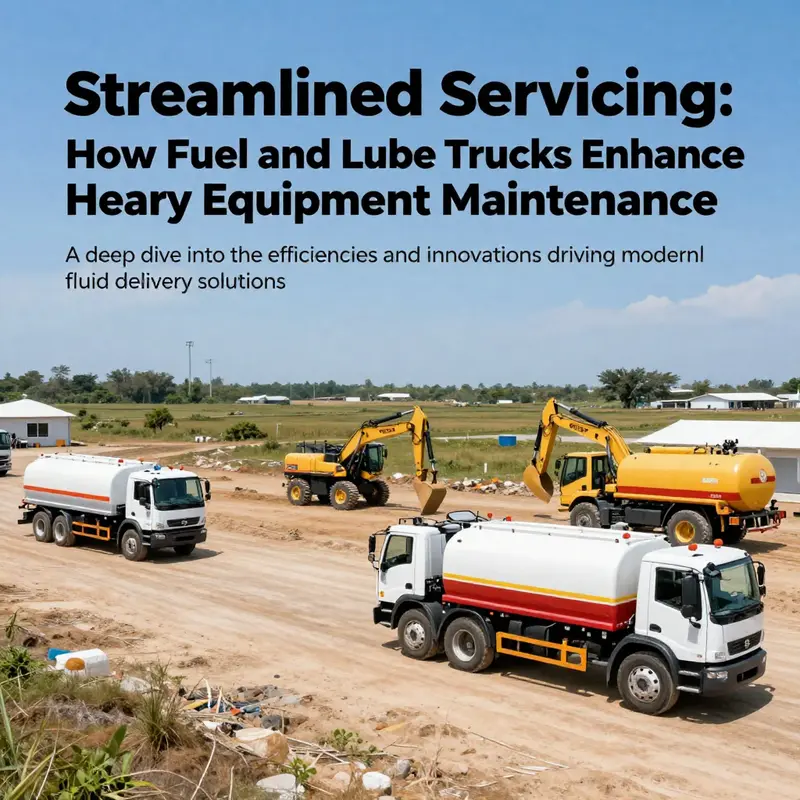
In the demanding landscape of heavy equipment servicing, where downtime can significantly impact productivity, fuel and lube trucks emerge as game-changers. These specialized vehicles simplify the multi-fluid delivery process by integrating various fluids into a single unit, thus reducing operational complexities and costs. For trucking company owners, fleet managers, and maintenance specialists, embracing these advancements means not only enhancing efficiency but also securing economic benefits and safety improvements. This article explores how fuel and lube trucks streamline servicing operations, providing comprehensive insights into their economic advantages and state-of-the-art technologies that boost safety and efficiency.
One Stop, Full Fluid Assurance: How Fuel and Lube Trucks Streamline Multi-Fluid Servicing for Heavy Equipment
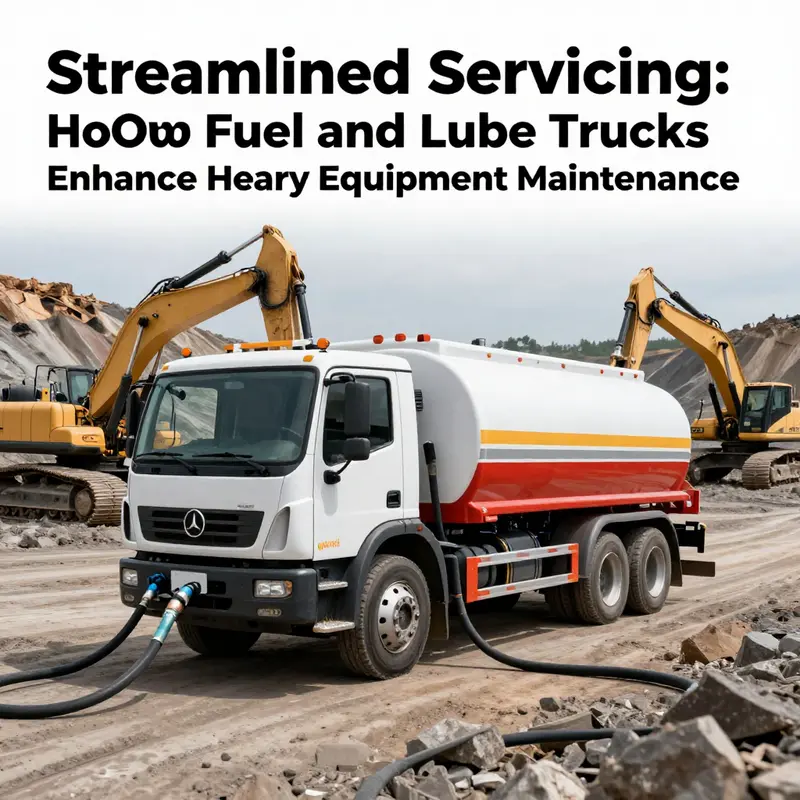
Fluid management for heavy equipment has long been a drag on uptime. Teams would pace between multiple depots, juggling diesel delivery, oil changes, hydraulic top-offs, and grease applications. Each fluid carried its own logistics: separate trucks, separate operators, separate safety checks, and a mounting list of quality-control steps to prevent cross-contamination. In environments where machines never stop for long, the costs of fragmentation—lost time, repeated trips, and the risk of human error—are brutally visible in the balance sheet. The evolution of fuel and lube trucks changes that equation by pulling the entire fluid-handling process onto a single platform. These are not just mobile tanks; they are purpose-built service ecosystems that carry diesel, engine oil, hydraulic fluid, coolant, and high-pressure grease in dedicated on-board tanks. They are designed to dispense precisely what each machine needs, when it needs it, with the kind of reliability that operators have come to expect from a well-tuned fleet. The result is a quieter, more predictable maintenance cycle and a fleet that can chase uptime rather than chase fluids across the mine floor or construction site yard.
At their core, fuel and lube trucks consolidate a sequence of administrative and operational tasks into a single, repeatable flow. Fluid delivery is centralized, reducing the number of stops required to service a fleet. Fewer trips translate into fewer fuel burn cycles and less wear on the transport equipment themselves. The savings compound quickly: less vehicle maintenance, lower driver labor costs, and fewer opportunities for spillage, contamination, or misdelivery. In practical terms, a single truck can refuel haul trucks, top off hydraulic reservoirs, replenish engine oil, and service grease points in a single pass. That kind of efficiency is not a luxury; in high-volume settings like open-pit mining, it translates directly into more hours of productive operation each day. The scale of the gains becomes even more apparent when engineers quantify downtime per shift and compare scenarios with and without consolidated fluid delivery.
The design philosophy behind these trucks is to keep fluid handling simple, safe, and precise despite the harsh realities of heavy equipment servicing. On-board tanks are engineered with large capacities to minimize refueling cycles while maintaining manageable vehicle handling. A common capability is a diesel tank in the tens of thousands of gallons range, paired with substantial reservoirs for lubricants and coolant. This is not merely about storage; it is about ensuring clean separation of fluids, reducing cross-contamination risk, and enabling quick,-metered delivery. Safety features are integrated into the core system: dual fill points to lower the chance of splash or accidental cross-feeding, breather and check valves to prevent airlock or siphoning, and sight glasses or level indicators so operators can verify contents at a glance. The dispensing system itself is governed by metered nozzles and shut-off valves to ensure the right quantity is transferred with a traceable measurement. Where older setups might rely on manual gauging or abrasive, stop-and-start refueling, modern multi-fluid trucks deliver controlled, repeatable results that fit neatly into preventive maintenance schedules.
Capacity and control matter, but so does the quality of the fluid-handling path. Built-in strainers and relief valves protect both equipment and the truck’s own piping from debris and pressure surges. In practice, these features reduce the risk of contamination that can lead to suboptimal lubrication, clogged filters, or accelerated wear. By controlling the transfer process—from pre-dip confirmation to post-delivery verification—operators gain confidence that the correct fluid is in the right place and at the correct amount. And because many heavy machines operate across varied shifts and weather conditions, the equipment must perform consistently, whether the fuel is diesel in cold northern winds or hydraulic oil in hot, dusty environments. The on-board system is designed with environmental controls and spill-prevention measures to keep the work area clean, compliant, and safe for the crew.
Another dimension of these trucks is their adaptability to different work settings. In open-pit operations, for example, the sheer scale of the fleet demands capacity and speed. A large-capacity unit reduces the number of delivery cycles, which minimizes not only downtime but the cumulative risk of human error across a network of pumps, hoses, and gauges. For underground or confined-space servicing, compact models prove invaluable. A high-safety, compact design enables maneuvering through narrow tunnels or under low-clearance sections without sacrificing essential fluid-management capabilities. These models carry essential fluids—diesel, hydraulic oil, engine oil, gear oil, and grease—through metered deliveries to fixed service points or remote reservoirs. The goal is consistently reliable, controlled transfer rather than ad hoc top-offs that can lead to inconsistent lubrication, improper lubrication intervals, or fuel contamination.
In practice, the service workflow enabled by multi-fluid trucks has a cascading effect on maintenance planning and execution. With a single delivery platform, maintenance planners can time fuel stops to coincide with planned oil and grease cycles, making the entire maintenance window more predictable. This alignment reduces the need for extra personnel during off-peak hours and lowers the complexity of coordinating multiple service crews. The integrated approach also opens space for new maintenance concepts that rely on continuous-flow support rather than episodic interventions. Predictive maintenance, for instance, benefits from the on-board fluids’ traceability. When technicians log fluid usage and replacement intervals directly from the vehicle’s metering system, the data stream informs both the maintenance calendar and parts procurement. OEMs increasingly recognize this opportunity and design PM kits and automated parts delivery as part of a broader maintenance ecosystem. The aim is to save technicians’ time while ensuring that essential components arrive just when they are needed, reducing idle time waiting for parts and accelerating the repair process.
The narrative of reliability becomes even more compelling when considering how these trucks adapt to emerging energy strategies. As fleets explore hydrogen as a potential energy carrier for medium- and heavy-duty applications, the role of multi-fluid delivery evolves rather than disappears. Hydrogen becomes a primary energy source, but auxiliary systems still demand careful care: coolant loops, lubricants for bearings and gears, and greases for critical joints. Design considerations must balance the space needed for hydrogen storage with the fluid-management footprint. Tanks and plumbing are laid out to maximize usable space while maintaining serviceability and safety. In this transitional phase, the best designs are modular enough to accommodate changing energy mixes without forcing fleets to overhaul the entire servicing architecture. The ability to add or reallocate fluid-management modules keeps a heavy equipment operation agile and ready for either incremental upgrades or wholesale fleet modernization.
The human factor is central to the effectiveness of these systems. Operators value clarity, predictability, and control. A well-designed multi-fluid truck communicates its status through straightforward indicators and automated sequences that reduce the chance of error. For instance, clear display panels show which fluid is being dispensed, the remaining quantity in each tank, and the estimated time to complete a transfer. The most successful implementations simplify the operator’s decision tree: confirm the target fluid, select the correct nozzle, and push a single control once. This approach minimizes the cognitive load and accelerates routine servicing, especially in high-pressure environments where a single misstep can cascade into costly downtime. Training and ongoing skill development remain essential. Even as the hardware becomes more capable, the technician’s understanding of fluid properties, compatibility, and contamination control makes the difference between a routine top-off and a preventable failure.
From a maintenance and lifecycle perspective, the value of integrated fluid delivery rests on uptime metrics and total ownership costs. Fewer vehicles and fewer trips translate into sustained fleet availability, while reduced labor requirements free technicians to tackle more complex tasks. The on-board, centralized approach also reduces the total footprint of the service fleet on-site. Fewer support vehicles mean less traffic in limited spaces, lower fuel usage, and diminished risk—both to personnel and to the equipment. For operations that care deeply about environmental performance and regulatory compliance, the integrated system is a natural ally. It facilitates proper fluid handling, minimizes spillage, and simplifies documentation for audits. When these factors converge, the maintenance program gains a steadier rhythm, and operators can plan around a more predictable, disciplined servicing cadence.
Looking ahead, customized fluid-management architectures will tailor the truck’s capabilities to the specific needs of a fleet. Some sites may require more diesel capacity, others more hydraulic-fluid reserve, or expanded grease points to support heavy-duty wear areas. The same platform can host modular fluid-management modules that can be swapped or upgraded without replacing the vehicle. This modularity is especially valuable for fleets that rotate through different operation profiles or that anticipate a gradual shift toward new energy carriers. In all cases, the central principle remains: deliver the right fluid, in the right amount, to the right place, with repeatable precision and traceable accountability. This is the essence of a streamlined maintenance workflow that keeps large-scale mining and construction fleets running smoothly, even as the work environment grows more demanding and the energy landscape evolves.
For readers seeking a broader perspective on maintenance strategy and parts ecosystems, consider exploring resources that discuss uptime and product support as part of a cohesive service strategy. See Unlocking fire apparatus uptime essential product support secrets for insights into streamlined maintenance and parts-flow dynamics that echo the same principles in heavy equipment servicing. Unlocking fire apparatus uptime essential product support secrets.
Externally, industry perspectives on maintenance and parts-support frameworks provide context for how OEMs and fleets approach service integration. A comprehensive resource on maintenance and repairs for equipment and related service trucks outlines the broader ecosystem that supports the kind of integrated fluid delivery described here. This external reference helps connect the on-truck capabilities with factory-recommended procedures, parts availability, and service planning. External resource: Cat Equipment Maintenance and Repairs. https://www.cat.com/en_US/support.html
Pooling Power: The Economic Gains and Operational Simplicity of Integrated Fuel and Lube Services for Heavy Equipment Maintenance
Consolidating fluid delivery and lubrication into a single, purpose-built vehicle reshapes the rhythm of heavy equipment maintenance. When a fleet lives in demanding environments—open-pit mines, large construction sites, or long-haul industrial operations—the cost of downtime is measured not just in minutes lost but in the acceleration of wear, the risk of contamination, and the cascading delays that ripple through a day’s schedule. An integrated fuel and lube truck changes that calculus by turning a fragmented set of tasks into a coordinated, on-site service that touches every major asset in the fleet. Instead of dispatching diesel trucks, hydraulic oil wagons, engine oil carriers, and grease units separately, operators can deploy a single mobile unit equipped with dedicated on-board tanks and controlled delivery systems. The effect is not merely convenience; it is a fundamental shift in how maintenance throughput is planned and executed, aligning fluid delivery with lubrication schedules in a way that reduces complexity and unlocks measurable cost savings over the life of a machine fleet.
The practical benefits begin with uptime. In demanding operating contexts, the availability of spare capacity is a scarce good. Delays in refueling or lubrication can stall a hydraulic circuit during a critical lift, a conveyor start, or a drilling cycle, forcing operators to pause while a truck is redirected, hoses are connected, and contamination checks are performed. An integrated unit minimizes the number of moving parts in the maintenance chain. It standardizes the delivery interface across multiple asset types, so technicians spend less time staging and more time servicing. The net effect is a smoother maintenance cadence that keeps production moving and reduces the frequency of unplanned stops. The efficiency gains compound when the same vehicle also consolidates monitoring and documentation. By carrying the fuel and lubricants in dedicated tanks with metered delivery, the operator gains visibility into consumption patterns, refill cycles, and lubrication intervals. This data, in turn, feeds into preventive maintenance plans that anticipate wear and schedule service before a failure emerges, rather than reacting to a fault later.
The heart of the value proposition lies in the fluid management system itself. Modern integrated units are designed around containment and precision. Built-in relief valves, filters, and shut-off mechanisms prevent contamination and spillage, while metered delivery nozzles ensure that each fill and each lubrication point receives the exact amount required. Safety remains a core consideration; dedicated dual fill points, breather valves, and sight glasses illuminate the status of fluid levels, reducing the chances of overfill and cross-contamination. Operators learn quickly that these features do more than protect assets; they reduce the risk to personnel during transfer operations and simplify the compliance footprint by providing traceable, auditable records of fluid transfer events. The upshot is that a single fleet truck becomes a controllable, auditable fluid-handling system rather than a collection of ad hoc tasks performed by separate vehicles with inconsistent procedures.
Capacity magnifies these benefits. A vehicle designed to carry large on-board tanks can serve multiple machines during a single visit, cutting the number of trips required and shrinking the overall footprint of fluid logistics. High-volume capacity means fewer refueling cycles and long intervals between fills, which translates into more time spent performing maintenance rather than driving to and from storage yards. This is especially true in remote or hazardous environments where every kilometer traveled adds risk and cost. The ability to deliver diesel, hydraulic fluids, engine oil, and grease from the same source, in measured quantities, reduces the logistical drag that typically accompanies a fleet of maintenance trucks. In open-pit operations, this consolidation translates into fewer vehicles needing to traverse haul roads, fewer operators exposed to the hazards of moving machinery, and a cleaner audit trail for fluid purchases and usage. The reduction in fleet complexity can also ease crew scheduling, ensuring that a single skilled technician can supervise multiple tasks within a single window rather than chasing separate service elements across different crews and shifts.
Underground and confined-site operations present a different set of challenges, yet the same principles apply. Specialized, compact models are designed to fit through limited overheads and narrow tunnels while still delivering diesel, lubricants, and greases through metered and controllable nozzles. The compact footprint reduces the risk of collisions with equipment and surroundings, while the metered delivery system maintains precise control over lubrication schedules and fuel transfer volumes. In these environments, the ability to perform on-site servicing without breaking the workflow of underground equipment becomes a decisive advantage. The truck becomes not just a refueling vehicle but a mobile workshop, offering retractable hoses, on-board tools, and enough storage capacity to address routine maintenance items—filters, seals, gaskets, and safety wiring—without forcing a second trip. The implications for uptime and safety in subterranean work sites are substantial, as the entire maintenance loop tightens around a single, integrated unit rather than sprawling across several separate service assets.
Beyond the operational edge, the economic logic of integration rests on the clarity of costs and the predictability of expenses. When maintenance managers model total cost of ownership, they increasingly account for the indirect costs that tend to accumulate with fragmented fluid services: late deliveries due to supply chain gaps, multiple drivers with different safety and operating practices, and the overhead of maintaining several separate fleets with varying maintenance schedules. An integrated fuel and lube unit reduces these overheads by delivering a more predictable maintenance cadence. The planning cycle becomes simpler because one vehicle type covers the essential fluid points across the fleet. A single maintenance sheet can document refueling, lubrication, and service events, aligning with a unified preventive maintenance (PM) framework. This integration dovetails with PM programs that emphasize structured service intervals, diagnostic fluid analyses, and the timely execution of well-timed interventions. The result is a measurable reduction in the ownership and operating costs that can be attributed to a well-timed service, a safer work environment, and better asset care.
The link between fluid management integration and preventive maintenance is not accidental. When operators pair integrated service vehicles with a formal PM program, the system becomes more than the sum of its parts. PM kits, service agreements, and fluid analysis protocols provide a clear, repeatable path to detect early signs of wear, contamination, or degradation. Fluid analysis offers a lens into the health of engine oil, hydraulic oil, and grease, enabling technicians to interpret condition trends and adjust maintenance tasks accordingly. In many cases, early detection through proactive fluid analysis prevents a larger breakdown, avoiding costly repairs and reducing unplanned downtime. Programs that leverage these analyses are often designed to trigger a well-timed service—neither premature nor belated—so equipment receives the right care exactly when it is needed. The economics of this approach are compelling: thousands of dollars can be saved annually by avoiding the consequences of late interventions and by optimizing fuel and lubricant usage through precise, regulated delivery.
The broader value of integrating fuel and lube services becomes particularly evident when viewed through the lens of asset life extension. Lubrication is not a one-off task; it is a foundation for the entire mechanical system, affecting piston rings, bearings, seals, and hydraulic components. Consistent lubrication reduces friction, minimizes wear, and preserves efficiency. A single service vehicle that can deliver lubricants precisely where needed, on schedule, helps maintain the intended tolerances of critical components. In combination with a robust PM program, operators can extend the interval between major overhauls and reduce the total number of expensive, disruptive maintenance events. The economic case strengthens as equipment life is stretched and residual values are preserved, contributing to a lower total cost of ownership over the asset lifecycle.
The strategic advantage of integrated fuel and lube services also hinges on safety and environmental stewardship. The improved control over fluid transfers reduces the likelihood of spills, which in turn lowers cleanup costs and reduces exposure to regulatory penalties. Modern on-board systems with dedicated valves and strainers minimize cross-contamination between fluids and provide secure containment during transfer. The capability to monitor levels with sight glasses and to verify completion with shut-off valves gives operators confidence that procedures are followed consistently. In open-pit and urban work sites alike, this disciplined approach translates into fewer incidents, smoother audits, and better relationships with regulators, neighbors, and workers who rely on a predictable, safe service environment. The cumulative effect is a more resilient operation, where safety, reliability, and economics reinforce one another rather than compete for scarce attention.
A practical way to frame the value of integration is to consider the planning horizon. For a fleet operating across multiple sites with varying access to fuel storage and maintenance facilities, the ability to rely on a single, mobile fluid-handling system creates flexibility. The truck can be deployed to where it is needed most, aligned with shift patterns and production cycles. It can be scheduled to support peak demand periods, maintenance windows, or fuel rationing scenarios, ensuring that critical assets do not stall while waiting for a service window. In this sense, the integrated approach becomes a strategic asset, not merely a logistics convenience. It enables operations to adapt to changing conditions—weather, supply disruptions, or shifting production priorities—without incurring a proportional rise in maintenance overhead or downtime risk.
Industry practitioners who have implemented integrated fuel and lube services also note the qualitative benefits that accompany the quantitative savings. Technicians report simpler workflows, fewer last-minute tasks, and better traceability of fluids. Fleet managers describe clearer accountability for service events and more precise budgeting for maintenance and fuel. Operators experience steadier machine performance, fewer surprises, and a heightened sense of control over the maintenance calendar. In the long run, this translates into a culture that values preventive care and process discipline as operational imperatives rather than as aspirational goals. The resulting workflow feels less like a sequence of isolated tasks and more like a carefully choreographed stream, in which every fluid transfer is timed to protect the equipment’s integrity, maximize uptime, and support sustained productivity.
As with any transformative approach, success hinges on thoughtful implementation. A phased rollout, starting with the most maintenance-intensive assets or the most critical fueling points, helps validate assumptions about time savings, safety, and practicality. Training is essential to ensure that technicians and operators understand the nuances of the integrated system, including how to manage levels, control flow, and document events accurately. Clear procedures, together with real-time monitoring and routine audits, reinforce discipline and reduce the risk of human error. When you couple this disciplined approach with a design philosophy that emphasizes modularity, safety, and reliability—echoed in cross-industry discussions about emergency-service vehicle design—the gains multiply. A well-designed integration strategy does not simply reduce cost; it reshapes the organization’s capability to maintain large, complex fleets in challenging environments. For a broader look at how design principles from emergency services illuminate efficient fleet systems, see design-efficiency-in-emergency-services.
In sum, the economic argument for integrating fuel and lube services into a single, mobile unit rests on a simple premise: better coordination, better control, and better care of fluid assets translate into more reliable equipment, fewer interruptions, and lower operating costs over the life of a heavy fleet. The technology and the process discipline exist to deliver these results, and the business case becomes especially compelling when measured against the realities of open-pit mining, large-scale earthmoving, and other high-demand environments. With a preventive maintenance framework that leverages documented fluid analyses and timely PM interventions, operators gain a powerful ally in the ongoing effort to maximize uptime, extend asset life, and reduce total cost of ownership. As maintenance teams learn to treat the integrated unit not as a replacement for multiple service vehicles but as a cohesive, on-site fluid management system, they unlock a mode of operation that keeps fleets ready for the next challenge—today and tomorrow. For those seeking a structured reading path on maintenance planning and service solutions, a comprehensive guide to planned maintenance and service strategies is available through the industry reference materials, which provides a formal framework for timing, data interpretation, and cost budgeting. External resource: Planned Maintenance Guide.
Guardians of Uptime: How Advanced Fuel and Lube Truck Technologies Elevate Safety and Efficiency in Heavy Equipment Servicing
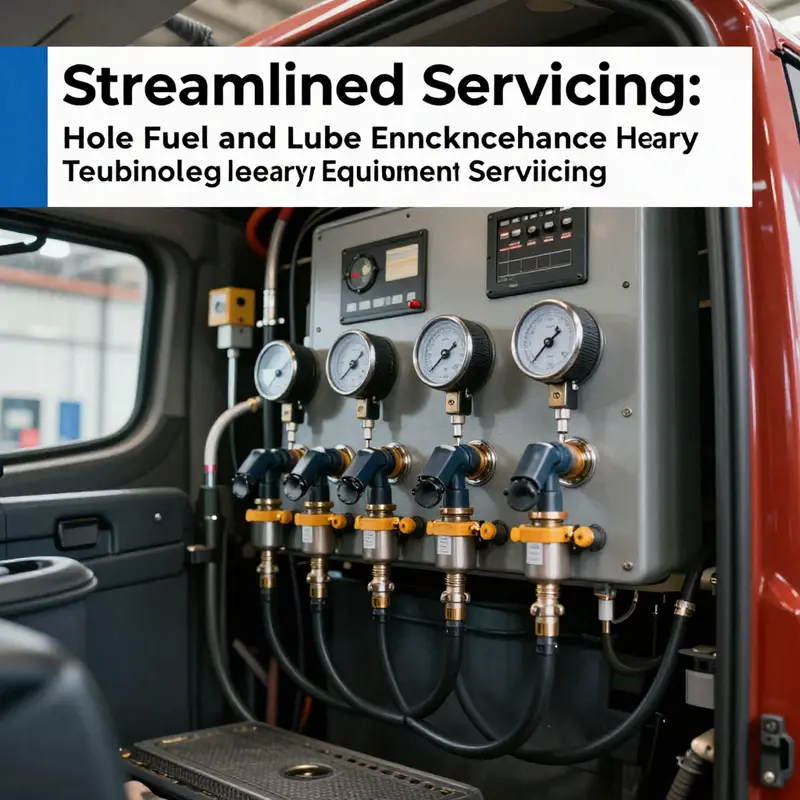
Fuel and lube trucks have moved beyond simple fluid transport. In large-scale operations, they function as integrated service platforms that consolidate the delivery of diesel, hydraulic oil, engine oil, and lubrication grease into a single, purpose-built vehicle. This consolidation reduces the number of trips, the number of operators, and the logistical friction that can otherwise bog down maintenance cycles. When a fleet relies on multiple, loosely coordinated vehicles to deliver every essential fluid, the result is a cascade of delays: waiting for a pump truck, coordinating access, rechecking inventory, and ensuring compatibility across diverse systems. A consolidated fuel and lube truck transforms routine servicing from a fragmented, time-consuming task into a streamlined, reliable process that keeps heavy fleets at peak availability. The essence of this transformation lies in on-board tanks, dedicated fluid paths, and a suite of precision controls that together minimize errors, depress contamination risk, and lower the probability of mishaps during fluid transfer.
From a safety standpoint, advanced fuel and lube trucks embody a comprehensive approach to fluid handling. Built-in relief valves, shut-off valves, and metered delivery nozzles are not ornamental luxuries; they are critical safeguards that prevent overfills, mitigate spills, and support accurate inventory management. The same systems that ensure precise metering and containment also provide a clearer audit trail for operational safety and environmental compliance. Contamination is the enemy of reliability. Oil and fuel are not interchangeable commodities in the eyes of a modern maintenance program—their incompatibility can damage seals, reduce lubricity, and alter viscosity in ways that degrade machine performance. By routing each fluid through dedicated, clean paths with strainers and filters, fuel and lube trucks minimize cross-contamination and help protect the entire fleet’s integrity.
The scale of on-board capacity is another linchpin of efficiency. Large-capacity tanks mean fewer trips and longer intervals between refills, which translates into more uptime for the machines that actually move the earth and lift the loads. In practical terms, this reduces the number of refueling cycles and on-site visits, freeing maintenance personnel to focus on diagnostic work, preventive maintenance, and critical inspections rather than chasing fluid deliveries. The capacity argument is not merely about volume but about velocity—how quickly a technician can perform a service without creating a bottleneck in the larger maintenance workflow. When a single truck can refuel, top off lubricants, and replace essential fluids for a broad spectrum of equipment, the entire operation gains predictability. The maintenance window becomes shorter, the risk of schedule slippage diminishes, and the fleet can sustain higher levels of production without sacrificing safety.
Safety-centric design extends beneath the hood of these vehicles as well. Dual fill points, breather/check valves, and sight glasses provide operators with immediate insight into fluid levels and system status, reducing the guesswork that often accompanies fluid transfers in noisy, congested job sites. Real-time monitoring further enhances decision making. Modern systems can log flow rates, detect deviations from preset parameters, and alert operators to potential leaks or blockages before a spill becomes an incident. These capabilities dovetail with spill containment features, such as enclosed transfer bays, catch pans, and secondary containment barriers that keep the work zone clean and compliant with environmental standards. In underground or enclosed environments, the advantages multiply. Compact, well-integrated designs enable access through tight tunnels, with high visibility instrumentation and ergonomic control layouts that minimize operator fatigue and error. The resulting safety gains are not abstract; they translate into fewer near-misses, lower exposure to chemicals and fuels, and a more controlled, defensible safety record for the operation.
Lubrication science is the quiet engine of reliability in heavy equipment. Proper lubrication reduces friction among moving parts, limits heat generation, and suppresses wear that can escalate into major failures. The role of a fuel and lube truck is not simply to present lubricants at the point of need; it is to ensure those lubricants arrive with the right properties at the correct moment in the service cycle. Meticulous metering supports optimal lubricant life and consistent viscosity, which are essential in the harsh, variable environments in which heavy equipment operates. The benefits extend beyond the immediate machine to the broader energy efficiency of the fleet. When a machine operates with optimal lubrication, internal energy losses decrease, and this contributes to lower fuel consumption at the system level. Over the lifetime of a large mining or construction fleet, even modest gains in lubricity, consistency, and precision can compound into meaningful reductions in energy use and emissions.
The research underpinning these observations emphasizes a holistic view of servicing. It is not enough to deliver fluids accurately; the system must prevent contamination, manage risk, and support the human operators who perform the maintenance. Automated controls are central to this approach. They regulate flow with precision, ensure that no valve remains inadvertently open, and verify that the correct fluid is dispensed into the right system. When combined with spill containment measures and robust monitoring, automation reduces the cognitive load on technicians and lowers the probability of human error. In practice, technicians can initiate a transfer, monitor the process via a digital readout, and confirm completion with a simple, auditable record. The upshot is a safer, more predictable workflow in which the chance of overfill, cross-contamination, or equipment damage declines significantly.
Beyond safety and reliability, these integrated trucks reshape the economics of maintenance. A consolidated service vehicle reduces asset counts, which lowers depreciation and fleet capital expenditures. Operating costs also drop, as fewer trips require less fuel investment and fewer personnel on site. Labor efficiency improves because technicians are freed to perform diagnostics and preventative tasks rather than coordinating fluid deliveries. In large operations, even small improvements in uptime translate into substantial productivity gains and a stronger bottom line. This is not a transient efficiency spike; it is a structural shift in how maintenance is executed on heavy fleets, aligning fluid delivery closely with the maintenance cadence and the actual needs of the equipment in the field.
Some of the most compelling stories about these systems come from underground and confined-space operations. In tunnels and shafts, maneuverability and compact dimensions are non-negotiables. A fuel and lube truck designed for such environments emphasizes a low profile, tight turning radii, and intuitive control layouts that support rapid, safe servicing without requiring elaborate setup. The emphasis on compactness does not imply compromises in capability. Instead, it reflects a deliberate balance: robust capacity, precise metering, and rigorous containment, packaged in a form that can operate within the spatial constraints of a mine or a tunnel while maintaining the same standards of safety and contamination control found on surface sites. In such settings, the value proposition shifts from simply moving fluids to enabling on-site, on-demand maintenance that keeps critical mining infrastructure online with minimal downtime.
Despite the clear advantages, the pathway to widespread adoption is not without hurdles. High upfront costs, the perceived risk of new technology, and inertia within established maintenance practices can slow uptake. Some operators worry about the complexity of integrating these systems with existing fleets or about potential downtime during transition. The evidence, however, points to a favorable total cost of ownership over the long term. Reduced spill incidents and contamination events, lower labor and fuel costs, and fewer refueling interruptions collectively deliver a compelling business case. Realizing this value often requires a mix of targeted education, staged implementation, and incentives that recognize the long horizon of savings. Industry collaboration plays a crucial role here. When operators, maintenance crews, and fleet managers share lessons learned and align on best practices, the transition becomes less daunting and more predictable.
The literature accompanying these technologies also stresses the importance of aligning lubrication practices with equipment design and operating conditions. A well-executed lubrication strategy complements the hardware. Systematic lubrication intervals, appropriate lubricant selection, and careful monitoring of wear indicators create a synergistic effect with the metering and containment systems on the truck. The result is not only better protection for components but also a more energy-efficient machine population. In turn, energy efficiency speaks to a broader sustainability agenda: by reducing energy losses through optimized lubrication, fleets can lower total energy consumption and associated emissions. While the gains may appear incremental for individual units, they accumulate quickly across a large fleet operating in challenging conditions. The message is clear: advanced fuel and lube truck technologies are a practical, scalable answer to safety, reliability, and efficiency challenges that define modern heavy equipment servicing.
To connect this discussion to broader industry thinking, consider the parallel drive toward design efficiency in emergency services. The same principles that allow a service truck to deliver fluids safely and precisely while staying compact and user-friendly can inform the design of other critical service vehicles. The core idea is to integrate capability and safety without complicating operation. For those seeking a deeper dive into how design choices in emergency service vehicles influence overall uptime and risk management, see the discussion on design efficiency in emergency services. design efficiency in emergency services.
As this technology matures, the industry is likely to see even tighter integration with digital logistics, predictive maintenance, and smart fleet management. Sensors embedded in valves, hoses, and tanks can feed a fleet-wide data ecosystem that flags anomalies, schedules replenishments, and triggers maintenance alerts before a fault becomes expensive downtime. The shift toward connected, data-driven servicing will further reduce operational risk and improve decision making. Operators will be able to optimize fluid inventories by factoring in equipment type, operating hours, changing ambient conditions, and historic failure modes. The end result is a maintenance paradigm where the right fluid reaches the right component at the right time with minimal manual intervention.
In sum, advanced fuel and lube truck technologies redefine what it means to service heavy equipment. They deliver safety through careful containment, precise metering, and real-time monitoring. They deliver efficiency through reduced trips, streamlined workflows, and long-term wear management. They deliver reliability through robust protections against contamination and spill, and they deliver value through a compelling total cost of ownership. The story is not merely about hardware; it is about how the integration of fluid delivery with fluid safety, measurement, and monitoring reshapes the entire maintenance lifecycle. As fleets expand and operations intensify, these systems offer a robust path to higher uptime, lower risk, and a cleaner, more efficient operation.
External resource for further reading: For a broader perspective on the role of lubrication in machine efficiency and safety, see the U.S. Department of Energy resource on the impact of proper lubrication on heavy equipment. Impact of Proper Lubrication on Heavy Equipment
Final thoughts
Fuel and lube trucks play a crucial role in transforming heavy equipment servicing by providing streamlined solutions that minimize downtime and maintenance complexities. Their ability to consolidate multiple fluid delivery systems into one efficient vehicle not only reduces costs but also enhances safety and productivity. With advanced technologies paving the way for greater efficiencies, trucking companies and fleet managers will benefit immensely by adapting to these innovations. Ultimately, staying informed about these evolving solutions is essential for maintaining a competitive edge in the heavy equipment landscape.