
Determining the Kelley Blue Book (KBB) value for your service truck can be crucial for truck drivers, company owners, and fleet managers alike. Whether you’re looking to sell, trade, or simply assess your truck’s worth, understanding the KBB value offers insights into fair pricing and market trends. In this guide, we’ll explore a step-by-step approach to retrieve those values, discuss the importance of accurate appraisals, analyze key factors influencing truck value, and consider the regional variances that may affect your truck’s worth. Each chapter is crafted to enhance your understanding and ease your decision-making process when tackling the competitive landscape of truck ownership and management.
Reading the Market: A Practical, Stepwise Guide to Kelley Blue Book Valuation for a Service Truck

Valuing a service truck is more than crunching numbers; it is listening to how the market actually appraises a vehicle that wears its workday on its frame. A service truck carries tools, cabinets, and built-up wear that tell a story about how it has been used, what it has carried, and how much revenue it helped generate. The Kelley Blue Book (KBB) value you obtain should reflect that story, not just the odometer. When you approach the KBB valuation with a clear narrative about condition, usage, and upfits, you gain a realistic, defensible number that aids in budgeting, negotiations, and fleet planning. This chapter offers a cohesive, narrative journey through the process, tying practical data collection to interpretation of results, so that the final value feels like a fair reflection of the market rather than an arbitrary figure pulled from a calculator screen.
Begin with a mindful mindset. The first impression a valuation gives is not only about the current price tag but about how well the number represents the vehicle’s life in service. A service truck is a specialized tool for a business, and its value is influenced by factors that standard consumer vehicles rarely encounter. The tires may be worn from job sites, the interior may bear the marks of enduring daily use, and the cargo area may show signs of routine upfitting or heavy-duty storage solutions. These realities matter because KBB’s valuation framework is designed to capture the total cost of ownership and resale potential in the real world, including reliability, maintenance costs, and the residual appeal of a durable workhorse. As you prepare to consult the official data, you can anchor your expectations by remembering that a well-maintained, properly documented vehicle often sits at the higher end of the spectrum compared to a similar model with less care or with unresolved issues. This is not simply about vanity—it’s about protecting the fleet’s long-term return on investment.
The core of obtaining a precise KBB value starts long before you click a single button. Gather your vehicle’s essential identifiers and the contextual details that will shape the tool’s recommendations. Begin with the basics: the exact make, model, and year, because these anchors determine the baseline framework of the value. Then add the VIN, if possible. The VIN is your key to rarity and specificity. It can reveal factory options, factory-installed equipment, and recall history that may not be obvious from a glance. If you cannot locate the VIN, or if the truck is a modified fleet vehicle with significant alterations, you’ll rely more on the other inputs, but you should still strive for accuracy wherever you can. Mileage matters in a service environment. It is not merely a count of miles but a proxy for wear and tear on components that endure frequent stops, starts, and load handling. Inputting the exact mileage is essential, and you should be mindful of the difference between miles driven in service mode and personal usage, should the vehicle have transitioned to a different owner. The trade-off between usage and value often hinges on mileage bands that KBB considers when projecting private-party versus trade-in versus retail values.
Next, document the details around trim level and options. A work truck often wears more than the base configuration: reinforced frames, upgraded suspensions, towing packages, tool storage systems, roof racks, and electrical modifications all contribute to value changes. The important point is to be explicit about what exists on the vehicle at the time of valuation. The same base truck with a heavy-duty upfit and specialized storage will carry a different market price than a stock configuration. If you know the engine type, transmission, and drivetrain, record those as well. A diesel engine, a two-wheel-drive system, or an all-wheel drive setup each shifts the balance of performance, maintenance costs, and resale appeal for a service use vehicle. In the same breath, you should note the title status—whether the title is clean, junked, salvaged, rebuilt, or otherwise branded. Title integrity has a dramatic impact on value; buyers at private-party transactions scrutinize titles closely, and a branded title can dramatically compress potential offers and even exclude certain sale paths.
There is another layer that many fleets overlook yet which can swing valuation: the vehicle’s service history. Although KBB’s valuation inputs do not directly require service history entries, a complete and transparent service log can influence a buyer’s perception of risk and reliability. If you can reference a maintenance record, you should do so when you prepare to present the truck for sale or trade. This is not about adding a checkbox on a form; it is about acknowledging the ways in which well-maintained components reduce future maintenance surprises and, therefore, support a more favorable value outcome. Carriers and fleets understand that steady upkeep lowers total cost of ownership, and a well-documented history helps justify a higher private-party or retail figure when the market is steady.
With your data gathered, you head to the official Kelley Blue Book tool. The process on the KBB site is straightforward, but the nuance comes from how you describe the vehicle’s condition and usage. The value experience begins by selecting the valuation category that aligns with your objective. If you are contemplating a direct sale to a private buyer, private party value is your starting point. If your objective is to maximize the return through a trade-in as part of a fleet refresh, the trade-in value becomes your reference. For those who intend to re-enter the market as a dealer inventory item, the suggested retail value can be a useful ceiling for pricing discussions, though it is less commonly used for a service truck. The KBB interface asks for the location by ZIP code, and this regional nuance matters more than many realize. In some markets, demand for work-ready utility vehicles remains steadier, which can elevate a price baseline for a service truck with proven reliability. Conversely, markets with abundant supply and intense competition among fleet buyers may press values down. As you enter your truck’s core data, you are not simply generating a single number; you are guiding the algorithm to reflect the market’s current willingness to pay for a vehicle in your region and circumstance.
The input flow is designed to reflect realism. You will be asked to confirm the vehicle’s make, model, year, and the exact trim or options. Then you input the mileage and title status. Some users will see prompts for additional upfit details—such as a heavy-duty suspension package, reinforced cargo area, or specialized electrical installations. These are not mere cosmetic adjustments; they are performance and durability features that add or subtract value in proportion to how they affect reliability and operating costs. The results you receive typically present several key figures: the Private Party Value, the Trade-In Value, and a carefully considered Retail Value, sometimes with a Certified Pre-Owned (CPO) or conditioned variant that is less applicable for used service trucks but may appear for completeness in the tool’s ecosystem. The Private Party Value is the price you could reasonably expect if you sold directly to another business or individual. The Trade-In Value reflects what a dealership might offer you in exchange for the vehicle as part of a deal to refresh their inventory. The Retail Value offers a sense of market demand if the vehicle were reconditioned and sold through a dealer against similar used inventory. It is important to interpret these numbers as a spectrum rather than isolated figures: the private party price might be your target when negotiating with a buyer who values service life and operational consistency, while the trade-in price often serves as a conservative baseline for budgeting a fleet replacement.
As you read the results, a few practical considerations help you translate numbers into decisions. First, verify that the input data aligns with the output. If the mileage or title status seems inconsistent with the reported condition, recheck your inputs. Small discrepancies can shift the valuation enough to influence negotiation strategies. Second, consider regional demand in tandem with the vehicle’s condition. A truck with robust maintenance records may fetch a higher value in one region, while another region with a saturated market for work-ready trucks may push the price down. Third, acknowledge that the upfit and specialty equipment you added to the truck often require a value adjustment beyond what a stock chassis would bring. Because KBB’s standard valuation framework may not capture every bespoke modification, you may decide to nominate a modest premium if the equipment meaningfully reduces downtime and extends the vehicle’s usable life in your fleet. Conversely, if the upfit requires specialized maintenance that is not widely supported locally, you might adjust expectations downward when presenting the truck to buyers who cannot rely on easy service or parts availability.
Beyond the inputs and the numbers themselves lies a broader practice: the discipline of knowing the vehicle’s history. Running a VIN-check with reputable history services can reveal accidents, flood damage, or title issues that could depress the vehicle’s value. A clean report reassures buyers and lenders, while any red flags should be addressed or disclosed during negotiations. In practice, you may find that a robust service history translates into a higher perceived reliability and a smoother path to a favorable private-party offer. If your truck has a mixed history—perhaps a period of downtime followed by a consistent service interval—frame the story for the buyer in a way that centers on the most recent, reliable performance and the steps you’ve taken to restore confidence. This narrative helps align the valuation with real expectations and reduces the risk of later disputes.
When you finish reviewing the numbers, you will likely feel the pull of two parallel objectives: to protect resale value and to plan for future fleet needs. If you are maintaining a fleet, you may find the value guidance useful for depreciation planning, budgeting for replacements, and negotiating trade-in allowances that keep the fleet’s total cost of ownership in a favorable trajectory. If you are a business owner or a contractor who occasionally sells a used vehicle, the valuation becomes a practical tool for pricing decisions and tax planning, ensuring you capture the vehicle’s residual utility without leaving money on the table. The beauty of the KBB framework is that it translates a library of data—mileage, condition descriptors, regional pricing, and upfit considerations—into decision-ready guidance. It does not replace thoughtful judgment; it complements it by offering a transparent reference point that you can explain to a buyer or a fleet committee.
To deepen your understanding of how maintenance and upkeep influence long-term value, consider the role of ongoing training and best practices in equipment care. Regular maintenance and operator training reduce the wear that devalues a vehicle and help maintain reliability, which in turn supports stronger resale performance. For those managing fleets or who want to explore the topic further, you can explore resources focused on maintenance training and its impact on uptime and costs. Fire truck and emergency-vehicle operations share a common thread with service trucks: the value of readiness and dependable performance in demanding environments. For readers who want a practical, hands-on perspective on keeping work vehicles in peak condition, a resource on dedicated maintenance training offers actionable guidance that complements the valuation process by preserving the vehicle’s functional value over time. Fire Truck Maintenance Training Importance
As you move from the calculation to the next steps, remember that the value you obtain from KBB is a snapshot of current market conditions, not a prophecy. It is a tool to inform decisions, not a mandate. If the market is shifting due to economic factors, inventory dynamics, or regional demand, you can recalibrate your expectations by revisiting the inputs and rechecking the regional data. The process becomes iterative rather than fixed, allowing you to fine-tune the value as conditions evolve. This approach is especially valuable when managing a fleet where timing and market awareness can influence the difference between a timely sale and a prolonged hold. In practice, you may reassess the valuation at the end of a quarter or just before negotiating a trade-in with a dealer who is trying to optimize a larger procurement program. The aim is to enter negotiations with a well-reasoned price range anchored by data, not emotion, and supported by a clear record of the vehicle’s condition and history.
Finally, to ensure you have a holistic view of where your service truck stands in the broader market, it’s helpful to maintain a running record of valuations and notes across your fleet. A simple ledger that tracks VINs, input data, maintenance notes, and resulting KBB values can become a valuable decision support tool over time. When you combine this with reliable history checks and a disciplined approach to upfits and maintenance, you build a stronger case for the price you seek in the market. The result is not just a number but a well-supported valuation that aligns with your business objectives, maintains your fleet’s uptime, and preserves your procurement leverage for future acquisitions.
For readers seeking a broader sense of official valuation resources and how to use them, the Kelley Blue Book platform remains a reliable starting point for understanding market reality and translating it into actionable pricing. Access to the official valuation page enables you to compare multiple value propositions side by side and to tailor them to your specific vehicle configuration and market. In the end, the practice of valuation becomes less about chasing a single fix and more about mastering a process that reflects the vehicle’s true utility, reliability, and lifetime costs. This is the essence of getting a fair Kelley Blue Book value for a service truck: a process that begins with precise data, continues with honest assessment, and ends with a market-informed price that supports sound fleet decisions. When you feel confident about the inputs, the context, and the resulting numbers, you will have a valuation that not only makes sense on paper but also holds water in real-world negotiations and budgeting.
External resource for further exploration: https://www.kbb.com
Reading the Market Pulse: Why Kelley Blue Book Value Matters for Service Truck Transactions
When a fleet manager or independent contractor considers buying, selling, or upgrading a service truck, Kelley Blue Book value emerges as more than a number on a screen. It acts as the market pulse that anchors negotiations, expectations, and lifecycle planning. Service trucks live in a demanding space where wear, modifications, and regional demand can swing value in ways that ordinary private-party pricing barely captures. The KBB value, interpreted correctly, becomes a practical benchmark for fair dealmaking. It reflects the vehicle’s core identity—age, mileage, and general condition—while also acknowledging how fleet life—regular stop-and-go use, heavy loads, and specialized equipment—changes resale dynamics. This chapter treats KBB not as a static verdict but as a living reference that supports fleet strategy, helps prevent overspending, and guards against undervaluation when a vehicle is replaced or reallocated within a fleet. It is the kind of information that can transform a routine transaction into a financially sound decision, especially when every dollar saved on a trade-in or purchase compounds across a fleet’s total cost of ownership.
To begin, the process is surprisingly straightforward, yet the implications are nuanced. On the Kelley Blue Book platform, you start with the fundamental vehicle inputs: the make and model category, the year, the current mileage, the exact trim level if applicable, the overall condition, and the location where the truck operates. This last factor—location—matters because regional market dynamics influence what buyers are willing to pay. A service truck kept in a busy metropolitan area with high demand for mobile technicians may command a different value than one stationed in a lower-traffic region. The explicit inputs allow KBB to tailor its valuation to current market realities, and that, in turn, informs every downstream decision a fleet manager must make. It’s a reminder that value is not a single number but a constellation of values tied to context: what you’re likely to get in a private sale versus what a dealer would offer in a trade-in, or what a dealership would price for a similar vehicle after reconditioning.
The tool’s output typically includes several valuation pathways: private party value, trade-in value, and retail value. Each serves a different purpose in fleet planning. Private party value represents what you might realistically fetch if you sold the truck directly to another business or an end user who is not a dealer. Trade-in value is the figure most fleet managers encounter first when negotiating with a dealer who aims to reissue the truck into the commercial market after refreshing it with some reconditioning. Retail value shows what a dealer would demand for a comparable vehicle following a return to service—after restoration, if needed, and after the cost of making the vehicle ready for sale is factored in. Understanding these distinctions matters because a service truck that has accrued significant mileage or special-purpose equipment may see a wider gap between trade-in and private party values than a standard consumer-grade pickup. This is not just about price; it’s about the negotiation posture you take, the timelines you set for disposition, and the confidence you bring to the capital plan that governs fleet renewal cycles.
The valuation becomes more meaningful when you connect it to the realities of a work-heavy vehicle. Service trucks bear more than mileage; they accumulate embedded wear from off-road work, constant loading and unloading, and the strain of long days in harsh environments. The KBB framework factors in condition notes and visible wear, but for fleet managers the true value hinge is often the maintenance history and the extent of modifications. A truck with an organized, well-documented maintenance record—oil changes, preventive service, hydraulic and electrical system checks, and component replacements—tends to hold value better than one with patchy records. Likewise, the presence of equipment additions and modifications—such as utility bodies, racks, ladder mounts, tools, or specialized lighting—can push the vehicle into a higher value tier if those features are cleanly installed and functional. The challenge is that KBB’s standard categories can’t capture every nuance of a customized service truck, so interpreting the numbers requires a careful read of both the inputs you provide and the context you add in notes. This is where a disciplined approach to data comes into play: the value is real, but the usefulness of that value improves when you translate it into a lifecycle story for your fleet.
One practical approach is to treat KBB values as a baseline rather than a final verdict. Use the private party, trade-in, and retail figures to map your own internal depreciation curve and to benchmark competitive offers from buyers and dealers. The baseline becomes more actionable when you align it with your organization’s broader lifecycle cost analysis. Consider the total cost of ownership: purchase price, depreciation, maintenance and parts, fuel or energy costs, and the expected useful life of the vehicle’s specialized equipment. In a service fleet, where uptime and reliability are mission-critical, you may find that a slightly higher upfront price in a retail purchase yields lower ongoing maintenance costs and longer service intervals, translating into a lower total cost of ownership over five years. Conversely, a vehicle with high resale viscosity in a hot regional market might justify a different mix of upfront investment and residual expectation. KBB’s data-driven approach—anchored in real-world transaction histories, registration patterns, and macroeconomic trends—helps fleet managers separate intuition from evidence, a distinction that matters when procurement cycles are long and the consequences of a mistimed decision ripple across service delivery.
The market dynamics surrounding service trucks are not static. The industry is gradually revising how it views depreciation as technology and maintenance practices evolve. In recent years, there has been growing attention to how electrification and advanced powertrain options affect resale trajectories for work vehicles. Electrified or hybrid configurations, when properly maintained, can retain value differently than traditional internal combustion engines, particularly in fleets that are already adopting more sustainable operations or that anticipate energy-cost pressures. The valuation methods themselves remain consistent, but the relative weighting of factors—reliability, anticipated maintenance costs, and the potential regulatory environment—shifts. This shift underscores a broader principle: as industries evolve, tools like KBB become increasingly important because they aggregate diverse indicators—economic trends, vehicle histories, and regional demand—into a digestible scorecard that fleets can act upon. In practical terms, this means a fleet manager can justify a higher purchase price if the reconditioning needs are modest, or confidently push back on a dealer’s offer if the vehicle’s maintenance narrative tends to support stronger resale prospects. The value, then, is not merely a number but a proxy for risk and opportunity across the asset’s lifecycle.
To make the valuation truly actionable, it helps to fold in field-level realities. A service truck’s condition is rarely a single-graded letter; it is a spectrum that reflects how the vehicle has been used and cared for. A truck that has spent most of its life on paved, urban routes will have a different wear profile than one that has served in remote, hard-working settings. KBB recognizes that work vehicles carry distinct wear patterns and typically calibrates its assessments to those realities, but it is the fleet manager who translates those insights into decisions about reconditioning, resale timing, and replaced equipment. The decision calculus often boils down to alignment between the maintenance program and resale outcomes. Regular, disciplined maintenance tends to preserve value, not just by preventing breakdowns but by keeping the vehicle in a condition that appeals to buyers who want a dependable workhorse with a verifiable service history. The flip side is equally instructive: a lack of maintenance records, sporadic service, or visible neglect can dramatically erode value, regardless of the truck’s remaining mechanical life. In other words, the KBB value becomes a canvas on which the maintenance and operations narrative is painted. When that narrative is coherent and complete, the market responds with more confident offers and more predictable resale windows.
For fleet managers who are contemplating electrified or hybrid service trucks, the price signals carry additional nuance. While traditional pricing leans heavily on mechanical reliability and known maintenance costs, a shifting electrical profile introduces questions about battery health, charging infrastructure compatibility, and the anticipated cost of components that may differ from conventional powertrains. Here again, KBB’s data-driven framework helps by providing a comparative baseline across powertrain configurations, regional demand, and condition levels. The chapter’s research results point to a broader industry truth: long-term value is not defined by a single metric but by how well a vehicle matches the asset needs of the organization over time. This means that a smart purchasing decision for a service truck often involves looking beyond the initial sticker price and weighing the payoff of a robust maintenance program, protective equipment investments, and a market-ready condition that reduces downtime during transitions between jobs or shifts. In this sense, the KBB valuation becomes a strategic instrument that supports fleet governance, budget discipline, and continuous improvement in service delivery.
To operationalize the insights, a practical mindset is to couple KBB estimates with a transparent asset ledger. Record each truck’s inputs—miles, hours of use, service history, modifications, and regional usage patterns—and compare them against the KBB output. This practice yields a narrative that is easier to defend in negotiations and easier to translate into a budget forecast. It also helps teams determine the optimal timing for trading in a vehicle versus keeping it longer, a decision that can hinge on the difference between a reasonable private party expectation and a dealer’s trade-in offer after reconditioning. When a fleet manager aligns KBB’s valuation with a structured depreciation model and a well-documented maintenance story, the resulting picture is much clearer: you know not just what the truck is worth today, but how its value is likely to change as operating conditions evolve and as the market for work vehicles shifts with technological progress.
The broader implications extend beyond the current purchase or sale. A reliable KBB-based assessment supports smarter procurement strategies, better inventory management, and more accurate lifecycle planning. It helps frame conversations with suppliers, financing partners, and end users who rely on service trucks to perform essential tasks. It also fosters a culture of data-informed decision-making within fleets, where capital decisions are anchored in verifiable market signals rather than anecdotal impressions. As the market continues to evolve, the disciplined use of KBB values, interpreted through the lens of fleet-specific realities, will remain a foundational practice for ensuring that every vehicle in the service fleet is aligned with the organization’s goals for reliability, efficiency, and cost effectiveness. In this sense, the value provided by Kelley Blue Book extends beyond a price tag. It becomes a language for negotiating, planning, and sustaining a fleet that keeps service work moving forward with confidence.
For readers seeking a deeper connection between maintenance routines and resale outcomes, there is value in integrating vocational training and ongoing upkeep into the asset narrative. Regular, standardized maintenance training helps ensure that service trucks stay in the condition that keeps their KBB valuation stable or improving. The ongoing discipline of component checks, preventive service, and proper handling of equipment ensures the vehicle presents well in the market, reducing the risk of rapid value erosion. This is not merely about compliance or mechanical performance; it is about shaping the vehicle’s market story through consistent care and documented history. The bridge from maintenance practice to market value is tangible when a fleet can demonstrate a clean service record and a clear modification log that substantiates the truck’s readiness for its next assignment. In the end, KBB’s value is most valuable when it is complemented by disciplined operations—an alignment of what the asset is, how it has been cared for, and how it is positioned for its next chapter in service work. This integrated view helps fleet leaders negotiate with confidence, plan for demand in the coming years, and allocate capital in a way that sustains performance without compromising reliability.
Internal link for practical context: broader discussions about maintaining and upgrading fire-service assets can illuminate how asset care translates into resale value. For a focused exploration of how disciplined maintenance supports uptime and asset longevity, see the dedicated resource on fire-truck maintenance service training. fire-truck maintenance service training.
As the field continues to evolve, the core takeaway remains straightforward: Kelley Blue Book value is a reliable anchor for service-truck transactions, but its true power lies in how you interpret and apply it within your organization’s unique operating conditions. The numbers provide a credible baseline. The real story unfolds when you layer on maintenance history, regional demand, and the asset’s specialized equipment. That combination clarifies pricing, informs negotiation posture, and supports smarter, steadier decisions about when to renew, reallocate, or retire a vehicle from service. The result is a more resilient fleet, better budget discipline, and a smoother path from one asset cycle to the next, grounded in a market standard that the entire industry recognizes and trusts. For readers who want to explore how market valuations intersect with broader trends in commercial fleets and electric work vehicles, external context can be valuable. See the industry analyses on the best electric trucks for 2024 to understand how electrification is shaping long-term value in the work-vehicle segment: https://www.kbb.com/vehicles/electric-trucks/best-electric-trucks-for-2024/.
Reading the Market Pulse: How Kelley Blue Book Valuation Shapes Service-Truck Worth
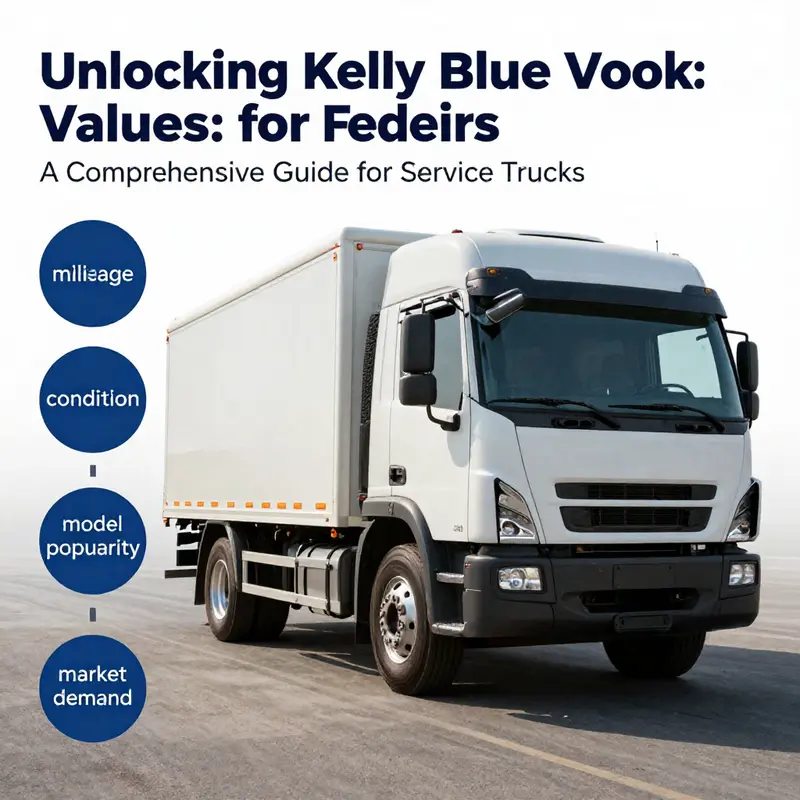
The value of a service truck, when viewed through Kelley Blue Book’s lens, is less about a single number and more about a living conversation between the truck’s condition, the broader market for work-ready vehicles, and the channels through which a sale might occur. The KBB valuation process is not a static price tag; it is a dynamic, multi-faceted model that blends private-party realism with what a dealer would offer in trade, then frames those realities against the retail price a dealer might set after reconditioning. For fleets and independent operators alike, this means that the reported value for a service truck reflects not only the machine’s mechanical state but also the market’s appetite for durable, reliable work trucks in a given region and at a given moment. It also means that the numbers you see on screen are best understood as a set of guideposts rather than fixed mandates. A well-documented maintenance history, thoughtful upfit configurations, and an awareness of local demand can lift a vehicle’s standing in the eyes of buyers and dealers, translating into more favorable values across private party offers, trade-in quotes, and retail listings. To many fleet managers, the most actionable approach is to treat KBB numbers as a baseline, then reason outward from the factors that uniquely affect a service truck in their specific context. The core of that reasoning rests on how KBB defines and aggregates data, and how the valuation model translates real-world conditions into a price range that captures both current market dynamics and longer-term depreciation patterns. In practical terms, this means acknowledging that valuation is not merely a function of year, mileage, or a simple condition rubric. It hinges on a synthesis of inputs that includes mileage discipline, mechanical integrity, and the history of any accidents or repairs, all interpreted through a market lens that recognizes the commercial use case of a service truck. When a fleet owner asks, “What exactly is my truck worth today?” the answer from KBB emerges as a narrative built from the truck’s age, wear, and the story the paperwork tells about upkeep and reliability. The private-party value, for instance, attempts to reflect what a direct buyer—perhaps another contractor or a small fleet—might actually pay, after accounting for the realities of selling a used vehicle without dealer intermediaries. The trade-in value approximates the offer a dealer might extend if the truck is being exchanged for a different asset within the dealer’s broader business mix. The retail value envisions the price a dealer would charge a consumer for a similar, reconditioned unit, which depends on how the vehicle is presented, how its upfits function in the field, and how serviceability translates into continuous use in demanding environments. The interplay among these valuation types helps owners calibrate their expectations and plan their exit strategy with a sense of real-world feasibility rather than a purely aspirational target. Understanding this framework matters because service trucks occupy a unique niche in the market. They are not pristine new vehicles, but they are not generic work trucks either. They habitually carry specialized equipment—storage units, power inverters, hydraulic systems, and other field-ready add-ons—that change the total-cost-of-ownership equation for prospective buyers. KBB acknowledges these realities by integrating a broad data spectrum that extends beyond the base vehicle sheet to include commonly observed upfit configurations and typical retrofit costs. In practice, this means that two identical base models can diverge in value if one carries a robust set of upfits tailored to a particular trade, while the other remains stock. The maintenance narrative, too, plays a pivotal role. A well-documented service history that demonstrates regular, preventive care; timely belt changes; fluid flushes; and a consistent record of repair work can significantly affect perceived reliability. Buyers and dealers view a clean, organized maintenance record as a proxy for future uptime, which matters deeply in fleet operations. Conversely, gaps in service history often introduce a risk premium that depresses value, even if the mechanical performance appears solid at the moment of appraisal. Regional factors further complicate the equation. In some regions, demand for durable, high-utility trucks remains resilient due to a concentration of trades and public-service fleets. In others, a surfeit of supply or higher operating costs may dampen appetite and compress prices. KBB’s model is designed to pick up these variations by weighting regional transaction data and price currents that reflect what buyers in a given market actually pay. Economic conditions, too, cast a broad shadow over valuation. Fuel prices, credit availability, and inflation influence how buyers evaluate ongoing operating costs, which in turn shapes what they’re willing to pay for a truck that promises predictable maintenance and long service life. In a market where operating expenses are rising, the appeal of a vehicle known for durability and lower per-mile maintenance can rise, lifting the residual expectations for a well-maintained unit. The valuation process also broadens as technology shifts begin to alter the baseline expectations for service trucks. The rise of electric powertrains in commercial fleets introduces new factors: battery health, regenerative capacity, charging availability, and total cost of ownership across a near-term adoption horizon. KBB’s methodology is careful to factor in these dimensions, recognizing that electric or plug-in configurations bring different depreciation curves and potential resale trajectories compared with traditional internal combustion options. This forward-looking nuance does not replace the core emphasis on condition and usage history; it complements them by acknowledging that fleet managers may adopt alternative propulsion in the coming years, which will reconfigure the market’s demand signal and, consequently, resale values. For someone who wants to translate KBB’s numbers into actionable steps, a practical approach emerges. Start with an honest assessment of condition, including mileage and mechanical health, and assemble all maintenance and repair records. Then map the truck’s usage narrative to the kind of buyers who value those attributes—whether as a construction contractor, utility service provider, or field support unit. Consider what upgrades or upfits exist and how they contribute to uptime and productivity. Upfits are not mere cosmetic enhancements; they are operational assets that can tilt the value proposition for prospective buyers who need immediate field readiness. In this light, a well-kept upfit, paired with regular preventive maintenance, becomes part of the asset’s ongoing value story rather than a one-time cost buried in depreciation. When it comes to the method of obtaining the KBB value, the official tool on the Kelley Blue Book site remains the most transparent route. It guides users through a structured input process, prompting you to specify the vehicle’s make and model, year, mileage, trim level, and condition, as well as your geographic location. The process recognizes that location matters because availability of similar trucks and the competitive landscape can shift based on regional supply chains and fleet needs. It then presents the three principal valuation pathways—private party, trade-in, and retail—so you can align your expectations with the channel you intend to pursue. In some cases, owners find it beneficial to simulate multiple scenarios within the tool. For example, you might compare a private-party scenario against a trade-in scenario to determine whether a dealership’s willingness to offer a fair trade aligns with your financial timeline. This is especially pertinent for service fleets evaluating a fleet refresh or a strategic shift in operating models. It is also worth noting that KBB’s data aggregation includes real-world transaction histories and registration data, which enhances the accuracy of the reported values. Such data helps the valuation reflect what buyers actually pay in practice, rather than relying solely on list prices or manufacturer MSRPs. The end result is a value that captures both the market’s sentiment and the stochastic nature of used-vehicle pricing. When viewed through this lens, KBB’s valuation for a service truck becomes a reference point for negotiations and decision-making, rather than a prescriptive mandate. It equips fleet managers with a credible anchor around which to structure disposition plans, whether that means selling privately, trading in, or listing as a reconditioned unit at a dealership. For readers seeking to connect these valuation insights to procurement and fleet-management decisions, consider the broader context of how value informs strategy. A robust valuation supports smarter budgeting for replacements, helps justify capital expenditures to stakeholders, and clarifies when a unit should remain in service longer versus when a refresh is warranted. In the pursuit of fleet resilience, understanding how to interpret KBB’s figures in concert with internal maintenance schedules and upgrade plans creates a disciplined framework for asset management. If you are exploring how to align your procurement and maintenance practices with market valuations, you may also find it helpful to consult resources on safety-focused procurement strategies, which offer perspectives on how organizations balance risk, cost, and uptime in fleet decisions. For instance, you can explore purchasing strategies that emphasize safety outcomes as a core consideration in procurement decisions by reading about community-driven approaches to fire-truck procurement. This perspective can illuminate how organizations frame value not only in dollars but in operational readiness and mission-critical performance. Purchasing for Safety: Community-Driven Fire Truck Procurement Strategies. Meanwhile, for readers who want a deeper dive into the underlying valuation framework that informs KBB’s numbers, the official Kelley Blue Book site provides comprehensive insights into how values are derived, updated, and contextualized for different sales channels. For a broader understanding of how market dynamics shape used-vehicle values, you can explore the official resource at Kelley Blue Book.
Where Markets Meet the Road: Regional Nuances in Kelley Blue Book Valuations for Service Trucks
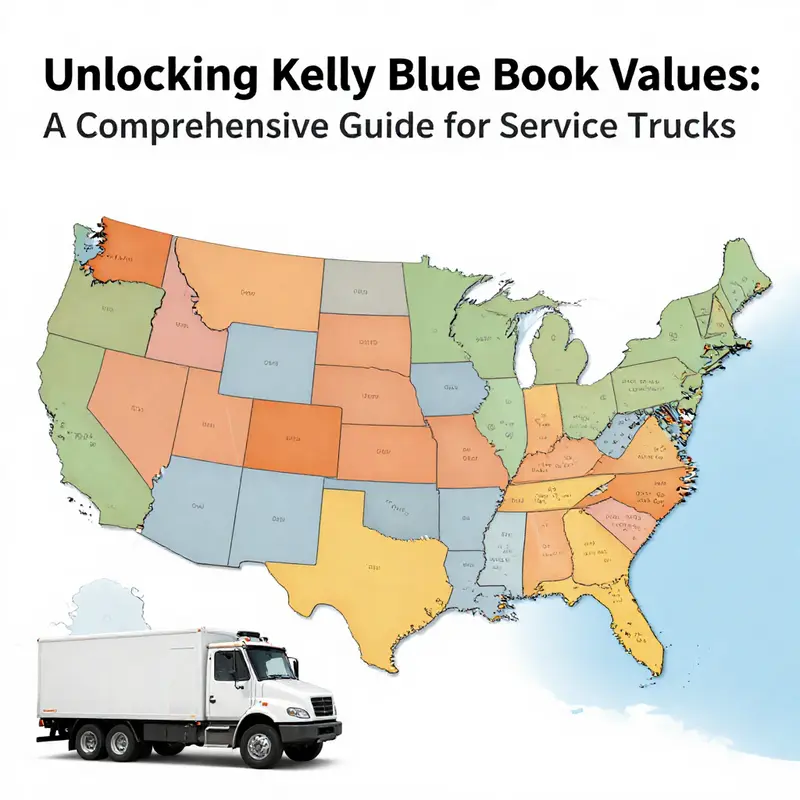
In sum, regional considerations do not replace the core KBB inputs. They enhance them by injecting local demand signals, economic momentum, and policy nudges into the valuation. The result is a more nuanced range that helps fleet owners and private sellers price service trucks with honesty and foresight. The valuations you retrieve from the tool should be thought of as a region-adjusted compass rather than a fixed coordinate. Use it to frame negotiations, guide maintenance decisions, and align resale timing with your market’s real-world tempo. And remember that regional nuance is not a speculative add-on; it is a practical lens through which the true, everyday value of a service truck is realized as it moves through the markets closest to where it works, lives, and wears out its tires.
Final thoughts
Navigating the process of determining your service truck’s value through Kelley Blue Book is fundamental for drivers, company owners, and fleet managers. By following the structured steps outlined in this guide, you not only empower yourself with comprehensive insights into your service truck’s worth, but you also equip yourself to make informed decisions in transactions. As you consider the multifaceted factors that influence values and the regional nuances of the market, integrating this knowledge can significantly enhance your financial strategies and operational planning. Take control of your vehicle appraisal process and leverage these insights to your advantage.