
For long-haul truck drivers, fleet managers, and those entering the trucking industry, understanding the Gross Vehicle Weight Rating (GVWR) of semi-service trucks is not just a matter of compliance; it’s about mastering the responsibilities that come with such powerful vehicles. GVWR is an essential concept that impacts everything from regulatory adherence and safety protocols to economic performance and environmental implications. In this exploration, we’ll cover the regulatory context that frames GVWR, delve into the technical aspects that define it, examine its economic ramifications, assess its safety considerations, and finally, discuss its environmental impact. This comprehensive perspective will equip you with the critical insights needed to navigate the complexities of semi-service trucks effectively.
GVWR as a Regulator’s Beacon: Weighing the Legal and Operational Boundaries of a Semi-Service Truck
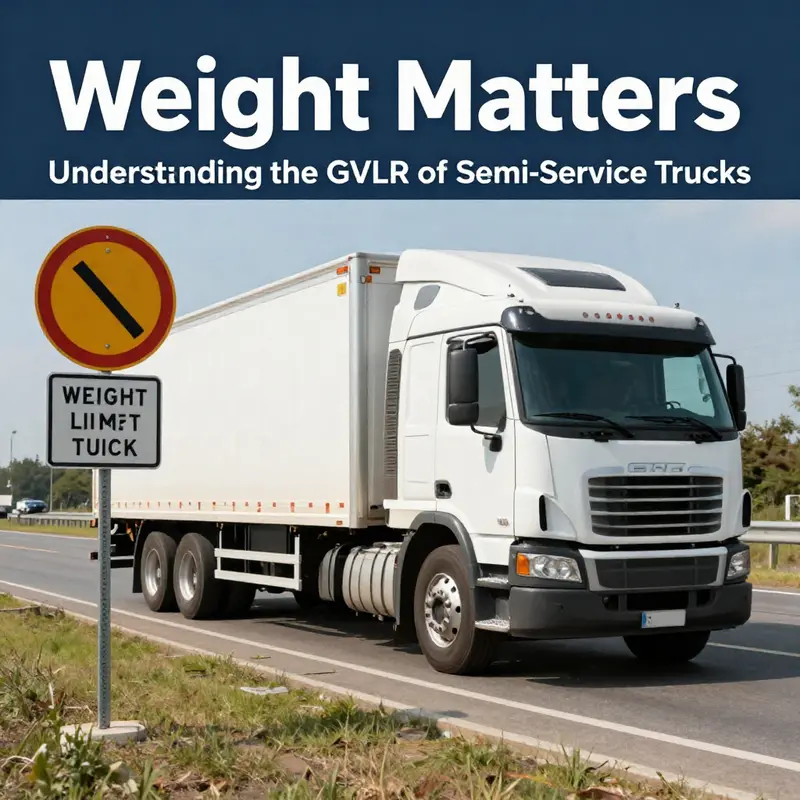
The Gross Vehicle Weight Rating, or GVWR, is more than a technical spec glued to a door frame. It is the regulatory heartbeat of a semi-service truck. In practice, GVWR tells manufacturers how much weight the vehicle is engineered to carry safely, including the chassis, fuel, fluids, driver, passengers, and any installed equipment. But it also binds the operator to a set of legal and safety obligations that ripple through every part of a fleet’s life, from design and procurement to daily operation and long-term maintenance. When you consider a semi-service truck – the kind used by mobile technicians, on-site medical equipment teams, or climate-sensitive service crews – the GVWR becomes the lens through which performance is measured, compliance is verified, and risk is managed. There is no single number that defines all such trucks, yet the weight boundary that separates ordinary workhorse capability from a regulated commercial vehicle is both practical and legal in equal measure. In many contexts, the weight is a doorway to access or restrict certain operating privileges, routes, and scheduling complexities. The truth is simpler and more consequential: GVWR sets the ceiling for what the vehicle can responsibly do, and it guides every decision that follows, from the size of the trailer hitch to the capacity of the braking system, and from the fuel strategy to the necessary driver qualifications.
Weighing the Work: Decoding GVWR for Semi-Service Trucks and the Impact on Capability and Safety
The Gross Vehicle Weight Rating, or GVWR, is more than a numeric label on a door jamb or a spec sheet. It is the structural heartbeat of a semi-service truck, the official ceiling that binds what the vehicle is designed to carry from the chassis to the cab, the payload, the fuel, the crew, and the tools that turn a truck into a working asset. In the world of utility, maintenance, and field operations, understanding GVWR means understanding what the truck is truly built to do, how it behaves under load, and where safety margins live when the rig leaves the driveway. It is a single, critical figure that threads through design decisions, regulatory compliance, and everyday operational discipline. For the reader tied to fleets, service crews, or equipment procurement, GVWR is not merely weight—it is policy, performance, and perspective, all wrapped into one measure that defines limits and opportunities at every mile of service.
In practice, the GVWR of semi-service trucks varies widely because the phrase covers a broad spectrum of chassis, axles, engines, and body configurations. Industry norms place many medium- to heavy-duty service trucks in the 11,000-pound range and upward, but the engines of the market are built to scale. Classifications commonly reference seven- to eight-cylinder heavy-duty trucks that are capable of pulling substantial trailers or supporting infrastructure projects, and the GVWR for these rigs typically sits well above the 11,800-pound mark. That threshold—roughly 5.35 metric tons—signifies a pivot from lighter-duty, urban-oriented duties to the demanding world of field operations, where payload, personnel, and equipment all accumulate a nontrivial burden. Yet those are not hard cutoffs; within the same class, GVWR can climb well into the multi-ton realm as configurations demand more robust frames, heavier axles, and larger fuel and hydraulic systems.
Across the spectrum, the range broadens dramatically when we move from urban or utility-focused usage to long-haul or heavy-duty service. Modern semi-service trucks designed for sustained operation, maintenance, and heavy equipment support frequently list GVWR values from the mid-30,000s up to and beyond 40,000 pounds. In some specialized fleets, especially those required to transport oversized equipment or to operate in environments with stringent payload demands, GVWR can exceed 60,000 pounds and approach the upper limits of heavy-duty road-legal configurations. This wide span reflects the core tension every fleet manager faces: the higher the GVWR, the greater the potential payload and the broader the operational envelope, but also the higher the demands on braking, suspension, tires, and driver competency. The vehicle’s curb weight—the mass of the truck itself without payload or passengers—plus fuel, gear, and crew, all contribute to the total that cannot be exceeded without compromising safety and legal compliance.
What the GVWR communicates, when stripped of its technical disguise, is a design decision made by the manufacturer. It represents a calculated balance between structural integrity, driveline endurance, and performance under load. The rating is not arbitrary; it follows from careful engineering that accounts for chassis strength, axle capacity, braking systems, suspension travel, and tire load ratings. As a result, the same truck configured for different roles can carry markedly different GVWR values simply by swapping axles, altering suspension, or choosing a heavier cab-and-chassis combination. In other words, GVWR is both a constraint and a lever—one that allows a vehicle to fulfill specific roles while ensuring it remains within the safety envelope defined by engineering reality and regulatory expectations.
To appreciate how GVWR translates into day-to-day capability, consider the components that feed into it. The GVWR effectively caps the fully loaded weight: curb weight plus payload, plus occupants, fuel, and any installed equipment. It is essential to distinguish this rating from inert measurements like empty weight or payload capacity alone. The GVWR is the maximum permissible gross weight; it is not a target payload. A truck can be operated below the GVWR without issue, but exceeding it invites a cascade of consequences that begin with safety and end with regulatory penalties, poor performance, and accelerated wear. When a vehicle approaches or surpasses its GVWR, braking efficiency declines; steering response can feel heaviness, and acceleration becomes a test of the engine’s torque and the transmission’s ability to manage heavy loads. Tires, brake linings, suspensions, axles, and driveline components all bear the additional stress, increasing the risk of overheating, failure, or loss of control in adverse driving conditions.
The practical reality is that semi-service trucks occupy a space where capability and caution walk hand in hand. A utility or field-service mission often requires a balance of payload and mobility. A truck might be configured with a moderate GVWR to maximize maneuverability in urban environments, support quick response times, and reduce maintenance costs. Another version, designed for longer routes or for carrying heavier equipment, may push the GVWR higher to ensure the vehicle can carry the necessary tools, spare parts, and crew without sacrificing safety. In either scenario, operating within the GVWR is not just about staying under a number; it is about aligning the vehicle’s duty cycle, resilience, and lifecycle costs with the mission profile. Fleet managers recognize that the right GVWR supports predictable fuel economy, predictable maintenance schedules, and compliant loading practices that protect both people and assets.
The practical implications extend to licensing and regulatory compliance as well. In the United States, the ability to operate a heavier GVWR truck often depends on the operator’s credentials. Vehicles that exceed certain weight thresholds may require a Commercial Driver’s License (CDL) with the appropriate class and endorsements, reflecting the added risk and complexity of moving heavier loads. The need for more robust braking systems, tires with higher load ratings, and enhanced suspension also means more elaborate maintenance protocols, inspections, and recordkeeping. The balance between payload potential and the operational overhead of maintaining a heavier machine is a recurring decision point in fleet planning. Operators frequently weigh the marginal gains in payload against the incremental costs of insurance, maintenance, fuel, and training to determine the most economical and effective GVWR for a given role.
A point often underscored in policy and practice is the importance of accurate labeling. The GVWR is a declared rating, typically displayed on a vehicle certification label located on the driver’s side B-pillar or in the owner’s manual. It is a legal and safety-critical datum; mislabeling or misstatement of GVWR can lead to overloading, with the associated risks for brakes, tires, suspension, and control. The consequences can be severe, including regulatory penalties, recalls, or other corrective actions. The scenario is rarely hypothetical: the regulatory landscape has, at times, highlighted instances where incorrect GVWR labeling prompted recalls or further investigation. The lesson is clear. Accurate GVWR labeling anchors safe loading practices, informs driver training, and guides maintenance planning. It also ensures that the vehicle’s design limits match real-world usage, preserving the reliability that fleets depend on during emergencies or demanding operations.
From a design and procurement perspective, the GVWR is a central criterion that shapes conversations about fleet readiness and resilience. When fleets assess potential purchases or retrofits, GVWR enters as a core spec alongside engine power, torque, axle configuration, drive system, and bodywork. A practical mindset links GVWR to operational realities: the number of personnel a truck can safely carry, the amount of fuel carried for expected duty cycles, and the payload capacity that supports field equipment without encroaching on performance. In procurement discussions, teams often consider how the GVWR aligns with maintenance capabilities, tire life, brake wear, and the anticipated service life of the chassis. They weigh the cost of heavier components against the benefit of increased payload and resilience on rough terrain or long-duty cycles. For teams navigating the procurement landscape, a thoughtful approach to GVWR can unlock more reliable uptime and better return on investment, while still complying with safety standards and regulatory expectations. For readers exploring this dimension of fleet strategy, a relevant framework is described in resources that discuss procurement best practices for fire apparatus and allied emergency vehicles, which also illuminate how payload and weight considerations influence design choices and lifecycle planning. fire apparatus procurement best practices.
In practical terms, the discussion of GVWR also dovetails with the broader conversation about safety culture and operating discipline. The rating is a reminder that loading and operation must be deliberate. Operators must consider not only the weight of the cargo but also the distribution of that weight. Uneven loading—placing too much mass on one axle or toward the rear—can degrade braking effectiveness, steering stability, and tire contact with the road. It can intensify the risk of trailer sway, fishtailing, or brake fade in hot weather or steep grades. Training and routine checks become essential tools in ensuring that every route, every job site, and every shift respects the vehicle’s limits. The interplay between GVWR, actual gross weight, and payload capacity is a nuanced choreography, one that requires precise planning, consistent loading practices, and a clear understanding of how weight translates into performance.
At the heart of the matter lies a simple but powerful truth: GVWR is a governing parameter that binds engineering, operation, and safety into a single frame of reference. It shapes what a semi-service truck can carry, how far it can go, and how confidently it can perform under demanding conditions. It also anchors the expectations for maintenance, training, and compliance, ensuring that the vehicle remains a dependable partner in missions that demand precision, speed, and resilience. The chapter connected these threads by tracing how the rating emerges from design choices, how it influences the practicalities of loading and usage, and how careful planning—not just the weight on the scale—protects people and equipment in the field. The GVWR, in essence, is the boundary that keeps the work within the realm of controllable risk and predictable performance. For further exploration into how procurement decisions reflect these realities and shape a fleet’s capability, readers can explore industry perspectives on procurement best practices. And for those seeking a regulatory anchor, the National Highway Traffic Safety Administration provides authoritative guidance on GVWR and its enforcement framework: https://www.nhtsa.gov/vehicle/gross-vehicle-weight-rating-gvwr
Weighing the Load: How GVWR Shapes Cost, Compliance, and Capability for Semi-Service Tractors
The GVWR, or gross vehicle weight rating, is a ceiling, not a number that simply sits on a spec sheet. For a semi-service truck, it marks the line between what the machine is built to carry and what the road, the law, and the market will tolerate. In practical terms, GVWR defines how heavy the chassis, fuel, driver, and payload can be before a vehicle becomes a regulatory headache, a maintenance headache, or a strategic advantage in disguise. The common classes that transport operators encounter—roughly encompassing 7- to 8-class trucks that form the core of most tractor units—are understood to carry a minimum burden well beyond eleven thousand pounds. That floor is not a limit on capability, but a baseline that shapes every other decision an operator makes, from fuel burn to insurance costs, from maintenance cycles to route planning. In the United States, the high end of the spectrum extends well beyond those numbers, with modern long-haul configurations often designed to support payloads that push the GVWR upward toward the forty-thousand-pound mark and beyond. The effect is not just about how much cargo can be hauled; it is about what that payload does to the economics of every mile driven, every hour on the road, and every contract won or lost because a shipper’s timelines and conditions demand reliability and efficiency at scale.
To understand the economic footprint of GVWR, it helps to frame the discussion around three interlocking dimensions: performance and efficiency, compliance and risk, and asset utilization and long-term planning. The first dimension centers on what the vehicle is asked to do. A semi-truck operating near its GVWR encounters heavier rolling resistance and, more critically, greater aerodynamic drag when the load sits high and far back from the tractor. The result is clear in the fuel data that researchers and fleets monitor: overweight operations can consume significantly more fuel than their legally compliant counterparts. The figure most often cited in industry studies is striking—up to about 20 percent more fuel usage for overweight scenarios. Even if this percentage varies by road grade, wind, tire condition, and driving style, the direction is unequivocal: more weight means more energy to move, and in an industry where fuel costs can dominate operating expenses, that energy translates into a real delta in the cost per mile. The ripple effects are immediate. A higher GVWR can deliver more payload per trip, but it also raises the minimum fuel burn and can shift the balance of cost per ton-mile in ways that change pricing, bidding, and the competitiveness of a fleet over long-term contracts.
Yet the economic reverberations do not end at fuel. The regulatory framework surrounding GVWR is not a mere formal constraint; it is a daily operating reality that shapes routing, scheduling, and risk management. Exceeding GVWR invites penalties, sometimes severe, and those penalties rarely stay in one lane. In many jurisdictions, fines accrue per pound over the limit, and a few overweight violations can accumulate into a hit to a carrier’s safety rating. Those ratings have tangible consequences: fewer acceptable loads, higher scrutiny from shippers, and in some cases, rejection by fleets that demand the highest safety and reliability as a condition of doing business. The math here is simple but unforgiving. A modest overload might seem like a minor cost relative to the value of a single high-paying haul, but repeat violations compound into higher insurance costs, more frequent inspections, and a reputational handicap that slower, safer operators avoid.
The third axis—fleet planning and total cost of ownership—turns GVWR from a technical specification into a strategic asset decision. A truck with a higher GVWR can payload more, enabling a single vehicle to cover the same volume with fewer trips. Fewer trips can translate into lower labor costs, reduced maintenance overhead for ancillary equipment, and a tighter schedule that improves asset utilization. But this advantage must be weighed against the higher purchase price, possibly higher insurance premiums, and the need for upgraded maintenance regimes to manage the added stress on tires, brakes, suspension, and driveline components. The calculus is not purely economic; it is logistical and operational. A fleet that concentrates on higher GVWRs may reduce trip counts and increase predictability, yet it could also face greater exposure to penalties and higher consequences for downtime when heavy-duty components fail. The optimal GVWR for a given route is not a universal number; it is the product of cargo type, distance, traffic patterns, paper-based regulatory strictness, and a fleet’s willingness to trade upfront capital for long-run stability.
What makes this balancing act particularly nuanced is the way GVWR interacts with the realities of route design and customer requirements. Some payloads, such as bulk commodities or heavy equipment, naturally align with a higher GVWR, and carriers may optimize their asset mix to exploit this alignment. Others, dealing with tight delivery windows or delicate freight, may benefit from lighter configurations that maximize agility and reduce wear-induced downtime. In either case, the decision must reflect a comprehensive model of risk and return: the risk of regulatory penalties if weights drift, the risk of mechanical failure if components are driven beyond their intended life, and the return of improved payload efficiency and improved asset turnover if the balance is struck correctly. It is a dynamic, not a static, calculation. The modern fleet manager blends real-time telematics, history of maintenance costs, and a forward-looking view of fuel markets to determine the GVWR that best serves a given network of routes and customers.
From a maintenance perspective, the gravity of GVWR is clear. Operating near or above the rated limit accelerates wear on tires, brakes, suspension systems, and drivetrains. These components, designed to withstand a range of loads, face greater stresses when the vehicle consistently carries heavy payloads. The consequence is more frequent maintenance, shorter component lifespans, and a larger pool of repair costs that can erode margins over a typical fiscal year. Downtime becomes a cost multiplier because a truck out of service cannot generate revenue. The financial impact of downtime compounds when a fleet operates on tight schedules, with backlogs of miles that must be recovered to meet customer commitments. In this context, GVWR becomes a proxy for reliability and a lever to control the tail of the maintenance expense curve over the life of the asset.
Yet GVWR is not simply a constraint to be endured; it is a design parameter that informs how fleets approach procurement and fleet standardization. A higher GVWR may require more robust tires, stronger axles, and reinforced suspensions, all of which can elevate the initial purchase price but also extend the period over which a tractor remains economical to operate, provided utilization remains high. Conversely, a lower GVWR may reduce upfront costs and insurance, but it can demand more frequent trips and more precise scheduling to avoid underutilization of capacity. The optimal configuration is a function of the business model: the typical load profile, the geographic scope of operation, the average distance per mile, and the variability in cargo types. Fleets that pursue standardization across a line of tractors, trailers, and configurations may reduce maintenance complexity and improve parts availability, and those savings can be substantial when scaled across a large operation. The literature on regulation and fleet performance supports this view, showing that policy shifts and standardization practices can steer the equipment mix toward configurations that optimize safety, utilization, and cost efficiency over time.
The decisions around GVWR also intersect with route design and logistics optimization in tangible ways. A truck with greater payload capacity can reduce the number of trips needed to move a given volume, which lowers labor costs and administrative overhead associated with dispatch, documentation, and scheduling. On the flip side, heavier vehicles impose stricter requirements for route planning, parking, and road restrictions. Some networks, particularly those with dense urban corridors, may favor equipment tuned to moderate GVWR values that balance payload with maneuverability and access to facilities. Operators who want to optimize both payload and route flexibility often rely on a mix of tractors with varying GVWRs and a smart allocation strategy that pairs each load with the most appropriate configuration. This approach can maximize asset utilization while keeping regulatory exposure and maintenance risk to conservative levels. In practice, it means investment decisions are guided not only by the weight rating itself but by a broader view of how payload, fuel, downtime, and service levels interact across the entire supply chain.
To appreciate the multi-dimensional effect of GVWR, consider the interface between regulatory regimes and economic performance. The weight limits on highways shape both the permissible load per trip and the number of trips a driver can legally complete within a given time window. When a fleet operates close to these limits, the marginal cost of adding payload can be relatively favorable, as it reduces the marginal number of trips without a proportional increase in fuel or labor costs. However, the penalties for overweight conditions can eclipse the potential gains from heavier payloads if weight control is not managed with precision. The financial penalties, safety downgrades, and risk of losing business to competitors with cleaner compliance records illustrate why GVWR does not sit in a vacuum. It is a central variable linking regulatory compliance, cost management, and competitive strategy.
In this sense, GVWR becomes a strategic dial, adjustable through purchasing choices, maintenance planning, and operational discipline. The right choice aligns with a fleet’s business model, the typical cargo mix, and the geographic footprint of its operations. It enables a level of predictability in maintenance schedules, fuel budgeting, and contract performance that can become a competitive advantage. The ongoing challenge is to translate this understanding into disciplined procurement, robust maintenance protocols, and adaptive routing that keeps the costs of weight under control while preserving the ability to meet customer needs with reliability. For readers who want to connect these ideas to broader organizational design and efficiency, the conversation about GVWR is part of a larger dialogue about design efficiency in emergency services and other heavy-transport contexts, where load, durability, and speed must be balanced under strict constraints. See further discussion in Design Efficiency in Emergency Services.
External resource: https://www.sciencedirect.com/science/article/pii/S0965856424003792
null
null
GVWR, Weight, and Lifecycle Emissions: Unpacking the Environmental Footprint of Semi-Service Trucks
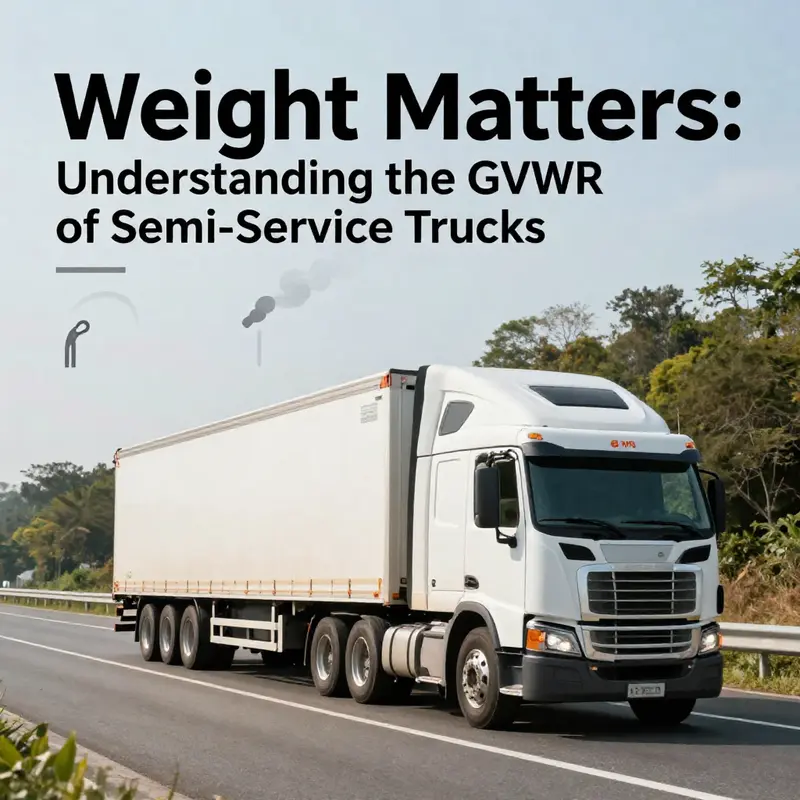
The Gross Vehicle Weight Rating (GVWR) is more than a label on a placard; it defines a performance envelope for a semi-service truck and shapes energy use across its life cycle. In heavy-duty trucking, the GVWR helps determine payload capacity, drivetrain load, and fuel demand per ton-kilometer. For long-haul, semi-service trucks, GVWR commonly sits well above 11,800 pounds, with many configurations in the 33,000-40,000 pound range and some platforms near 60,000 pounds when payload and energy storage are tallied. This weight range matters not just for performance and compliance but for lifecycle emissions and energy efficiency across the vehicle’s lifetime. A higher GVWR can enable higher payload, but it also may require more energy input to move that payload, depending on the energy density of the powertrain and the mass of the energy storage system. The relationship between weight, energy use, and emissions is nonlinear and depends on drivetrain efficiency, vehicle structure, energy source, and upstream energy mix. GVWR thus acts as a design constraint that shapes propulsion technology, battery sizing, and fuel architecture, influencing lifecycle outcomes.
Comparative lifecycle assessments of diesel, battery electric, and hydrogen fuel cell trucks suggest that BEV and FC configurations can reduce climate impact relative to diesel when powered by low-carbon electricity or hydrogen and when operating at high utilization. Yet non-climate categories such as acidification or ecotoxicity can vary with energy supply chains and manufacturing footprints. Upstream production and end-of-life recycling contribute to environmental footprints and may offset some operation-phase gains, particularly where battery and fuel cell manufacturing are still maturing. Where GVWR is high and energy storage is heavy, the marginal energy cost per additional ton of payload can rise if battery mass erodes payload efficiency. Conversely, lighter GVWR or more efficient chassis can amplify electrification benefits, especially on routes with predictable, high-mileage demand. Regulator-driven improvements in testing and certification can improve cross-model comparability across GVWR classes, helping operators and policymakers gauge performance with greater confidence. A holistic view—emissions per ton-kilometer, energy source, and lifecycle stages from cradle to grave—is essential to interpreting results across GVWR segments. For readers seeking deeper context, several lifecycle studies point to nuanced trade-offs that depend on energy mix, technology maturity, and end-of-life management. The overall message is that GVWR should be treated as a design and policy parameter that interacts with energy systems, not simply as a vehicle maximum.
In practice, the strongest environmental insights come from comparing emissions per ton-kilometer under realistic payloads, routes, and energy scenarios. The GVWR-informed design space offers opportunities to optimize uptime, safety, and sustainability through thoughtful weight management, energy density improvements, and optimized charging or refueling infrastructure. The cited lifecycle literature highlights that BEV and FC options can offer climate benefits in many long-haul contexts, but achieving net gains requires careful attention to battery mass, energy source quality, and end-of-life pathways. Ongoing data transparency and synchronized regulations will help align GVWR choices with robust environmental performance throughout a truck’s life.
Final thoughts
Throughout our exploration of the Gross Vehicle Weight Rating (GVWR) of semi-service trucks, we have highlighted its critical role not only in regulatory compliance but also in technical specifications, economic strategies, safety measures, and environmental impacts. Understanding GVWR empowers long-haul truck drivers, fleet owners, and maintenance specialists to make informed decisions that enhance performance, safety, and sustainability. As you navigate the rugged roads of the trucking industry, let this knowledge serve as a guiding principle for your professional journey in ensuring both operational success and compliance with standards.