
Box truck delivery services are a vital part of the logistics industry, catering to a diverse range of clients. As a long-haul truck driver, trucking company owner, or fleet manager, understanding how to effectively secure business in this sector can transform your venture. The demand for box truck services is rising due to the increasing need for efficient delivery solutions, particularly in urban environments. In this guide, we will explore effective strategies that include leveraging digital platforms, building strong relationships in logistics hubs, creating direct client partnerships, and employing effective marketing techniques. Each chapter will delve into actionable steps tailored to enhance your business prospects and drive success in this competitive landscape.
From Digital Platforms to Real-World Freight: Building a Sustainable Box Truck Delivery Business
Digital platforms have redefined how a box truck delivery service finds work, but they do not replace the need for solid relationships, reliable execution, and a clear value proposition. The most successful operators treat digital marketplaces not as a single source of revenue, but as a backbone that supports a broader, multi-channel approach. In practice, this means weaving the precision and speed of online matching with the predictability of direct client partnerships, the adaptability of local marketing, and the trust earned through consistent on-time performance. When you view digital platforms this way, the path to a robust, scalable business becomes less about chasing every load and more about curating a dependable profile, a disciplined operating rhythm, and a portfolio of services that make you indispensable to customers with frequent, small- to mid-size deliveries.
At the core of digital platforms is their ability to translate capacity into opportunity with speed and transparency. A box truck operator can, in theory, connect with a vast array of shippers and brokers, and the platform’s algorithms can match your available hours, your truck’s size, and any specialized capabilities—such as insulation, temperature control, or secure handling—with appropriate loads. The practical reality, however, is that success hinges on how you present your capabilities and how you organize your operations to align with those matches. A well-crafted profile becomes a mini-dossier: it communicates not just what you can haul, but when you can haul it, how you guarantee safety and compliance, and how you handle exceptions like delays or last-minute changes. Your vehicle specifications—dimensions, weight limits, refrigeration if needed, payload capacity—should be stated clearly. Your safety record, licensing status, and insurance protections are not mere formalities; they are the currencies of trust that allow digital platforms to transact with confidence.
The way you engage with a platform matters as much as the platform itself. When you bid on loads, you should approach every opportunity with a professional, data-informed mindset. Track your historical performance, such as on-time pickup rates, delivery success, and claim-free miles. Platforms that offer ePod and GPS-based proof of delivery can be leveraged to demonstrate reliability to clients who value real-time visibility. Integrating these features into your operating routine signals to shippers that you are a partner, not just a vendor. Insurance options and payment protection features offered on the platform further reduce the friction of doing business across miles and markets. In short, the platform is a gateway, but your profile, your documentation, and your execution discipline sustain the relationship.
Beyond the mechanics of matching, digital platforms expand your reach in two critical ways. First, they reduce the marginal effort required to discover and secure loads, especially for a small fleet or sole operator. The algorithmed matching tends to favor efficiency: loads that minimize empty miles, align with your current location, and fit your available window appear more frequently when your profile is complete and your vehicle is consistently available. This is not about exploiting a gimmick; it is about enabling smarter planning. Second, platforms create a transparent ecosystem. Ratings, reviews, and standardized terms give both sides a shared language for evaluating performance. The better your ratings, the more you become a preferred carrier, with priority access to the most consistent, higher-quality work. That dynamic—improved visibility through performance, not just bid volume—drives sustainable growth.
Yet the digital realm does not stand alone. The second major thread in your business fabric is a robust network of real-world relationships cultivated at logistics hubs and in the communities you serve. Digital platforms can send you loads, but the origin of repeat business is often the pair of hands you shake and the conversations you have with people who orchestrate daily dispatches. Major freight terminals, distribution centers, and logistics parks pulse with activity, and while most of the activity there is not visible on a screen, it is where the durable relationships form. Being present in these hubs during peak periods—pulling up with a simple sign and a professional demeanor—demonstrates readiness and reliability that online signals alone cannot provide. The goal is to become a familiar, trusted option for short-haul, high-frequency deliveries that fit naturally into an operator’s daily rhythm. In practice, this means carrying business cards, and perhaps a modest mobile sign that communicates your core services at a glance. It also means being prepared to discuss your capabilities in real time: how you handle time-sensitive deliveries, how you manage temperature control if needed, and what you can do to support smooth dock operations through on-time arrivals and smooth handoffs.
But the platform-driven channel thrives only when paired with a direct, direct-to-client approach. Many businesses, especially local retailers, restaurants, florists, medical suppliers, office-supply distributors, and e-commerce fulfillment centers, require frequent, reliable small-scale deliveries. For these clients, the easiest path to long-term revenue is a direct relationship that bypasses intermediaries, or at least reduces their reliance on them. In this mode, your value proposition becomes more than “I can move goods”; it becomes a package of reliability, flexibility, and value-added services that solves concrete problems. You might offer scheduled pickups to streamline a client’s inventory management, or arrange for last-mile delivery within a defined service area. You could propose value-added services like inventory checks during drop-off, cross-docking support, or consolidated daily routes that reduce the client’s administrative overhead. The pilot project becomes a low-risk, high-visibility demonstration of your capabilities. A small-scale pilot that proves your reliability can unlock larger, ongoing contracts that pay for themselves over time.
In this multi-channel framework, marketing locally completes the loop. Digital presence creates awareness, hub-based activity builds trust and familiarity, and direct client engagement converts interest into ongoing business. Local marketing can be cost-effective and highly targeted: showcasing your service area, sharing success stories, and displaying customer testimonials on simple channels like social media and community bulletin boards. The aim is to create a visible, consistent presence that signals you are a serious partner for daily logistics needs. A well-choreographed local strategy also leverages the network effects that are so powerful in the transportation industry; satisfied customers can become ambassadors who introduce you to new clients with speed and credibility.
In all of this, the power of referrals should not be underestimated. Word-of-mouth remains one of the most powerful drivers of growth in the trucking world, precisely because trust and reliability are highly contextual. A driver who arrives on time, handles paperwork cleanly, and communicates clearly when issues arise creates a narrative that others want to emulate. Don’t hesitate to ask for referrals in a straightforward, professional way. A short note acknowledging a successful delivery and inviting the client to recommend your service can yield surprisingly strong results when the relationship is already solid. Equally important is participation in industry groups, chamber events, and online forums where peers exchange best practices and opportunities. Mutual recommendations have a practical rhythm: you help others by sharing your capacity wisely and they reciprocate when their schedules align with what you can deliver.
All of these elements—digital access, hub-based presence, direct client partnerships, local marketing, and referrals—must be harmonized around a disciplined operating model. It starts with a clear profile and credible documentation on digital platforms: a vehicle that is legitimately sized for the loads you target, a documented safety and compliance record, a physical or digital proof of delivery, and an approach to incident management that keeps clients informed without overcomplicating the process. It continues with a reliable day-by-day rhythm: predictable pick-up windows, honest communication about delays, and a calendar that aligns your capacity with the needs of your best clients. It ends with continuous improvement: analyzing what works in terms of load types, peak times, and customer segments; adjusting your marketing focus accordingly; and reinvesting earnings into the equipment, training, and certifications that enhance your service offering.
If you are aiming for a cohesive, capable box truck operation, treat digital platforms as both pipeline and quality control. They offer access, speed, and transparency; your job is to convert those attributes into verifiable performance. Tell a compelling story about your service—one that connects machinery and math to human reliability. Demonstrate flexibility by offering scheduled deliveries, time-window guarantees, and optional services like inventory management or pickups that fit a client’s operational cadence. Use the digital tools that support secure payments, reliable tracking, and auditable delivery records. And, at the same time, cultivate the non-digital dimensions that stay relevant across markets: a friendly, professional presence at the docks, a reputation for small but meaningful acts of reliability, and a willingness to tailor your services to the client’s specific workflow.
The result is a box truck business that does not depend on a single channel for survival. When a platform’s matching algorithm introduces you to new opportunities, your local reputation, your direct client relationships, and your ability to deliver consistently become the differentiators that sustain growth beyond the next load. You gain a patient, scalable business, where cash flow stabilizes not because you chase every permit or every dispatch, but because you become the carrier of choice for a curated set of high-frequency clients and strategic hubs. The numbers then speak for themselves: higher utilization of your assets, shorter dwell times at docks, and stronger margins driven by repeat business and value-added services. In this environment, your box truck is not merely a vehicle; it is a moving node in a reliably managed network that ties together digital speed and human steadiness into a durable capability for local and regional logistics.
For operators who want a practical blueprint, the path is clear. Build a professional platform profile that succinctly communicates size, capabilities, and safety credentials. Make yourself accessible on the digital marketplace by keeping calendars current and being prepared to accept both bids and immediate dispatches when the terms align with your constraints. Invest in real-time tracking and compliant paperwork that allow clients to monitor progress and verify milestones. Then supplement this foundation with targeted outreach at logistics hubs and in your local business community. Bring a simple value proposition to potential direct clients: reliability, flexibility, and a willingness to adapt to their delivery rhythms. Consider pilot projects as low-risk experiments that can demonstrate your capability and accelerate larger, longer-term contracts. Finally, treat referrals as a formal channel of growth—cultivate satisfied customers into advocates who will introduce you to new opportunities.
As you implement this multi-channel approach, keep a steady eye on the data. Track where your loads come from, which clients yield repeat business, and which service offerings drive the best margins. Use this intelligence to fine-tune your online profiles, adjust your service packaging, and prioritize the hubs and markets that consistently perform. The objective is not merely to survive in a competitive market, but to shape a resilient business model that scales with demand, absorbs fluctuations, and remains responsive to the evolving needs of shippers and consumers alike. For further reading on the broader digital transformation shaping commercial vehicle logistics, see an external resource that provides deeper context on how technology is evolving this space: https://www.energy.gov/eere/vehicles/articles/digital-transformation-commercial-vehicle-logistics.
If you want a concise source of practical examples and ongoing reflections on trucking operations, you can also explore industry perspectives and actionable guidance at the 5startruckin blog. This resource offers a practitioner’s view on building a credible online presence, coordinating with local partners, and translating a fleet into a reliable service—essentials for turning a box truck into a steady business. 5startruckin blog.
In short, digital platforms are a powerful accelerant for growth if you couple them with the everyday discipline of customer service, safety, and operational reliability. The most enduring box truck businesses do not rely on luck in the marketplace; they rely on a robust, multi-channel strategy that delivers consistent performance, transparency, and value to every client they serve. When you align online opportunities with on-the-ground credibility, you create a virtuous cycle: more loads, better utilization, higher returns, and a business that can weather demand shocks while continuing to grow.
Relational Freight: Building Trust and Partnerships in Logistics Hubs for Box Truck Deliveries
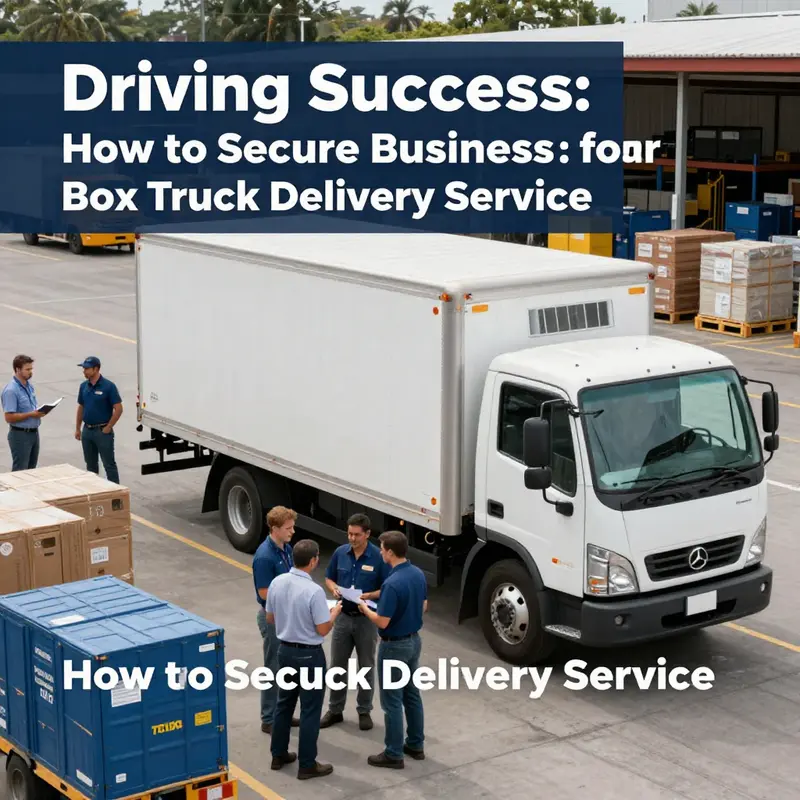
In the busy networks where goods move from warehouse to storefront, the box truck is more than a vehicle; it is a bridge between demand and delivery. The hub is not merely a place where trailers come and go; it is a living ecosystem where warehouses, brokers, shippers, and carriers intersect. The success of a box truck delivery service grows from understanding that ecosystem, from earning the trust of the people who coordinate the moves, and from proving reliability day after day. This understanding matters because the hub’s rhythms shape your schedule, your pricing, and the very likelihood that a given load will become a repeat opportunity rather than a one-off job. When you treat the hub as a dynamic partner rather than a backdrop, you begin to see how a steady stream of consistent work can emerge from relationships built over time. And that is the heart of turning a modest fleet into a dependable, self-sustaining delivery business.
To cultivate real advantage in the hub environment, you start with the stakeholders who influence the daily flow. There are warehouse managers who must carve space in tight dock calendars; operations supervisors who chase on-time windows and last-minute reroutes; freight brokers who connect demand with carriers in real time; and local transportation providers who understand street-level realities and peak-hour chokepoints. Each role has its own metrics, constraints, and pressures. Recognizing these differences matters because it shapes how you present your capabilities and how you respond when plans shift. You don’t merely tell them you can deliver on time; you demonstrate it by arriving with predictability, by communicating clearly about what you can handle, and by showing a track record of careful handling of goods, whether it’s non-perishable items to stockrooms or time-sensitive items that require careful temperature control.
Within many regions, hubs cluster around intensive freight corridors and distribution parks. The logic of regional hub networks is straightforward: proximity to major centers creates dense inbound and outbound activity, making it easier to secure repeat work and to optimize daily routes. In practice, you become a known, dependable option for short-haul moves that align with the hub’s peak periods. Your ability to operate with minimal switching costs—efficient hand-offs, compatible documentation, and consistent timing—translates into more stable utilization of your box truck and a more predictable revenue stream. When you present yourself as a partner who can be counted on during the busiest hours, you position your service for a steady cadence of pickups and deliveries, rather than a scattershot schedule that leaves you chasing sporadic opportunities.
The backbone of trust in the hub is communication. You need more than occasional updates; you need a rhythm of transparency that matches the hub’s tempo. This means regular check-ins, timely notifications of schedule changes, and open access to information about shipment status. Real-time visibility tools and clear documentation reduce the friction that often accompanies last-minute changes and misaligned expectations. A warehouse manager who can see a reliable delivery window reflected in the dock calendar will be more willing to bring you into contracted lanes and to allocate space for your truck on a recurring basis. Yet communication is not only about technology; it is about the people who reply promptly, acknowledge issues, and propose practical solutions when plans go off track. A proactive, courteous driver who communicates delays or constraints becomes a collaborator rather than a problem, and that shift in perception is what sustains long-term partnerships in the hub environment.
Consistency, too, is a critical asset. A carrier who demonstrates steady performance across multiple facilities within a hub earns credibility that travels beyond a single load. This is where disciplined operations intersect with strategic thinking. It isn’t enough to move freight once; the aim is to create a dependable profile that aligns with the hub’s expected service levels. This is especially important when the hub handles specialized cargo or distinctive handling requirements, such as perishable goods that demand temperature control. The reliability of your fleet and your processes underpins the hub’s confidence that you will maintain service quality, even as demand ebbs and flows. In turn, this reliability translates into the hub offering you more priority lanes, better scheduling latitude, and access to larger or more strategic routes—an ecosystem effect that enhances utilization, reduces downtime, and fortifies margins.
Operational consistency also extends to equipment and the broader supply network that supports your fleet. In many global settings, reliable uptime hinges on close coordination with manufacturers, parts suppliers, and service networks that can deliver timely maintenance and urgent repairs. A hub-friendly operator seeks not merely the cheapest option but the most dependable one. From this perspective, a dependable, well-maintained fleet becomes a strategic asset because it reduces the risk of disruptions that could ripple through a dock calendar and undermine a partner’s plans. The reality is that the hub rewards predictability; when a load arrives on time, every time, even when traffic or weather complicates the day, you prove your worth as a partner. That is how trust is earned and reinforced through day-in, day-out reliability.
To bring these concepts to life, consider how supplier relationships play a decisive role in keeping your service consistent. The logic of hub partnerships is reinforced by strong supplier networks that can provide equipment, parts, and maintenance with minimal lead time. When your operation can rely on a stable supply of spare parts, timely maintenance windows, and service that aligns with your schedule, you can promise punctuality with greater assurance. This is not theoretical; it is the practical backbone of the service-level discipline that partners expect. The hub environment rewards a vendor-supplier ecosystem that can adapt to the local cadence—whether it means faster turnarounds to address a fleet gap during a peak week or the ability to scale up for a regional surge in orders.
A further practical dimension of hub relationships concerns the broader decision-making framework used by buyers and operators in the network. Supplier selection for B2B buyers, in particular, becomes a lens through which hubs can assess fit and reliability. A well-chosen supplier network supports your capacity to promise stable service baselines—delivery within agreed windows, careful handling of cargo, and predictable invoicing. The strategic value here lies in choosing partners who can demonstrate performance, transparency, and flexibility. For operators who want to view the network as a system rather than a set of isolated transactions, there is value in applying systems-thinking tools to model how changes in one part of the hub ecosystem—such as a shift in demand at a distribution center—cascade through scheduling, routing, and vehicle utilization. Even if you do not formally adopt a complex model, the mental model of interdependencies helps you anticipate bottlenecks, coordinate with the hub’s planners, and prepare contingency plans that keep shipments moving smoothly.
All of this translates into concrete on-the-ground steps you can take when you walk into a hub. Carry business cards and a simple mobile sign that clearly communicates your service scope. Be ready to discuss your capabilities on the spot, including how you handle peak periods, how you protect cargo, and how you communicate throughout the delivery cycle. Start with a small pilot project to establish a track record under real conditions. A pilot is a practical proof point: it shows that you can deliver on schedule, maintain cargo integrity, and stay aligned with the hub’s performance metrics. When a warehouse manager observes the measurable impact of your pilot on dock utilization and throughput—not just on the truck’s clock but on the wider operations—it transforms a tentative relationship into a formal arrangement. Pilots become the stepping stones to contracted lanes, where revenue predictability rises and planning becomes easier for every party involved. This progression is the natural trajectory for a service that proves its value in daily operations.
The interaction between hub discipline and direct outreach is where growth happens. Your box truck benefits from the hub’s scale, while your broader marketing and sales efforts benefit from the hub’s discipline and predictability. The result is a balanced portfolio: steady work from contracted hub lanes and a healthy appetite for queued loads on digital platforms that surface high-demand times and locations. When you achieve this balance, you gain resilience. You can weather seasonal fluctuations with a reliable backbone, and you can pursue expansion into adjacent hubs with greater confidence because you have demonstrated, repeatedly, that you can deliver reliably where it matters most. The hub’s credibility becomes a platform from which you can grow, not a gate you must fight to pass through.
Within this framework, a practical mindset emerges: successful hub relationships require not only execution capability but also strategic patience. You build trust slowly, but once earned, it compounds through repeat opportunities and shorter sales cycles. The hub learns to expect a certain level of performance from you, you learn which docks tend to be more navigable during particular hours, and both sides learn how to adapt when plans change. This dynamic yields a service that is not only efficient but also predictable, making it easier for the hub to allocate dedicated resources to your lanes and for you to plan driver rosters with a clearer view of demand. The result is a self-reinforcing cycle: trust grows, loads become more reliable, margins stabilize, and your business becomes a preferred choice for busy distribution centers.
As you consider the broader picture, you may find the hub-centric approach complements and strengthens other channels you rely on to grow your box truck business. Digital load platforms provide volume and visibility, direct client outreach to local retailers and suppliers creates relationships with repeat opportunities, and targeted local marketing builds name recognition in your service area. The hub relationships foreground reliability as the core value proposition—reliable timing, friendly communication, responsible handling, and the ability to scale quickly when needed. When these elements come together, you have a durable platform that supports sustainable growth rather than a one-off revenue spike. The hub becomes the stage where reliability is demonstrated, credibility established, and a predictable calendar of opportunities created.
Incorporating procurement and supplier discipline into this hub-focused strategy yields added leverage. A robust supplier network that consistently provides well-maintained equipment and timely maintenance services reduces unexpected downtime, which in turn sustains dock schedules and fosters trust with logistics partners. For instance, the broader principle of sourcing reliable, quality equipment reflects the hub’s emphasis on stability and risk management. This is not purely about cost. It is about the confidence to promise specific delivery windows and to meet them, even when the environment is challenging. When hubs see a fleet that remains available, compliant, and well maintained, they respond with longer-term commitments and more favorable scheduling terms. This is how a single box truck operator transforms a fleet into a dependable service, and how a reliable service becomes a stepping stone to broader opportunities within the hub network.
To give this idea a concrete anchor, consider the broader regional dynamics that influence hub relationships. In some regions, clusters near major logistics centers create dense, resilient supply chains that can absorb shocks and maintain performance. Well-developed infrastructure, integrated networks, and a concentration of specialized talent foster smoother coordination and faster response times. In practice, understanding these regional patterns helps you tailor your service to the hub’s specific context—whether it involves temperature-controlled transport for sensitive goods, high-volume urban deliveries, or the quick hand-offs that keep dock activity flowing smoothly. This awareness also informs how you position your service to potential clients and how you structure pilots that demonstrate the exact value you bring to a given hub. The aim is not simply to move goods across a city but to integrate your operations so closely with the hub’s rhythm that your service becomes an extension of the hub’s own capabilities.
One practical takeaway is the recognition that relationships with suppliers and manufacturers are not peripheral to hub success; they are central. In many cases, reliability is anchored in the quality and reliability of the equipment you use, the availability of spare parts, and the speed with which issues are resolved. The idea of sourcing from established suppliers, and coordinating maintenance to avoid downtime, directly supports the hub’s imperative of predictable service. This is a reason to think strategically about the entire supply chain around your box truck operation, from the choice of vehicle types to the maintenance contracts and the layover facilities that support your fleet. If you want to deepen this perspective, you can explore the procurement concepts outlined in fire apparatus procurement best practices, which offer a practical framework for evaluating suppliers, service levels, and contingency options. fire apparatus procurement best practices.
As you advance with this hub-focused strategy, you also build a foundation for scalable growth. The hub relationships you cultivate can feed into broader market ambitions: expanding to additional hubs, courting larger retailers, or approaching distribution centers with more sophisticated, value-added offerings such as inventory management, scheduled pickups, or streamlined return logistics. The hub then becomes not just a place to pick up and drop off but a lever for expanding service lines and increasing the density of your daily route network. The result is a more resilient business model that can adapt to market cycles, shifting demand patterns, and the evolving needs of local communities. This is how a basic delivery asset matures into a robust, multi-channel box truck delivery service that can sustain growth over time.
To close this chapter, the practical takeaway is clear: invest in hub relationships with the same intensity you apply to securing a digital load stream. Merge the reliability of real-world partnerships with the efficiency of data-driven load matching and the trust built through transparent communication. The combined effect is a stable pipeline of opportunities and the confidence to bid and operate in ways that maximize utilization and margins. With this approach, you’re not just chasing work; you are building a networked delivery service that can adapt to demand, weather, and road conditions while keeping commitments to clients and partners alike. The hub is the engine; your disciplined operations are the fuel; together they power a sustainable, scalable box truck delivery business.
External resource: mini reefer box truck suppliers in China. https://www.alibaba.com/showroom/mini-reefer-box-truck-suppliers.html
Direct Partnerships That Deliver: Building Long-Term Client Relationships for Your Box Truck Delivery Service
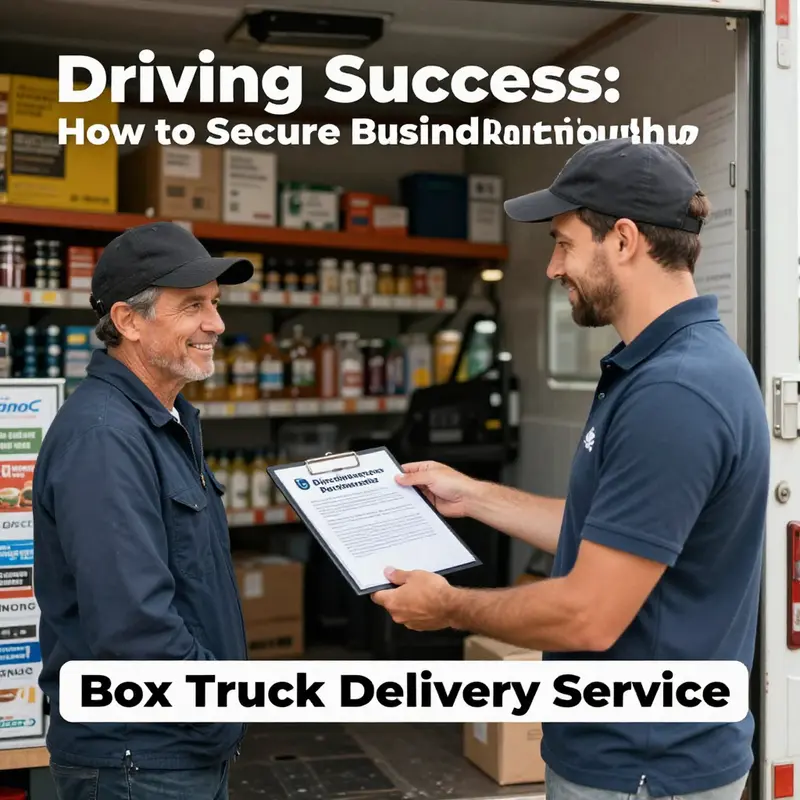
Direct client partnerships are not a nice-to-have in a box truck delivery service; they are the backbone of a stable, scalable revenue stream. When you align your operations with a client’s logistics rhythms, your truck stops becoming a mobile asset and starts acting as a predictable part of a customer’s supply chain. This chapter explores how to move beyond transactional deliveries and develop enduring collaborations that yield reliable lanes, steady volumes, and mutual growth. It also highlights the operational choices that make partnerships credible and profitable, from dedicated fleets to integrated dispatch practices, while weaving in the realities of day-to-day execution. The objective is clear: turn conversations with potential clients into pathways for long-term contracts that matter for both sides, not just a single pickup or a one-off shipment that pays the moment. To achieve this, you must think of yourself not merely as a driver or carrier, but as a logistics partner who can absorb variability, protect product integrity, and deliver value beyond what a standard transport price would promise. In practical terms, this means identifying the right opportunities, tailoring solutions to those partners, and proving value through disciplined operations, transparent communication, and continuous improvement.
A direct partnership begins with disciplined market intelligence. Rather than casting a wide net with generic proposals, you zero in on industries where box truck capabilities directly address recurring needs. E-commerce fulfillment centers seeking reliable regional last-mile capacity, grocery distributors requiring time-sensitive deliveries to stores and cold-chain compliant suppliers, medical supply wholesalers needing controlled environments and tight scheduling, and moving companies seeking a trusted partner for local relocations all present repeatable demand. Each industry has distinct rhythms: daily routes with fixed time windows in groceries, or high-frequency, small-load shipments in e-commerce. By mapping these rhythms to your truck’s capabilities—load capacity, refrigeration, liftgate reach, proximity to key hubs—you can articulate a value proposition that feels tailored rather than generic. In this context, a direct approach is more effective when you combine a precise industry focus with a clear operational narrative: we understand your lanes, we can meet your service levels, and we can adapt as needs evolve.
The core of any successful direct partnership is customization. A one-size-fits-all delivery service rarely earns a partner’s trust for long. Instead, you offer tailored solutions that align with a client’s dispatch cadence and inventory management practices. This might mean scheduled daily routes that align with a retailer’s replenishment cycles, or a dedicated fleet that serves a single large distributor to minimize variability and maximize on-time performance. It could also involve integrating with the client’s dispatch system to receive orders automatically, or providing real-time visibility that sits inside the client’s own dashboards. At the center of customization is your equipment profile: a reefer box truck is invaluable for temperature-sensitive products, while a standard dry van with a liftgate opens opportunities with e-commerce fulfillment and last-mile deliveries. Flexible configurations, combined with a willingness to adapt to the client’s calendar and service-level agreements, create a sense of partnership rather than vendor-customer dynamics. When you demonstrate that you can adjust routes, timing, and service features, you earn the trust to be asked for more complex, higher-value work.
Operational efficiency is the currency of a durable partnership. Clients tolerate risk when their partner minimizes it. Hydraulic liftgates that handle 1,000 to 3,000 pounds can streamline loading at multiple stops, reduce manual labor, and shorten cycle times. Route optimization becomes not just a cost saver but a reliability instrument; fewer miles driven per delivered load translate into more predictable arrival windows and reduced wear on your fleet. Visibility and documentation matter just as much as speed. Electronic proof of delivery (ePod), GPS tracking, and automated status updates reassure clients that shipments are on track. In many sectors, small improvements compound into meaningful reliability gains. For example, staggered scheduling or pre-allocated time slots can dramatically reduce unloading bottlenecks at distribution centers. As you present to a prospective partner, quantify the impact: how many minutes of dwell time you save per stop, how your liftgate reduces manual handling, or how your ePod reduces carrier payment disputes. These metrics become part of the business case that travels with every negotiation.
Pricing strategies are another pivotal element in direct partnerships. Clients want predictability and fairness, not opaque surcharges buried in the fine print. A flexible pricing model—one that accommodates growth, volume fluctuations, and longer-term commitments—can seal a partnership. Volume-based discounts reward sustained collaboration, while flat-rate or milestone-based contracts offer budgeting clarity for the client. You can also design tiered service levels, where a base delivery service is complemented by add-ons such as inventory management, scheduled pickups, or dedicated fleet slots. The key is to present options without creating a labyrinth of exceptions. A well-structured contract should specify service levels, reporting requirements, performance guarantees, and clear processes for handling exceptions, delays, or force majeure. A client who sees that you’ve thought through pricing, SLAs, and escalation paths is far more likely to commit to a multi-month or multi-year engagement.
Building from pilot projects to full partnerships is a tested path. A pilot allows a client to test your reliability, communication, and operational fit on a finite lane or set of routes. The pilot concept should be explicit: what routes will be covered, what service levels will be achieved, what the acceptance criteria are, and how the pilot will transition to a longer-term contract if success is demonstrated. It’s essential to define measurable outcomes—on-time delivery rate, incident rate, damage-free rate, and customer feedback scores—and to publish a joint review plan at the end of the pilot. A successful pilot becomes the springboard for a formal agreement, with a clear forecast of volumes, lanes, and the duration of the commitment. When you approach pilots, bring a concise operating plan, a realistic loading plan, and a capability statement that outlines how your team will scale to meet growing demand. This reduces risk for the client and accelerates trust-building. If the pilot meets the agreed targets, the path to a long-term contract becomes straightforward, with fewer objections tied to cost or risk.
Compatibility with a client’s technology stack can accelerate the move from contract to continual collaboration. Some clients require close integration with their dispatch and warehouse management systems. Other clients may rely on simple, robust communication channels and real-time status updates. Either way, you should demonstrate that your processes can plug into theirs with minimal friction. This might involve API-ready data sharing, standardized EDI formats, or straightforward CSV exports. The operational implication is clear: when the client can forecast what you will deliver and when, and when they can verify performance in real time, your service becomes not only a transport function but a trusted component of their supply chain. To support this, build a transparent performance dashboard that can be shared with clients regularly, detailing on-time performance, load accuracy, and exception handling. The client can see how your service responds to spikes in demand, how you handle last-minute changes, and how quickly you recover from hiccups. Transparency is a powerful selling tool, especially when you’re attempting to lock in longer-term commitments.
Beyond operational excellence, relationship management plays a central role in sustaining direct partnerships. The conversations should move beyond price and capacity to a broader value proposition that includes collaboration on process improvements, co-design of routing solutions, and joint cost-reduction initiatives. Schedule regular business reviews to discuss performance, upcoming seasonal demands, and any shifts in the client’s business model. Use these discussions to propose extensions, like specialized handling for fragile items, or a shared inventory management protocol that reduces stockouts and overstock. In parallel, cultivate a culture of proactive communication. If you anticipate a delay or a potential disruption, alert the client early with a clear impact assessment and a plan for mitigation. A client who experiences clarity, responsiveness, and proactive problem solving will trust you with more complex, higher-volume work. It’s in these moments that you demonstrate your value as a partner rather than merely a carrier.
A practical mindset for nurturing partnerships runs through every touchpoint. Pre-visit research should inform every client meeting, with a focus on lanes, peak times, and recent operational challenges the client has faced. Your conversations should be framed around outcomes: how will you help them hit their service-level targets, reduce total landed cost, and improve supply chain resilience? In presenting, the emphasis is on outcomes, not just capabilities. Bring a concise proposal that translates capabilities into business impact: fewer late deliveries, more accurate inventory counts on arrival, and higher customer satisfaction scores downstream. Equally important is the post-sale phase: ensure that the client knows how to access performance information, how to request changes, and how escalation will work in the rare event of a problem. A dedicated account manager can become the face of the partnership, maintaining continuity as you scale and ensuring that service levels stay aligned with evolving needs.
As you pursue direct partnerships, remember that your network remains a powerful engine for growth. Leverage referrals from existing clients and participate in local logistics groups where warehouse managers, operators, and brokers congregate. While this chapter centers on direct client relationships, you should view it as part of a broader ecosystem. The most successful box truck operators blend direct partnerships with intelligent use of digital marketplaces and selective broker relationships to fill gaps and manage peak periods. The goal is to convert conversations into commitments and to convert capacity into trusted, long-term lanes. If you are building a marketing story around your direct partnerships, consider the value of content that showcases case studies, performance dashboards, and pilot results. Clients like to see tangible evidence of your reliability and your willingness to invest in their success. To integrate these ideas into your business development routine, maintain a structured approach: identify target segments, craft customized offerings, pilot with measurable objectives, and formalize with a scalable contract framework. The result is a delivery service that is not merely rented equipment but a strategic asset in your client’s logistics architecture.
For readers seeking practical reminders about ongoing learning and growth, a helpful reminder is to anchor your strategy in a reliable, updated source of industry knowledge. The broader logistics conversation is never static, and staying connected to a steady stream of insights helps you refine your direct-partnership approach over time. If you’re looking for ongoing inspiration and practical context, explore more in the 5StarTruckIn blog, which offers broader perspectives on trucking operations and client-focused service improvements. 5StarTruckIn blog
In sum, building direct client partnerships for a box truck delivery service is about pairing your operational strengths with a deeply understood client needs map. It requires a disciplined mix of customization, measurable performance, and proactive relationship management. When you pair a dedicated fleet with integrated systems, transparent communication, and a clear path from pilot to contract, you create value that translates into stable volumes, improved margins, and a reputation for reliability in a competitive market. The payoff is not a single successful shipment but a trusted, enduring presence in a client’s supply chain that grows with their business. And as you expand, you’ll find that the most productive partnerships often seed additional opportunities—new lanes, additional service lines, and deeper collaboration that elevates your entire operation. This is how a box truck moves from being a passive asset to becoming an indispensable partner in a client’s day-to-day logistics success. External resource: Box Truck For Sale overview: https://www.truckcenter.com/box-trucks-for-sale/26-ft-box-truck
Fill the Truck: Practical Marketing to Win Local Box Truck Delivery Work
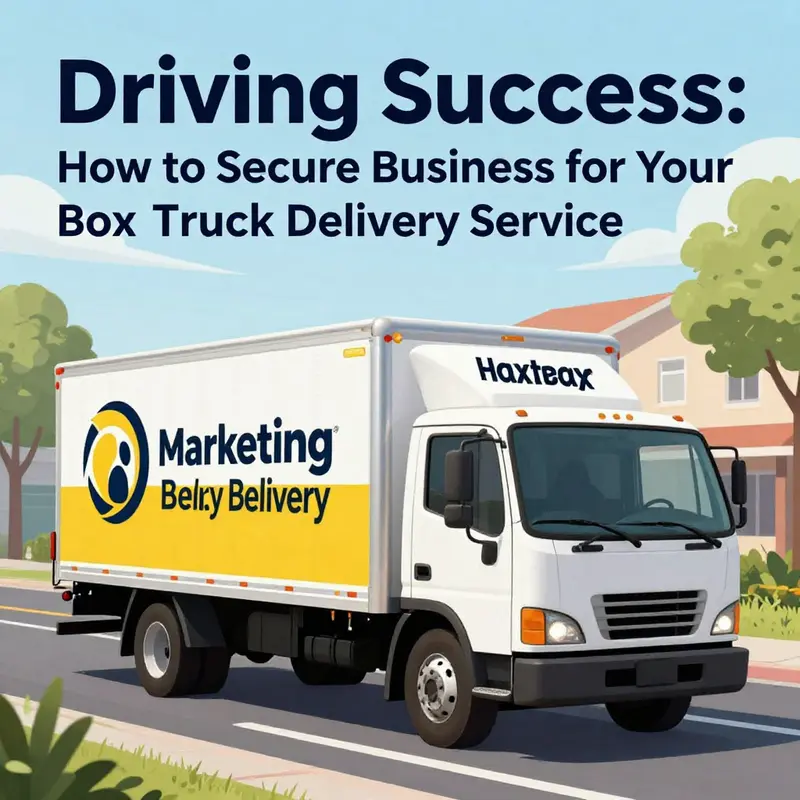
Fill the Truck: Practical Marketing to Win Local Box Truck Delivery Work
Marketing a box truck delivery service means turning a vehicle into a trusted, visible solution for local businesses. The aim is not only to attract leads but to create repeatable, high-value relationships that keep the truck busy. That requires a clear value proposition, consistent visibility where customers search, and proof that you deliver on time and intact. This chapter walks through a unified approach that blends an authoritative online presence, precision local outreach, and reputation-building operational practices that buyers notice and reward.
Start by defining what makes your service distinctive. Is it scheduled same-day runs for retailers, climate-controlled cargo, white-glove inside delivery, or tight after-hours availability? Frame your marketing around that promise. Keep messaging simple and direct: what you do, where you operate, and why you are more reliable than an ad hoc carrier. This clarity shapes every asset you create: the website, the pitch to a warehouse manager, the referral email, and the social post.
Your website is the operational hub for marketing. It should list service areas and pricing tiers in plain language. Describe equipment options and capacity so a procurement manager can match a load quickly. Include an explanation of your communication tools, such as real-time tracking and electronic proof of delivery, to show reliability. Add customer testimonials and short case studies that demonstrate measurable outcomes, like reduced delivery time or fewer damaged pickups. Keep pages scannable; use bullet lists and clear headings for services, coverage, and contact options. Embed a contact form and a direct booking button for immediate dispatch requests. These small conveniences reduce friction and convert interest into bookings.
Visibility where customers search is essential. Local search optimization focuses on clear, location-specific phrases customers use, such as same-day deliveries within a city or short-haul distribution between nearby industrial parks. Optimize page titles and service descriptions for these queries. Create a page for each major service area or industry vertical you serve. This increases the chance a local retailer or fulfillment center will find you when urgency is high.
A strong presence on local business listings amplifies that visibility. Claim and maintain your business profile on major local directories. Encourage satisfied clients to leave reviews. Each positive review increases trust and helps your profile appear higher in search results for local delivery queries. Respond to reviews promptly and professionally. A courteous response to a negative review can convert a hesitant prospect into a customer by showing you stand behind your service.
Content marketing builds authority and improves SEO, but it must be practical. Share short articles and posts that answer questions buyers have. Topics that resonate include packing tips to prevent damage, benefits of scheduled local delivery versus ad hoc couriers, and what to expect from white-glove service. Use behind-the-scenes posts to humanize your brand. Show how a typical delivery is handled from pickup to proof of delivery. These pieces attract organic visits and serve as sales collateral when approaching businesses.
Social media and local community outreach reinforce trust. Use neighborhood platforms and local business groups to post clear service announcements and route availability. Post customer testimonials and before-and-after snapshots of packaging to demonstrate care. Sponsor a small community event or a local team to put your logo in front of frequent shoppers. Visibility at community touchpoints makes your name familiar when businesses need a carrier quickly.
Referral programs convert satisfied customers into advocates. Offer a small credit or discounted delivery for each referred business that becomes a paying client. Make the program simple to use. Send a follow-up message after each job and ask for referrals. Often a single enthusiastic customer can introduce three or four local partners. Those introductions turn into recurring accounts faster than cold outreach.
Partnerships with complementary businesses generate steady, high-quality leads. Reach out to moving companies, event planners, home improvement suppliers, and local fulfillment centers. Offer to handle overflow during peak times or to operate scheduled daily runs. Propose a pilot arrangement that demonstrates reliability over a short period. A successful pilot often converts into monthly contracts. Keep pricing transparent and offer a discount for committed volume to make the math easy for partners.
Physical presence around logistics hubs matters. Parking your truck near distribution centers and freight terminals during peak hours makes you visible to dispatchers and warehouse supervisors. Carry simple printed materials and an elevator pitch that emphasizes reliability and availability. Networking in person shortens the sales cycle. A warehouse manager who sees your truck regularly will think of you when a last-mile need arises.
Operational trust signals are marketing tools. Implement tracking, proof of delivery, and simple invoice processes. Show these features in a one-page service sheet and on your website. Offer insurance details and claims statistics to address risk concerns. These measures reduce perceived transaction risk and make procurement decisions easier. When buyers compare carriers, they will choose the one with transparent systems and straightforward terms.
Pricing must be clear and defensible. Publish basic rate ranges and explain the variables that affect price: distance, weight, handling requirements, and time windows. Offer a structured discount for recurring routes or block-booked capacity. For first-time customers, present a pilot price or first-job discount to remove the initial barrier. Make sure your terms are easy to understand and avoid surprises on invoices. Predictable billing builds long-term trust.
Testimonials and case studies are powerful. Collect short, specific testimonials that highlight punctuality, damage-free delivery, and communication. Create a one-page case study for notable wins. Quantify results when possible: percentage improvement in on-time deliveries, number of missed pickups avoided, or cost savings for the client. Prospective customers respond to concrete numbers more than general praise.
Direct outreach remains a cornerstone of landing business. Prepare a concise pitch that fits on one page. Use it when visiting retailers, medical suppliers, or office distributors. Offer to run a one-week pilot at a reduced rate. Follow up with a summary of the pilot’s results and a proposal for ongoing service. Consistent follow-up distinguishes professional operators from casual providers.
When operating locally, signage and visible branding are effective. A professionally lettered truck becomes a mobile advertisement. Use a clear phone number and website address on the vehicle. If you offer specialty services, include a short phrase, like climate control or inside delivery. A branded vehicle builds instant recognition among local businesses and supports the credibility of outreach efforts.
Measure what you market. Track lead sources to see which tactics produce bookings. Monitor conversion rates from website contact to paid job. Record average revenue per customer and frequency of repeat work. These metrics reveal which investments to scale. For example, if community sponsorships produce more reliable leads than paid local ads, reallocate budget accordingly.
Finally, make marketing and operations inseparable. Marketing promises must match daily performance. If you advertise two-hour windows, meet them. If you promote damage-free handling, invest in proper tie-downs and trained staff. Operational excellence creates referrals, and referrals reduce marketing spend. Over time, a reputation for reliability builds a self-sustaining pipeline of business.
For an example of a regional carrier that built reputation through service clarity and local engagement, see this profile on a company recognized for quality and reliability: Exploring 5-Star Truck Inc: Quality Service and Reliability on the Road.
Practical marketing for a box truck delivery service focuses on trust, accessibility, and measurable results. Build a clear online hub, optimize for local search, nurture partnerships, and prove your promises through tracking and testimonials. Keep offers simple and repeatable. Ask for referrals. Track the right metrics. When every part of your business signals reliability, the truck becomes not just a vehicle, but a dependable partner for local commerce. For deeper tactics on content-driven growth and referral strategies that scale, consult this detailed resource: https://www.entrepreneur.com/article/375694
Final thoughts
Securing business for your box truck delivery service requires an integrated approach that encompasses digital engagement, relationship-building, and strategic marketing. By leveraging digital freight platforms, establishing networks in logistics hubs, forming direct partnerships, and employing effective marketing strategies, you can create a sustainable delivery business that meets the demands of today’s market. Embrace these strategies to not only enhance your visibility but also to position yourself as a reliable partner in the logistics industry.