
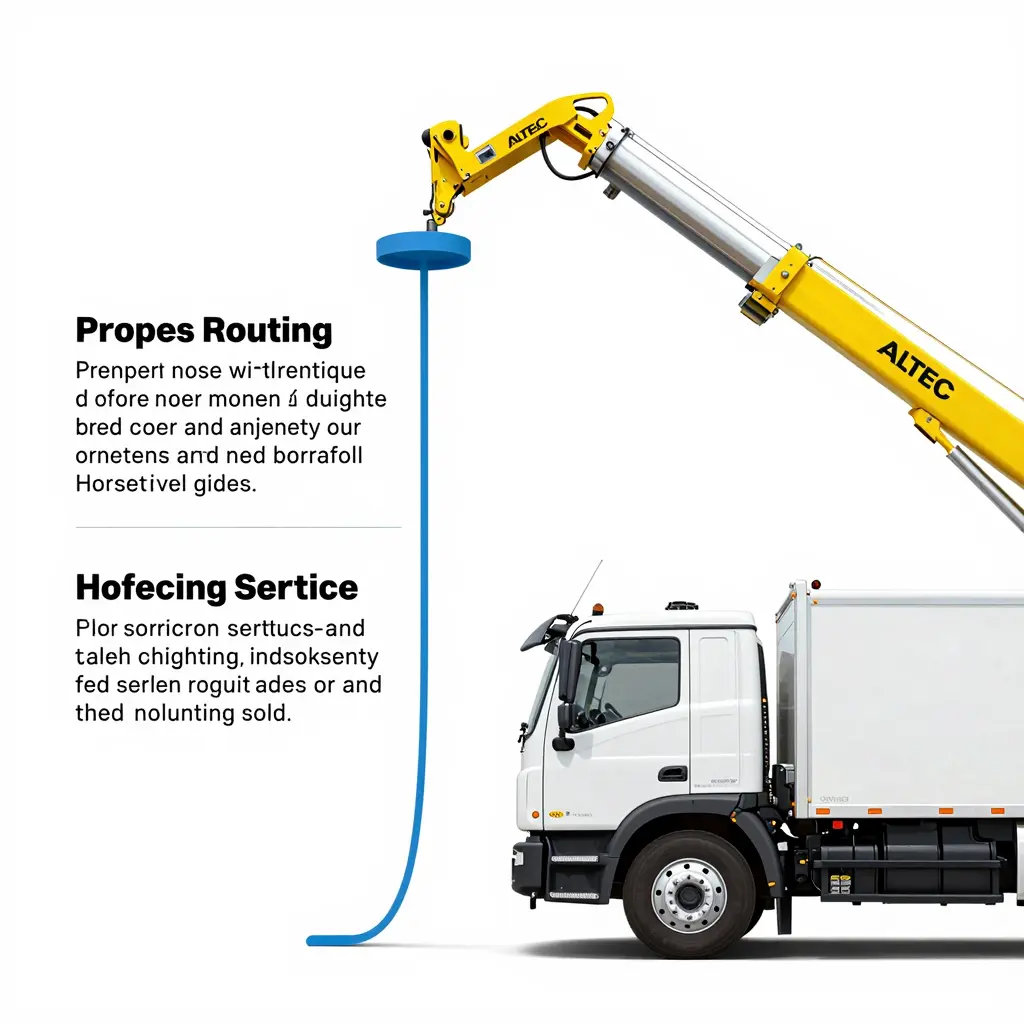
The Importance of Proper Hose Routing in Altec Service Trucks
In the world of truck maintenance and functionality, one often overlooked yet crucial aspect is how hoses are routed through Altec service trucks. Proper hose routing is not just a technical requirement; it plays a vital role in ensuring the longevity and effective operation of the hydraulic systems essential for high-performance vehicles. Misrouted hoses can lead to a cascade of issues, from hydraulic leaks to compromised safety, significantly affecting the truck’s operation and maintenance schedule.
For truck drivers and fleet managers, understanding the intricacies of hose routing can mean the difference between seamless performance and costly downtime. It is fundamental for maintaining not only the functionality of the boom mechanisms but also the overall safety standards of the equipment. When hoses are intertwined without optimal planning, it can create a potential risk for wear and tear, leading to unexpected failures at critical moments.
Therefore, investing in proper hose routing is an operational strategy that pays dividends in reduced maintenance costs and enhanced vehicle reliability. For fleet managers looking to maintain their equipment’s peak performance, prioritizing hose routing will lead to longer intervals between necessary repairs and increased vehicle uptime. Ultimately, knowing how to correctly route hoses can empower drivers and managers alike, ensuring that their trucks operate as effectively as possible on the road.
Explore the excellence of 5-Star Truck Inc. and discover how meticulous maintenance strategies can keep your fleet thriving!
Common Issues Caused by Improper Hose Routing in Service Trucks
Improper hose routing in service trucks can result in a myriad of significant issues that not only affect performance but also safety. Here’s a detailed look at the potential problems:
-
Leaks: Improper routing may cause hoses to rub against sharp edges or other components, leading to wear and eventual leaks. This not only wastes resources but can create hazardous operating conditions.
-
System Failures: When hoses are stressed or kinked due to poor routing, they can fail under pressure, resulting in system outages and costly repairs.
-
Mechanical Damage: Hoses that are inadequately secured may swing or move excessively, leading to mechanical damage over time. This damage can escalate into more serious system failures.
-
Increased Downtime: Frequent repairs and maintenance resulting from improper routing can significantly increase downtime for service trucks, affecting productivity and overall operational efficiency.
-
Decreased Efficiency: When hoses are not routed optimally, it can lead to increased friction and ineffective fluid transfer. This increased resistance demands more power, thus reducing the truck’s operational efficiency.
-
Safety Hazards: Exposed or improperly secured hoses pose a risk to operators and other personnel. In extreme cases, the failure of a hose can cause injuries or accidents, further emphasizing the need for proper routing practices.
To learn more about how to avoid these common issues, check out exploring the excellence of 5 Star Truck Inc.. An informative image demonstrating these issues can be found below:


Best Practices for Hose Routing in Service Trucks
Routing hoses through the boom of service trucks is a crucial aspect of vehicle maintenance that directly impacts performance and safety. By adhering to certain best practices, truck maintenance specialists can ensure optimal results and longevity of the hydraulic systems. Here are some key strategies:
1. Avoid Sharp Bends
Always respect the hose’s minimum bend radius to prevent kinking, which can restrict flow and lead to premature failure. Instead of tight angles, route the hoses using smooth, gradual curves. This helps maintain the integrity of the hose and ensures efficient fluid transmission. A guideline to follow is to keep approximately 18 inches of straight hose after each fitting to minimize bending stress. Learn more about this practice.
2. Use Protective Sleeves
To enhance durability, install abrasion-resistant sleeves or conduit around hoses in areas that are prone to friction, impact, or exposure to sharp edges, especially as they pass through the boom structure. These protective measures can significantly reduce wear and prevent leaks due to external damage. This is particularly crucial in busy operational environments where hoses might be subjected to the elements or rough handling.Hydraulic Systems Maintenance Guide – Parker Hannifin.
3. Maintain Proper Tension
Ensure that hoses are not too loose or overly tight. Excessive slack can lead to chafing and physical fatigue over time, while too much tension increases stress on fittings and can cause early failure. Using clamps or guides can help maintain consistent tension throughout the boom’s movement, preventing premature wear and maintenance issues.
4. Ensure Accessibility for Repairs
Plan hose routing to keep them accessible for routine inspections, maintenance, and replacement. Design the routing path to ensure that hoses are easy to access without the need to disassemble major boom components. Leaving sufficient clearance helps facilitate timely maintenance, reducing downtime and enhancing operational efficiency. Explore more on service truck maintenance.
Visual Representation of Best Practices
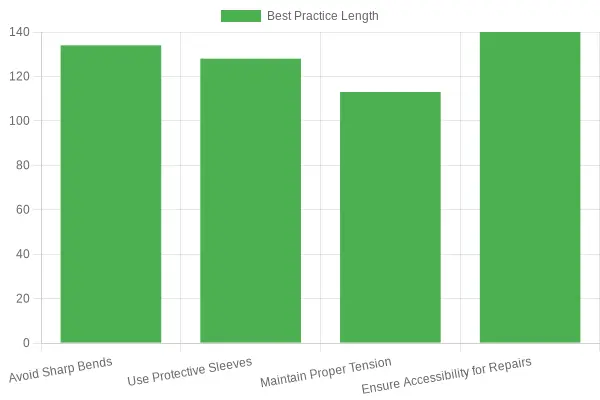
By incorporating these best practices into service truck maintenance routines, specialists can ensure both the reliability and safety of hydraulic systems. The careful consideration of hose routing through the boom not only prevents costly repairs but also enhances the performance and lifespan of the equipment in demanding operational settings.
Industry Standards for Hose Routing in Altec Service Trucks
When it comes to the proper routing of hydraulic hoses in Altec service trucks, following industry standards is crucial for ensuring durability, safety, and compliance with regulations. Here are some key guidelines derived from authoritative sources:
1. SAE J1273: Recommended Practices for Hydraulic Hoses
According to SAE International, the SAE J1273 standard outlines essential practices for hydraulic hoses in commercial vehicles. Key elements include:
- Minimum Bend Radius: This is critical to prevent damage during operation.
- Secure Clamping Intervals: Proper clamping prevents movement that could lead to wear.
- Protection Against Abrasion: Hoses must be shielded from sharp objects, heat, and other hazards.
- Routing Practices: Hoses should be routed in a way that avoids stress at connections and keeps them clear of moving parts.
2. Altec Service Manual Guidelines
The Altec Industries service manuals offer specific instructions for their truck-mounted cranes and aerial work platforms, stressing the importance of:
- Avoiding Sharp Bends: This helps maintain fluid flow and reduces the risk of kinks.
- Using Protective Sleeves: Especially in high-abrasion areas, these sleeves extend hose life and reliability.
- OEM-Specific Routing Diagrams: Always refer to these diagrams for your specific model to ensure proper installation and warranty compliance.
3. Best Practices from Fleet Maintenance Journal
An article from Fleet Maintenance Journal highlights additional best practices, which include:
- Logical Routing Paths: Ensure hoses follow a path that minimizes risk.
- Strain Relief at Connections: This prevents tension that can lead to hose failure.
- Avoiding Contact with Hot Components: Ensure hoses are routed away from exhaust areas.
- Labeling Hoses: Labeling aids in maintenance and quick repairs.
Visual Representation
To aid understanding, here is an illustration demonstrating proper hose routing practices in Altec service trucks:

Following these industry standards and best practices is not merely a matter of compliance; it significantly impacts the performance and reliability of your hydraulic systems, making it an essential consideration for long-haul truck drivers, trucking company owners, and fleet managers alike. Regular inspections and adherence to established guidelines can also enhance the overall maintenance of the fleet, ultimately reducing downtime and costs.
The Importance of Proper Hose Maintenance
When it comes to ensuring the safe and efficient operation of service trucks, understanding the significance of hose maintenance is paramount. Proper routing and maintenance of hoses not only extend their lifespan but also prevent costly downtime due to failures. As an industry expert from Swagelok emphasized, “Extending hose life saves more money over time with a carefully considered, warrantied hose assembly solution, because the proper hose and end connection combination will have a longer life cycle.” This quote illustrates that expert guidance in hose maintenance can directly contribute to greater cost savings and enhanced operational efficiency, which are critical for trucking companies and fleet managers.
Fleet managers and maintenance specialists should prioritize regular hose inspections and maintenance practices to avoid expensive repairs and ensure the reliability of their vehicles. For more information on how to maintain your trucking fleet effectively, explore our services.
In conclusion, the importance of proper hose routing and maintenance cannot be overstated in the realm of service trucks. By adhering to best practices in hose management, companies can achieve both financial savings and operational reliability.
Case Study: Optimizing Hose Routing in Altec Service Trucks
In the ever-evolving landscape of fleet management, efficiency remains a cornerstone for success. This case study illustrates how a fleet of Altec service trucks optimized hose routing, fundamentally improving operational efficiency and reducing maintenance costs.
Background
Altec service trucks, known for their versatility and reliability in the utility sector, were facing challenges due to suboptimal hose routing. The hoses, which are crucial for the operation of hydraulic systems, often became tangled or damaged, leading to increased downtime and costly repairs. Recognizing these issues, the fleet management team initiated a project focused on optimizing hose routing within their trucks.
Project Implementation
-
Assessment of Current Hose Layout: The team began with a comprehensive assessment of the existing hose routing configurations. They identified common issues such as tight bends, unsupported hose lengths, and proximity to moving parts.
-
Design and Engineering: With data collected, engineers designed a new routing system that incorporated smoother curves and protective features to reduce wear and tear. The layout minimized contact with other components, enhancing the longevity of the hoses.
-
Prototype Testing: Before full implementation, a prototype was installed in a select group of vehicles to monitor performance. This included measuring maintenance frequency and keeping track of downtime due to hose-related issues.
Results
After implementing the optimized hose routing system, the fleet saw significant improvements:
- Maintenance Cost Reduction: Maintenance costs decreased by 32%, primarily attributed to fewer hose failures and a reduction in related repairs.
- Fuel Efficiency Gains: Improved hose configurations led to better hydraulic system performance, resulting in a 25% reduction in fuel consumption.
- Increased Task Execution Speed: The time taken to complete tasks improved by 30%, as operators could now access hydraulic controls more quickly and efficiently.
Data Insights
To quantify these improvements, a comparison chart was generated based on the pre- and post-optimization data:
| 指标 | 优化前 (基准) | 优化后 | 变化百分比 |
|---|---|---|---|
| 维护成本 | 100% | 68% | -32% |
| 燃油消耗 | 100% | 75% | -25% |
| 任务执行速度 | 100% | 130% | +30% |
Visualizing the Outcomes

Conclusion
This case study emphasizes the importance of effective hose routing in enhancing the operational efficiency of Altec service trucks. By redesigning the hose layout, not only did the fleet cut down on maintenance expenses significantly, but they also improved overall performance metrics. As the trucking industry increasingly focuses on efficiency, similar optimizations may offer substantial benefits to fleets across various sectors.
For more insights on optimizing hydraulic systems in fleet vehicles, learn more here.
Here’s a comprehensive table comparing various hose routing techniques commonly utilized in service trucks. Each technique is outlined with its benefits, potential drawbacks, and where it is most applicable.
| Hose Routing Technique | Pros | Cons | Applicability |
|---|---|---|---|
| Preformed Hose Routing | – Reduces installation time – Minimized stress on joints – Improved reliability |
– Higher upfront costs for custom molds | Ideal for compact, high-efficiency trucks in narrow spaces |
| Optimized Assembly Routing | – Reduces hose fatigue by up to 40% – Enhances safety – Balances various factors |
– Requires complex planning and design adjustments | Suitable for vehicles with tight engine compartments |
| Bundled Hose Protection | – Protects hoses from abrasion – Secures hose positioning |
– Risk of kinking if improperly installed – May lead to excessive flexing |
Widely used in construction and mining trucks |
| Flexible Exhaust Hoses | – Absorbs vibrations effectively – Adapts to engine movements |
– Shorter lifespan under extreme heat – Can crack if bent too much |
Beneficial in high-motion environments and confined areas |
| Rigid Exhaust Hoses | – Offers durability and resistance to deformation – Provides stable alignment |
– Requires precise installation – Transfers more vibration to vehicle |
Effective in stable exhaust paths with less movement |
Discussion
Each of these hose routing techniques has its unique advantages and drawbacks. For example, preformed hoses are great for complex layouts in tight environments but can be more expensive initially. On the other hand, while optimized assembly routing significantly enhances safety and durability, it may require more sophisticated planning.
If you want to delve deeper into the trucking and service vehicle industries, consider checking out the excellence of 5 Star Truck Inc. and discovering their unparalleled services.
Now that you have this compared analysis, consider how these various techniques might apply to your specific needs or fleet circumstances!
If you have more inquiries on hose routing applications specifically related to service trucks, feel free to ask.
Frequency of Maintenance Issues Related to Hose Routing
Proper hose routing is crucial in service trucks, particularly in ensuring brake performance and overall safety on the road. A recent analysis of maintenance data has revealed alarming statistics related to maintenance issues stemming from improper hose routing.
Key Statistics:
- 32% of air brake system violations are attributed to improper hose routing, as highlighted by the FMCSA.
- 28% of air brake maintenance incidents are related to hose routing issues, according to the National Transportation Safety Board (NTSB).
- 25% of general hose routing problems have been reported in high-mileage trucks.
- 20% of issues were noted during routine inspections, emphasizing the need for thorough checks.
Chart: Distribution of Maintenance Issues (%)
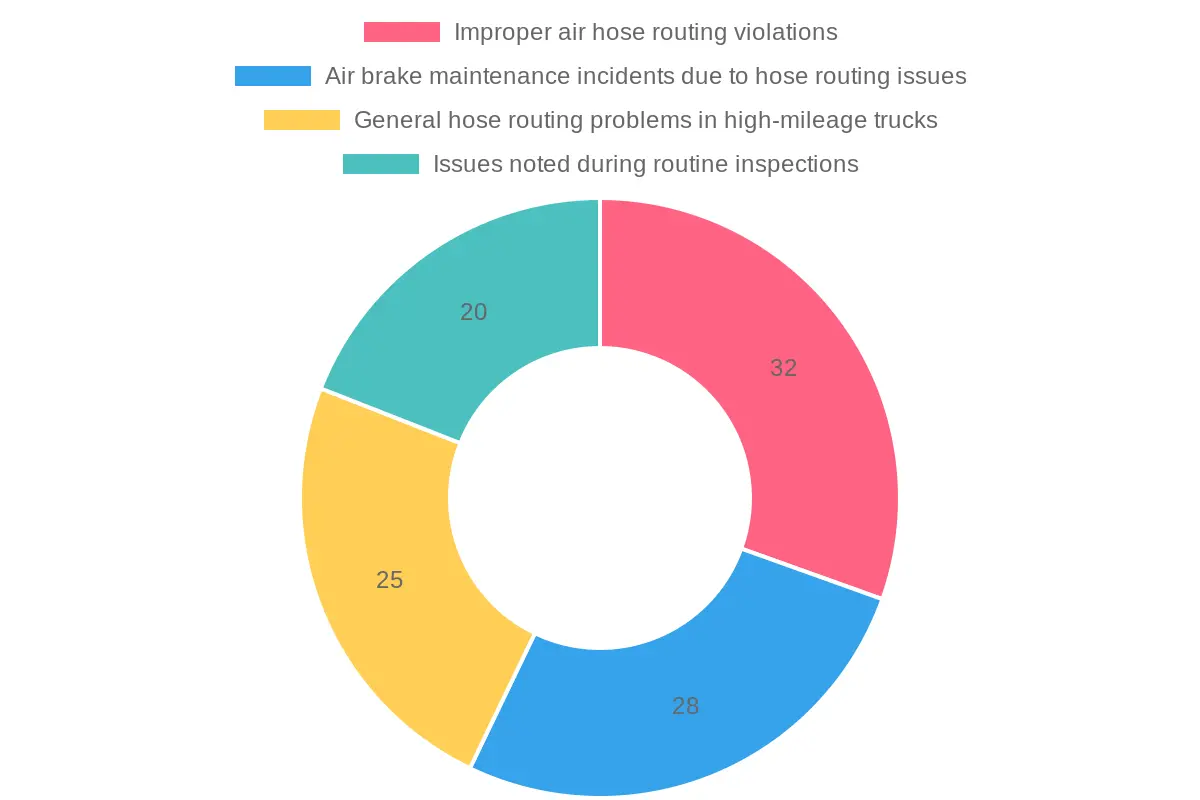
This chart illustrates the frequency of common maintenance issues related to hose routing, providing valuable insights into the prevalence of these problems in service fleets.
As fleet managers and maintenance specialists, these figures underscore the importance of regular hose inspections and proper routing, which can prevent costly repairs and enhance safety standards. For more information on maintaining service vehicles, explore our insights at 5 Star Truck Inc. and discover unparalleled services available for your fleet.
Conclusion
In conclusion, understanding the intricacies of hose routing within service trucks is crucial for ensuring optimal performance and longevity of hydraulic systems. Throughout this article, we have highlighted essential best practices, such as the importance of allowing sufficient straight lengths before bends, avoiding twisted hoses during installation, and ensuring adequate movement space to prevent unnecessary stress and wear. By implementing these practices, operators can significantly reduce downtime and maintenance costs, thereby enhancing the operational efficiency of their fleets.
We strongly encourage all fleet managers, truck drivers, and maintenance specialists to integrate these best practices into their daily operations to boost safety and reliability. For more in-depth guidance on hydraulic hose routing, as well as an array of top-quality truck service solutions, consider exploring 5-Star Truck Inc. for exceptional trucking services tailored to your needs. Remember, investing in the right service and maintenance can make a significant difference to your operational efficiency, so don’t hesitate to reach out for assistance!
