
The airbag system in your 2008 GMC truck is a crucial safety component that plays a vital role in protecting you during a collision. When the airbag light illuminates on your dashboard, it signals a potential issue that needs urgent attention. For long-haul truck drivers, trucking company owners, and maintenance specialists, this means not just identifying the problem, but understanding the critical components that support airbag functionality. In the following chapters, we will guide you through diagnosing the airbag light issue, explore common triggers, outline effective repair strategies, and emphasize essential safety considerations. Gaining a comprehensive understanding of your airbag system can significantly enhance safety and reliability on the road.
SRS Light Diagnosis and Safe Troubleshooting for a 2008 GMC Truck
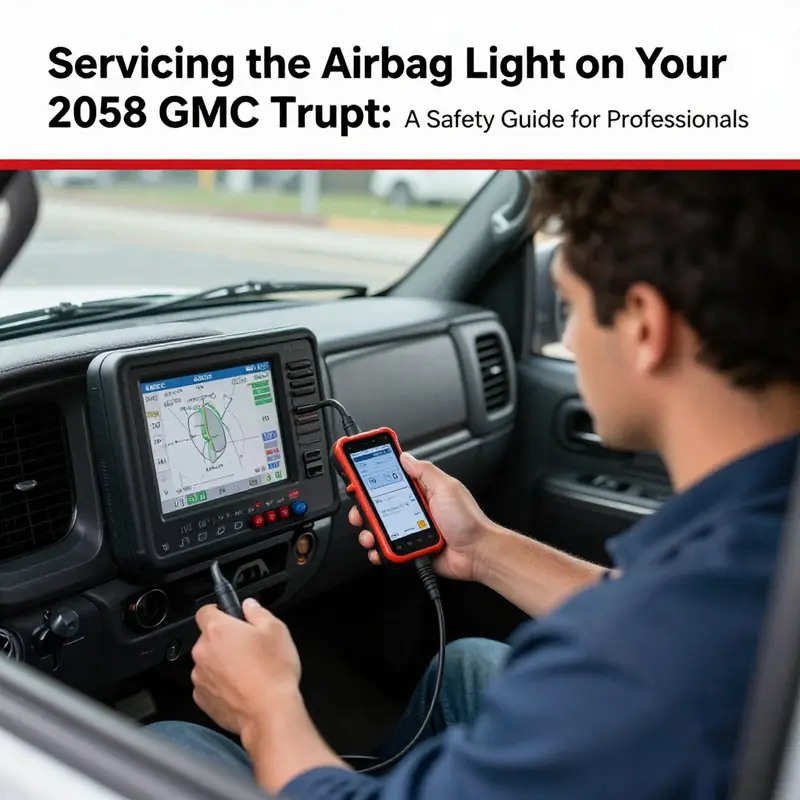
The air bag warning, often shown as the SRS (Supplemental Restraint System) light on the dash of a 2008 GMC truck, is a safety flag that should never be ignored. When this light illuminates, it means the vehicle’s restraint system has detected a fault that could prevent airbags or seatbelt pretensioners from working correctly in a crash. Diagnosing that fault is a logical process that blends careful visual inspection, straightforward electrical checks, and fault-code retrieval with a scan tool that can read SRS codes. Approaching the problem in a methodical, safety-first sequence reduces risk, narrows the likely causes, and helps you decide whether the repair is a do-it-yourself job or requires a trained technician.
Start by treating the vehicle as a live electrical system tied to critical safety hardware. Before you touch airbag connectors, the steering wheel, or seat-belt hardware, remove the ignition key and disconnect the negative battery cable. Wait at least ten minutes before working on the system so residual charge in the SRS capacitors can dissipate. This pause is important because even after the battery is disconnected, the system can retain enough energy to deploy an airbag. Keep that safety window in mind as a routine first step rather than a suggestion.
With the vehicle safely de-energized, begin a careful visual inspection. Walk the truck and look for obvious issues that can trigger the light: a blown fuse in the dash, a loose connector beneath a seat, or evidence of corrosion where wiring harnesses pass through the floor. Pay special attention to under-seat connectors for occupant detection and seat-belt pretensioner wiring. These terminals are exposed to movement, dirt, and moisture, and they are common failure points. Look for bent pins, dirt or corrosion on terminals, torn insulation, and wires crushed by seat tracks. Gentle reseating of connectors after cleaning them with contact-safe cleaner can often restore a reliable circuit.
Next, consider vehicle electrical health. A low or recently replaced battery, poor ground connections, or a failing charging system can produce misleading SRS warnings. If lights flicker elsewhere or the radio or other modules behave oddly, check battery state and alternator output before deeper SRS work. Restore good battery connections and charging performance first, because unstable voltage can corrupt sensor readings and throw false trouble codes.
To pinpoint the fault rather than guessing, retrieve stored SRS trouble codes with a scan tool that supports airbag system diagnostics. A professional-grade diagnostic device will read the SRS control module and show specific faults: open or short circuits, resistance out of range, internal module errors, or sensor signal failures. Note each code and the freeze-frame data if available; that snapshot can include parameters such as vehicle speed and voltage at the moment the fault was logged. Do not clear codes before you inspect and repair; clearing them prematurely removes the evidence that helps identify the root cause.
Interpretation of the codes focuses your work. Some codes indicate a simple wiring open or short, which you can trace with a meter and visual inspection. Others point to the clockspring— the spiral cable assembly inside the steering column that maintains electrical continuity to the driver’s airbag while the wheel turns. A faulty clockspring will commonly generate a driver airbag circuit fault. Replacing the clockspring requires careful steering-wheel removal and strict adherence to discharge and handling procedures to avoid accidental deployment. If the fault points to passenger-side circuitry or the occupant classification system, check under the passenger seat for the occupant sensor pad and its harness. Damage, corrosion, or mispositioned trim can interrupt the circuit and trigger the light.
Seat-belt pretensioners and crash sensors are other key suspects. Pretensioners have pyrotechnic devices that fire during a crash to tighten belts; if a pretensioner shows a fault code, it must be handled and replaced according to manufacturer guidelines because it includes explosive elements. Crash sensors (impact sensors) are placed strategically around the truck to detect collision forces. A sensor damaged by prior impact, water intrusion, or wire damage will set the SRS light. When a sensor is suspected, verify the wiring and connector condition before assuming the sensor itself is bad. Replace parts only when diagnostics and inspection point clearly to a failed component.
Wiring harness integrity is the backbone of reliable diagnosis. Use a wiring diagram from the official service information to trace circuits. Check continuity and resistance across suspect sections and between connectors and the SRS module. Look for chafed wires, especially where harnesses pass through metal bulkheads or under seats. A short to ground or to voltage will typically register as a circuit fault on the scan tool and can often be reproduced by moving a seat or flexing harness sections while watching live data from the SRS module.
When the control module itself reports internal faults, exercise caution. SRS control modules contain event data and firing circuitry. If a module is damaged, replacement will often require proper pairing, registration, or clearing procedures so that the new module interacts correctly with the truck’s other systems. Some replacement modules require coding to the vehicle or a dealer-level tool to clear crash data. If you reach this stage, consult the official service procedures or a qualified shop to avoid creating an inoperative system or losing stored diagnostics needed after a collision.
After repairing or replacing components, verify your work by reconnecting the battery and using the scan tool to clear stored codes. Do not rely on code clearing alone; test drive the truck under normal conditions and re-scan to be certain a persistent fault does not return. A transient fault caused by poor battery voltage or a loose connector may not reappear immediately, so verify stability by driving for several miles and rescanning. If the light returns, re-examine the previously repaired area and broaden your inspection to related circuits.
Safety and documentation go hand in hand. Keep a record of the codes retrieved, parts replaced, and repairs made. Photograph suspect harnesses and connector pinouts before disconnecting them so reassembly is correct. If you are not confident with electrical diagnosis or handling airbag components, hire a certified technician. Mishandling components can result in unintentional deployment or leaving the restraint system disabled. A professional repair shop can provide the specialized tools and experience needed for safe airbag module replacement, clockspring service, or seat-belt pretensioner work.
Throughout diagnosis, remain aware that some fixes are simple and inexpensive while others require specialized parts and labor. A loose ground or a corroded connector can be corrected with cleaning and reseating. A failed SRS control module or pretensioner may be costly and require more complex steps. The right diagnostic approach avoids wasted parts replacement by letting codes and inspection guide repairs. If initial scans and checks do not reveal the culprit, escalate methodically: re-check battery and charging system, then fuses and grounds, then seat and steering column connectors, and finally the sensors and module.
When in doubt, refer to the vehicle-specific service documentation for torque specs, connector pinouts, and airbag handling procedures. Official procedures ensure repairs are performed to manufacturer standards and that any required module programming or post-repair resets are completed. For detailed technical procedures, wiring diagrams, and official safety steps, consult the factory service manual available from the manufacturer: https://www.gm.com/service-manuals
Tracing the Airbag Light: A Comprehensive Guide to Common Triggers and Safe Servicing on the 2008 GMC Truck
The airbag warning light in a 2008 GMC truck is not a cosmetic nuisance. It is a safety notice that the Supplemental Restraint System SRS may not perform as designed in a crash. When the light comes on, it is signaling the presence of a fault in the airbag circuit, the sensors that feed the system, or the controller that interprets those signals. Treating it with caution is not about chasing a fault to unlock a secret performance; it is about ensuring that in the moment when the vehicle is asked to protect you, the system will respond as intended. The path from a flashing or steady light to a safe, verified repair begins with disciplined diagnosis using the right tools and a respect for the complexity of airbag systems. A professional approach is essential, because airbag components operate with high voltage and precise timing, and missteps can lead to unintended deployment or failure to deploy when it matters most. Yet with patient, methodical work, most warning light causes can be traced, repaired, and verified without sacrificing safety or reliability.
At the core, the airbag warning light is driven by fault codes stored in the vehicle’s SRS module. An OBD II diagnostic tool capable of reading airbag or SRS codes will reveal stored trouble codes that point investigators toward the subsystem at fault. These codes do not guarantee a single failed part, but they do narrow the search to the likely offenders within the complex network of sensors, connectors, and control units that comprise the SRS. The codes might indicate a problem with a sensor input, a fault in a steering column assembly, a wiring anomaly in the seat area, a disconnected or corroded connector, a failed module, or a blown fuse that interrupts the circuit. Reading and interpreting these codes requires patience and a careful approach because the same light can be triggered by multiple conditions, and some faults may only illuminate after a certain sequence of events such as key on, seat movement, or a jolt that stresses the connections.
The most common suspects fall along a familiar map. First, wiring connections that live beneath the seats and in the seat tracks deserve careful scrutiny. Vibration, moisture, and the constant motion of a seating assembly can loosen pins, corrode terminals, or crack insulation. This is where a weight sensor or a seat occupancy sensor can feed incorrect data into the SRS, triggering the light. A careful inspection focuses on the seat harnesses, the grounds that run to the seat frame, and the connectors that anchor the sensors to the airbag control module. In some cases, simply reseating a connector or cleaning a corroded contact can restore proper communication and clear the fault. But if wiring has been pinched, worn through, or exposed to moisture, the fault will recur until the harness is repaired or replaced.
Seatbelt pretensioners are a second major category. These devices retract the belt with controlled force in a crash, and they are integrated into the SRS circuit. If a pretensioner sends an errant signal or develops a fault, the SRS will detect the inconsistency and illuminate the warning light. Because pretensioners often involve pyrotechnic elements and a controlled deployment path, diagnosing and addressing pretensioner faults is typically a task for a technician who can safely handle the components, test the signals, and perform any required replacement in a controlled environment. Although the pretensioner may resemble a single component in the seat belt system, its failure can manifest as a broader airbag warning, because the SRS monitors the integrity of the belt system as part of its overall safety strategy.
A blown fuse is a comparatively simple electrical fault that can disrupt the airbag circuit and trigger the warning light. Fuses protect the circuit and, when damaged, can cut power to the critical paths that feed sensors and the control module. Replacing a blown fuse is not a cure for an actual sensor or module fault, but it may reveal a more serious underlying issue or temporarily restore functionality until the root cause is addressed. It is important to use the correct fuse specification and to trace why the fuse failed in the first place, since a recurring fuse blow is a symptom of a deeper electrical or SRS fault.
The airbag module itself can fail or develop a failure mode that disrupts communication with the rest of the system. A faulty module may fail to deploy when needed, or it may miscommunicate with other sensors, prompting the light to come on. Replacing or reprogramming the module requires careful handling because it contains stored crash data and calibration parameters that govern how the system responds in a collision. The process should be conducted by someone trained to perform airbag module work, as incorrect procedures can lead to nondeployment or unintended deployment.
The clockspring, or airbag spiral cable, is a crucial link between the steering wheel and the airbag system. It maintains a reliable electrical connection as the wheel turns, and damage to this component can interrupt the circuit that sends deployment signals from the steering wheel airbag to the rest of the system. A worn or broken clockspring is a frequent root cause of intermittent or persistent airbag warnings. Replacing the clockspring is a delicate operation that typically requires removing the steering wheel and airbag module, then performing careful reassembly to maintain wheel alignment and system integrity. Any error in this area not only jeopardizes the airbag function but can create a risk of improper deployment or nondeployment.
Crash sensors stationed around the vehicle provide data on deceleration and impact conditions. When these sensors develop faults, they can feed incorrect information to the SRS logic, causing the light to illuminate even though the airbags themselves are sound. The diagnostic challenge here is distinguishing between a sensor fault and a wiring or module fault since all three are interconnected in the SRS loop. The repair path often involves testing the sensor circuits, replacing a faulty sensor, and confirming the integrity of the harness that feeds the sensor data back to the SRS module. Electrical noise or weak grounds can also create misleading signals, so a thorough inspection of grounds and the vehicle electrical system is essential.
Electrical issues beyond the immediate SRS path can masquerade as airbag faults. A weak battery, a poor ground, or a parasitic draw can introduce irregular voltage levels that confuse the SRS module. In some cases, what seems like an airbag problem is a power or grounding issue that affects multiple systems. A methodical approach checks battery health, tests for stable voltage during cranking, and inspects battery-to-chassis grounds. If a weak battery is dragging down the system, replacing or servicing the battery and ensuring clean, solid grounds can resolve a misleading light and prevent new faults from appearing after repairs.
Diagnosing a 2008 GMC truck SRS warning begins with data collection. An OBD II diagnostic tool is used to retrieve stored trouble codes and to pull freeze frame data that reveals the vehicle state at the moment the fault occurred. Codes associated with the SRS will point you toward a subsystem—be it the steering column, seats, sensors, or the control module. The codes are a guide rather than the final answer, and the next steps involve a physical inspection of the implicated area, followed by component testing and, where necessary, replacement. It is crucial to document the codes and the repair steps taken so that the light can be cleared and the system retested. After the repair, the codes should be cleared with the diagnostic tool, and the vehicle should be driven for a period of miles to verify that the warning does not return. If the light reappears, a revaluation of the suspected area is required, as the initial fault may have been masked by an intermittent connection or a marginal component that fails again under load or vibration.
Service guidance emphasizes caution. The airbag system contains energetic devices and high voltage elements that can pose serious safety hazards if mishandled. When in doubt, disengage the battery and allow for a safe waiting period before touching airbag components. Disconnecting or reconnecting any airbag component should be performed by someone trained in airbag safety procedures. Accessing the clockspring, seat sensors, or the SRS module often requires removing trim and airbags themselves, which adds risk if performed without proper safety measures and protective equipment. The official service documentation for the vehicle provides step by step, model specific instructions for safe disassembly, testing, and reassembly. It is not merely about swapping parts; it is about preserving the system’s integrity and ensuring that every connection is secure and properly insulated.
Repair execution varies with the fault. If the issue is a loose or corroded connection beneath a seat, carefully disconnecting, cleaning, and reattaching the harness can restore a solid signal path. If a sensor shows resistance drift or response failure, the sensor should be tested with appropriate tooling, and replaced if out of specification. A blown fuse is straightforward to address, but the root cause of the fuse failure must be found to prevent a recurrence. When a clock spring is found to be defective, replacement is the most reliable fix, though it is an involved procedure requiring steering wheel removal and airbag handling. If the clockspring is replaced, it is essential to verify that the airbag warning light does not reappear after driving several miles and that the system reports no further fault codes. In the case of a suspected module fault, the repair may involve a module replacement or reseating, and in some instances, reprogramming or calibration according to the vehicle’s service data. For pretensioners and crash sensors, replacement typically follows the manufacturer’s recommended sequence to reestablish the integrity of the SRS chain. Throughout, the goal is not to patch symptoms but to replace or repair the component that allows accurate sensing and safe deployment in a crash.
Once the physical maintenance is completed, the system must be revalidated. Clearing the codes is not a cure in itself; it is a reset that allows the system to reinitialize and recheck the circuit. A successful verification requires a short-term and a longer-term test: a careful road test that exercises the steering, seating, and occupant sensing features, followed by a longer drive to confirm enduring stability. If the light returns during the test, the diagnostic loop must be reentered, and the fault revisited with fresh codes. It is also prudent to review the vehicle documentation and service history for any past airbag repairs, as repeated failures often indicate a recurring fault or an underlying electrical issue that was not fully resolved.
In the broader context, maintaining an airbag system begins with proactive awareness. Regular vehicle maintenance, careful seat and wiring management, and attention to electrical health are all validators of SRS reliability. The 2008 GMC truck may present with the familiar triad of suspects—connections in the seating area, sensor integrity, and the steering column interface—yet no single rule covers every scenario. The diagnostic path must remain flexible, moving from generic fault code interpretation to targeted inspection, and finally to precise component replacement when required. The aim is to restore confidence in the airbag system without compromising safety, and that requires a disciplined approach grounded in proper diagnostic practice and respect for the system’s safety-critical nature.
For readers who want to pursue this with thorough documentation, consult the vehicle’s official service resources, which describe the proper disassembly sequence, testing procedures, and wiring diagrams tailored to the 2008 GMC truck family. While the desire to fix things quickly is natural, airbag work benefits from a measured methodology that minimizes risk to the technician and occupants alike. A measured approach improves the odds of a first-time fix and reduces the likelihood of misdiagnosis, which can save time and money while preserving safety. If any step feels beyond the reader’s experience, seeking a certified technician is the safest path. The stakes are high in airbag work, and professional handling ensures that the vehicle remains protective for drivers and passengers in the event of a crash.
External resource for recall and safety information can deepen understanding of potential issues related to the airbag system. For recall information and broader safety considerations, refer to the National Highway Traffic Safety Administration’s recalls database at https://www.nhtsa.gov/recalls. This repository provides vehicle specific notices and updates that may influence diagnosis and repair decisions.
Diagnose, Repair, and Reset: Servicing the Air Bag Light on a 2008 GMC Truck
When the air bag light stays illuminated on a 2008 GMC truck, it signals a fault in the Supplemental Restraint System (SRS). That system includes airbags, seat belt pretensioners, crash sensors, wiring, and the control module. Ignoring the light is not an option; it means the system may not deploy in a collision. This chapter walks through a careful, practical approach to finding and fixing the cause. The tone emphasizes safety, methodical troubleshooting, and when to involve a trained technician.
Start by treating the light as a diagnostic clue, not an annoyance. A persistent warning often stems from one of a few recurring problems: a failed clockspring in the steering column, loose or corroded connectors under the seats, damaged wiring, faulty crash sensors, or a malfunctioning SRS control module. Each of these faults produces specific trouble codes stored by the vehicle. Retrieving those codes with a professional-grade diagnostic scanner that can read SRS codes is critical. The codes point to the failing component and save time and parts. If you do not have experience with automotive electrical systems or with safety devices, plan on having a qualified technician perform the scan and repairs.
Begin with a simple, safe reset attempt. Turn the truck off and disconnect the negative battery terminal. Leave it disconnected for at least ten minutes. This can clear temporary or spurious codes caused by voltage spikes or electronic glitches. Reconnect the battery, start the truck, and watch the dash self-check. The light should illuminate for a few seconds and then go out. If the light remains off, monitor it for several miles of driving. If it returns, the fault is persistent and requires further diagnosis.
Next, perform a diagnostic scan. Use a scan tool that supports SRS codes and can show live data where possible. Record all stored and pending codes. Note freeze-frame data and any event markers. These codes will identify whether the fault is in a sensor circuit, airbag squib, pretensioner, clockspring, or the control module itself. Even a code that sounds generic will include a circuit number. Cross-reference that circuit to the service manual wiring diagram before replacing parts.
Many issues resolve after a targeted inspection once a code narrows the search. Inspect connectors and harnesses under the front seats and behind interior panels. These areas are exposed to passengers, moisture, and abrasion. Unplug each airbag-related connector, inspect pins for corrosion or bent contacts, and reseat them securely. Look for broken insulation, wire exposure, tape repairs, or signs of prior rodents. A connector that appears loose or contaminated is a common and fixable cause of the SRS light.
The clockspring is another frequent culprit on older trucks. It sits inside the steering column and maintains electrical continuity to the driver airbag and steering wheel controls as the wheel turns. Symptoms of clockspring failure include an SRS code pointing to the driver airbag circuit, loss of horn or steering wheel controls, and sometimes a visible airbag light. Replacing a clockspring is more involved than swapping a simple plug. It requires steering wheel removal, careful alignment of the replacement part to center it, and adherence to safety procedures. Always remove the battery connection and wait the recommended time before working near airbags. If you choose to replace the clockspring yourself, follow the factory procedure exactly, and verify alignment before installing the steering wheel.
Crash sensors and seat belt pretensioners are also part of the SRS. Crash sensors are mounted at the front, sides, or floor and detect impact forces. A sensor that fails or has a bad connection will set a fault. Pretensioners have their own circuits and can register as faults if their connectors or wiring are compromised. When codes point to those circuits, inspect mounting points and connectors for corrosion or damage from past impacts. Replace any sensor or pretensioner only with parts specified for the vehicle and installed to factory torque and wiring standards.
Wiring problems can be subtle. Harnesses can chafe against metal edges, be pinched by seat tracks, or suffer from water intrusion. Trace the affected circuit from the connector to the module while looking for breaks, splices, or signs of repair. Whenever you find damaged wiring, isolate the section, repair to OEM-quality standards, and apply proper insulation and strain relief. Temporary fixes are a common reason the light returns later. A professional electrical repair uses soldered joints or approved crimp terminals and heat-shrink tubing.
The SRS control module itself can fail, although less often than wiring or connectors. A module failure can be the result of prior incorrect repairs, water intrusion, or internal component failure. If the module is suspected, confirm that all related circuits and sensors are in good condition first. Some modules require reprogramming or calibration after replacement. That step usually needs specialized equipment and access to factory software. A qualified shop or dealership is typically required for module replacement and reinitialization.
After replacing or repairing the flagged component, use the scan tool to clear codes. Do not assume clearing codes alone resolves the issue. If the underlying fault persists, the code will quickly reappear. After clearing, perform the dash self-test and drive the truck for several miles to allow the system to perform its checks. Monitor live data where available. For example, a sensor that shows intermittent signals will sometimes appear normal during a static test but fail under load or vibration. A short test drive will better reveal intermittent wiring or connection faults.
Safety is paramount when working with airbags. Airbag modules and related components store energy and can deploy if mishandled. Always disconnect the battery and follow the vehicle manufacturer’s recommended wait time to allow capacitors to discharge. Handle modules and squibs with the covered face away from you. Never use power tools near airbag connectors. If you feel uncertain at any step, stop and seek professional assistance. A certified technician will have the training and equipment to perform repairs safely and to verify system functionality.
While some owners prefer to handle simple connector checks and reseating themselves, other tasks require specialized skills. Replacing a clockspring, airbag module, or SRS control unit usually requires specific alignment procedures and sometimes calibration with a dealer-level diagnostic system. For those uncertain, seek help. Consider shops that emphasize training in truck maintenance, because technicians with formal training in vehicle safety systems reduce risk and improve results. For information on organized training for truck maintenance teams, see this resource on truck maintenance service training.
After repair and code clearance, document what was done. Note parts replaced, wire repairs, connector cleanings, and the codes that were erased. Keep receipts and any calibration reports. This documentation is valuable if the system reports faults later. It also helps future technicians avoid repeating diagnostic steps.
Regular preventive steps reduce the chance of an SRS fault. Keep interior moisture out by addressing leaks. Avoid unnecessary modifications to seat tracks and wiring paths. If you add seat covers or floor mats, ensure they do not interfere with sensor circuits or seat occupancy sensors. Inspect the cabin wiring periodically, especially if the truck works in harsh conditions or sees heavy use.
When the SRS light returns after an apparent repair, do not ignore it. Re-scan for codes and compare new codes to prior records. Intermittent problems often point to a harness issue aggravated by vibration or temperature changes. If a technician replaced a module, verify that programming was successful and that there are no pending codes indicating a calibration step was missed.
Finally, rely on the official service information for model-specific procedures. The factory manual contains wiring diagrams, connector locations, torque values, and safety procedures unique to the 2008 GMC truck. For exact steps and specifications, consult the vehicle’s official documentation. The manufacturer’s owner resources are the authoritative reference for SRS repairs: https://my.gm.com/owner-center
A functioning airbag system is essential. Treat the air bag light as a safety defect that needs timely attention. Use proper diagnostic tools, inspect connectors and wiring thoroughly, replace faulty components to factory standards, and follow safe working procedures. When in doubt, enlist a trained technician. Document the work and verify the repair with a cleared code and a stable dash self-check that remains off after driving. These steps restore the system to its designed protective function and give you confidence that the vehicle will perform when it matters most.
Critical Safety Protocols and Recall Guidance for Servicing the Airbag Light on a 2008 GMC Truck
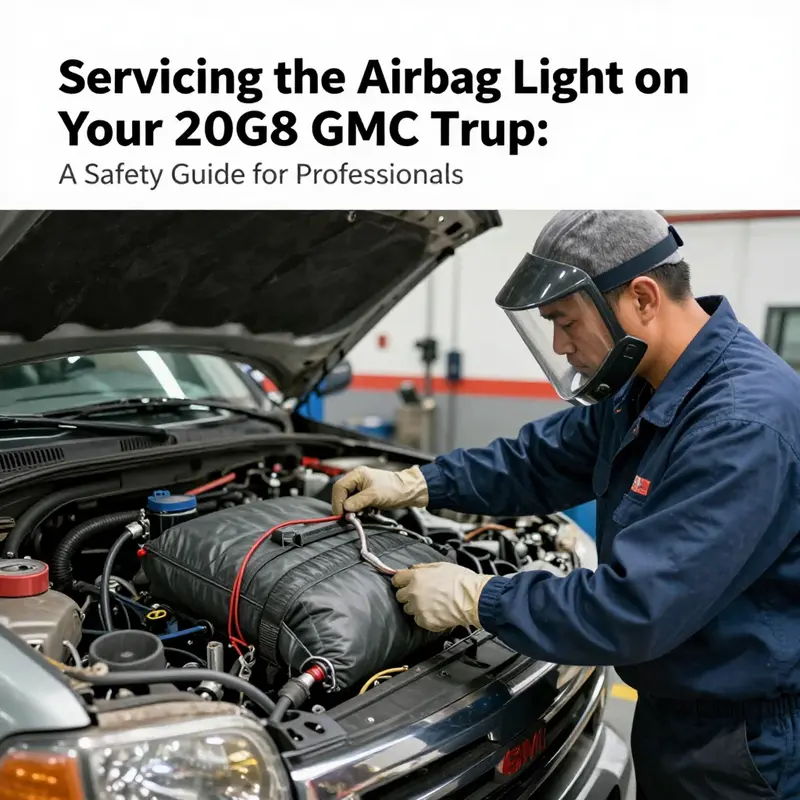
Understanding the real risks and required protections when servicing the SRS warning on a 2008 GMC truck is the foundation of any safe repair. The airbag light signals a fault in the Supplemental Restraint System. That fault means airbags or pretensioners may not deploy correctly in a crash, or could deploy unexpectedly during service. Both scenarios create serious risk. When you begin work, treat every step as safety-critical. Assume components are live until proven otherwise, and use a methodical, documented approach from diagnosis to disposal.
First, confirm whether the vehicle is affected by the well-documented inflator recall that covers many 2008 models. Certain inflators can rupture during deployment, sending metal fragments into the cabin. If the vehicle is on a recall list, the safest course is to have the defective inflator replaced by an authorized facility as soon as possible. Checking the VIN through the national recall database is quick and essential. If a recall applies, coordinate replacement through the dealer or a certified facility before performing any additional airbag system work.
When no recall action is required, or after a recall repair is complete, follow proven electrical and mechanical safety steps. Begin by removing the key and ensuring the ignition is off. Disconnect the negative battery cable to isolate the system. After disconnecting the battery, wait at least the manufacturer-recommended period before touching airbag components. This waiting period allows stored energy in the system’s capacitors to dissipate. During that time, do not sit in the driver seat or manipulate steering components in ways that could re-energize the system.
Static electricity and improper grounding can cause unexpected deployment. Ground yourself before starting work and keep the area free of loose metal objects. Use insulated tools when working near squibs, inflators, and connectors. Never probe airbag connectors with a test light; traditional continuity checks can inadvertently trigger an inflator. If diagnostic testing of the airbag system is required, use a diagnostic tool capable of reading Supplemental Restraint System codes and operating in a passive, non-activation mode. If such a tool is not available, arrange for a qualified technician who has the proper equipment.
Handling airbag modules demands extra care. When removing an airbag module from a steering wheel or dash, carry it with the trim cover facing away from your body. Place removed modules face up on a flat surface, away from work areas. Keep them clear of heat sources and avoid placing anything on top of them. Secure them to prevent tipping. Never disassemble an airbag module or attempt to repair an inflator. Disassembly can defeat safety mechanisms and creates risk of accidental ignition.
Clock springs and steering column work deserve special attention. The clock spring contains the electrical path for the driver airbag. If it is loose, misaligned, or damaged, it can set off fault codes and cause intermittent connection. Before removing steering column components, center the wheels and lock the steering column if possible. Document the clock spring alignment marks and follow correct alignment procedures on reassembly. Incorrect clock spring installation can cause loss of steering wheel controls, horn failure, and airbag circuit faults.
Concerning occupant sensing and seat-related wiring, checking under seats and carpeting reveals many common fault sources. Wiring harnesses routed under seats can become pinched, chafed, or corroded. Seat occupancy sensors and seat belt buckles contain switches and wiring that feed the system. Inspect connectors for corrosion and bent pins. Carefully reseat connectors and apply dielectric grease sparingly to protect contacts from moisture. If a connector shows heat damage, replace it rather than attempting a repair. Repairs that leave unreliable connections can lead to intermittent faults that are hard to diagnose and dangerous in a crash.
Module-level faults may require careful handling of the SRS control unit. The SRS control unit often stores crash data and fault history. Do not attempt to reprogram or reset the module without following manufacturer guidance. Clearing codes without repairing the underlying issue is not safe. After any repair, clear stored codes only with a proper scan tool and verify that the light remains off after several road cycles. When a module must be replaced, ensure the replacement is correct for the vehicle and is installed with the proper torque and connector procedures. Some modules retain memory and must be handled per specific deactivation steps.
Airbag inflators and deployed components are treated as hazardous waste in many jurisdictions. If an inflator is found to be damaged or if an airbag has deployed, follow local and federal disposal rules. Protect yourself with gloves and eye protection when handling damaged inflators and modules. Do not burn, crush, or tamper with inflators. When a recall replacement is performed, the dealer or authorized center will typically handle the return or disposal according to regulatory requirements. If you are a service shop handling these parts independently, establish a documented chain-of-custody and a safe storage area for returned inflators until transfer to a disposal facility.
Personal protective equipment is mandatory for anyone working on the SRS. Safety glasses, gloves, and protective clothing should be worn. Face shields are advisable when working on or near suspected damaged inflators. Keep bystanders clear of the work area. If working in a shop environment, use signage to prevent entry into a danger zone while SRS work is underway.
Training and documentation are as important as physical precautions. Only personnel who have received appropriate training in airbag service procedures should perform these tasks. Training should cover diagnostic tools, safe disconnection and reconnection procedures, handling and storage of modules, disposal practices, and procedures for verifying repairs. For broader maintenance and training resources relevant to vehicle safety practices and procedural competence, consider reviewing industry-focused maintenance training materials that emphasize safety and compliance. One useful reference on training importance and structured programs can be found here: fire truck maintenance training importance. While the linked material is geared to a different vehicle type, the principles of structured training, documentation, and adherence to safety standards are directly applicable.
Documentation of the diagnostic results, repairs, parts replaced, and follow-up steps is essential. Record the VIN, fault codes read, the steps taken to resolve the issue, and any replaced components. If a recall part is installed, note the recall reference number and the details of the replacement. This record helps in future diagnostics and provides proof of service for warranty or safety inspections.
After completing repairs, test the system as described by the manufacturer. Reconnect the battery and watch the airbag warning light through a full ignition cycle. Use a scan tool to monitor live data from seat sensors and airbag circuits. If the light returns, re-check connectors and wiring harnesses. Do not clear codes repeatedly without addressing the cause. Test drives should be conducted in a safe location and avoid scenarios that might stress unconfirmed repairs.
Legal and ethical responsibilities also play a role. If you own the vehicle and find a recall applies, arrange repairs promptly. If you are a technician and discover a recall while servicing another issue, notify the owner and recommend recall remediation before continuing with non-urgent SRS work. Failing to disclose a recall can expose owners to risk and technicians to liability.
Finally, adopt a conservative approach when uncertainty exists. If diagnostic codes point to multiple potential causes or if the integrity of wiring or modules is in doubt, escalate to a certified facility. The cost of a cautious decision is modest compared to the cost of injury or death resulting from an improperly serviced restraint system. Treat SRS work with the same rigor and respect you would any other life-safety system.
For the most up-to-date information on recalls and required corrective actions, consult the national recall database and coordinate with authorized service providers as needed: https://www.nhtsa.gov/recalls
Final thoughts
Servicing the airbag light in your 2008 GMC truck is essential for maintaining safety on the road. Understanding the diagnostic process, common issues, effective repair strategies, and critical safety precautions can empower you as a truck driver, fleet manager, or maintenance specialist. Never underestimate the importance of a functional airbag system. Taking proactive steps ensures that your vehicle remains roadworthy and keeps you protected in the event of an accident. Remember, when in doubt, consult a professional to avoid the risks associated with improper handling of airbag components.