
The essential infrastructure of the United States Postal Service (USPS) plays a crucial role in connecting communities and ensuring efficient mail delivery. However, a common question arises among professionals in the trucking and transportation sector: does the USPS rent trucks from services like Budget? This inquiry leads to a deeper investigation of the USPS’s fleet management approach. As we explore the USPS’s strategic shift towards an all-electric delivery vehicle fleet, we will delve into the rationale behind such investments, the implications of federal funding, and the environmental impact of these changes. Each chapter builds upon the last, offering insights that resonate with long-haul truck drivers, trucking company owners, fleet managers, and aspiring truck drivers alike.
Rethinking USPS Fleet Modernization: Ownership, Electrification, and Why Rentals Aren’t on the Plan
The question of whether the United States Postal Service rents trucks from private rental companies is often framed as a binary choice, but the reality is shaped by policy objectives, budget discipline, and a long view of fleet reliability. The USPS has framed its modernization as a shift toward ownership of a purpose-built electric delivery fleet rather than intermittent access to rental stock. This distinction matters because it signals how the agency plans to meet daily service standards across a vast and varied geography while constraining costs and risk over the vehicle lifecycle.
At the heart of the Delivering for America plan is the idea that a national postal fleet should be standardized, scalable, and durable. The agency has pursued an integrated approach: invest in electric vehicles, build out charging and maintenance infrastructure, and align procurement with a unified platform rather than piecemeal, rental-based solutions. The budget implications are explicit: billions are allocated over multiple years to develop, test, and deploy a modern fleet. Those funds are framed not as a temporary fix, but as capital for long-term asset value, predictable maintenance expenses, and nationwide interoperability. In short, the USPS presents ownership as the path to reliability, not a temporary accommodation to demand spikes.
Operationally, the fleet remains a managed asset rather than a rolling reservation. In practice, the USPS combines in-house maintenance capacity with formal government procurement channels and selective partnerships for specialized services, all under a governance model designed to ensure consistent standards across regions. Vehicles are treated as assets with a defined lifecycle, chosen to fit the cadence of postal routes—from stop frequency to climate resilience—so that uptime is more predictable and costs are more transparent over time. Ownership supports standardized training, spare-part visibility, and a uniform maintenance framework that reduces the risk of downtime caused by incompatible platforms or ad hoc replacements.
The electric vehicle program extends beyond the trucks themselves. Successful modernization depends on charging infrastructure deployment, data-driven route optimization, and the capability to service, repair, and eventually retire batteries in a timely manner. The scale of a nationwide network requires planning for end-of-life battery replacements, supplier diversification, and rebuilds that minimize route interruptions. These are not afterthoughts; they are core elements of a cohesive system where procurement, logistics, and maintenance move in lockstep. In this design, renting fleets would complicate scheduling, raise integration risks, and dilute accountability—factors that undermine the very reliability the public relies on.
Critically, the research and policy discourse around USPS fleet management consistently emphasize asset stewardship and lifecycle thinking. A unified, owned fleet enables better spare parts planning, consolidated driver training, and schedulable maintenance windows. Standardization across a core vehicle family reduces training time, simplifies parts inventories, and lowers total cost of ownership, even when initial purchase prices are higher than seasonal rental rates. The result is a predictable, auditable cost structure that aligns with public-sector budgeting practices and performance goals for service quality and environmental performance.
What about the temptation to rent as a stopgap during peak periods? The analysis usually notes that while rentals can appear convenient for temporary surges, they introduce complexity around charging compatibility, maintenance accountability, and long-term fleet integration. A rental model risks misalignment with national route patterns, variable vehicle availability, and inconsistent support networks—risks far at odds with the USPS’s objective of dependable mail delivery across urban centers and rural towns alike.
In sum, the USPS’s modernization narrative reads as a deliberate rejection of ad hoc rental arrangements in favor of asset ownership, standardized platforms, and a holistic view of fleet readiness. This approach aims to deliver a durable, scalable, and environmentally responsible backbone for mail delivery, supported by procurement that aligns with long-range strategic goals rather than short-term flexing of rental capacity. For readers seeking official context, the USPS policy and program documentation provides the framework that explains why ownership and electrification—rather than rental convenience—are central to the Delivering for America vision.
Electrified Commitments: The USPS’s Long-Term Fleet Budget and Why Ownership, Not Rental, Guides Its Route to Modern Delivery

Understanding whether the Postal Service rents trucks is more than a question about catalogs. It signals who controls the route to modern delivery. The USPS presents its fleet modernization as a long-run investment. It is not a patchwork of ad hoc vehicle leases. In public fleets, decisions about rent versus own hinge on lifecycle cost. They matter for maintenance predictability and network-wide capability. The agency favors owning a future that is largely electric. It prioritizes a deliberate plan over short-term rental options.
The core plan calls for tens of thousands of electric delivery vehicles by 2028. It includes custom-built models and commercial off‑the‑shelf EVs. Taxpayers fund this shift, with commitments exceeding $3 billion by early 2025. The logic is simple: electrification lowers emissions and operating costs. It also aligns with federal sustainability goals. The choice to buy rather than lease signals standards control. The USPS wants to shape the fleet’s technology, maintenance, and charging strategy. A single platform avoids vendor-driven fragmentation.
The program has faced real-world headwinds. By late 2025, timelines slipped and costs grew. That drew scrutiny from Congress and watchdogs. Despite the tensions, electrification remains intact. The agency still plans to buy about 21,000 more BEVs by 2028. The overall target stays at 66,000 units. Ownership reduces lifecycle risk. Leasing would complicate maintenance and parts supply. It would also tie the agency to rental terms over decades.
From a financial view, ownership ties to total cost of ownership. The USPS can amortize battery replacements and depreciation. It can lock in maintenance with trusted partners. It can plan for upgrades as technology evolves. Rentals offer near-term flexibility but bring unknown future costs. They expose the fleet to variable rates and shifting vendor roadmaps. In a public service, predictability matters as much as upfront price. Standardization across a huge network improves training, parts, and contingency planning.
Governance matters. Federal procurement rules demand fairness, transparency, and value. An owned fleet enables lifecycle analyses and clear emissions reporting. It supports measurable savings from technology upgrades. It reduces fragmentation that rentals often bring. Uniform platforms simplify driver training and repairs. It eases data sharing and network planning. Procurement best practices argue for standardized, long contracts to secure favorable terms. This idea resonates beyond the postal world. For more on these principles, see fire-apparatus procurement best practices. (fire-apparatus procurement best practices).
Environmentally, the aim is clear. Lower emissions at scale. Less fuel dependence. A quieter, more efficient network. The program also supports jobs in design, charging, and maintenance. It invites scrutiny of fund deployment for public benefits. The challenges are technical and managerial. They include battery supply chain resilience and grid integration. They require disciplined program management and ongoing transparency with oversight.
Ultimately, the USPS story mirrors a broader shift in public fleets. Ownership is not nostalgia; it is strategy. The journey is about data, charging, and workforce readiness. It is about keeping the system running under peak loads. If readers want broader context, procurement strategies for complex fleets offer insights. The fleet becomes a single, evolving platform, not a patchwork of borrowed capabilities.
Readers will watch for schedule adherence, battery reliability, and cost metrics. The rent question is answered by the overarching approach: a public mission requires predictable, auditable, scalable assets. The question is not simply whether renting is off the table, but whether the model best serves service reliability and environmental goals.
For a detailed assessment of timelines, budget status, and program risks, see the GAO’s comprehensive review: https://www.gao.gov/products/GAO-25-107594.
null
null
null
null
Greener Mail, Stronger Communities: The Environmental and Social Horizons of USPS Fleet Electrification
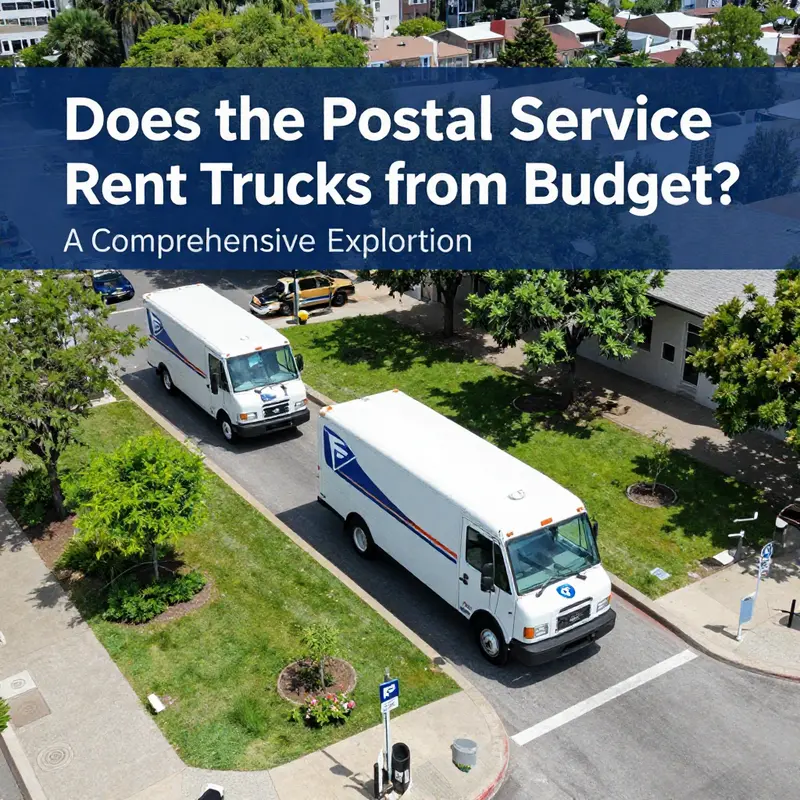
Electrifying the United States Postal Service fleet is less about borrowing vehicles and more about retooling an indispensable artery of national commerce. The transition is framed as a long arc of modernization: a move from a mechanical, fossil-fueled backbone to an all-electric network that must deliver in every weather, on every route, with the kind of reliability that citizens depend on daily. In public statements, the emphasis has been on ownership and control rather than rental or short-term access. The goal is not to plug into a rental market to meet temporary surges in demand but to cultivate a durable, domestically produced fleet that aligns with environmental mandates and long-run fiscal prudence. The policy logic connects two realities: first, the USPS must maintain uninterrupted service across millions of rural and urban miles; second, it must reduce its environmental footprint in ways that are visible in urban skylines and quiet neighborhoods alike. Such a pairing of reliability and sustainability reframes questions about capital expenditure, maintenance cycles, and the timing of charging infrastructure upgrades as interdependent elements of a broader national strategy.
From an environmental perspective, the all-electric vision targets more than tailpipe excuses; it engages the entire life cycle of the vehicle—from manufacturing and battery production to end-of-life recycling and the generation of the electricity that recharges every route. A University of Michigan analysis challenges the USPS’s initial environmental metrics by presenting a potentially larger net reduction in lifetime greenhouse gas emissions. The estimated range of 14.7 to 21.4 million metric tons of CO2-equivalent avoided underscores the magnitude of climate benefits that can accrue when policy, technology, and operations intersect with clean energy grids. Yet the report also cautions that the true climate signal only emerges through a comprehensive life-cycle assessment. Production emissions, the electricity mix powering the vehicles, the pace of battery recycling, and the durability of the NGDV’s components all influence the final tally. In short, the scale of potential benefit is enormous, but it depends on data that stretches beyond a single performance metric and into the more demanding terrain of full-system accounting.
Socially, electrification is imagined as a public-health upgrade as much as a climate strategy. Fewer tailpipe emissions mean clearer air in dense urban centers where mail carriers endure daily exposure to exhaust while navigating stop-and-go traffic. The improvement in air quality carries a range of health co-benefits—from fewer asthma flare-ups to reduced cardiovascular strain for residents who live near busy routes. The workforce itself could feel the ripple effects: lower noise levels at loading docks, reduced vibration and heat for drivers, and a more predictable maintenance schedule that keeps vehicles on the road rather than in repair bays. These are not abstract wins. They translate into longer, safer working days and communities that notice tangible changes in air and acoustics. At the national level, the electrification initiative dovetails with decarbonization ambitions that define the country’s transportation policy and clean-energy ambitions. The optics of a federal program steering a large, visible fleet toward zero-emission operation reinforce public confidence that climate goals can be pursued without compromising essential services.
Strategically, USPS leadership frames the rollout as fiscally responsible and risk-mitigated. The plan leans into centralized procurement and scale, hoping to secure favorable battery pricing, standardized charging protocols, and predictable maintenance costs over the vehicle’s life. Owning and operating a dedicated electric fleet shifts the cost calculus away from volatile gasoline prices toward more predictable electricity prices and long-term depreciation planning. It also demands significant infrastructure work: a nationwide charging network, optimization of route planning around charging windows, and investment in grid-ready facilities at regional processing centers. The aim is to reduce fuel use and maintenance expenses while improving worker safety and route reliability. Crucially, this approach requires careful rollout to ensure service levels stay high during the transition, with contingency plans for outages or slower-than-expected battery supply. The long horizon invites ongoing collaboration with energy providers, manufacturers, and local authorities to align charging capacity with dispatch patterns and seasonal travel demands. In this sense, the USPS electrification project serves as a living test case for how large public fleets can choreograph procurement, renewables, and labor considerations into a coherent operating model.
Beyond the transformation of emissions and engines, the policy architecture invites scrutiny of how the project is financed and governed. The decision to pursue full fleet electrification, funded by public dollars, reframes questions of accountability, transparency, and performance measurement. It also highlights the importance of workforce development and training, as drivers, fleet technicians, and maintenance staff adapt to new technologies that blend software, battery management, and traditional vehicle mechanics. The cross-cutting implications extend to energy resilience, as charging strategy can influence local distribution systems and demand-response programs. The envisioned outcome is a fleet that not only reduces emissions but also signals to communities that public services can align with a cleaner energy transition without sacrificing reliability. The public health dividend, the climate dividend, and the economic dividend are interwoven, creating a narrative in which environmental stewardship supports everyday life and civic trust.
To truly gauge what this electrification means in practice, observers call for transparent, ongoing analysis that tracks emissions, costs, reliability, and social outcomes across a decade or more. The life-cycle emissions profile will be a moving target as battery technology evolves, as charging infrastructure expands, and as the electric grid decarbonizes in parallel. The Michigan study’s implication—that the net climate benefits are sensitive to how emissions are accounted—remains a vital reminder that numbers matter only when anchored to robust data and consistent methodology. As the USPS moves toward its goal, the chapter of policy and practice will be written in the terms of life-cycle accounting, air-quality monitoring, community health metrics, and the reliability of mail delivery during extreme weather events. The project’s success will hinge not only on the technical performance of the NGDV or the speed of the charging build-out but also on the integration of this transition into the rhythms of urban life and rural mail routes. In other words, the electrified mail system becomes a case study in how public infrastructure can advance environmental objectives while strengthening the social fabric that binds neighborhoods to the mail they rely on every day.
A practical lens on implementation reveals that the charging backbone and route planning are not abstract engineering concerns but operational levers that shape the everyday experience of mail delivery. When planners model thousands of daily miles with real-time energy consumption, battery degradation, and weather-related stress, they are testing the resilience of both the fleet and the communities it serves. This is where the journey from policy to pavement becomes tangible: the same questions that govern a city’s transit charging network—where to place stations, how to balance load with grid capacity, how to forecast demand—also inform the success of a nationwide postal electrification program. The integrated picture suggests that environmental aims become credible only when paired with practical, scalable infrastructure and a workforce prepared to operate within the new paradigm. As a result, the project offers moral and technical lessons about how public investment can catalyze cleaner transportation while preserving critical services for all neighborhoods, from the densest urban corridors to the most remote rural routes.
For readers seeking a concrete thread through these broad shifts, a planning guide on fleet charging infrastructure offers a useful parallel to the USPS pathway. It illustrates how end-to-end charging strategies—station placement, energy management, and maintenance integration—translate into dependable service and durable savings in high-demand operations. The discussion around these infrastructure decisions echoes across sectors, from emergency services to parcel delivery, underscoring a shared challenge: how to harmonize climate ambition with the stubborn realities of daily service. In this sense, the USPS electrification effort becomes not only a national climate initiative but also a blueprint for how large, mission-critical fleets can navigate the transition without compromising reliability or public trust.
External resource for further reading on the topic of life-cycle emissions and policy implications can be found here: https://www.umich.edu/news/2022/aug/um-analysis-challenges-usps-electric-vehicle-environmental-study
Final thoughts
The exploration of whether the USPS rents trucks from Budget ultimately reveals a trend towards modernization and sustainability within their fleet management strategies. With significant investment in electric vehicles, the USPS not only aims to improve delivery efficiency but also to adhere to environmental standards and societal expectations. By analyzing the postal service’s decisions alongside rental models, professionals in the trucking industry can gain valuable insights into the future of fleet management and the implications for their own operations. This transition serves as a benchmark for the entire transportation sector, embodying a commitment to eco-friendliness and innovation.