
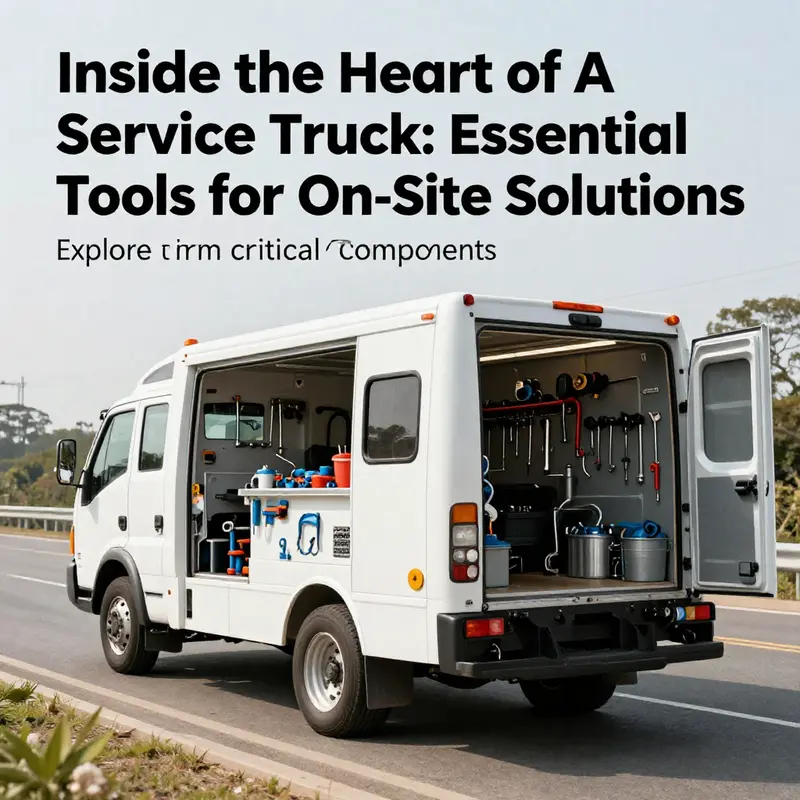
A service truck is more than just a vehicle; it’s a mobile repair workshop designed to handle maintenance and emergency needs for heavy equipment and fleet vehicles. Whether you’re a long-haul truck driver, a trucking company owner, a fleet manager, or someone aspiring to enter the trucking industry, understanding what’s inside these specialized vehicles can significantly enhance your operational efficiency. This article breaks down the essential features found in service trucks, including the indispensable tools and equipment, advanced diagnostic instruments, necessary spare parts, and innovative storage solutions. Each chapter will unveil how these components work together to ensure that your fleet remains on the road and performing optimally, no matter the challenges faced.
Rolling Workshop on Wheels: Inside the Tools and Equipment of a Service Truck
From the outside, a service truck may look like a sturdy utility vehicle cruising along roads and job sites. Step inside, and the impression shifts from transportation to a purpose-built, rolling workshop designed to keep machinery alive in the field. The contents are not accidental; they are the product of careful prioritization, field-tested practicality, and a clear understanding that every tool and device must earn its place by delivering speed, reliability, and safety when work must happen away from a traditional shop. This is a space where organization meets redundancy, where every drawer and compartment serves a job, and where the rhythm of the day is determined by the sequence of tasks that might unfold from moment to moment. The truck functions as a self-contained work cell, a mobile depot that equips technicians to diagnose, repair, and adjust equipment under a wide range of conditions. It is, in essence, a portable workshop that travels to the problem rather than waiting for the problem to travel to the shop.
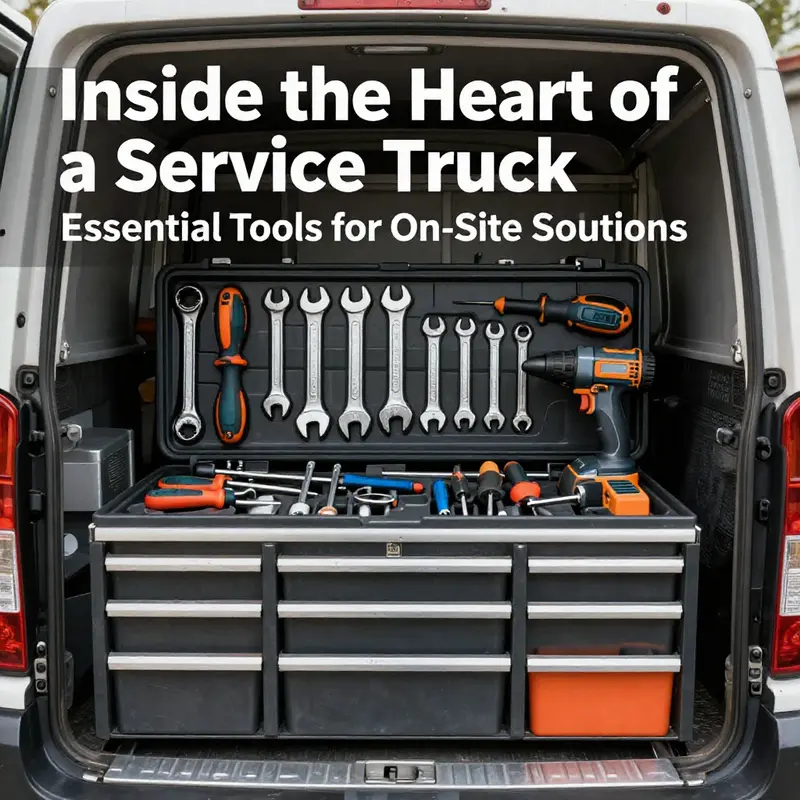
The core toolkit forms the backbone of the operation. A technician’s first instinct is to reach for a reliable set of hand tools that cover the basics: a full spectrum of screwdrivers, both flat-head and Phillips, plus specialty bits for hex/torx fasteners. Open-end and box-end wrenches, complemented by a versatile adjustable wrench, address the most common fastener configurations encountered in heavy equipment, fleet vehicles, and infrastructure components. Pliers—nose, cutting, slip-joint—provide the grip and manipulation needed for a variety of assemblies, from wiring to hoses. A comprehensive socket set, with multiple drive sizes, becomes the workhorse for removing and installing components that would otherwise require a trip back to a shop. These tools are arranged in lockable, weather-tight drawers to stay protected from dust, moisture, and the inevitable jostling of a bumpy road. A hydraulic jack is indispensable, enabling safe lifting for tire work, brake service, or suspension access. A large, sturdy wheel lug wrench completes the set, ensuring drivers can regain mobility in the event of a roadside issue. When the task involves electrical systems, a jump starter or portable battery pack and a reliable multimeter are essential. The multimeter, in particular, becomes a technician’s friend for diagnosing battery health, charging faults, and parasitic electrical drains, letting the team identify the root cause instead of guessing.
In parallel with the manual toolkit, the diagnostic and testing equipment in a service truck represents the bridge between observation and judgment. The onboard diagnostic interface, commonly referred to as an OBD scanner, reads and clears error codes from the vehicle’s control modules. This device is pivotal for pinpointing issues in engines, transmissions, electrical systems, and emissions controls, especially when the symptoms are intermittent or masked by other failures. A tire pressure gauge, a simple instrument with a big impact, ensures that tire performance is not compromised by under- or over-inflation—conditions that can affect traction, fuel economy, and component life. A digital tire inflator takes the guesswork out of roadside relief, delivering precise inflation to the recommended pressures and guiding the technician through adjustments for load and terrain. For more stubborn cases, emergency tire sealant kits and portable air compressors provide a temporary but effective stopgap that buys time until a proper tire service can be performed. The diagnostic suite may also include a compact oscilloscope or a simple voltage tester for electrical circuits, depending on the truck’s specialization. Each unit is chosen not for novelty but for its ability to resolve a realistic set of on-site challenges with minimal downtime and maximum safety.
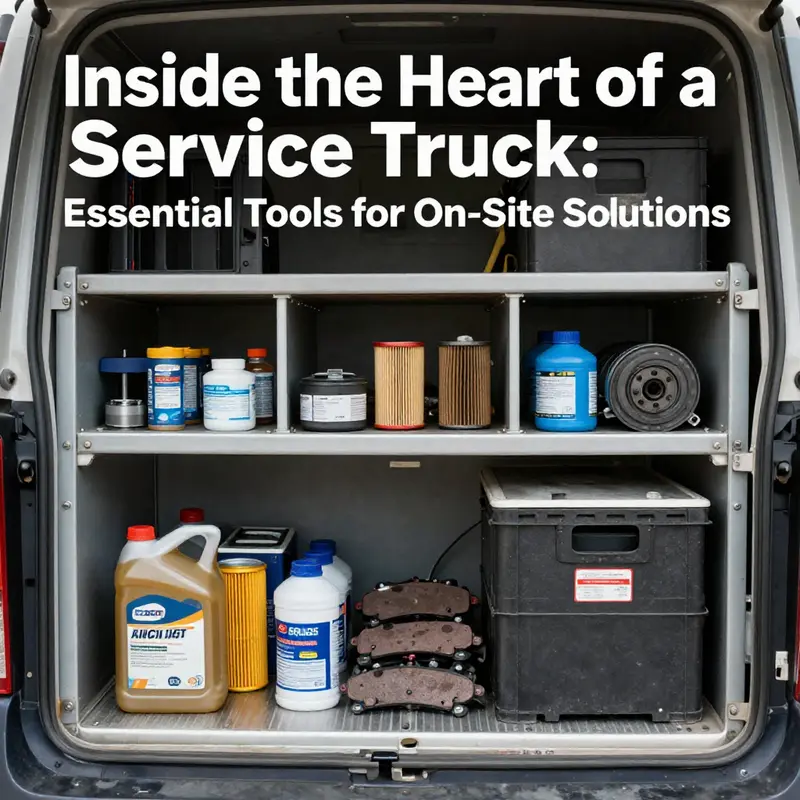
The maintenance and safety shelf is a quiet but critical guardian of reliability. Fluids form the lifeblood of the operation, provided in a hierarchy of necessity: engine oil for top-ups, power steering fluid to maintain steering accuracy, coolant to control temperatures, and brake fluid to preserve stopping power. Each category is stocked in ample quantities to cover routine service intervals and unexpected top-offs triggered by long drives or extreme conditions. Replacement filters for air, fuel, and oil are stored in orderly bins so technicians can pivot quickly from diagnosis to remediation. Hoses, gaskets, and belts—common wear items—are kept ready for immediate substitution when a hose develops a leak or a belt starts to fray. Lubricants and greases, labeled for quick identification, support a wide range of re-lubrication tasks on engines, joints, and hydraulic fittings. Beyond fluids, a robust safety package accompanies every operation: a first-aid kit prepared for field injuries, a fire extinguisher sized for vehicle fires and small component blazes, and high-visibility safety gear to ensure the crew remains conspicuous in congested work zones. Lighting and visibility gear—powerful flashlights or headlamps, reflective triangles, and portable work lights—are placed where they can illuminate tight spaces or night-time work, dramatically reducing the risk of missteps or erroneous connections. The goal is to minimize the need for a return trip to base for a missing item, which translates into faster service and less downtime for customers.
A service truck’s interior also houses a set of specialized tools tailored to the kinds of tasks technicians encounter on site. Brake service capabilities commonly include a bleeding kit to flush old fluid and remove air from brake lines, ensuring proper pedal feel and braking response. Wire strippers and crimpers support quick electrical repairs and harness subtleties, while clamps and assortment of hoses enable temporary, field-ready configurations to test, bypass, or temporarily seal sections of a system. A portable workbench or folding table provides a stable space for detailed tasks that require more surface area or a clean layout, from wiring harness work to sensor replacements. The organization of all these items is not arbitrary but engineered to maximize speed and minimize the risk of misplacement. Heavy-duty, lockable toolboxes and modular storage units keep components separated by function, with foam inserts that cushion delicate instruments and labeled bins that guide the technician to the exact drawer where a necessary part lives. The emphasis on secure storage reflects a dual concern: preventing loss in transit and protecting tools from the harsh environment in remote or rugged locations. A well-organized interior means the technician can retrieve a needed item in seconds, not minutes, which is a difference that compounds into greater uptime and safer, more predictable field work.
Power and utility systems inside the service truck extend the reach of the technician beyond what a single battery or a portable generator could support. Onboard generators and compressed air systems provide the energy and airflow required to power air tools, inflate tires, and pressure-test lines when electric outlets might be scarce or insufficient for a given task. Battery chargers sustain tool readiness during long missions, preventing tool drain at critical moments. For heavier repairs, some vehicles are equipped with winches, cranes, or lifting devices designed to move heavy components decisively and safely. These systems reduce physical strain on technicians and widen the range of equipment that can be serviced without external assistance. The versatility of the truck’s electrical and pneumatic capabilities is what often distinguishes a field-ready operation from one that can merely respond to minor issues. It is the difference between a repair performed on the spot and a temporary, stopgap fix that merely postpones the inevitable return to base.
The contents also reflect the different forms a service truck can take, a fact that connects the everyday to the strategic. A flatbed service truck, common in many regions, emphasizes transport and securement—open platforms, side rails, and anchor points with winch options for securing bulky equipment during transport. Mobile repair workshops, including interior cabins and climate-controlled interiors, push the envelope on what a field team can achieve by simulating some of the comforts and capabilities of a shop. The core philosophy remains consistent: the truck must be self-contained enough to handle a broad spectrum of issues but also flexible enough to adapt to specialized tasks. This balance is why the interior is designed with modularity in mind; drawers can be reconfigured, work surfaces folded away, and tools swapped out to match the priorities of a particular job, whether it involves heavy machinery in a remote quarry or a fleet diagnostic in a congested city corridor.
Communication and safety gear round out the toolkit as the connective tissue of field work. Radios, GPS, and mobile internet connectivity ensure coordination with dispatch centers, other crew members, and customers. The safety package includes visibility equipment, signage for roadside work, and contingency plans for weather or site hazards. The technician’s mindset—prepared, precise, and adaptable—shines through in how these devices integrate with the physical tools. A well-contained, ready-to-use inventory can shave minutes from the diagnostic cycle, reduce the need for call-backs, and ultimately protect the technician from creating a hazardous or unstable work environment. The correlation between the layout of the tools and the outcomes on the ground is not merely practical; it is a fundamental part of how field teams deliver dependable service under pressure.
This inventory—tools, diagnostics, fluids, and storage—speaks to a broader design philosophy that prioritizes reliability and speed without sacrificing safety. The arrangement is not just about having everything in one place; it is about making the right things readily accessible in a way that respects the realities of field conditions—dust, temperature swings, rain, and the occasional sudden jolt of a rough road. The tools are chosen for ubiquity and relevance; their placement is decided by workflow logic, aligning with the sequence technicians typically follow when diagnosing and repairing. The result is a portable workshop that makes the most of every mile driven, turning a service truck into a problem-solving hub that travels to the customer with the capability to resolve issues promptly, accurately, and safely. In the end, a service truck is not merely a vehicle equipped with gear. It is a curated ecosystem that embodies the craft of field maintenance, a rolling promise that problems can be diagnosed, understood, and fixed where they arise, and a quiet assertion that uptime matters in ways that a fixed shop cannot always deliver. For teams who live by this principle, the truck’s interior is less about storage and more about readiness—the ability to transform a road-side moment into a productive repair, a decision made on wheels, and a service delivered without delay. Design discussions that shape this interior, including the emphasis on efficiency and performance in emergency service contexts, reinforce why the arrangement matters. Design efficiency in emergency services is a reminder that every inch of space, every tool, and every connection counts when lives and livelihoods depend on fast, reliable service.
Inside the Rolling Lab: Diagnostic and Testing Instruments that Power a Service Truck
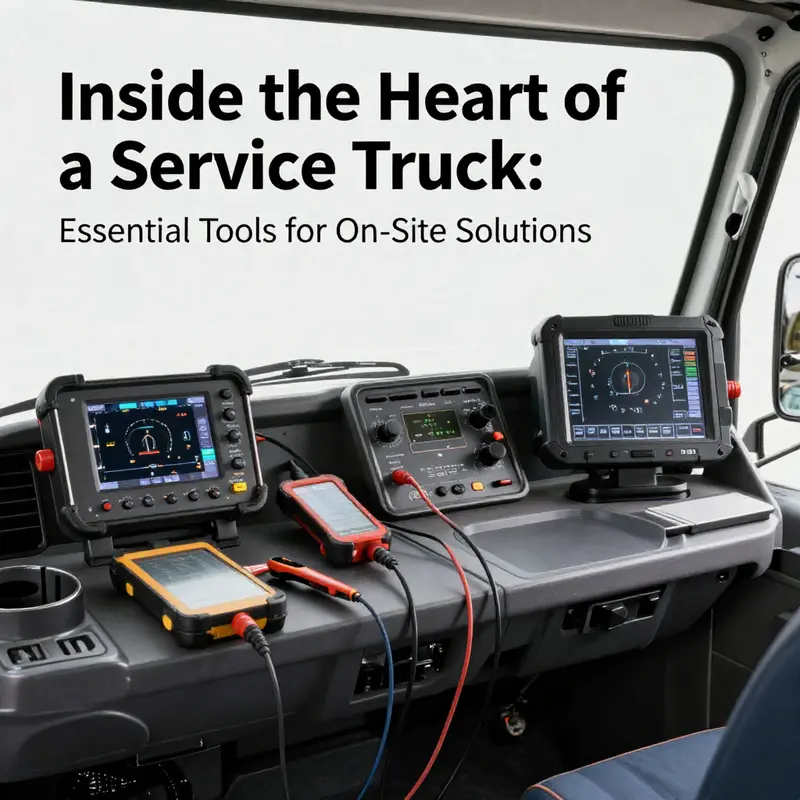
A service truck is more than a mobile toolbox; it is a rolling laboratory where the vehicle’s health is read, tested, and adjusted in real time. The instruments inside a service truck are the practical brain behind on-site maintenance and rapid repair. They convert a cramped cab into a temporary workshop, where data streams from engines, transmissions, electrical systems, and hydraulics flow into a diagnostic core that technicians interpret with trained judgment. The result is a workflow that blends human expertise with precise measurement, allowing crews to move efficiently from fault detection to repair verification, all while the vehicle remains on or near the job site.
At the heart of this capability are diagnostic tools designed to interface with a truck’s onboard computer systems. These tools access the “communication language” of the vehicle, reading fault codes that point to problem areas and, equally important, providing a live feed of sensor data as the engine and subsystems operate. The fault codes act like signposts, narrowing the field of investigation, while live data reveals whether an issue is a persistent fault or a transient reading caused by a momentary condition such as a cold start or a high-load moment during operation. In practice, technicians watch the data stream for anomalies in parameters like fuel trim, air mass flow, pressure readings, and temperatures. When readings diverge from expected profiles, the technician knows where to probe further and what tests to run next. The diagnostic screen becomes a map of the vehicle’s current state, guiding a measured sequence of checks rather than a guesswork guesswork.
For heavy-duty applications, the diagnostic approach extends beyond generic codes. Manufacturers build ecosystems of modules that control the engine, transmission, anti-lock braking, active safety systems, and exhaust aftertreatment. Each module has its own diagnostic domain, its own set of meaningful parameters, and its own software interface. The on-board diagnostic interface is not a single door but a series of doors that lead deeper into the vehicle’s logic. A technician uses a tool to access each door in turn, reading codes, interpreting trends, and sometimes initiating controlled tests. These tests might involve actuating a valve, cycling a solenoid, or commanding a sensor to change state to confirm a response. The goal is not merely to identify a fault but to understand its cause and confirm its fix through repeatable, observable behavior.
A key distinction in the diagnostic toolkit is the spectrum of tools used. Generic diagnostic interfaces are capable of reading broad system data and common fault codes. They are complemented by manufacturer-specific diagnostic equipment that speaks the vehicle’s native dialect. The generic tool can tell you that a fault exists; the manufacturer-specific tool can tell you why it exists and how to correct it at the system level. In the field, a technician might begin with a universal interface to scan for immediate issues and then switch to a manufacturer-tailored device to dive into sophisticated features such as programming, calibration of control modules, or reconfiguration of system parameters. The distinction matters because some problems require access to proprietary data, specialized routines, or calibration sequences that only the OEM’s toolkit can legally and effectively perform.
These devices today often come in tablet form, a compact, rugged interface that can be mounted in the cab or held in hand. The tablet becomes a gateway to the vehicle’s electronic brain, delivering code readouts, real-time graphs, and guided test procedures. The portability of a tablet-based system is a practical advantage in field operations where space is limited and conditions can be rough. Technicians benefit from intuitive layouts, touch navigation, and the ability to capture notes alongside the diagnostic data. Yet the tablet is only as good as the software it runs and the data libraries it can access. Regular updates are necessary to keep the tool synchronized with evolving vehicle models, new fault codes, and updated calibration routines. Without timely updates, even the best diagnostic interface risks becoming stale, reducing its effectiveness in diagnosing newer systems or updated control logic.
The diagnostic ecosystem within a service truck also depends on a network of supporting instruments. A robust OBD interface is supplemented by a range of testing instruments that measure electrical continuity, waveform patterns, and system responses under load. Electrical tests may involve backprobe probes, current clamps, and low- to high-voltage measurement capabilities, allowing the technician to trace current flow and identify parasitic draws. Pressure and temperature testing tools monitor cooling systems, fuel delivery, and lubrication pathways, ensuring that readings align with manufacturer expectations during steady-state and transient conditions. A well-equipped truck facilitates actuation tests—temporarily commanding a system to operate in a controlled manner to observe its response. This can reveal issues that static readings alone might miss, such as delayed actuator response, improper timing, or misalignment in hydraulic or electronic control loops.
A service truck’s diagnostic capacity is not merely about reading data; it is also about managing the lifecycle of the tools themselves. The maintenance of cables, connectors, and adapters is essential. Rugged environments impose dust, vibration, and temperature swings that can degrade connections and sensor integrity. Technicians keep cables organized and labeled, with protective sheathing to shield sensitive contacts from moisture and dust. Regular calibration of measurement devices is also a core practice. Calibration ensures the accuracy of voltage, resistance, and current readings, which in turn underpins reliable fault isolation and measurement-based repairs. The coordinated dance of software updates, calibration routines, and physical maintenance is what keeps the rolling laboratory trustworthy across days of diverse service work.
Distinct from the general toolkit, manufacturer-specific diagnostic equipment introduces a layer of specialization that expands a technician’s capability. These devices are tailored to the unique control architectures of particular brands and models, enabling deeper analysis and advanced operations such as module programming and reprogramming. In the field, such capability is not exercised lightly; it requires solid training, an understanding of the vehicle’s firmware, and strict adherence to guidelines. The investment in this category of gear is not just financial but also temporal and intellectual. Technicians must schedule and complete training, understand licensing requirements, and stay current with software versions that unlock new diagnostic features or safety updates. The payoff, however, is clear: deeper access to system diagnostics, the ability to correct faults at the source, and the option to tailor vehicle performance to the fleet’s operational needs.
With any set of tools, limitations are part of the landscape. Diagnostic instruments are powerful, but they demand technical literacy. Operators must interpret fault codes, discern transient readings from true faults, and distinguish between sensor fault and actual mechanical failure. A skilled technician translates data into actionable steps, an ability that grows with experience and continuous education. Ongoing costs accumulate as well—software licenses, periodic updates, and sometimes subscription services that keep OEM databases current. In the field, the cost of a single missed diagnosis can be higher than the price of the diagnostic tool itself, because an incorrect fix can lead to repeat trips, additional wear on components, and extended downtime for a fleet.
To maximize value, service trucks adopt best practices that integrate diagnostic instruments into a disciplined workflow. Calibration routines are performed on a schedule aligned with manufacturer guidance, and all measurements are recorded for traceability. Cables and connectors are inspected for wear and replaced before they fail, reducing the risk of data loss during a critical repair. Technicians document fault codes, captured data snapshots, and the test steps performed, building a traceable service record that can inform future maintenance and parts planning. In practice, the process begins with a targeted scan to capture baseline data, followed by a focused diagnostic path based on the codes and live readings. If necessary, the technician executes controlled tests to provoke and verify a fault, then applies the appropriate repair, whether it is a software reflash, a calibration adjustment, or a mechanical replacement.
The role of the diagnostic suite extends beyond fault resolution. It supports preventive maintenance by monitoring trends over time. A rolling fleet often travels through varied climates, terrains, and operating loads, all of which influence wear patterns. Diagnostic data gathered on-site can be added to a maintenance database, enabling fleet managers to spot recurring issues, schedule pre-emptive interventions, and optimize parts stocking. This proactive approach reduces unplanned downtime and extends the service life of critical equipment. In the moment, though, the technician’s ability to read, interpret, and act on data translates directly into on-site reliability. The rolling lab empowers a repair that might otherwise require a fully equipped workshop, allowing a fleet to stay productive even when a machine must stay in service away from permanent facilities.
The integration of diagnostics into the service truck experience also has a human dimension. The technician is a diagnostician, a planner, and a repair technician rolled into one. The best field professionals balance analytical rigor with practical intuition. They recognize when a reading is a false signal caused by a transient condition, and they know when a fix requires coordination with a maintenance supervisor or a parts supply chain. The rolling lab thus becomes not just a collection of tools, but a framework for sound decision-making under pressure. It is the combination of precise instruments, disciplined procedures, and experienced judgment that turns a service truck into a dependable partner for fleets facing remote, demanding, or time-sensitive maintenance tasks.
Within this framework, an internal link to broader field practices can be a helpful reminder of the ongoing education that supports effective diagnostics. For more on how field maintenance training supports service efficiency, see the dedicated page on fire-truck maintenance service training, which offers broader context about hands-on routines, safety considerations, and workflow education that parallel road and off-road service work. fire-truck maintenance service training.
For readers seeking deeper technical grounding on diagnostic tool capabilities and vendor resources, there is a comprehensive external reference that outlines how diagnostic systems are designed to handle heavy-duty truck diagnostics, including material considerations and industry use cases. This external resource provides a broader view of the diagnostic ecosystem and its practical applications in the field: https://www.iveco.com/en/truck-diagnostics
The Rolling Inventory: Spare Parts, Consumables, and the Rhythm of On-Site Service
A service truck functions as a moving workshop, and its heartbeat is the stock it carries. Spare parts and consumables are not afterthoughts tucked away in a corner; they are the engine that powers every on-site repair, routine maintenance, and emergency fix. The way a crew manages this rolling inventory directly shapes how quickly a fault is resolved, how safely a system is restored, and how often a fleet can stay on the road rather than waiting in a shop. In the field, time is not simply money—it is uptime, and uptime is built on the readiness of parts that can be swapped, resealed, or replenished without a long return to a depot. Thus, the inventory strategy inside a service truck is as deliberate as the wrench it sits beside and as dynamic as the worksite it reaches first when trouble arises.
Spare parts, in this context, fall into two broad and equally vital streams. The first is the family of fast-moving consumables—items that wear out, clog, or degrade with use and need frequent replenishment. Gaskets and seals, hoses, belts, and a range of filters—air, oil, and fuel—keep engines and hydraulic circuits airtight and clean. Electrical connectors, those small, stubborn pieces that endure vibration and temperature swings, often represent the difference between a clever diagnosis and a stubborn misfire. These parts are cheap in isolation but priceless in uptime because a missing or degraded seal can cascade into leaks, pressure loss, overheating, or contamination. The second stream includes longer-lived mechanical components that technicians carry as potential rebuild or swap candidates when wear becomes unacceptable. Pumps, motors, and hydraulic elements form a category where a timely replacement decision can prevent days of downtime. Shafts, rotors, gears, and drums—visible indicators of wear in engines, transmissions, and braking systems—are the kind of items that define a repair window. When a technician replaces a crankshaft or a camshaft in a field setting, it is not simply about restoring power; it is about restoring the machine’s reliability for many hours of demanding work to come.
In service truck practice, the inclusion of these parts is never arbitrary. It emerges from a careful balance between what is likely to fail, what the equipment demands, and what space and weight allow. The truck operates under the constraint that every extra part costs storage space and reduces payload or increases fuel burn. The art, therefore, is to curate a core set of spare parts and to pair that with modular expansions tailored to the specific machine the crew is supporting. This is where the concept of stock packages comes into play. Instead of loading a random assortment of components, many operators design pre-packaged kits matched to a piece of equipment by its serial number or by its maintenance history. If a generator set has a known vulnerability in a control valve or a cooling loop, a relevant kit can be prepped as an exchange unit—a ready-to-go replacement assembly that minimizes on-site repair time. The advantage of exchange units is not merely speed; it is the ability to eliminate a second trip to a depot. A field technician can remove a faulty assembly and install a pre-assembled replacement, then bring the failed unit back for deeper diagnostics and refurbishment on a later schedule.
This logic—pre-assembled replacements and serial-number-based stock packages—transforms inventory from a passive jumble into an active tool for uptime. The field crew keeps a rolling cadence of inspection and replenishment, guided by data about usage and wear patterns rather than guesswork. If a particular pump shows signs of deteriorating seal integrity after a defined operating hour, the corresponding seal kit or complete pump cartridge is flagged for immediate restock in the next deployment run. In this way, inventory becomes predictive rather than reactive. Organizations that master this approach often align their on-site stock with the needs of the machines they service, ensuring that the right components are available where and when they are needed most.
The practical note is that spare parts are only as valuable as the conditions under which they are used. A part left behind in a warehouse has little impact on uptime; a part available at the front line—inside the service truck or within a short drive—can shave hours, sometimes days, off a repair cycle. This is why some crews maintain the concept of on-site pre-positioned supplies at strategic locations within deployment zones. In humanitarian and industrial missions alike, the logistics of transporting spare parts and consumables can become a major line item. The goal is not only to stock a broad assortment but to optimize for geography, mission duration, and the probability of failure modes seen in the field. The cumulative effect is a smoother workflow, lower escalation costs, and a more reliable service window for customers who count on the truck to minimize disruption.
Consumables complete the on-site picture. Lubricants, cleaning solvents, adhesives, and sealants are not merely tools of the trade; they are the finishing touches that keep assemblies sealing-tight, joints from seeping, and surfaces free of contaminants. Brake fluid and coolant form the lifeblood of hydraulic and cooling systems, ensuring consistent performance under varying temperatures and load. The value of these materials extends beyond the repair itself; they influence the long-term health of a machine by reducing the risk of corrosion, contamination, and premature wear. Technicians learn to anticipate consumption rates based on the operational profile of the equipment. When a machine runs at high idle or operates in dusty, high-temperature environments, consumables must be stocked more aggressively to maintain the same service cadence.
Successful on-site maintenance hinges on more than parts and fluids. It requires a disciplined approach to inventory management—a system that can deliver the right item at the right time, in the right condition, and in the right quantity. A practical framework begins with the organization of the truck’s mobile workstation and storage. Built-in drawers, modular cabinets, and labeled bins help technicians locate the precise gasket set or belt kit without delay. It also calls for robust inspection routines. Mobile mechanics often perform quick checks on critical items during every deployment, noting wear indicators, contamination, or corrosion that would justify a reorder before the current stock is exhausted. Consistent, routine checks prevent the surprise of a missing seal on a critical gasket or a dehydrated lubricant bottle in the middle of a field repair.
A crucial element of inventory strategy is the concept of exchange units—pre-assembled replacements that can be swapped out quickly to restore function. This idea reduces the repair time to the period it takes to disconnect and reconnect an assembly, a win in environments where every minute matters—from highway breakdowns to remote field sites. The practice of maintaining exchange units is paired with the broader idea of country- or region-wide spare parts networks. In some models of service operations, spare parts and exchange units are stored so that they are effectively on-site in the country of operation, ready to deploy when and where needed. The impact in real terms is measurable: lower downtime, fewer unscheduled visits, and improved predictability for customers who rely on fast, reliable service in challenging locations.
Within these operational realities lies an implicit philosophy about how technicians work. A field technician is not simply a tool-wielder; they are a steward of an ecosystem. They understand the life cycle of the equipment, the common failure points, and the way small components contribute to big outcomes. The act of stocking and selecting spare parts is a careful negotiation between the breadth of the deck and the depth of the repair experience. It requires judgment about which parts to keep on the truck and which to source on site if a particular mission proves more demanding than anticipated. And because all field teams operate within time-sensitive constraints, the ability to call upon a well-curated inventory becomes a strategic capability rather than a routine back-office function.
To tie these practices back into the broader topic of what’s inside a service truck, consider how spare parts and consumables interact with the other core elements described in this volume. The diagnostic and testing instruments that arrive on the scene rely on the ability to replace sensors, seals, and connectors quickly when a fault is detected. The mobile workstation provides not only space but workflow ergonomics that minimize the time spent searching for the right item. The power and utility systems—generators, compressed air, and battery chargers—keep tools energized and ready for the moment of truth. Specialized attachments and modular storage systems allow technicians to tailor a single vehicle to a multi-purpose mission, whether it is roadside rescue, industrial maintenance, or emergency response. And the safety and communications gear ensures that the team can coordinate, transport, and execute complex repairs in what can be hazardous or rapidly changing environments. In short, spare parts and consumables are the tangible, high-leverage assets that translate the concept of “on-site workshop” into practical, reliable field performance.
For readers seeking a broader lens on uptime and product support as they relate to service operations, see the discussion on unlocking fire apparatus uptime essential product support secrets. This perspective emphasizes the connection between on-site parts readiness and the broader framework of service continuity. unlocking fire apparatus uptime essential product support secrets.
In sum, the rolling inventory inside a service truck is more than a catalog of items. It is a carefully designed, dynamically managed system that sustains uptime in the most demanding environments. Spare parts and consumables are the visible tip of the iceberg; beneath lies a disciplined approach to predictive stocking, modular kit design, exchange-unit gratification, and logistics discipline. When technicians are equipped with the right parts, in the right configurations, and with a clear plan for replenishment, every field mission becomes less about improvisation and more about execution. The result is a service operation that is faster, safer, and consistently reliable—an enterprise built not only on skill but on the smart, strategic management of the inventory that makes it possible.
External reference: https://new.abb.com/products/spare-parts-and-consumables
Rolling Workshops: Inside the Mobile Command Center of a Service Truck
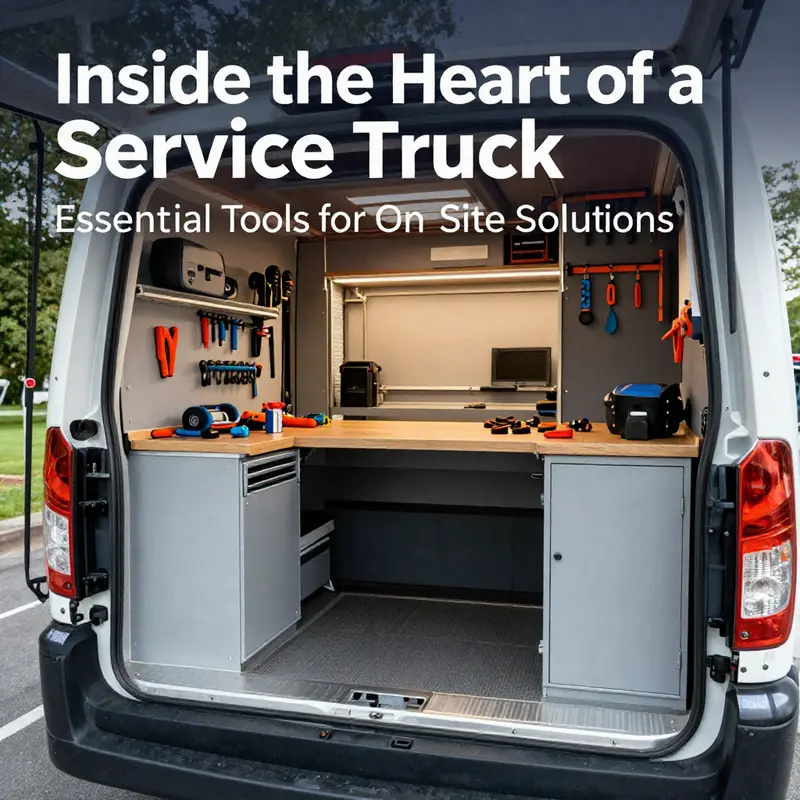
A service truck is more than a vehicle with tools stowed in a rear compartment. It is a rolling workspace engineered to deliver on-site maintenance, repair, and support with the speed and precision of a fixed shop. The interior of a well-crafted service truck is a fusion of ergonomics, durability, and smart design, where every drawer, cabinet, and workstation has a purpose that keeps technicians productive even when the job site is a distant ridge, a cluttered urban street, or a windy rural shoulder. The transformation from a standard cab to a mobile command center begins with an interior layout that prioritizes access, visibility, and resilience. Instead of random tool placement, the storage system uses heavy-duty drawers and lockable cabinets arranged in a logical, repeatable sequence. A technician can reach a needed component without crawling through a maze of gear. Modular shelving units line the sides, creating a rhythm of exposed surfaces and enclosed pockets that make it possible to swap tasks mid-route without sacrificing organization. Dedicated compartments are carved out for tools, spare parts, and consumables so that a small but vital subset of items — like engine oils, filters, brake components, hoses, clamps, and fasteners — are always within arm’s reach. The goal is to reduce downtime by eliminating the frantic rummage that can waste minutes and, in field settings, convert minutes into days of project delays. In practice, the interior becomes a compact workshop where a precise set of tools and parts can be pre-planned for a specific job, and then reconfigured with the same certainty on the next site. The layout often includes integrated racks designed to accommodate rugged tools and heavy materials, a feature especially common on 4×4 utility trucks that tackle uneven terrain or remote job sites. A mobile workshop like this is not simply about storage; it is about an optimized workflow that respects the realities of field work. When a technician opens a sturdy, well-sealed cabinet, the tools gleam with the sheen of regular maintenance, and the cabinet doors close with a reassuring, solid click. The drawers are lined with anti-slip mats and foam inserts that cradle sensitive equipment, protecting delicate instruments from the bumps and jolts of highway travel. These touches — though mundane on the surface — are essential to keeping precision tools accurate and safe in harsh environments. The interiors also reflect a careful balance between enclosure and exposure. Enclosed bodies protect sensitive instruments from the weather, dust, and theft, which is invaluable when a job moves to a windy hillside or a rain-soaked construction site. Yet open or semi-open designs invite quick access for frequently used items and reduce the friction of daily routines. The choice between enclosure and exposure is never arbitrary; it is a calculated trade-off based on job type, location, and the likelihood of exposure to the elements. Beyond the drawers and cabinets, the mobile workstation rests on a sturdier platform of electrical and mechanical systems that sustain its functionality in the field. Integrated power systems, including onboard generators and, increasingly, solar energy capabilities, turn the workspace into a self-reliant hub. A portable power setup can run diagnostic tools, power drills, torque wrenches, and climate control devices, enabling technicians to operate comfortably for extended periods without hunting for a generator at every site. This is especially critical in environments where power sources are scarce or unreliable, and in operations that demand continuous operation. The ability to test, diagnose, and repair on the spot hinges on a reliable power backbone that remains quiet, compact, and safe. Lighting plays a pivotal role in the efficiency of a mobile workshop. Task lighting, overhead illumination, and rugged LED strips are positioned to illuminate work surfaces without creating glare on screens or dashboards. Well-lit benches allow technicians to read tiny serial numbers, identify worn threads, and inspect connectors with confidence. The work surface itself is designed for resilience, combining heat-resistant materials with a forgiving, easy-to-clean finish. Fold-out workbenches and built-in benches rise or fold away as needed, giving the crew a place to lay out components, perform assemblies, or test configurations while the vehicle is stationed or moving slowly. A climate-controlled climate inside the cab or bed area can be essential for certain tasks. In some configurations, climate control is integrated into the workstation so that sensitive equipment can remain at a steady temperature, which protects electronics, preserves lubricants, and improves human comfort during long shifts. Temperature control becomes a practical feature when field jobs involve precision measurement devices or delicate components that react to heat and humidity. The durability of the interior is a continual consideration. The materials must withstand vibration, road spray, and abrasion without corroding or losing their luster. Sloped surfaces, water-resistant coatings, and corrosion-resistant metal finishes extend the life of the storage system. Molded plastic trays and rubberized gaskets seal compartments against moisture, while reinforced rails and heavy-duty hardware withstand repeated use. The chaining of these design decisions yields a cockpit of equipment that is both protective and accessible, a place where technicians can perform a wide range of tasks without stepping outside the vehicle. The organizational logic is not merely about tool access. It extends to consumables and spare parts, which are indispensable for routine maintenance and emergency fixes. A well-stocked mobile workstation includes space for engine oil and filters, air and fuel filters, brake components, hoses, lubricants, and a curated set of spare parts that keep vehicles and machinery running on the road. The storage architecture makes it possible to rotate stock efficiently, ensuring that critical items are always in stock and within reach. The storage compartments are clearly labeled, yet their organization is subtle enough not to interrupt the clean lines of the interior. The aim is to provide a sense of order that supports quick decision-making under pressure. In practice, technicians often load the truck with modular kits tailored to specific industries. A plumbing-focused rig, for instance, might emphasize compact tool carts and corrosion-resistant fittings, while an electrical contractor’s van might dominate with multi-drawer tool chests and secure bins for connectors and test equipment. HVAC-leaning configurations may feature larger open platforms for coil assemblies or duct components, and infrastructure maintenance crews may require heavy-duty racks and wind-resistant tarps for weather protection on exposed sites. The modular approach is not only about tools but also about the physical flow of work. The floor plan guides how a technician moves between the workstation, the diagnostic drawer, the spare parts cabinet, and the power supply. A practical rhythm emerges: open a cabinet, grab a part, close the door, perform a scan, swap a tool, and slide the bench into alignment with the next step. The beauty of a well-designed mobile workshop is that it becomes a second, specialized workspace on wheels, one that travels with the crew and organizes itself around the tasks they perform. Within the broader fleet of service trucks, the workstations vary in sophistication, reflecting the job profile of the service team. Some vehicles lean toward compact, highly organized interiors that emphasize travel efficiency and tight urban maneuverability. Others opt for larger bodies that make room for more robust benches, heavier equipment, and even climate-controlled workspaces for extended field operations. Both approaches share a core philosophy: the rolling workshop is an extension of the technician’s capabilities, not merely a carriage for tools. The interior must be reliable, repeatable, and easy to maintain. It should resist wear from constant use, protect sensitive gear, and support the technician’s mental model of how to work on site. A thoughtful layout does more than store items; it reduces cognitive load. When a technician can locate a required item in a predictable place, their attention remains focused on the task rather than on the hunt. And when the truck is secure and organized, inspections and handoffs with dispatch or customers proceed with confidence and speed. For designers and operators, the lesson runs through all phases of a service truck’s lifecycle: from the initial build to routine maintenance and periodic refurbishment. The internal systems must be adaptable to evolving job profiles, and the storage architecture needs to accommodate changing part inventories as projects shift across seasons or regions. This adaptability, paired with robust materials and a disciplined approach to organization, defines the service truck’s value as a mobile workshop. It is not merely about being equipped; it is about being prepared in a way that supports steady, on-time service delivery under diverse conditions. As one moves through the vehicle’s interior, the continuity between space, function, and workflow becomes evident. The mobile workstation is a deliberate synthesis of engineering choices meant to empower technicians to diagnose, repair, and assemble with minimal friction. It is the practical heart of a fleet that must respond to infrastructure challenges, emergency repairs, and routine maintenance in sometimes harsh or logistically complex environments. In short, a service truck’s interior is a carefully engineered environment where organization, power, protection, and practicality converge to keep the job moving forward. For readers seeking deeper perspectives on how layouts translate into operational efficiency, the concept of design efficiency in emergency services offers valuable guidance that informs these mobile workspaces. design efficiency in emergency services. The chapter’s synthesis of storage, power, and workflow echoes the same principles that animate modern emergency and utility fleets, while remaining grounded in the realities of field work. External resources provide further context on how these ideas are applied in real-world design, emphasizing the importance of reliable uptime and safe, efficient on-site operations. External resource: https://www.truckbody.com/service-truck-bodies-for-sale-standards-composition-and-industrial-use
Final thoughts
Understanding what’s inside a service truck can transform how you approach maintenance and repairs for your fleet. Each component, from tools and diagnostic equipment to spare parts and efficient workstations, plays a crucial role in ensuring that vehicles stay reliable and operational. By leveraging these resources, trucking professionals can minimize downtime, enhance productivity, and deliver seamless roadside assistance, ultimately contributing to the success of their operations. Armed with this knowledge, fleet managers, drivers, and aspiring professionals can appreciate the immense value these mobile workshops bring to the industry.