
For truck drivers and fleet managers, servicing your diesel truck is paramount to maintaining performance and reliability on the road. Knowing where to go for quality service can make all the difference in minimizing downtime and ensuring safety. In this guide, we will explore five essential options: Authorized Dealerships, Specialized Diesel Repair Shops, 24-Hour Roadside Assistance Services, Local Recommendations, and the role of Manufacturer’s Websites. Each chapter offers valuable insights tailored to long-haul truck drivers, trucking company owners, and maintenance specialists, providing a comprehensive understanding of your service options. Let’s dive in!
Steering Toward Certainty: How Authorized Dealerships and Brand-Specific Centers Keep Your Diesel Truck in Peak Form
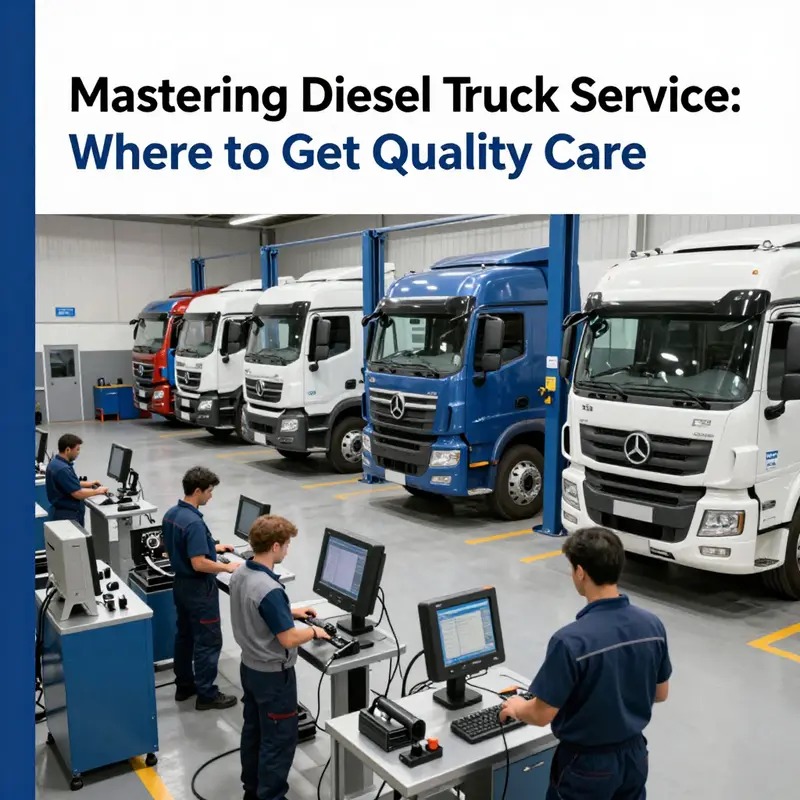
Choosing where to service a diesel truck is more than a matter of proximity. It is a decision that influences warranty coverage, diagnostic accuracy, long-term reliability, and uptime for fleets and private operators alike. The most dependable path begins with the network of authorized dealerships and brand-specific service centers. These facilities are not mere repair shops; they are the custodians of OEM procedures, the guardians of genuine parts, and the stewards of factory-trained know-how. When a diesel engine runs smoothly, it does so because the people who service it respect the vehicle’s design, use the correct tools, and follow the manufacturer’s repair and maintenance protocols to the letter. That alignment matters, especially for trucks that log heavy miles or carry demanding payloads. In those moments, the value of an authorized service environment becomes clear: it preserves performance, protects warranties, and ensures that every diagnostic reading reflects the vehicle’s true condition rather than a workaround or improvisation.
Authorized dealerships operate within an expansive and increasingly accessible service ecosystem. They offer a certified setting where technicians routinely work on vehicles that share a single lineage of design and specification. The benefit is not limited to the moment of repair; it extends to ongoing maintenance, where routine tasks like oil changes, filter replacements, and system inspections are performed with the exact tolerances and intervals prescribed by the manufacturer. The result is a vehicle that remains as close as possible to the original performance envelope, with warranty considerations intact and service records that align with factory expectations. For fleets that rely on predictable maintenance windows, this predictability is itself a form of uptime protection.
Brand-specific service centers take the concept of authorized service a step further. They are designed to deliver services that are squarely tailored to a brand’s engineering philosophy. The tools, the fixtures, and the diagnostic protocols are calibrated to the same standards that were used when the truck rolled off the line. Technicians at these centers are often factory-trained and certified, not only on general diesel diagnostics but on the nuances of that brand’s emission-control strategies, drivetrain behavior, and electronic control architectures. The advantage is obvious when a diagnostic dilemma arises. Brand-specific centers can run brand-verified tests, interpret data through the manufacturer’s lens, and implement repairs in a way that preserves calibration and regulatory compliance. In markets with fleets that operate under tight regulatory frameworks or municipal requirements, the alignment between service and compliance is a practical safeguard for operators who need to stay on the right side of the rules while minimizing downtime.
It is also worth acknowledging what these networks imply about the parts supply and the teardown-to-rebuild workflow. Authorized facilities tend to receive genuine parts directly from the OEM or through approved distributors. Parts compatibility is assured, which reduces the risk of fitment issues or performance anomalies that can arise from aftermarket substitutes. For a diesel engine—where precision tolerances matter, and where emissions-related components are integral to efficient operation—the assurance of genuine parts is not a luxury; it is a baseline expectation. The service centers designed to handle these parts are equipped with the proper tools and calibration capabilities, from torque sequences and gasket fitments to electronic alignment procedures. For operators who plan long-term ownership or run fleets with high utilization rates, this is a meaningful layer of reliability.
A practical question often accompanies this discussion: how does one locate and choose among the authorized networks? The answer lies in the brands’ official service resources. Most manufacturers publish a dealer locator or a network directory on their official websites. A simple search can guide you to the nearest facility with the right capabilities, whether your truck is part of a national fleet or a single-vehicle operation. For those managing fleets or municipal contracts, the locator becomes a crucial planning tool, helping logistics managers map servicing hubs against routes, depots, and maintenance windows. The broader story is the geographic expansion that industry analyses have highlighted. A January 2026 industry report notes that authorized service networks have been expanding across Canada, with growing density in regions known for heavy vehicle activity. Ontario, Alberta, and Quebec emerge as hotspots where fleets demand reliable service access to keep delivery schedules and service commitments intact. Such growth is not incidental; it reflects a growing recognition that proximity to authorized centers translates into tangible uptime gains for operators who cannot afford lengthy downtime.
Accessing the right information is a straightforward step. In practice, you start with the official website of the vehicle’s manufacturer, where you can locate dealer networks and service center capabilities. If a fleet relies on a particular brand family, the brand-specific center often carries the full spectrum of services—routine maintenance, diagnostics, transmission work, and inspections of complex emissions-related systems. This focus on OEM procedures helps ensure that even the most intricate maintenance tasks are executed with an eye toward long-term reliability and compliance. It is also worth noting that many of these centers offer advanced diagnostics that extend beyond basic fault codes. By leveraging OEM diagnostic tools and software, technicians can interpret data in the context of the vehicle’s history, firmware versions, and service advisories, offering a more nuanced and accurate picture of the truck’s health.
For operators who are weighing where to service their diesel trucks, it helps to remember that authorized networks exist alongside reputable specialized diesel repair shops. The latter can be a practical option when a truck is in a remote area or when a brand-agnostic diagnostic capability is sufficient for a particular issue. The time is rarely wasted when a shop can perform targeted maintenance or carry out essential repairs using a chassis-specific approach. In any case, when choosing local support, a practical criterion is the availability of certified technicians, access to OEM parts, transparent labor pricing, and the ability to schedule service within your operational timetable. The goal is not simply to fix a problem but to restore peak performance with a traceable service history and a solid warranty framework wherever applicable.
The topic also touches on the realities of emergency needs. No discussion of service networks would be complete without acknowledging roadside or after-hours assistance as a safety valve. In the event of a breakdown far from a dealership or brand center, nationwide road-rescue services and emergency towing can be a lifeline. These services are designed to bridge the gap between a vehicle in distress and a trained professional who can assess the situation, secure the vehicle, and arrange appropriate next steps. They do not replace planned maintenance, but they do serve as a critical backup that helps minimize downtime and protect the integrity of the truck when unexpected trouble occurs.
For those who want to broaden their understanding of reputable trucking services, there are reputable industry voices and resources that discuss best practices in maintenance training and ongoing support. A recommended perspective can be found in this resource: Exploring the Excellence of 5 Star Truck Inc—Your Premier Trucking Solution. This linked resource offers a broader lens on the importance of dependable service and the role of trusted partners in keeping fleets resilient and productive. Exploring the Excellence of 5 Star Truck Inc—Your Premier Trucking Solution
In wrapping this discussion, the practical takeaway is clear. If you want to safeguard warranty coverage, maximize uptime, and ensure that maintenance and diagnostics stay aligned with the vehicle’s original design, start with authorized dealerships and brand-specific service centers. Their network, their tooling, and their people are built around a shared commitment to preserving the integrity of diesel trucks throughout their service life. For fleets and serious operators, this is not only a service decision but a strategic one—one that can influence operational efficiency, resale value, and the reliability that customers and partners come to expect. As you plan your next maintenance cycle or an urgent repair, map out the nearest authorized network, verify the capabilities of the center, and consider how proximity, certified technicians, and OEM parts can translate into concrete uptime gains. And when the time comes to make final scheduling decisions, remember that the benchmark for quality service is not a quick fix; it is a coordinated effort that restores and preserves the truck’s performance over the long haul.
External resource: https://www.daimlertrucks.ca/dealers
Beyond the Quick Lube: Why Specialized Diesel Repair Shops Are the Best Home for Your Heavy-Duty Truck
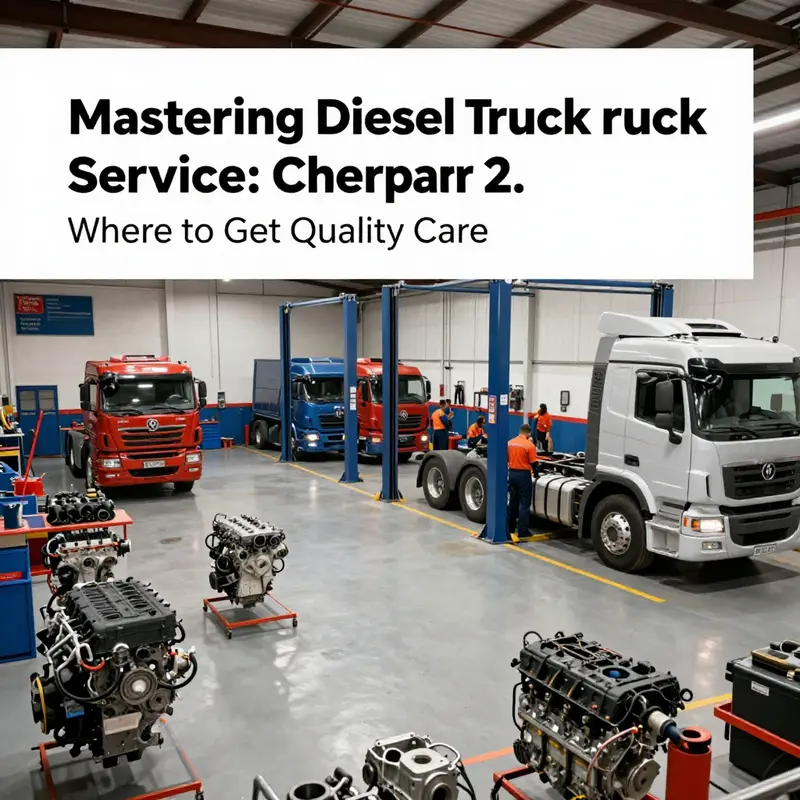
When you own a diesel truck, the question of where to service it often boils down to how demanding the work is and how quickly you need reliable, long-lasting performance. For everyday maintenance, a capable general shop might suffice, but when the engine is a big, high-mileage workhorse, you want a place that lives and breathes diesel technology. Specialized diesel repair shops are not just catch-all repair centers; they are precision facilities built to diagnose, calibrate, and repair modern diesel systems with the same care a surgeon gives to a patient. These shops go beyond routine oil changes and brake checks. They invest in the equipment, the procedures, and the expertise that keep heavy-duty engines efficient, durable, and compliant with increasingly strict emissions standards. The outcome is not merely a fix now but a durable repair that preserves fuel economy, reduces downtime, and protects the long-term value of your investment.
The core advantage of a specialized diesel service center is its laser focus on the unique complexity of diesel powertrains. Diesel engines today rely on a tightly integrated network of electronics, fuel delivery, air management, and exhaust aftertreatment. Small misalignments in injector timing, turbo calibration, or fuel pressure can ripple through an engine’s performance, increasing smoke, reducing power, or triggering fault codes that mask the root cause. A specialized shop trains technicians specifically for these systems and outfits them with tools designed to test, measure, and adjust components in ways a general auto shop cannot. They handle high-pressure common-rail systems, electronically controlled injectors, and sophisticated fuel pumps with the same confidence that a surgeon brings to a delicate procedure. This is where the engine’s real health is debugged—through precise diagnostics, careful calibration, and tests that simulate real-world demand.
A defining feature of these facilities is their diagnostic rigor. Rather than relying on generic scanning software alone, specialized shops deploy a suite of tests that probe both electrical signals and hydraulic performance. Consider the role of an electronic injector tester in this ecosystem. This device blends electrical signal analysis with hydraulic testing to evaluate solenoid response, coil resistance, spray pattern, and timing. It is not just about knowing whether an injector is technically “in range” but about understanding how its behavior translates into fuel delivery under load, how it responds to rapid throttle changes, and how evenly it distributes fuel across cylinders. When a technician spends time with this kind of equipment, the diagnostic process moves from guesswork to evidence-based action. The goal is to restore the engine to peak efficiency, minimize emissions, and ensure that fuel economy does not suffer as a byproduct of wear or miscalibration. This is the kind of depth that a specialized diesel shop routinely offers, and it is why fleet operators and individual owners alike seek these centers when the truck’s performance falters.
The service repertoire at a dedicated diesel shop also reflects the demands of modern, heavy-duty use. Routine maintenance remains essential—a disciplined schedule of oil changes, filter replacements, coolant checks, and belt inspections—but truly critical work often centers on fuel systems, air handling, and exhaust aftertreatment. In diesel engines, fuel delivery and combustion timing are the main levers for efficiency and longevity. Specialist centers provide calibrated injector testing, precise pump adjustments, and compressor or turbo matching services that ensure air meets fuel in exactly the right ratio at every engine speed. They can reprogram or update engine control modules where needed, address hard-start conditions common after extended idling, and diagnose intermittent faults that only reveal themselves under load or at highway speed. Such services require technicians who are not only mechanically adept but also deeply knowledgeable about diesel-specific physics and electronic control strategies. The payoff is a truck that runs smoother, starts reliably in cold weather, and maintains consistent torque without the drama of misfires or rough idle.
Another important consideration is fleet reliability and downtime. For a fleet operator, the choice between a dealership, a general repair shop, and a specialized diesel center is often about uptime guarantees and parts philosophy. Authorized brand dealerships can be excellent for warranty coverage and OEM parts, but specialized shops frequently offer faster turnarounds for non-warranty work, longer experience with high-mileage configurations, and a more flexible approach to unusual or legacy engine families. In practice, a well-chosen diesel specialist becomes part of the fleet’s operating backbone, familiar with the typical failure modes of the engines in use and prepared with a diagnostic playbook that minimizes guesswork. This experience translates into fewer trips for the same problem and a higher likelihood that the solution addresses the root cause rather than just the symptom. For anyone who runs a single truck or a small fleet, this can be the difference between a back-in-service window at a reasonable cost and a cascade of missed deliveries caused by repeated breakdowns.
What should you look for when selecting a specialized diesel repair shop? Start with credibility. Look for technicians who have formal diesel training and ongoing certification that demonstrates commitment to staying current with diesel technology. Ask about their diagnostic approach: do they use multiple diagnostic tools, and can they explain how they validate a diagnosis before performing any repair? Clear communication about the problem, the proposed solution, the expected downtime, and the warranty on the repair is essential. Next, consider the shop’s equipment and capabilities. A truly capable diesel center will have high-pressure fuel system testers, injector calibration rigs, and the ability to test pump performance under simulated operating conditions. They should also demonstrate a structured process for reassembling and testing after repair, including checks of fuel rail pressures, injector seals, and return lines. Parts quality matters too. Reputable shops prefer OEM or OE-equivalent parts when feasible, along with transparent explanations when aftermarket parts are used. Such honesty about parts—what’s common, what’s better, what’s warranted—fosters trust and helps you budget for long-term maintenance rather than chasing repeat failures.
Turnaround times are another practical consideration. A properly equipped diesel shop can often diagnose in a single visit what a general shop might take multiple visits to confirm. Because diesel engines run at higher compression and feature more elaborate fuel and aftertreatment systems, a diagnostic timeline that includes test protocols, reprogramming if needed, and a calibrated calibration session helps owners minimize downtime. In the end, the best choice is a center that treats uptime as a core metric rather than a metric to chase on a quarterly report. As you weigh options, think about your vehicle’s role: a long-haul tractor that pulls miles across several states requires an operation with predictable scheduling and reliable parts availability; a local vocational truck might demand quick turnaround and highly accurate repairs that prevent repeated visits to the shop.
The alliance between diagnostic precision and practical service is what sets specialized diesel shops apart. In practice, you’ll often see a workflow that begins with a careful inspection, followed by targeted pressure and flow tests, then a series of electrical checks, and finally a calibrated adjustment wrapped in a test drive. It is this integrated approach that brings confidence when the engine roars back to life. For operators who depend on consistent power at challenging speeds, the value of this approach is measured in miles and in the avoidance of downtime—every hour the truck spends in a shop is an opportunity cost for the business. That is why many fleets, even when they have loyalty to dealership networks, cultivate relationships with one or two trusted specialized centers that understand their operating profile and fleet requirements. The result is not simply a repaired engine but a partner that helps sustain performance, extend service intervals, and protect residual value through meticulous maintenance history.
For readers who want to explore this further, consider how specialized training mirrors a broader commitment to excellence. While a single repair can fix a symptom, ongoing training and competency in diesel technology build resilience into the entire operation. Even in unrelated but demanding sectors, you’ll find how rigorous, hands-on training translates into uptime and reliability. Fire Truck Maintenance Service Training, for example, illustrates how disciplined training practices translate into high performance under pressure. This is the principle you want driving your diesel truck program: ongoing, technically sound education that keeps the shop ahead of the curve and your vehicle on the road. See Fire Truck Maintenance Service Training for an example of how comprehensive training elevates service quality and uptime across demanding fleets. Fire Truck Maintenance Service Training
In short, specialized diesel repair shops offer a blend of deep diesel knowledge, sophisticated diagnostic tools, and a disciplined repair process that general auto centers rarely match. They understand the engine’s language—the timing, the pressure curves, the spray patterns, and the aftertreatment interactions that determine whether your truck sips fuel or burns it. They know how to listen to the noises a machine makes under load and translate that into precise corrective steps. For owners and operators who demand performance, durability, and cost-effectiveness, these shops become the most reliable option for servicing diesel trucks. They are not just places to fix problems; they are environments designed to preserve the integrity of your investment, keep your operation moving, and ensure that every mile you drive is backed by solid engineering and professional care.
External resource for continued reading: https://www.fmanddiesel.com/
Round-the-Clock Rescue: How 24-Hour Roadside Assistance Keeps Diesel Trucks Moving
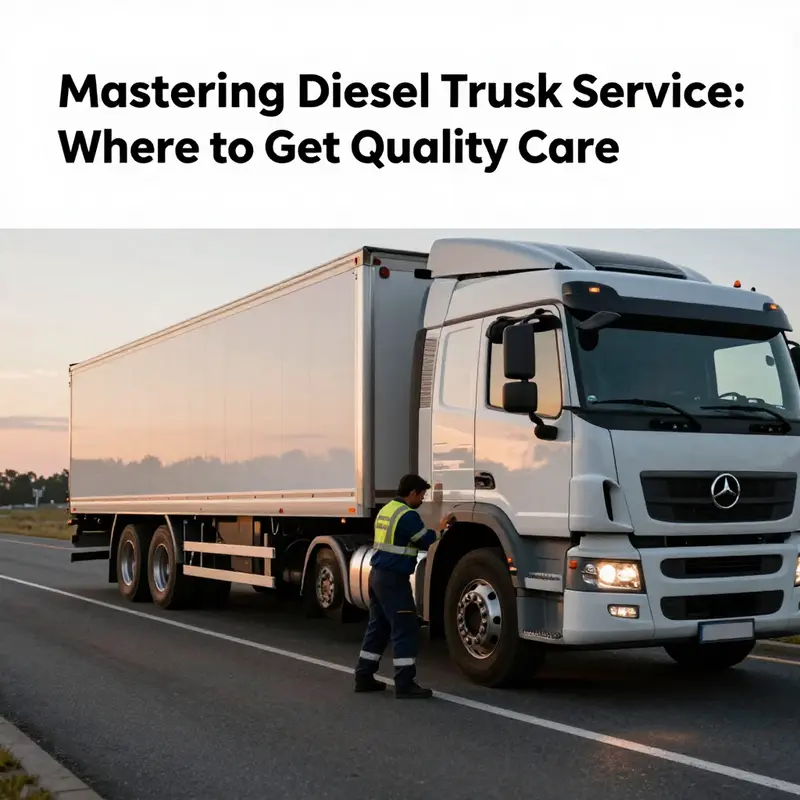
Diesel trucks travel through every hour, every climate, and every mile of the supply chain, so a breakdown isn’t just a momentary headache; it can ripple through deliveries, customer commitments, and driver safety. In the relentless tempo of freight movement, 24-hour roadside assistance isn’t a luxury—it’s a strategic backbone. This chapter explores how on-demand, around-the-clock support operates, what drivers and fleets should expect, and how this service fits into a broader plan for uptime, safety, and cost control. The essence of 24/7 roadside help lies in rapid response, trained mobile expertise, and a coordinated network that can turn a stalled engine into a road-ready vehicle again with minimal downtime. It’s a safety net that keeps trucks moving when the weather turns, when a detour forces a longer route, or when a simple component fails far from a familiar shop. In practice, drivers may never know the exact hour a problem is diagnosed, because the system is designed to remove friction from the moment a fault is reported. A robust program makes a single call or tap feel like a seamless handoff—from the driver’s concerns to a dispatcher, to a technician arriving with solutions, to a repair facility that has prepared the right parts in advance. That sense of seamless continuity is the promise at the heart of modern roadside assistance.
Most 24-hour programs center on a few core capabilities: on-the-spot diagnostics and assistance, essential on-site repairs or part replacements when feasible, battery and electrical checks, tire service or changing, fuel delivery when a vehicle runs dry, and, when required, safe towing to an authorized repair center. The aim isn’t just to fix a broken truck; it’s to protect the downstream workflow—protecting driver hours, protecting cargo integrity, and protecting the business’s schedule. In many fleets, the distinction between a minor nuisance and a major disruption hinges on the speed and accuracy of the first mobile interaction. A technician who arrives with the right diagnostic tools, the right spare parts, and the right communication with the dispatcher can determine whether a vehicle returns to service within hours or remains immobilized for days.
The mechanics behind this service are increasingly powered by telematics and data-sharing. Telematics systems provide real-time location, vehicle health indicators, and engine fault codes that guide dispatch decisions. When a driver reports a problem, the system can automatically share an engine code, GPS location, and a brief symptom description with the service provider. The dispatcher then translates that data into a triage plan: should the vehicle be towed, is a mobile technician within striking distance, or can the nearest shop pre-stage parts for a quick, on-site repair? This data-driven approach shortens diagnosis time, tightens the feedback loop with the driver, and helps a fleet align its maintenance calendar with actual road incidents rather than isolated scenarios. The better the data, the more precise the intervention, and the more predictable the outcome.
Speed matters, but so does reliability. A 24/7 program is most effective when it is backed by a well-structured network: a web of nationwide or regional teams that can reach any location with consistent service levels. Trucks operating in remote corridors or rural counties depend on this reach. The dispatch center must know the coverage gaps, the capacity of mobile units, and the availability of nearby repair centers prepared to take a stranded vehicle. In practice, this means pre-authorized repair networks that include member shops with calibrated workflow practices, standardized diagnostic protocols, and access to common replacement parts. For fleets, this arrangement offers more than convenience; it yields predictable escalation paths, clearer accountability, and the potential to minimize warranty exposure and misdiagnosis. When a driver is stranded, every minute counts, and a plan that prioritizes clear, documented communication can reduce misinterpretations and missteps that often extend downtime.
The practical realities of 24-hour roadside assistance also depend on the specifics of the vehicle and its operation. For heavy-duty, long-haul, or regional freight fleets, the on-call team must be conversant with engine platforms, fuel systems, cooling circuits, and electrical architectures that are unique to diesel powertrains. The most effective providers maintain a rotating cadre of technicians who are trained to handle the complexity of modern diesel engines, including high-pressure fuel systems, advanced aftertreatment devices, and heavy-duty cooling subsystems. Even when a mobile unit cannot complete a repair on the roadside, the next best outcome is swift, efficient evacuation to a nearby authorized center where technicians can continue diagnostics with full access to OEM repair procedures and genuine parts. The operational mindset here is not merely to fix a leak or replace a sensor; it is to preserve safety, limit environmental risk, and protect payload integrity by keeping the truck in a controlled, planned repair environment whenever possible.
For fleet operators, the value proposition of 24-hour roadside support extends beyond incident response. A well-integrated program complements preventive maintenance and planned downtime, turning uptime into a strategic asset. Fleets that pair 24/7 support with proactive maintenance schedules, parts forecasting, and pre-authorized repair networks can reduce unplanned downtime significantly. Knowing that help is available at any hour encourages more realistic driver hours and reduces the temptation to push a vehicle beyond its safe limits. It also supports a more resilient supply chain, because a single breakdown in a distant location no longer translates into a cascading delay in a customer’s delivery window. The relationship between roadside assistance and maintenance becomes a loop: data from incidents informs maintenance planning, which in turn reduces the probability of future roadside events. And when incidents do occur, the ability to coordinate a rapid, well-sourced recovery helps keep drivers safe and cargo secure while preserving the fleet’s operational tempo.
The human element remains essential, too. Behind every dispatch is a coordinator who understands the nuances of where a truck is, what it needs, and which repair networks can respond most effectively. This person translates the engine fault code into actionable steps, negotiates with repair facilities, and keeps the driver apprised of the plan. The driver’s confidence flourishes when they sense an organized, transparent process rather than a series of disjointed phone calls. In practice, drivers are trained to communicate a concise symptom, share their VIN when applicable, and confirm any pre-authorized preference for a repair network. In turn, the dispatch team keeps the driver informed about ETA, potential lodging, or nearby alternatives if a rental vehicle is warranted. This collaborative flow—driver, dispatcher, technician, and facility—tests the program’s efficiency, but when it works, it creates an almost seamless transition from problem to solution.
When evaluating a 24-hour roadside program, fleets should probe a few core questions: What is the average response time for mobile units and for towing in different regions? Are there pre-negotiated rates for common repairs, and how are those costs rolled into the fleet’s overall maintenance budget? How does the provider handle after-hours escalations, and what kind of customer support is available to drivers in distress? How transparent is the diagnostic data flow, and can the fleet access real-time status updates without extra friction? The best programs are not merely reactive; they are designed around a culture of reliability, continuous improvement, and safety. They offer clear metrics—response times, repair success rates, downtime per incident, and driver satisfaction scores—that a fleet can monitor and optimize over time.
For readers seeking a concrete example of uptime-focused product support in heavy-duty operations, see the resource on unlocking fire apparatus uptime: essential product support secrets. This reference illustrates how uptime is engineered across complex, high-demand fleets, emphasizing the same principles—rapid response, data-informed decisions, and integrated repair networks—that underpin road-side support for diesel trucks. Unlocking fire apparatus uptime: essential product support secrets.
As a closing thought, the decision to adopt or expand a 24-hour roadside program should be framed not as a cost but as a strategic investment in uptime, safety, and customer reliability. In practice, the most effective programs align with broader fleet-management goals: maintain driver hours within legal limits, safeguard cargo, and minimize the ripple effects of a breakdown on the overall supply chain. A well-chosen, well-integrated 24/7 roadside service acts as a steady point of contact on the map of operations, turning an unpredictable moment into a managed event with a clear route forward. For fleets that operate across wide geographies, that assurance alone can be worth more than any single component replacement found on a parts shelf. And as technology advances, the combination of telematics-enabled diagnostics, mobile repair capabilities, and a robust repair network will only sharpen the precision and speed of roadside interventions, reinforcing the essential role this service plays in keeping diesel trucks moving, day and night.
External resource: Penske Truck Leasing on LinkedIn
null
null
Chapter 5: Manufacturer Portals as the Trusted Gateway to Diesel Truck Service
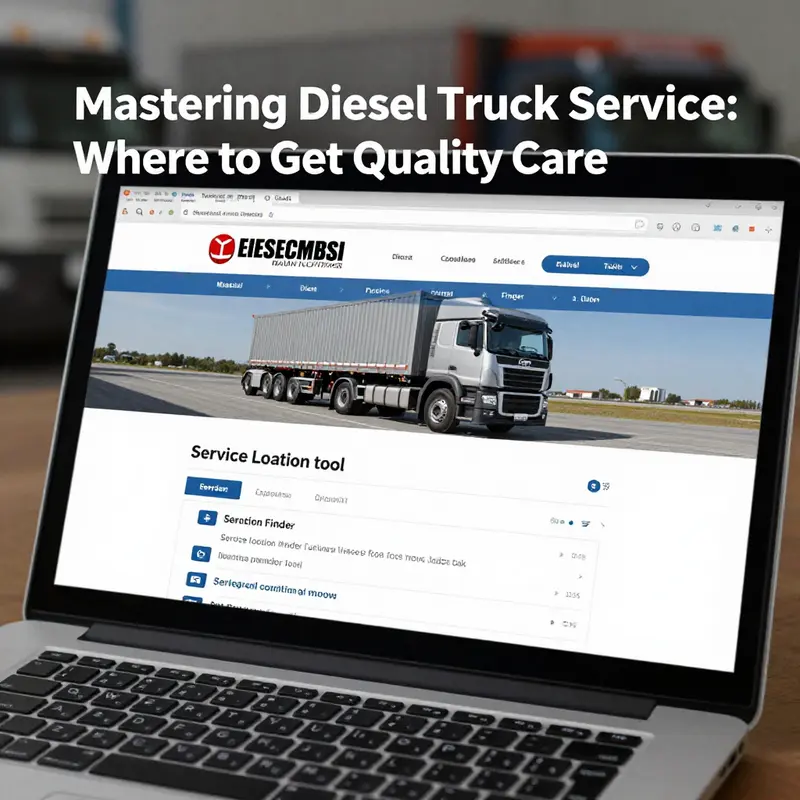
Every long-haul journey of a diesel-powered work vehicle begins with a reliable source of truth about its maintenance and care. When you consider where to service your diesel truck, the most trustworthy starting point is often the manufacturer’s own website. These official platforms are designed not just to sell or showcase trucks, but to keep them running safely and efficiently through data that is model-specific, up-to-date, and tied to warranty considerations. Rather than wading through a sea of third-party listings, a well-structured manufacturer portal aggregates the precise information you need in one place: dealer networks, service procedures, parts compatibility, recalls, and maintenance schedules. For the owner or fleet manager, this can transform what feels like a daunting task into a clear sequence of steps grounded in the vehicle’s original design and intended service life. The advantage is not merely accuracy; it is confidence. You know you are looking at information generated or approved by the people who built the engine, the transmission, and every critical subsystem, and that matters when health, performance, and uptime are on the line.
A central benefit of these sites is the dealer locator. The moment you enter your location, you can see an authorized service network that has been vetted by the manufacturer. This is crucial for diesel engines where incorrect service procedures or the use of non-genuine parts can lead to warranty issues or degraded performance. The locator is not just a map; it is a curated map of technicians who have received brand-specific training and access to the right diagnostic tools and software updates. The value of seeing a certified technician’s name beneath a service request cannot be overstated, especially when the goal is to minimize downtime and preserve the vehicle’s long-term reliability. The same portal often offers a transparent pathway to schedule maintenance or repairs online, track the status of ongoing work, and receive reminders aligned with the model’s recommended maintenance intervals. For fleet managers juggling dozens of vehicles, the ability to standardize maintenance windows and keep repair histories in one place reduces the chaos of scattered records and makes compliance with service intervals straightforward.
Beyond the human element of trained technicians, manufacturer portals deliver access to a treasure trove of technical resources that empower owners to understand and anticipate service needs. Service manuals, parts catalogs, and wiring diagrams—each tailored to the exact engine model, configuration, and year—allow you to verify whether a service bulletin or recall affects your truck and what procedure the dealership should follow. This specificity matters. Diesel engines are not uniform across all configurations; a single label can refer to a family of engines that differ in turbo geometry, fuel-system timing, or emissions controls. In the right hands, the manual is more than a booklet; it is a map to correct maintenance, step-by-step diagnostic steps, and an audit trail that supports warranty claims. When you access the manufacturer’s parts catalog, you can confirm that the parts you order will fit, function, and perform as intended. This reduces the risk of misfit components that can cause performance dips or warranty disputes down the road.
The digital ecosystem on these sites often extends to customer support portals that feel more like collaborative partnerships than one-off transactions. Live chat, downloadable software updates, and troubleshooting guides are common features that keep both individual owners and fleet operators connected to the latest recommendations from the maker. The ability to log in, view repair histories, and receive notifications about recalls or recommended maintenance intervals means the truck can be treated as a living asset rather than a static unit. It is this continuity—between manufacturer guidance, dealer work, and ongoing digital support—that helps prolong uptime and optimize the vehicle’s operating cost. In practice, it means you can arrange a service window that doesn’t clash with a critical delivery schedule, receive a reminder when a service is due, and have confidence that the work performed aligns with the exact specification for your engine family.
A nuanced but increasingly important feature is the emphasis on model-specific visualizations and interactive tools. Some manufacturer sites go beyond text to offer immersive experiences that reveal how the truck’s systems interact under various usage scenarios. A prominent example of this approach is a 360-degree virtual tour of a particular model family. While the tour showcases interior layouts and configurations, it also helps users appreciate which components are likely to require attention based on how the vehicle is used—worksite routes, heavy payloads, or long-haul routes all influence maintenance emphasis. This kind of visualization supports informed conversations with service advisers and strengthens the decision-making process around when and where to service. It’s a reminder that the manufacturer’s portal is not merely a catalog of parts and services; it is a design-centered toolkit aimed at keeping the truck aligned with its original performance profile.
To use these resources effectively, a practical, almost ritualistic approach helps. Begin by locating the official site of the manufacturer of your truck, then navigate to the service or support section. Use the dealer locator not only to find a nearby shop but to confirm that the shop is authorized for your exact model. If you have a specific service need—say, a diagnostic that involves a sophisticated emissions control system—look for the related service bulletin or maintenance plan referenced in the manuals. If you are managing a fleet, enroll in the customer portal to capture service histories and trigger reminders. Download and store any maintenance schedules in your own records so you can compare real-world service dates with the recommended timelines. And don’t overlook recalls: a quick check on the portal can alert you to any open recalls that require attention, which is essential for safety and compliance.
The role of the manufacturer site becomes even more meaningful when contrasted with third-party shops or generic parts suppliers. Authorized dealers have access to the exact diagnostic tools and software from the engine and system designers, ensuring that updates are applied correctly and that fault codes point to the genuine root cause. Independent shops can be superb, but without model-specific updates and direct access to software, there is a higher risk of unintended consequences from repairs or calibration. The manufacturer’s platform offers a bridge between the owner and the service ecosystem, providing a continuous, auditable trail from purchase through every service interval. This continuity is particularly valuable for fleets where maintenance accountability, uptime metrics, and residual value depend on consistent, model-accurate servicing.
As you explore, you may encounter an example of how a major manufacturer’s site blends storytelling with data: a 360° tour that gives a tangible sense of model configurations and the kinds of components that typically require attention in routine service. You might not see the brand name spelled out in every instance, but the principle remains clear: high-fidelity product data, aligned with a verified network, creates a service pathway built on trust and precision. For readers curious about how such resources translate into real-world practice, consider exploring a practical demonstration of a manufacturer’s product page that emphasizes an immersive, model-focused experience. This kind of resource illustrates how digital tools translate into better maintenance decisions, streamlined service planning, and ultimately more reliable operation on the road.
Internal link: for practical guidance on product support, see maximizing-fire-truck-product-support. This link serves as a concrete example of how additional maintenance-oriented resources can complement the core brand portals, reinforcing the principle that the most dependable service decisions begin with official, model-specific information.
External resource: an illustrative example of how a manufacturer’s digital ecosystem can present data and support tools is available through a 360° product page tour, offering a window into how a major truck maker structures its model family resources. Access it here: 360° product page tour. While the exact truck family may differ, the underlying design philosophy—clear data, guided maintenance pathways, and direct access to support—remains universally applicable to the question of where to service a diesel truck. Approaching service in this way, through official channels, helps ensure that maintenance aligns with the vehicle’s engineering heritage and preserves the integrity of the warranty and lifetime performance.
Final thoughts
In conclusion, servicing your diesel truck is a crucial aspect of maintaining its performance and reliability. From the specialized care of authorized dealerships to the convenience of roadside assistance, there are numerous options tailored to suit the needs of long-haul truck drivers, fleet managers, and maintenance specialists. By exploring local recommendations and the wealth of information provided on manufacturer’s websites, you can make informed decisions that will keep your trucks rolling smoothly. Remember, the right service provider can greatly enhance your operational efficiency and safety on the road. Invest time in understanding your options to ensure you choose the best service for your diesel truck.