
In the trucking industry, having a reliable service partner is key to ensuring operations run smoothly. A & F Truck Services operates through various independent locations, providing essential support across regions. From truck repairs to maintenance services, understanding what each company offers is crucial for long-haul truck drivers, trucking company owners, fleet managers, and aspiring truck drivers. This article explores the overview of A & F Truck Services locations, how to effectively contact them, and recommendations on service selection and verification, helping you make informed choices for your trucking needs.
A & F Truck Services Unveiled: Mapping a Multistate Freight Network and the Services That Tie It Together
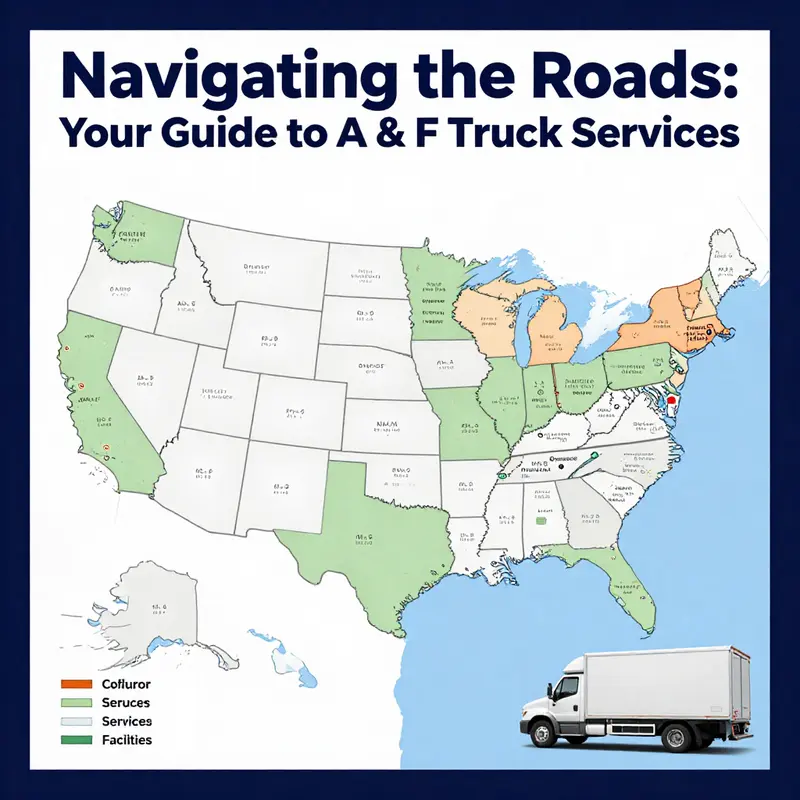
Names travel faster than trucks, especially when they belong to a family of regional operations sharing a banner. In the world of freight and logistics, A & F Truck Services appears in several places, each serving its own community while contributing to a broader, multistate capability. This chapter examines what the name signals in practice: a Houston-based headquarters with regional reach into the New York and New Jersey metropolitan areas, alongside smaller outfits whose presence in California and New England underscores how geography shapes service scope. The aim is not to equate these firms but to map the terrain they collectively represent. When clients seek reliable freight solutions, they encounter a network that blends centralized leadership with regional agility. That balance matters because logistics is as much about the people and the processes behind the scenes as it is about the vehicles on the road. In this landscape, the challenge for customers is to locate, verify, and align with the right capacity at the right moment. For those navigating this terrain, a careful eye on location, service breadth, and response times can be as important as the price quoted. The broader discussion around the name is echoed in industry conversations that explore diverse approaches to end-to-end transport and storage, including perspectives on how networks grow, how hubs anchor operations, and how regional players contribute to a seamless national rhythm. A practical way to glimpse this is to consider how a single corporate banner can mask a constellation of operations that each bring something distinct to the table. The narrative here draws on the documented footprint of A & F Trucking Services, LLC, and related entities, while keeping in view the larger logistics ecosystem in which these firms operate. As readers explore the material, a note about verification is prudent: there are independent companies with similar names in various regions, and the details—address, services, and contact information—should be confirmed via direct communication or mapped listings. This caution is not a setback but a reminder of how the logistics marketplace often presents multiple, locally focused options that share a brand-like name yet serve different fleets and client bases. For readers who want to situate this discussion among practical industry conversations, see the broader discourse on trucking and supply chain optimization at sources like Discovering the unparalleled services of 5 Star Truck Inc, which offers a representative look at how modern trucking entities articulate their value in an increasingly connected network. The point is not to replicate a specific firm’s offerings but to illuminate how a multistate fabric of service providers can deliver integrated logistics through coordinated freight movement, strategic storage, and capable last-mile execution.
The Houston headquarters serves as the central node in this network, establishing a base that can coordinate cross-regional movements, synchronize warehouse staging, and calibrate the flow of containers and goods across nearby corridors. The address 7447 Harwin Dr, Houston, TX 77036, places the company in a transportation-accessible area known for freight activity and industrial densities. From this hub, the organization extends its reach into the dense corridor that links the Northeast with the South and the Midwest, while maintaining a focus on regional reliability and scalable capacity. The geography is not merely a matter of miles logged; it is a strategic layout that aligns with the workflow demands of shippers who require both speed and resilience. For clients with operations that span coast-to-coast, this combination of a robust central base and regionally aware service teams can translate into tangible advantages—shorter transit times, fewer handoffs, and a clearer line of communication from origin to destination.
Covering the New York and New Jersey metropolitan areas expands the practical reach of this network. The importance of those markets lies not only in their size but in their role as major distribution and fulfillment hubs. A & F Trucking Services leverages its presence in this corridor to facilitate freight flows that might otherwise encounter friction in handling, transfer, or customs-related activities. In logistics terms, this means a smoother interface between trucking legs, warehousing, and last-mile delivery, with the added flexibility of warehousing options that can be deployed to smooth peak periods or optimize inventory placement for regional customers. The result is a dynamic capability to respond to shifting demand, weathering seasonal spikes or unexpected disruptions with a ready mix of space, equipment, and personnel that understand the local landscape. The Northeast footprint also encourages a knowledge loop: lessons learned in one market inform operations in another, from scheduling and lane optimization to safety and compliance practices that are tailored for different regulatory environments. This interplay of centralized control and localized execution helps translate high-level strategy into reliable day-to-day performance on the street and in the warehouse.
Beyond the Houston hub and the Northeast corridor, the landscape includes independent outfits in other regions that share the A & F branding. In California, for example, a service point in Goshen has offered truck repair and maintenance services, while in Massachusetts, Springfield hosts a facility that provides truck-related services as well. These locations illustrate a broader pattern in which similar names accompany separate businesses that address the needs of their own communities. The practical implication for clients and observers is a reminder to verify the exact operation, scope, and contact details of the firm they plan to engage. A shipment’s journey depends not just on the carrier’s name, but on the reliability of its local partners, the consistency of its maintenance practices, and the capacity to respond to the specific constraints of a given route or market. In short, a name can be a general pointer to a set of capabilities, but the real value emerges when that name maps to coordinated resources, dependable access to equipment, and a disciplined approach to safety and compliance across the network.
The service offering described in detail for the Houston-based entity is deliberately broad, designed to address the many facets of modern freight and storage needs. Core trucking remains the backbone, moving freight between origins and destinations with a focus on on-time performance and proper handling. Intertwined with this are services aimed at time-sensitive cargo that benefits from expedited movement—an approach that prioritizes speed while still preserving safety and regulatory compliance. For shipments that do not fill a full trailer, a less-than-truckload option provides cost-effective solutions by consolidating multiple customers’ freight into a single vehicle, optimizing capacity without sacrificing service integrity. The final-mile component then finishes the journey, delivering goods directly to residences or businesses, with attention to the nuances of last-mile scheduling, signature capture, and customer communications that influence the recipient’s experience.
Storage capabilities anchor the possibility of a true end-to-end solution. Warehousing and storage, whether short-term or long-term, enable customers to stagger inventory, manage seasonal demand, and coordinate cross-docking or transloading when route alignment requires it. Container handling—whether skidded or floor-loaded—highlights the operation’s readiness to manage scale and variety. Handling containers of any size demands skilled stevedoring, careful sequencing, and the ability to move goods through staging areas with minimal disruption to downstream processes. In parallel, pick-and-pack order fulfillment aligns inventory with demand in a way that supports timely distribution to customers or retail channels. This combination of storage, container management, and precise fulfillment is essential for clients seeking not just transportation but integrated supply chain performance that reduces lead times and improves accuracy.
Taken together, these service areas form a platform for end-to-end supply chain management that can adapt to client needs across regions and industries. The net effect is a logistics partner capable of handling everything from routine freight moves to complex, multi-facility coordination. It is this flexibility—paired with a structured safety and compliance framework—that often differentiates providers in a crowded market. For readers tracing the arc of modern freight services, the Houston hub and its regional network offer a representative case of how a firm can position itself to respond to evolving customer expectations: faster delivery cycles, transparent tracking, responsive support, and the capacity to scale up during peak seasons without compromising reliability.
The service mix described here is complemented by capabilities that bind the network together: warehousing and storage flexibility, container handling proficiency, and fulfillment expertise that aligns with the broader needs of distributors, manufacturers, and retailers. In an era where e-commerce, omnichannel fulfillment, and cross-border trade create complex logistical requirements, the value of an integrated approach becomes clearer. Clients benefit when the same partner can move goods, store them securely, consolidate shipments, and ensure delivery with the same standards across different markets. The aim is not to claim omnipotence but to highlight how a coherent service suite—rooted in a central hub but empowered by regional teams—can translate into reliable performance for a diverse client base. The organization’s geographic spread supports a balanced mix of speed, cost, and resilience, a combination increasingly sought in today’s supply chains.
This chapter, while anchored in the Houston-based operations, also acknowledges the broader context in which similar-named entities operate. The California and Massachusetts locations remind readers that regional expertise matters, and that “A & F Truck Services” may refer to distinct businesses depending on where a shipment begins or ends. The takeaway for practitioners is pragmatic: verify exact location, confirm the scope of services, and align expectations with the team that will actually execute the move. This due diligence is especially important when a network appears to share branding but comprises separate legal entities with separate maintenance practices, employee rosters, and equipment pools. To illustrate how the industry voices these cross-cutting themes, readers can explore industry narratives that discuss how large, multi-region freight networks maintain service consistency while preserving local responsiveness. The connective tissue across regions—fleet reliability, storage flexibility, and a clear line of communication—remains the constant that keeps shipments moving smoothly from origin to destination.
In closing, the picture that emerges is of a multistate freight and logistics ecosystem in which a Houston headquarters anchors a wider regional capability, while independent regional outfits contribute to a broader, more resilient network. The service spectrum—ranging from core trucking to last-mile delivery, storage, and container handling—mirrors the broader demand for end-to-end logistics solutions that can adapt to varying goods, timelines, and market conditions. For readers developing a procurement or carrier selection strategy, the reality is that a single name may mask a family of capable operations. What matters is the quality and consistency of the service delivered at the point of execution, the transparency of communication, and the ability to scale in response to variation in demand. The channel for that alignment often runs through direct engagement with the firm’s regional teams, with careful attention to the specifics of the shipment and the regulatory environments governing each route. The larger narrative is not about a single company but about a networked approach to freight that emphasizes coordination, reliability, and customer-focused flexibility across a national freight landscape.
External reference for broader context: https://www.linkedin.com/company/a-f-trucking-services-llc/
Across Regions and Roads: Navigating A & F Truck Services’ Contact Channels and Customer Support
When fleets move from one mile marker to the next, the reliability of a service partner is measured not only by the quality of the work but by the clarity of the path to reach them. In the world of heavy-duty vehicles, where a breakdown can stall deliveries, delay schedules, and ripple through a chain of operations, the ability to quickly and confidently connect with a trusted maintenance provider is as critical as the service itself. This chapter follows that thread through the murmur of regional names and numbers that share a silhouette on a map—A & F Truck Services—and unfolds how customers navigate multiple, similarly named entities to find the right contact, the right support, and the right assurance when machines demand attention. It is a reminder that behind every dispatch, workshop bay, and roadside call there lies a human system designed to translate a truck’s needs into a coordinated response, and that system begins with accessible, accurate contact information.
In this landscape, two distinct footprints emerge. One is A&F Truck Repair and Service, located in Goshen, California. The record is precise enough to feel reliable at a glance: a street address in Goshen, a specific postal code, and a dedicated phone line that invites today’s urgent requests and tomorrow’s routine maintenance. The other footprint is A & F Truck Service in Springfield, Massachusetts, anchored at 920 Dwight Street in Springfield, MA 01104, with a separate phone line and a Yelp listing that offers a community lens on service experiences. The proximity of these two entities—both sharing a compact, almost artisanal name—serves as a practical warning about how a fleet operator must verify each contact point before pulling the trigger on a service plan or a repair appointment. In the simplest terms, a single misdial or misdirected map pin can send a driver halfway across town to the wrong shop, turning a minor scheduling discrepancy into a morning of wasted time and a maintenance budget that has already started ticking.
The Springfield address, 920 Dwight St, Springfield, MA 01104, plus the phone number (413) 737-1556, are easy to recall after a call or a quick glance at a business card or a listing. Yet the ease of access becomes meaningful only when the information is current and verifiable. A customer who reaches out by phone often does so not just to request a simple tire rotation or an oil change, but to initiate a more complex conversation about uptime, preventive maintenance, and the specific needs of their fleet. The same phone line that can schedule a routine service must also be equipped to handle an emergency roadside request, a situation in which minutes matter and the clarity of the caller’s details—location, vehicle count, service type, and preferred arrival time—can determine whether a truck rolls again before the day’s end or remains sidelined.
Meanwhile, the Goshen footprint in California speaks to a different operational frontier: a service shop that markets itself as a repair and maintenance partner for trucks in its region. The listed address—93227 Goshen, CA—paired with a dedicated contact line, functions like a regional anchor for operators who plan regular maintenance, troubleshoot persistent issues, and rely on a local specialist who understands the terrain, the loading patterns, and the common wear points of trucks that traverse the Central Valley and beyond. In both cases, a consistent rule applies: the value of customer support rises in direct proportion to how easy it is for a caller to confirm the right location, confirm the right service type, and confirm the right expectations about timing and turnaround.
What makes this more than a matter of dialing the right digits is the layered reality of independent operations that share a name. The two A&F entities run their own teams, inventory, and scheduling processes. For a fleet manager, that means a critical initial step is confirmation—before a service even begins—of which shop will handle a given task. A simple rule of thumb emerges from experience: verify the exact street address through a direct phone call or a map service, and do a quick cross-check against the local area’s landmarks or a dispatch sheet. The reason is plain. The world of trucking is rife with similarly named outfits, regional variances in service scopes, and occasional gaps between a listing’s stated hours and the shop’s actual hours on a busy day. A phone conversation—or a live chat with a shop’s receptionist or dispatcher—offers a real-time verification layer that no online listing can fully substitute.
The Springfield entry is a useful case study in how customers should navigate once contact is established. The address is specific; the phone line is clearly associated with the location. The Yelp listing provides a community perspective that can illuminate practical details such as wait times, the pace of service, and the demeanor of the shop’s staff—factors that matter when a breakdown interrupts a fleet’s rhythm. The Yelp page, in particular, offers a composite view: some reviewers will emphasize responsiveness and workmanship, others might highlight the challenge of securing an appointment during peak periods. Taken together, these insights can help a fleet decision-maker calibrate expectations: how quickly the shop responds, how well they communicate delays, and how transparent they are about the scope of work and parts availability. Yet the existence of a Yelp profile also signals the need to cross-verify these impressions with direct, current information from the shop itself. A listing is a helpful guide, not a guarantee, and timely confirmation via a phone call remains a best-practice anchor.
From a customer-support perspective, what matters most is a seamless handoff from inquiry to action. A caller should not have to repeat the truck’s identification numbers, location, and service history multiple times. A well-run shop keeps its intake process tight: the dispatcher records the vehicle’s make and model, the issue as described by the driver, the last known fault codes if available, and the preferred service window. The technician then benefits from a concise brief that can reduce diagnostic time and accelerate the path to repair. When a fleet leverages multiple independent shops with overlapping capabilities, the efficiency of that handoff becomes a differentiator. It is not enough to have a phone number; the fleet is served by a system that can triage needs, route them to the right technician, and provide a reliable estimate for parts, labor, and turnaround. In practice, this means a customer should look for a shop that values precise intake, keeps clear documentation, and follows up with realistic timelines—especially when parts must be sourced or when a diagnostic phase reveals a deeper issue than initially described.
In a broader sense, the Springfield and Goshen examples remind us of the human element behind every contact form, every voicemail, and every line item on an invoice. The people on the other end of the line translate technical symptoms—the truck’s noises, the dashboard warnings, the symptoms described by the driver—into a plan of action. They schedule the appointment, allocate a technician, and communicate any changes in the plan back to the fleet manager. The best shops also provide a direct point of contact for ongoing maintenance plans, standing fleet engagements, and contingency arrangements for urgent after-hours service. That continuity—where a single point of contact becomes familiar to the fleet’s operations team—reduces friction and builds trust over time. It is the opposite of a transactional relationship; it is a cooperative partnership built on reliability, predictability, and clear, consistent communication.
To that end, customers should approach the initial contact as an information exchange that has two aims: to confirm the shop’s alignment with the fleet’s needs and to establish the foundation for ongoing service. The first aim is practical: is a technician available within the requested window, does the shop carry the necessary parts for the described issue, and can they offer a realistic estimate of labor time and downtime? The second aim is strategic: will the shop become a trusted maintenance partner, capable of providing proactive recommendations, preventive maintenance scheduling, and timely updates that help optimize uptime across the fleet? A well-structured conversation can lay the groundwork for long-term reliability, including routine checkups, preventive maintenance plans, and a clear understanding of how service credits, warranties, or preferred-part clauses are handled. This is where a simple phone call becomes a long-term relationship, and where the value of a credible, accessible contact channel becomes evident.
The cautionary tale embedded in the existence of multiple A & F Truck Services is not a deterrent but a practical guide. It invites readers to adopt a disciplined approach to contact verification. It encourages the use of multiple verification vectors: phone confirmation, map verification, and a quick cross-check against a known corporate directory or fleet-maintenance portal when available. In this approach, a simple call becomes a gateway to a reliable service experience. If a driver arrives at the wrong address, it is not merely an inconvenience; it can disrupt a schedule, cause unnecessary downtime, and waste valuable hours that a fleet can ill afford. The antidote is straightforward: insist on precise address details, ask to be connected to the service desk responsible for your region, and request a written receipt or confirmation email with the service window and the estimated completion time. The more explicit the communication, the less room there is for misinterpretation.
Within this framework, one should also acknowledge the broader ecosystem that supports a truck service operation. The existence of a Yelp profile or other third-party reviews is not extraneous; it is part of the community’s feedback loop that informs potential customers about what they can expect. Reviews can highlight how a shop handles scheduling, how they communicate delays, and how fair their pricing appears to be in the eyes of the customer. They can also reveal patterns—whether a shop consistently meets promised timelines, whether parts availability is reliable, and how well the staff handles the challenges that come with complex, heavy-duty repairs. This is not to rely on testimonials alone but to triangulate information: the shop’s stated capabilities, direct confirmation from the shop, and the observed experiences of other fleet managers and drivers. In an industry where uptime is a strategic asset, every piece of feedback that helps improve predictability is valuable.
Embedded within the practice of careful contact management is a simple, enduring principle: keep the lines of communication open and accessible. In practice, this means maintaining a current list of primary contacts for each regional shop, including a primary dispatch number, a secondary emergency line, and an email address for written confirmations. It also means confirming the shop’s preferred method for communicating updates during a service event—whether through SMS, email, or a dedicated portal—and respecting those preferences so that every update lands where it is most likely to be seen by the right person at the right time. The aim is not to create a labyrinth of bureaucracy but to produce a smooth, transparent experience that minimizes the cognitive load on fleet operators who must manage many moving parts while keeping vehicles on the road.
As readers contemplate their own contact practices, they may find value in a broader procurement and safety lens. For fleets that manage maintenance contracts, service levels, and partner selection with a formal process, there is a growing body of guidance that frames maintenance as a safety-first, uptime-enhancing discipline. A related article explores how safety-driven procurement strategies can shape decisions about who services a fleet, what service level agreements look like, and how to structure a vendor relationship that aligns with fleet performance metrics. You can explore that broader context here: Purchasing-for-safety-community-driven-fire-truck-procurement-strategies.
While this discussion centers on contact and support, the thread it weaves through is consistency. The best service partners—whether they sit in Springfield, Goshen, or any other region—recognize that consistent contact means fewer moments of uncertainty for the fleet. A consistent phone line, a consistent address, and a consistent, reliable response when a truck is down create a predictable operating environment. It is in this predictability that fleets gain a competitive edge: reduced downtime, more reliable maintenance windows, and the ability to plan with greater confidence. The real value, then, is not simply in the repair or maintenance itself but in the trust that forms when a fleet discovers a partner who can be counted on to answer the call, confirm the details, and deliver service with clarity.
To bring this idea back to the practical level, consider the Springfield example again. The address and phone are a starting point, but the next steps—the ability to secure a service window, to understand whether a diagnostic phase is needed, and to receive a transparent estimate—are all contingent on the quality of the initial contact. The same holds true for the Goshen shop. Whether the driver needs a quick roadside restart, a scheduled preventive maintenance session, or a more in-depth repair, the capacity to reach the right people quickly and to receive accurate information about timing and parts is what keeps a fleet on the move. A robust contact framework—one that accommodates regional differences, acknowledges the autonomy of independent shops, and prioritizes clear communication—transforms contact information from a mere data point into a fundamental operational asset.
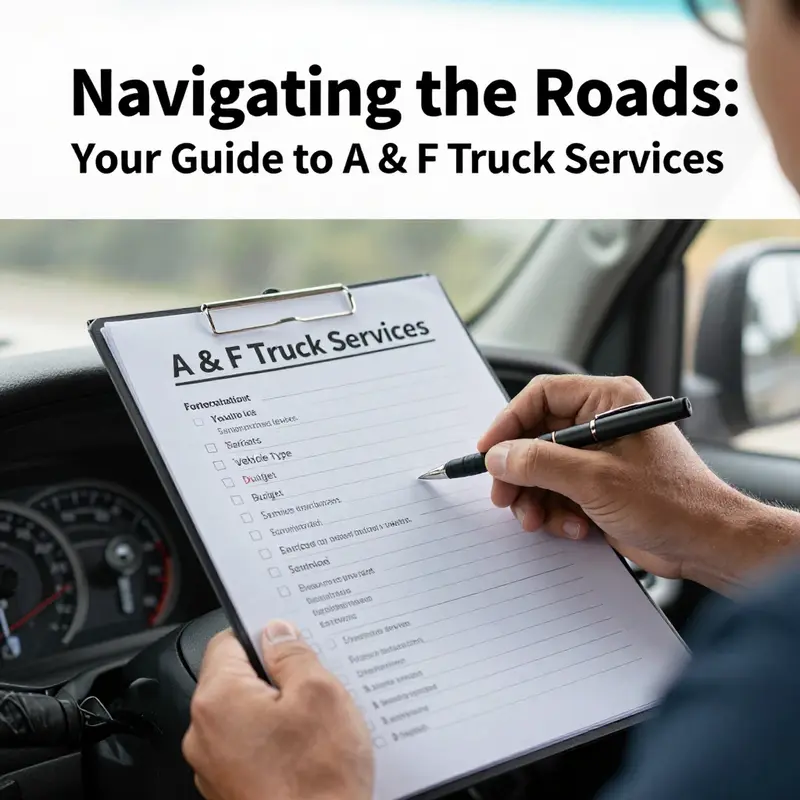
In closing the practical loop, fleet operators should document and standardize their outreach rituals. They should establish a preferred contact protocol for each region, maintain a concise description of the services offered by each shop, and implement a simple pre-call checklist that streamlines conversations. A model checklist might include the following: confirm the exact shop name and location, verify the vehicle’s make and model, outline the issue as described by the driver, and record the requested service window. The technician’s notes should then capture the diagnostic steps taken, the agreed-upon scope of work, the expected parts availability, and any follow-up actions. With this discipline, a fleet’s interaction with A & F Truck Services—whether in California or Massachusetts—becomes less about hunting for a contact and more about engaging a well-orchestrated system designed to maintain your rolling assets.
For readers who want to explore direct experiences and diagnostics from the Springfield shop, the local review landscape offers a window into customer perceptions and practical outcomes. See the Springfield Yelp listing for firsthand impressions and practical details about their operations: https://www.yelp.com/biz/a-f-truck-service-springfield. This external resource complements the information above by providing a community perspective that, when combined with direct contact verification, can help fleets calibrate their expectations and plan more effectively for uptime. The integration of multiple information streams—direct calls, map confirmations, and community impressions—yields a more resilient approach to maintaining a regional service network that your fleet can rely on across routes and seasons.
null
null
Final thoughts
A & F Truck Services presents a diverse array of options for truck drivers and fleet managers seeking dependable vehicle support. With separate entities in Goshen, California, and Springfield, Massachusetts, ensuring you know the specifics can significantly impact your choice of service partner. Always remember to verify information directly via phone or through mapping services tailored to your region. Armed with knowledge and clear guidelines, you can navigate your trucking needs with confidence and efficiency.