
Navigating the world of full-service truck leasing can be daunting, especially when affordability is a top priority. For long-haul truck drivers, trucking company owners, fleet managers, and aspiring drivers alike, understanding how to secure the best leasing deals is crucial. This comprehensive guide will walk you through finding affordable full-service truck leasing companies across five key areas: leveraging specialized online platforms for comparisons, evaluating all-inclusive pricing, verifying company credibility, employing effective negotiation strategies, and understanding your specific leasing needs. Each chapter will equip you with the knowledge and tools necessary to make informed decisions, ensuring you get the best deal without compromising on service quality.
Navigating Specialized Online Marketplaces to Uncover Affordable, Full-Service Truck Leases
Finding affordable, full-service truck leases hinges on more than chasing the lowest base rate. The most reliable value comes from packages that bundle insurance, maintenance, roadside support, and fuel management into a single, predictable monthly invoice. In practice, this means turning to specialized online marketplaces that aggregate multiple leasing providers, standardize the presentation of service packages, and let you compare apples to apples in real time. These digital platforms streamline what used to be a time-consuming process: you can specify vehicle type, required services, and location, then filter results to show only those options that meet your operational needs. Instead of contacting dozens of carriers one by one, you get a curated set of full-service offers that can be evaluated side by side. The emphasis is not merely on the sticker price but on the total package—the full cost of ownership that emerges when every service component is included and clearly stated. A transparent all-inclusive approach helps prevent the kind of hidden fees that quietly erode savings over the term of a lease. When you see a monthly figure that covers the lease payment, comprehensive insurance, routine maintenance and repairs, 24/7 roadside assistance, and fuel-management solutions, you gain a realistic picture of how the lease will affect cash flow month to month. This clarity matters because fleets grow and seasonality shifts. A rate that looks favorable in the spring can become exploitative if it stacks fees during peak demand or after mileage thresholds are met. The reliable path is to weight the total monthly outlay and the predictability of that outlay over the life of the contract, rather than chasing a lower nominal rate alone. The platforms themselves are designed to surface this clarity. They enable you to set filters for “full-service” packages and to sort results by total cost, vehicle type, mileage allowances, and service coverage. Read the fine print in the service description, and look for a single, consolidated invoice that rolls all costs into one line item. If the platform presents multiple monthly invoices or splits insurance from maintenance in a way that invites confusion, that is a red flag. You want one predictable number you can budget around, with assurances that if a component isn’t performing, it is covered under the same contract rather than buried in a separate line item. The concept of all-inclusive pricing is not purely financial. It is a guarantee of reliability. By ensuring that maintenance, parts, and labor are billed within the lease rather than billed separately, a full-service provider aligns incentives around uptime. A well-maintained fleet reduces unexpected downtime and repair delays, which in turn lowers indirect costs like missed deadlines, reduced carrier capacity, and emergency substitutions that disrupt operations. The platforms that support this approach also facilitate a broader evaluation of a leasing partner’s credibility. You can see which providers are pre-vetted and what criteria they have met, such as compliance with licensing requirements and adherence to industry safety standards. A credible supplier will share details about their fleet’s age, maintenance schedule, and the geographic reach of their service network. They will describe turnaround times for common repairs and the policy for temporary replacements when a vehicle is out of service. This level of openness helps buyers avoid reactive choices driven by aggressive marketing rather than consistent performance. It is also wise to validate a platform’s own credibility. Look for clear terms of service, data protection policies, and a track record of helping users obtain transparent pricing and reliable carriers. While the online marketplace acts as a facilitator, its value is ultimately determined by the quality and responsiveness of the leasing partners it presents. The evaluation should therefore extend beyond the platform’s interface to the underlying network of service providers. In practice, this means checking credentials, reading independent reviews, and probing the platform for what happens when things go wrong. How quickly can a breakdown be resolved? What is the policy for a dispatch delay or a missed maintenance window? How often do clients report successful uptime and quick vehicle replacement? The answers reveal more about true affordability than any quoted monthly price. Beyond price and reliability, every fleet manager should articulate their own needs before engaging in negotiations. How many trucks are planned for the near term? What is the typical annual mileage, and how elastic is that figure? Are you seeking a long-term lease to lock in stability, or a shorter arrangement that leaves room to renegotiate as volumes fluctuate? Do you anticipate seasonal spikes that require scalable capacity? These questions guide the selection process and sharpen negotiation leverage. Long-term leases often yield lower monthly rates, particularly when a provider can commit to a stable utilization profile. Bundling multiple units under a single agreement can unlock volume discounts, but it also requires clear fleet management expectations. For example, you may negotiate for synchronized maintenance windows, standardized replacement cycles, and uniform insurance terms across all vehicles. The right balance of term length and service scope can deliver meaningful savings without compromising uptime or operational flexibility. It is essential to scrutinize the contract for ambiguities around what is included in maintenance, how insurance coverage is defined, and what constitutes “unavailable” or “out of service.” Read the fine print on mileage thresholds, fuel-card arrangements, toll management, and roadside services. The smoothest arrangements come with predictable invoicing and a well-defined escalation path for service issues. When a fleet decision hinges on more than price, a structured test phase can be invaluable. Pilot a small subset of units under the same full-service terms you would apply to the entire fleet. Track uptime, maintenance response times, and the accuracy of the invoicing during that pilot. The data you collect will corroborate or challenge the marketing claims you encountered on the platform. It will also give your finance and operations teams practical experience with the provider’s processes, which in turn strengthens the negotiation position when you scale up. For many buyers, the end goal is not simply a lower monthly payment but a dependable, end-to-end solution that minimizes administrative friction. The best platforms emphasize the whole lifecycle of a lease: start-up onboarding, regular maintenance, insurance administration, incident response, and renewal or exit planning. When the solution feels like a seamless extension of your own operations, the cost advantages become more consequential. For readers who want to connect this process to broader procurement standards, there are established considerations that align leasing decisions with organizational governance. See fire apparatus procurement for guidance on aligning equipment strategy with safety and performance criteria. fire apparatus procurement. As you refine the selection, remember that the objective is to secure a package that truly reduces total cost of ownership while delivering consistent uptime and service quality. The right platform can be a catalyst for that outcome, transforming scattered quotes into a coherent, auditable, and negotiable bundle. When you combine a disciplined requirements definition with a selective, transparent marketplace, you gain not only a favorable price but a dependable partner for the long haul. An informed buyer can confidently compare offers, verify credibility, and negotiate terms that reflect the realities of daily operations and the demand cycles of the business. In the end, the best affordable full-service lease is not the one with the lowest sticker price. It is the one that reliably stays within budget month after month while keeping fleets moving, maintenance predictable, and downtime to a minimum. External resources can further illuminate the process and offer additional perspectives on best practices in modern fleet procurement. For instance, real-time marketplaces and algorithm-driven matching can streamline the connection between shippers and carriers, helping you secure agreements that align with your logistical needs. Convoy (external) provides a contemporary example of how data-driven matching can support efficient, reliable leasing arrangements. https://www.convoy.com/
null
null
The Trust Test: Verifying Credibility to Uncover Truly Affordable Full-Service Truck Leasing
Affordability in full-service truck leasing emerges not from a single line item but from a careful alignment of service expectations, reliable equipment, and transparent billing. The true test of price is not the headline quote; it’s the total monthly invoice that arrives without surprises. The path to such clarity begins with credibility. A provider may offer a tempting base rate, but if the contract hides insurance, maintenance, roadside support, fuel management, or mileage penalties, the once-attractive price dissolves into a bill that undermines budgeting.
Technology has reshaped how buyers approach this problem. Digital marketplaces that aggregate multiple providers give you the first practical advantage: side-by-side comparisons that slice through marketing spin. A leading digital marketplace in this space lets you filter for ‘full-service’ packages and instantly see whether the quote includes insurance, scheduled maintenance, 24/7 roadside assistance, and fuel-management solutions. The benefit is not just convenience; it is a substantial reduction in the time you spend validating promises and calculating what-ifs. You can pivot from a low base rate to a more stable long-term cost arrangement by comparing the services bundled into each offer, and you can do it with a few clicks rather than dozens of calls. Yet even the most transparent platform cannot substitute for human diligence. The price you see is only as trustworthy as the company behind it, and that is where credibility enters the equation.
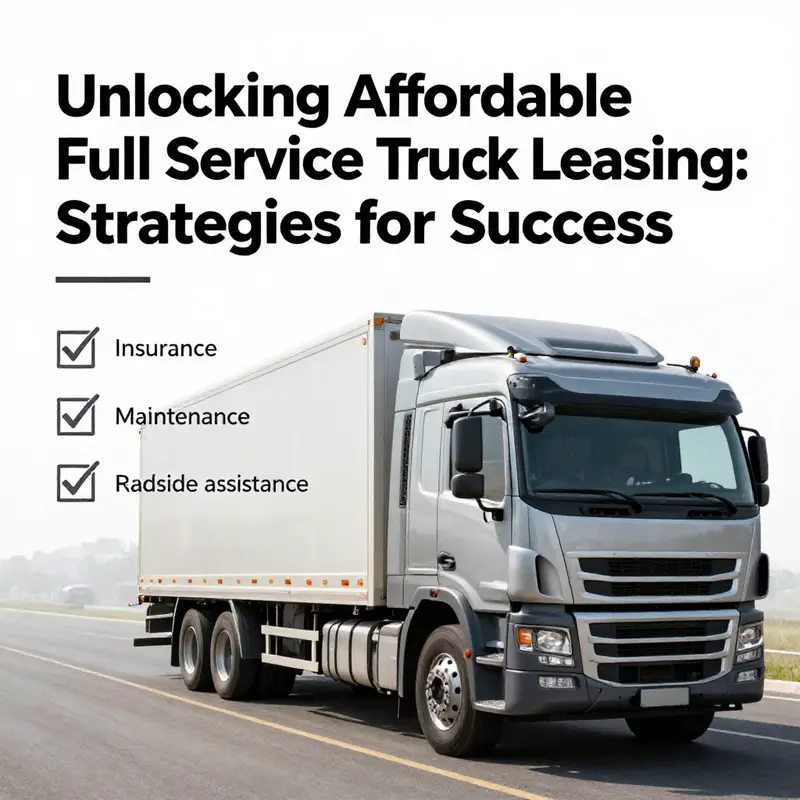
Beyond the platform, credible providers distinguish themselves with all-inclusive pricing. The best packages present a single monthly invoice that clearly enumerates each component: the lease payment itself, comprehensive insurance covering liability, collision, and other risks, routine maintenance and repairs performed under warranty, 24/7 roadside assistance, and fuel-management options such as cards or reimbursement arrangements. When a quote hides line items behind vague terms or tacks on variable charges for tires, oil changes, or dispatch fees, the apparent affordability is a mirage. Consider the psychological economy of pricing. A provider that quotes a seemingly low price but adds fees for exceedance of mileage limits, for tire replacement outside of standard wear, or for administrative handling is not the bargain it first appears to be. The dependable pattern is predictability: one clear monthly number, no creeping add-ons.
Verifying credibility is the practical counterpart to parsing price. First, confirm basic legitimacy. A reputable full-service truck lessor should hold a valid business license and be registered with the relevant national or regional authorities. The verification step is not a box to tick but a baseline for trust. Then turn to reputation. Independent customer feedback matters, not as a chorus but as a chorus of typical experiences. Look for patterns in reviews: responsiveness to inquiries, the condition of vehicles on delivery, and the swiftness with which the service team resolves incidents. A single glowing review means little; a pattern of consistent performance matters.
Another dimension is the provider’s network. A credible operator maintains a modern fleet and a robust service footprint. It should be possible to verify the average turnaround time for repairs and to understand how a replacement vehicle would be dispatched if your truck is out of service. In long-haul or time-sensitive operations, the speed of support is as important as the cost of the lease itself. In this light, you can treat the ‘full-service’ designation as a promise: a vendor not only rents a truck but also shares the risk of downtime and the administrative complexity that comes with running a fleet.
For many buyers, the journey begins with clarifying needs. A precise demand profile makes negotiation more productive. How many units do you require? What is your typical monthly mileage? Are you seeking a short-term arrangement during peak seasons, or a longer commitment that earns a slightly lower rate? When you can articulate your variables, you can press for terms that reflect them. Negotiation is not about squeezing the lowest price from a vendor; it is about aligning the service structure with your actual operating model. For example, you might secure a modest discount by committing to a longer term or by bundling maintenance across several units. Discounts for multi-vehicle deployments or bundled services can be meaningful, but only if they stay aligned with your usage pattern and do not unlock hidden costs elsewhere in the contract.
The danger of mispricing is real. An instructive reminder comes from the field experience of many operators who note the difference between advertised rates and the total life-cycle cost. A provider may tout a very low daily rate, but the true total could exceed more credible options when all charges are tallied—insurance premiums that are higher than expected, maintenance caps that shift costs to the lessee, or disproportionate charges for roadside assistance during off-peak hours. The lesson is simple: the best value emerges when price transparency is coupled with a credible service framework. The affordability you secure should not depend on a single clever line item but on the stability of the entire package over the term.
To build this intelligence, many buyers exploit public and private channels for due diligence. Official company registration records and licensing databases offer a first, essential screen. The goal is to confirm that the operator is legally established and has not faced meaningful sanctions in the past. Equally important is the company’s track record of contractual performance. Publicly accessible dispute records or court filings can reveal chronic problems such as repeated nonpayment, breach of contract, or litigation tied to non-delivery of promised services. While no single file tells the entire story, a confluence of credible indicators—steady business activity, a clean enforcement history, and a lack of red flags in judgments—tilts the odds in your favor. In practical terms, this means running a few targeted queries: look up the company’s registration status, search for any legal judgments, and review any warnings or penalties issued by relevant authorities. The aim is not to sensationalize risk but to quantify it for budgeting and operational continuity.
Public-facing review platforms add texture to the data, but they require discernment. Conversations in forums, rating sites, and comment sections often reveal patterns that a glossy brochure cannot. A steady thread of complaints about unexpected charges, opaque pricing language, or delays in service communication should trigger deeper probing before committing. Equally important is to confirm the provider’s claim of coverage areas and service centers. A full-service lease that promises nationwide support is valuable only if the network is truly national, with technicians available in the regions where you do business and the ability to expedite replacement equipment when needed. As you assess credibility, you should balance the qualitative impressions of the service team with the quantitative signals of reliability—fleet age, maintenance history, uptime statistics, and the speed of dispatch.
Incorporating the subtopic’s practical wisdom into your process helps avoid the dreaded end-of-month surprise. The negotiation room is where needs become cost certainty. A thoughtful buyer begins with a clear scope: the number of units, anticipated mileage, service requirements, and requested inclusions like fuel-management programs or telematics partnerships. Given that backdrop, you can secure favorable terms by offering commitments that lower the operator’s risk. For instance, providing longer lease commitments in exchange for a lower monthly rate or agreeing to consolidated maintenance across several trucks can unlock savings that are real and durable. You can also probe for multi-unit discounts, seasonal incentives, or flexible mileage allowances that mirror your actual usage. The critical constraint is to maintain a contract framework that is straightforward and workable. A neat, predictable structure reduces the chance of budget creep and makes audits less painful.
If you want a concise route to this due diligence, consider a broader procurement lens. In practice, the best results come from combining three pillars: a trustworthy aggregator or broker that can surface all-inclusive options; a rigorous credibility check that blends official records with independent feedback; and a negotiation strategy tailored to your operating footprint. This triad echoes a larger truth in transport procurement: reliability compounds with time, and consistent service beats the illusion of a lower price on day one. When you approach the search armed with this mindset, the math stops being abstract and starts becoming an operational plan you can defend to stakeholders.
To connect procurement strategy with safety and reliability, you can explore dedicated guidance on how to align fleet purchases with broader safety objectives. For example, a focused piece on purchasing for safety—community-driven fire-truck procurement strategies offers a perspective on how to balance cost with mission-critical performance in equipment choices. That resource, while rooted in a specific sector, contains transferable principles about value, risk sharing, and vendor accountability that apply to commercial trucking as well. See Purchasing for safety—community-driven fire-truck procurement strategies.
Finally, the overarching framework for credible, affordable full-service leasing rests on credible, transparent terms and a network you can rely on. Platforms that consolidate quotes reduce search friction; credible providers that present all-inclusive pricing reduce financial ambiguity; and due-diligence practices that combine official records with user experiences illuminate practical risk. The result is not just a lower price, but a more predictable and manageable operating cost. It is a trust-first approach to commercial trucking that recognizes that true affordability is not the same as the cheapest number on a page. It is the cost you can budget with confidence, backed by a service partner who shows up when you need them and keeps your wheels turning.
For readers who want a more formal route to diligence, consider public records as part of your screening toolkit. In many jurisdictions, public registries and court databases provide a baseline portrait of a company’s legitimacy and performance history. A careful cross-check reduces the chance of signing an agreement with a high risk partner. While the record won’t guarantee trouble-free service, it improves the odds that your lease will support stable operations rather than create new headaches. In the end, credible, all-inclusive leasing is not a compromise; it is a disciplined approach to shortlisting and selecting partners that can shoulder the responsibilities of full-service trucking while you focus on core operations.
External resources for due diligence expand the set of signals you can rely on. For a practical framework that spans legal and financial credibility, public records access can be complemented by professional due-diligence guidance and independent evaluations. For a broad, real-world reference, you may consult publicly accessible court records and enterprise information portals that document a company’s compliance history and legal actions. If you want to explore an authoritative public source beyond your local market, you can consult international or cross-border records as well. See https://wenshu.court.gov.cn for public judgments and court information.
Smart Bargaining for Affordable Full-Service Truck Leases: A Practical Guide to Clarity, Cost Control, and Reliability
Finding affordable, full-service truck leases is less about chasing the lowest headline rate and more about building a transparent, value-driven agreement that protects uptime and margins. When you negotiate with leasing providers, you’re not just buying wheels; you’re purchasing a comprehensive package that should insulate your operation from surprise costs and downtime. The heart of successful bargaining lies in clear needs, rigorous price comparison, and a disciplined approach to contract terms. In practice, this means translating vague intentions into a concrete, testable set of expectations and then letting competition reveal true market value. The aim is to secure a single, predictable monthly invoice that covers not only the lease but also the essential services that keep a fleet on the road. A well-constructed full-service arrangement typically includes lease payments, comprehensive insurance, scheduled maintenance, roadside assistance, and fuel management options. Each element carries its own risk and potential for hidden costs, so you must scrutinize how these pieces fit together before you sign anything.
Begin with a precise statement of your needs. Determine how many trucks you require, the expected annual mileage, and the typical operating conditions. Assess whether you need long-term stability or flexibility to scale up or down as demand changes. Clarifying these variables upfront creates a sturdy benchmark for every quote you receive. It also prevents the familiar negotiating trap of shifting goalposts once a supplier sees your appetite for volume. In addition to vehicle age and payload, consider the non-negotiables: maintenance response times, uptime commitments, and the exact scope of insurance coverage. If a quote touts low monthly fees but omits tire replacements or hydraulic repairs, the apparent bargain dissolves the moment a tire pillages your budget or a costly component fails mid-contract. The discipline of clarity pays off in predictable operating costs and steadier budgeting for miles and assets.
Next, practice comprehensive quote collection. Do not rely on a single proposal or a quick back-and-forth with one provider. Seek detailed bids from multiple sources, including both full-service and partial-service outfits. The objective is not to find the cheapest quote at face value but to map out the total cost of ownership across the term. Break down each quote to reveal all charges: the base lease, insurance premiums, maintenance allowances, coverage limits, roadside assistance fees, fuel-management options, and any mileage surcharges or early termination penalties. A robust comparison—one that looks at total monthly cost and the likelihood of hidden fees—offers a true view of affordability. Price transparency is itself a negotiating tool. When suppliers see you have options, they are more inclined to present straightforward terms rather than layering in opaque charges that erode value over time.
There is immense value in cultivating long-term relationships with reputable providers, particularly when you manage a fleet whose uptime is tied to revenue. A longer lease term can unlock lower monthly payments and more favorable service commitments, especially if you commit to a multi-unit arrangement. This is not merely about raw discounts; it is about aligning incentives. A trusted partner will work with you to optimize fleet performance, not simply to extract monthly rent. In practice, that means discussing service level agreements, maintenance scheduling, and the availability of replacement units during downtime. It also means planning for upgrades or changes in demand without renegotiating from scratch. To maximize leverage, come to the table prepared with a negotiation framework that includes your bottom line, acceptable concessions, and a clear walkaway point. If you have access to negotiation education resources, such as formal coursework or structured playbooks, use them to refine your approach. A disciplined, well-prepared stance tends to yield terms that stay favorable across the life of the lease.
Another crucial facet is the thorough review of contract details. The cheapest upfront offer is not a bargain if penalties, service response times, or damage terms undermine value. Scrutinize early termination clauses, mileage allowances, and maintenance coverage beyond basic oil changes. Confirm how repairs are handled—whether the provider dispatches a technician or replaces the vehicle—and what constitutes an acceptable downtime threshold. Ask about the procedure for vehicle damage and the responsibility for warranty-covered repairs. A reliable full-service partner should deliver timely service without surprise deductibles or sudden rate escalations. In addition, assess the credibility of the supplier as a whole: licenses, regulatory compliance, and the health of their service network. A fleet with modern, well-maintained trucks supported by a robust network of service centers reduces the risk of costly downtime and extends the usable life of your assets. If a quote seems too good to be true, it probably hides service gaps or restricted coverage. A cautious approach protects you from a short-term gain that becomes a long-term liability.
As you shape your strategy, link practical procurement practices to broader principles of cost control and reliability. When you design a bidding process, structure it so the final choice reflects both financial and operational prudence. For example, framing your procurement around total cost of ownership, uptime guarantees, and the predictability of monthly invoicing helps align supplier behavior with your business goals. A thoughtful approach to negotiation also means recognizing that terms can be traded. If a supplier lacks flexibility on price, you might negotiate for enhanced maintenance allowances, higher mileage caps, or faster service response times. Conversely, if service quality is the critical differentiator, you may justify a modest premium in exchange for a stronger uptime commitment or broader insurance coverage. The goal is to balance price with performance in a way that reduces risk and stabilizes cash flow.
To anchor your process in solid practice, consider the broader procurement landscape that informs how fleets are acquired and managed. A thoughtful procurement approach, such as fire apparatus procurement, can offer a useful lens for standardizing bid requests, evaluating terms, and validating supplier qualifications in regulated, safety-focused environments. This mindset emphasizes rigorous supplier vetting, clear performance criteria, and disciplined contract administration. By adopting these principles, you can apply a proven framework to commercial truck leasing, ensuring that every quote you evaluate is measured against rigorous standards rather than emotional appeal or shallow savings.
In the end, the chapter of negotiation is really about discipline and clarity. You begin with a precise map of needs, collect detailed, apples-to-apples bids, and pursue a relationship that rewards uptime as much as price. The most affordable full-service lease is not the one with the lowest sticker price, but the one that preserves reliability while delivering predictable, controllable costs month after month. As you move through the bidding process, maintain a central ledger of metrics: total monthly cost, uptime commitments, response times for service, coverage levels, and the conditions beneath which penalties would apply. Track patterns across quotes to identify not only the best numbers but also the most credible and consistent service implications. When you emerge from negotiations with a bundle that includes comprehensive insurance, scheduled maintenance, 24/7 roadside assistance, and clear fuel-management options, you’ve constructed an affordable lease that truly supports operational needs without sacrificing performance. The objective is not a single victory in a single negotiation but a sustainable, profitable alignment between your fleet’s needs and a leasing partner’s capabilities.
For further practical guidance on procurement and to see how structured bidding and comparative evaluation can shape your leasing outcomes, you may find it helpful to explore broader procurement discussions, such as those found in resources dedicated to fire apparatus procurement practices. This approach reinforces the notion that disciplined, criteria-driven evaluation yields durable value and helps prevent costly oversights. For a deeper dive into negotiation tactics specifically aimed at truck leases, a well-regarded external resource provides a concise, actionable framework: https://www.linkedin.com/pulse/8-tips-negotiating-truck-lease-ryan-mcintosh.
Internal link: As you refine your internal processes, consider aligning your strategy with established procurement practices found in related fields. A practical touchstone is the concept of fire apparatus procurement, which emphasizes clear requirements, supplier qualification, and contract discipline as core drivers of value. See more on this approach here: fire apparatus procurement.
Tuning Your Lease: Aligning Operational Realities with Truly Affordable Full-Service Truck Leasing
Choosing an affordable full-service truck lease is less about chasing the lowest headline price and more about aligning a provider’s offerings with the exact rhythms of your daily operations. In practice, the best deals emerge when you translate the concrete realities of your business into a detailed leasing profile. The process is less a sprint for cheap monthly numbers and more a careful calibration of needs, risks, and predictable costs that keep your trucks on the road and your budget under control. When you approach leasing with this mindset, you gain a lens that helps you distinguish a truly affordable package from a package that merely looks attractive at first glance.
First, the cargo you move should guide everything else. The type of goods determines not just the type of trailer or tractor you need, but also the ancillary systems that must be in place to preserve product integrity and regulatory compliance. If your work involves sensitive perishables or pharmaceuticals, the fleet may require temperature-controlled capability and precise monitoring systems. Even in less regulated lanes, the reliability of climate control can be a differentiator in maintenance costs and resale value. These needs translate into equipment specifications that you should lock down before you start negotiating. The right trailer or tractor size, wheelbase, payload capacity, and fuel efficiency profile become the baseline from which all other costs flow. In this sense, understanding your operation isn’t a luxury; it’s a budgeting discipline that prevents you from paying for features you don’t need while starving your fleet of critical capabilities.
Second, translate day-to-day realities into vehicle specifications with the calm of a planner who knows that every extra inch of capacity or every additional mile-per-gallon matters when margins are tight. Fleet size, typical routes, and expected annual mileage are not abstract numbers. They determine whether you can justify a longer-term commitment with a lower monthly rate or whether a shorter term with a slightly higher rate makes your cash flow more predictable. It also informs maintenance planning. A full-service model that bundles routine maintenance, inspections, and repairs with a single monthly invoice can simplify budgeting, but only if the bundled services actually match the truck’s usage. If you run routes with heavy urban stops and frequent idling, for example, you’ll want a plan that covers more frequent proactive maintenance and faster repair turnaround.
Third, geography matters more than most operators admit. The regions in which you operate come with their own regulatory and service-network realities. Some zones have stricter safety requirements, while others demand more frequent inspections or additional insurance considerations. A leasing partner with a robust nationwide network of service centers and a pledged average repair time can drastically reduce downtime. If your lanes are concentrated in a particular state or cross-border corridor, you should verify not only coverage but the provider’s familiarity with the local compliance landscape. In practice, this means asking about the geographic reach of maintenance facilities, the availability of replacement vehicles, and the speed with which mobile service units can be dispatched if a fault occurs on the road. The goal is to minimize operational risk while maintaining a clear, predictable cost structure.
Fourth, total cost of ownership should guide the decision more than any line item on a price sheet. A true all-inclusive package will cover more than the lease payment. Look for provisions that stack up to a predictable monthly total: comprehensive insurance, highly detailed coverage that includes liability, collision, and comprehensive protection; regular maintenance schedules with programmed oil changes and tire care; 24/7 roadside assistance with defined response times; and fuel-management components such as fuel cards or reimbursement mechanisms. The value of a truly inclusive model becomes clear when you consider the alternative: a low base rate gilded by add-ons that explode the monthly total. A single, transparent invoice that captures all the necessary services reduces financial exposure to unexpected spikes and makes budgeting straightforward. When assessing a package, you can convert every major category—maintenance, insurance, fuel, and driver support—into a line on your forecast to compare apples to apples across providers.
Fifth, credibility and service quality are non-negotiables. Affordability must not come at the expense of reliability. A prudent approach is to verify a provider with a careful audit of credentials and an honest review of service quality. Check that the company holds valid licenses and is registered with the appropriate transportation authorities. Read independent reviews to gauge how quickly they respond when a truck is down, how well the fleet is maintained, and how efficiently their service team operates under pressure. Ask for specifics on their fleet turnover, the average age of their vehicles, and the scale of their service network. A robust full-service partner will be able to cite real-world metrics—average turnaround times for repairs, the typical time to dispatch a replacement, and the level of on-road support available during peak seasons. Lower upfront costs that hide slower response times or a sparser service network inevitably increase operating risk and can erode savings through downtime.
Sixth, the art of negotiation grows out of clarity. Once you have a precise picture of your fleet needs, you can begin conversations with rental houses armed with facts rather than abstractions. Define the expected fleet size, the typical annual mileage, the mix of equipment types, and whether you anticipate long-term or short-term leases. This is also the moment to explore leverage points that can produce real savings: spreading a purchase over a longer term can yield a lower monthly obligation, and bundling services for multiple units often unlocks volume discounts. Transparent pricing matters here just as much as the underlying performance. Seek providers who disclose the full cost structure up front and avoid any that rely on opaque add-ons. A credible quote should present a clear, single monthly figure that encompasses the lease, insurance, maintenance, roadside support, and fuel management, with no unwelcome surprise at invoicing time. The negotiation should hinge on what you need in practice rather than what a salesperson is pushing; your leverage comes from your well-defined usage profile and the potential for a longer, stable relationship.
In practice, the path to affordability is not a chase after the smallest base rate but a disciplined pursuit of a package that aligns with your operating realities. You can begin with a broad market scan using generic online marketplaces that aggregate multiple providers and allow you to filter for full-service, all-inclusive packages. While these tools are valuable for quickly narrowing options, your final choice should rest on a deeper evaluation of reliability and fit, not a single price. The emphasis should be on a package that offers predictable monthly costs, a robust service network, and transparent terms that reflect the actual needs of your fleet.
To link this approach to established practitioner guidance, consider the broader procurement discipline that emphasizes alignment between business needs and supplier capabilities. The same logic applies when evaluating full-service truck leasing: you want a partner who understands your operations at a granular level, from the regulatory landscape you navigate to the daily realities of moving goods along your core routes. A practical example is the procurement framework that stresses compatibility between the supplier’s service scope and your specific fleet usage, a principle that helps prevent overpaying for unnecessary features while ensuring essential services are reliably covered. This is not merely a cost exercise; it is a strategic alignment that reduces risk, enhances uptime, and ultimately sustains your bottom line.
As you refine your criteria, a subtle but important step is to study procurement literature that addresses the practicalities of equipment leasing and fleet management. The insights from this body of work remind us that successful leasing hinges on understanding the full lifecycle of the assets and the realities of daily operation. You might encounter guidance about assessing maintenance cycles, insurance considerations, and the importance of dependable roadside assistance—topics that echo the core questions you pose when comparing quotes. Although the specifics of every fleet will differ, the underlying principle remains constant: the most affordable arrangement is one that reliably keeps trucks moving while protecting you from hidden costs and unexpected downtime.
For readers seeking concrete pathways to deepen their knowledge, consider exploring industry discussions on procurement best practices. These resources emphasize how to translate real-world usage into contractual terms and how to translate risk into cost control. The emphasis on practical, outcome-driven criteria aligns closely with the decisions you will make when selecting a full-service leasing partner tailored to your operations. As you move from generic price comparisons to tailored specifications and credible service promises, you build a case for affordability that rests on reliability, clarity, and strategic value rather than a fleeting discount.
In sum, understanding your operational realities is the keystone of finding truly affordable full-service truck leasing. Your cargo characteristics, vehicle specifications, geographic footprint, total cost of ownership, and the vendor’s credibility all shape the final equation. The best outcomes arise when you use this knowledge to structure a transparent, all-inclusive offer that guards against hidden charges, minimizes downtime, and supports scalable growth. If you treat the leasing decision as a data-driven negotiation anchored in your daily workflow, you will be better positioned to secure a plan that feels like a natural extension of your business rather than a negotiated compromise. And as you examine prospect after prospect, you can anchor every conversation in the same frame: what does your operation need, what will this offer actually cost, and how quickly can you recover value from every mile your fleet covers? For those who want to see how procurement thinking translates into concrete supplier relationships, a practical reference point is the guidance that outlines procurement best practices for specialized equipment—a reminder that the strongest leases emerge from clarity, discipline, and partnerships built to endure the long haul.
Internal link reference: For deeper strategies on equipment procurement aligned with this approach, see fire apparatus procurement best practices. fire apparatus procurement best practices.
External resource: https://www.transportation.gov/.
Final thoughts
Securing affordable full-service truck leasing is not merely about finding the lowest base rate—it’s about understanding a comprehensive approach that combines research, evaluation, and negotiation. By utilizing specialized platforms for comparisons, recognizing the importance of all-inclusive pricing, verifying company credibility, applying smart negotiation strategies, and understanding your specific needs, you can make choices that align with your budgetary constraints while ensuring a reliable partnership for your trucking operations. With the right tools and knowledge, making your lease decision can lead to significant savings and operational efficiency.